
Discover how professional, evidence-based couples counseling in Phoenix can help you navigate conflict, restore intimacy, and build a resilient partnership.
Understanding Couples Counseling in Phoenix: A Path to Relational Healing
Couples counseling is a collaborative, evidence-based process designed to help partners improve their relationship. Unlike individual therapy, the focus is not on one person, but on the relationship itself—the dynamic, the patterns, and the emotional connection between you. In this therapeutic space, the relationship becomes the client. It’s a common and courageous step for couples across the Phoenix metro area to seek this kind of support. Acknowledging that your partnership could benefit from professional guidance is not a sign of failure; it is a proactive step of profound strength and commitment to your shared future. The scope of this work is broad, ranging from premarital counseling to prepare for a life together to navigating high-conflict situations that feel overwhelming.
When is the Right Time to Seek Professional Support?
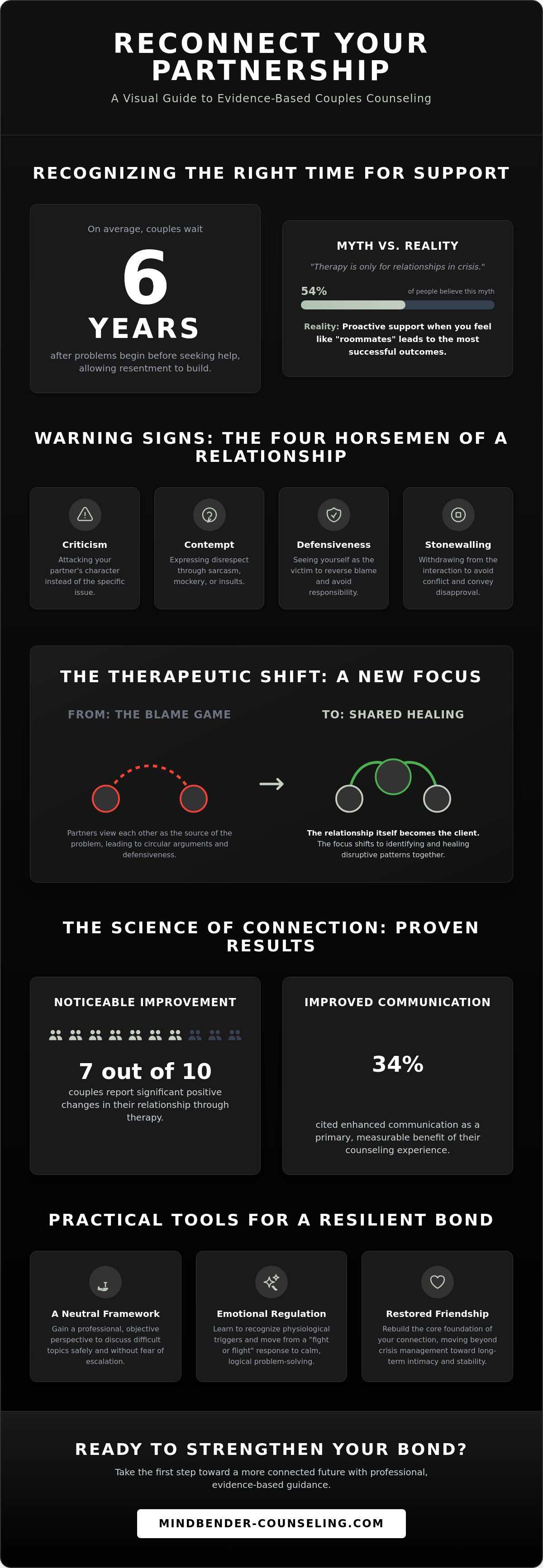
Many couples wonder if their problems are "bad enough" for therapy. The truth is, the earlier you seek support, the more effective it can be. Research from the Gottman Institute, a leader in relationship science, found that couples wait an average of six years after problems begin before seeking help. By then, negative patterns are deeply entrenched, making the work of rebuilding more challenging. It is far more effective to intervene when the initial warning signs appear.
- Early Warning Signs: Dr. John Gottman identified four communication styles so destructive he named them the "four horsemen of the apocalypse": criticism, contempt, defensiveness, and stonewalling. If these have become a regular feature of your interactions, it's a clear signal to seek professional guidance.
- Silent Distance vs. Active Conflict: Relationship distress isn't always loud. Sometimes, the most telling sign is a growing silence. If you feel like you’re living with a roommate instead of a partner, or if emotional and physical intimacy has faded, this emotional distance is just as damaging as frequent arguments.
- Repetitive Fights: Do you have the same argument over and over with no resolution? This indicates a deeper, unresolved issue beneath the surface. Counseling helps you uncover and address the root cause, not just the symptom.
The Benefits of a Neutral Third Party
While well-meaning friends and family can offer support, they can never be truly objective. Their advice is filtered through their own experiences and their loyalty to one or both partners. A trained couples therapist provides a crucial, neutral perspective that is impossible to find elsewhere.
- An Objective Perspective: A Phoenix therapist is trained to see the patterns that you’re too close to notice. They don't take sides; instead, they advocate for the health of the relationship and help each partner understand the other's viewpoint.
- A Safe Container for Conversation: Therapy provides a structured, safe environment—a "container"—where you can discuss difficult topics without the conversation escalating into a fight or shutting down completely. The therapist acts as a facilitator, ensuring both partners feel heard and respected.
- Fostering Understanding, Not Blame: The goal of couples counseling is not to determine who is "right" and who is "wrong." It is to foster mutual empathy and understanding. When you can see the conflict from your partner's perspective, you can begin to work together as a team to solve the problem, rather than seeing each other as the problem.
The Science of Connection: How Evidence-Based Couples Therapy Works
Many people are skeptical of therapy, viewing it as simply "paid venting." However, modern couples counseling is a structured, science-backed discipline. "Evidence-based therapy" isn't a buzzword; it refers to specific therapeutic models that have been rigorously tested in clinical research and proven to produce measurable, lasting results. This approach moves beyond just talking about problems and focuses on actively changing the relational patterns that cause distress. It’s about learning how your nervous systems react during conflict and developing the tools to co-regulate and return to a state of connection, even when things are difficult. The emphasis is on building long-term emotional resilience, not just applying temporary fixes.
Proven Methodologies for Lasting Change
Evidence-based practice means your therapist isn't just guessing. They are using a clear, research-supported map to guide you back to each other. Three of the most respected and effective models include:
- Emotionally Focused Therapy (EFT): EFT is grounded in attachment science—the same science that explains the powerful bond between a parent and child. It views relationship distress as a response to a perceived loss of secure emotional connection. The therapist helps you identify the negative cycle you're stuck in (e.g., "I pursue, you withdraw") and then guides you in expressing the deeper, more vulnerable emotions and needs that are driving the conflict.
- The Gottman Method: Developed from over 40 years of research with thousands of couples, the Gottman Method is a highly practical approach. It uses the "Sound Relationship House" theory as a blueprint, teaching you concrete skills to rebuild friendship, manage conflict constructively, and create a system of shared meaning.
- Behavioral and Cognitive-Behavioral Therapy (CBT): These approaches focus on identifying and changing specific negative interaction cycles. You learn practical tools for communication, problem-solving, and de-escalation. By changing your behaviors and the thoughts that fuel them, you can create new, positive patterns in your relationship.
What to Expect in Your First Therapeutic Appointment
Starting therapy can feel intimidating, but the initial phase is a structured process of discovery. Your first appointment is not about diving into your biggest fight; it's about building a foundation for the work ahead.
- The Assessment Phase: The process typically begins with a joint session where the therapist learns about your relationship history and your goals. This is often followed by individual intake sessions, where each of you has a private space to share your personal history and perspective with the therapist.
- Setting Relational Goals: Based on the assessment, you and your therapist will collaboratively set specific, personalized goals. This isn't a vague wish for things to "get better." It's a clear vision of what you want to achieve, such as "We want to be able to discuss finances without it ending in a fight" or "We want to restore physical intimacy."
- The "No-Secrets" Policy: Ethical couples work operates under a "no-secrets" policy, meaning that any significant information shared by one partner in an individual session will be considered part of the shared therapeutic work and may be brought into the joint sessions.
Navigating Modern Relationship Stressors in the Phoenix Metro
Life in a dynamic, growing area like Phoenix comes with its own unique set of pressures that can strain even the strongest relationships. The daily grind of long commutes, the high demands of the professional landscape, and the pressure to maintain a certain lifestyle can leave little energy for nurturing your partnership. Many couples find that external stressors—financial worries, career ambitions, or the challenges of raising a family in a fast-paced suburban environment—inevitably bleed into their relationship, showing up as irritability, distance, or conflict. It's in this context that one of the most common fears about therapy arises: "The therapist will take my partner's side." Addressing this objection is a crucial first step toward healing.
Overcoming the Fear of Bias in Therapy
The fear that a therapist will "gang up" on one person is a significant barrier for many. A professionally trained, evidence-based counselor understands this fear and is skilled in creating a balanced and safe environment for both partners.
- The Relationship is the Client: It bears repeating: the therapist’s primary client is the relationship itself. Their loyalty is to the health and well-being of your partnership, not to either individual. Every intervention is designed to benefit the "us," not just the "you" or "me."
- Neutrality and Gentle Challenge: A good therapist maintains neutrality while also gently challenging both partners to examine their own contributions to the negative patterns. They hold each person accountable for their behavior in a way that is compassionate, not judgmental.
- The Therapeutic Alliance: A crucial part of the process is building a strong "therapeutic alliance" with both individuals. You should both feel that the therapist understands you, respects you, and has your best interests at heart, even when the conversations are challenging.
Addressing Cultural and Diverse Relationship Dynamics
Every relationship exists within a unique cultural context. A one-size-fits-all approach to therapy is ineffective and disrespectful. High-quality counseling must be sensitive to the diverse fabric of the Phoenix community and beyond.
- Inclusive Care for All Couples: We are committed to providing affirming and knowledgeable care for LGBTQIA+ couples in Arizona. Your relationship will be honored and understood, free from judgment or assumption.
- Respect for Diverse Structures: We recognize that relationships come in many forms. Whether you are in a non-traditional relationship structure, come from different cultural or religious backgrounds, or are navigating a blended family, our approach is flexible and respectful.
- Personalized, Not Prescriptive: Therapy should not impose a single set of values. Our interventions are personalized to align with your unique values, beliefs, and goals as a couple, ensuring the solutions you build are authentic to who you are.
Choosing the Right Couples Counselor: A Framework for Phoenix Residents
Finding the right therapist can feel like a daunting task. Directories provide lists, but they don't tell you how to evaluate the quality or fit of a provider. It's essential to find someone who not only has the right credentials but also specializes in the science of couples work and feels like the right partner for your journey.
- Evaluate Credentials and Specialization: Look for a licensed professional (like an LPC, LMFT, or LCSW) who has specific, advanced training in a recognized couples therapy modality like EFT or the Gottman Method. General counseling is very different from the specialized skill set required for effective couples work.
- Trust the "Vibe Check": Most therapists offer a brief initial consultation, often by phone. This is your chance to get a feel for their personality and approach. Do you feel comfortable talking to them? Do they sound compassionate and confident? Trust your intuition.
- Ask About Their Experience: Don't be afraid to be a savvy consumer. Inquire directly about their experience and success in treating your primary concern, whether it's infidelity, communication breakdown, sexual issues, or something else.
Key Questions to Ask During a Consultation
To help you make an informed decision, have a few questions ready for your initial consultation call. This shows you are invested in the process and helps you assess the therapist's expertise.
- What evidence-based methods do you primarily use for couples, and why do you find them effective?
- How do you structure your sessions, and how do you handle high conflict or intense emotion in the room?
- What is your experience working with couples who are facing our specific situation (e.g., recovering from an affair, dealing with a parenting conflict, etc.)?
Logistics: Telehealth vs. In-Person Sessions in Arizona
Technology has made high-quality therapy more accessible than ever. Deciding between virtual and in-person sessions is a matter of personal preference and logistics.
- Comparing the Benefits: In-person sessions offer a unique, contained energy and eliminate distractions. Telehealth provides unparalleled convenience, saving you from Phoenix traffic and making it easier to fit therapy into busy schedules. The effectiveness of the therapy itself is comparable in both formats.
- Preparing for a Virtual Session: If you choose telehealth, ensure you have a private, quiet space where you and your partner can be together, uninterrupted, on a device with a stable internet connection. Treat the time with the same respect you would an in-office appointment.
Strengthening Your Bond with Mindbender Counseling
Your relationship is one of the most important cornerstones of your life. When it feels strained, the rest of your world can feel off-balance. At Mindbender Counseling, we serve as your compassionate, expert guide on the journey back to connection. We are deeply committed to using evidence-based techniques that don't just put a bandage on the problem but foster genuine, lasting emotional growth. We believe that every couple's story is unique, which is why our approach is always personalized. Our focus is on helping you build a solid internal foundation for your relationship—one that is resilient enough to weather life's inevitable storms.
Our Approach to Relational Growth
Our therapeutic process is designed to be a clear, supportive path. We begin by helping you de-escalate the conflict that keeps you stuck, creating the safety needed for deeper work. From there, we guide you in rebuilding the positive connection, friendship, and intimacy that may have been lost. Our goal extends beyond simple crisis management; we aim to equip you with the understanding and tools for long-term relational stability and satisfaction. We invite you to take the first, hopeful step toward the more fulfilling partnership you deserve.
Schedule Your Consultation Today
Reaching out for help is a sign of hope. It is a declaration that your relationship is worth fighting for. We provide a clear, low-friction path to get you started on this important work. Please know that it is rarely too late to seek support and begin the process of healing.
Ready to rebuild? Schedule your couples counseling session in Phoenix today.
Frequently Asked Questions
How long does couples counseling usually take to see results?
The timeline varies depending on the couple's specific issues and goals. Some couples experience relief and positive shifts in communication within the first few sessions. Deeper, more entrenched patterns may take several months of consistent work. Your therapist will discuss a projected timeline with you after the initial assessment.
What if my partner refuses to go to counseling with me?
This is a common and difficult situation. You cannot force your partner to attend. However, you can start by attending therapy on your own. This can help you gain clarity, develop better coping skills, and learn how to change your own behavior within the relationship dynamic, which can sometimes inspire a reluctant partner to join later.
Is couples counseling covered by insurance in Arizona?
Coverage for couples counseling is complex. Most insurance plans do not cover it directly, as "relationship issues" is not a billable medical diagnosis. However, if one partner has a diagnosable mental health condition (like anxiety or depression) that is affecting the relationship, therapy may be covered under that diagnosis. It is best to check directly with your insurance provider about your specific plan benefits.
Can couples therapy help after an affair or infidelity?
Yes, absolutely. Recovering from infidelity is one of the most challenging experiences a couple can face, and therapy is often essential for healing. A trained therapist can provide a structured process for addressing the betrayal, rebuilding trust, and helping the couple decide how to move forward, whether together or apart.
What is the difference between marriage counseling and couples therapy?
The terms are often used interchangeably. "Couples therapy" is a more modern and inclusive term that applies to all committed partners, whether they are married, cohabiting, or dating. "Marriage counseling" specifically refers to therapy for married couples. The techniques and goals are largely the same.
How do we know if our relationship is "too far gone" for counseling?
If both partners have even a small amount of willingness to try, the relationship is not "too far gone." The belief that things are hopeless is often a symptom of the distress itself. Counseling is designed to help you find a path forward, even when it feels impossible. The only time it is truly too late is when both partners have definitively decided to end the relationship.
Will the therapist tell us if we should break up or get a divorce?
No. An ethical therapist will never make that decision for you. Their role is not to be a judge, but a facilitator. They will help you gain clarity, improve communication, and understand your options so that you can make the best decision for yourselves, whatever that may be.
How much does couples counseling in Phoenix typically cost?
The cost of couples counseling in Phoenix can vary significantly based on the therapist's credentials, experience, and location. Fees can range from $150 to $300+ per session. It's important to view therapy as an investment in your well-being and the future of your relationship.


