

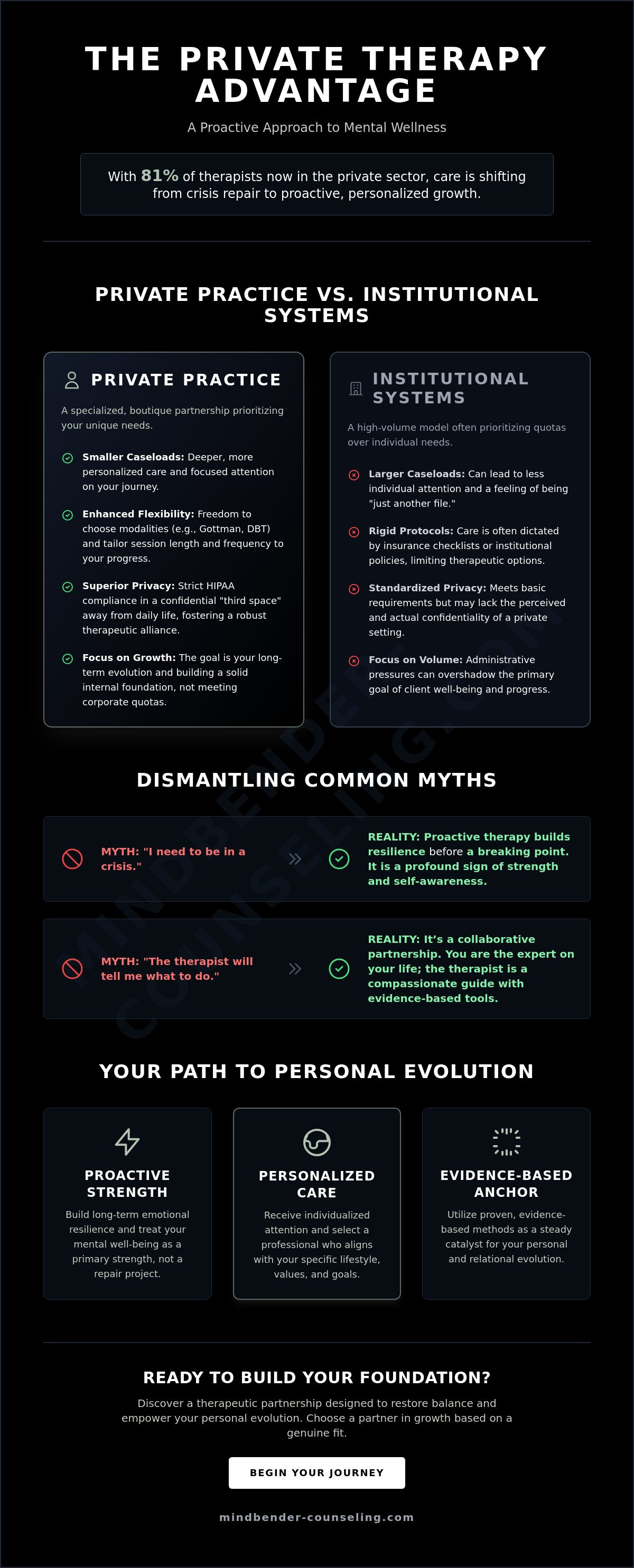
What if the most courageous step you could take for your future wasn't waiting for a crisis to strike, but choosing to build your internal foundation while you're still standing strong? You might feel like your daily struggles aren't "bad enough" for clinical intervention, or perhaps you're concerned about being judged for seeking help. It's a common hesitation, but with 81% of therapists now working in the private sector, the reality of private therapy has shifted toward proactive, personalized care. This approach treats your mental well-being as a primary strength rather than a repair project.
We know that the "private pay" model can feel confusing and finding a therapist who truly gets your lifestyle often feels overwhelming. This guide will help you discover how evidence-based, individualized attention can transform your daily life. We'll break down the therapeutic process, debunk common myths about the industry, and empower you to choose a partner in growth based on a genuine fit. You deserve a clear, logical path forward that treats your mental health as a vital investment in your overall success.
Key Takeaways
- Learn how private therapy functions as a specialized, boutique partnership that prioritizes your unique needs over rigid institutional protocols.
- Understand why seeking support is a proactive strength that builds long-term emotional resilience, even if you aren't currently in a crisis.
- Discover how smaller caseloads in private practice lead to deeper, more personalized care and more meaningful outcomes for your well-being.
- Gain a clear framework for identifying your personal goals and selecting a professional who aligns with your specific lifestyle and values.
- Explore how evidence-based methods can serve as a steady anchor and a catalyst for your personal and relational evolution.
What is Private Therapy? Defining the Personalized Approach
Private therapy represents a specialized, confidential relationship between you and a licensed professional. Unlike community mental health centers or large institutional "mental health companies" that often prioritize high volume, a private practice operates on a boutique model. This means your therapist maintains a smaller caseload, allowing them to provide a higher level of individual attention and deeply personalized care. For a comprehensive overview of psychotherapy, it's helpful to see how these specialized settings evolved to offer more than just clinical intervention; they offer a space for genuine transformation. In this setting, the focus remains entirely on your unique journey rather than meeting a corporate quota.
In a private setting, evidence-based therapy isn't just a buzzword; it's the bedrock of the practice. Because private practitioners aren't bogged down by the administrative weight of large-scale community systems, they can invest more time in specialized training and staying current with the latest research. This ensures that the individual or couples counseling you receive is grounded in proven methods that lead to measurable, long-term outcomes for your mental well-being. You aren't just another file in a cabinet; you're a partner in a process designed to restore balance and build a solid internal foundation.
The Pillars of Private Practice: Autonomy and Privacy
Your privacy is protected by strict HIPAA-compliant standards that often exceed the basic requirements of larger institutions. This environment offers a higher layer of actual and perceived confidentiality, which is essential for deep work. You and your therapist also share the freedom to choose specific therapeutic modalities, such as the Gottman Method or Dialectical Behavior Therapy (DBT), without being restricted by the rigid protocols often found in institutional systems. This autonomy extends to the logistics of your care; session lengths and frequencies are tailored to your progress rather than an insurance company's checklist.
Why "Private" Matters in Mental Health
The psychological benefit of a dedicated space cannot be overstated. When you step into a private office or a secure virtual session, you're entering a "third space" away from your daily professional or social circles. This separation is vital for professionals in Arizona and Texas, where community ties can be tight and the fear of judgment often prevents people from seeking help. This model fosters a robust therapeutic alliance, which is the single most important predictor of success. By removing the bureaucratic layers of institutional care, you're able to build a foundation of trust and stability that allows for true internal progress and personal evolution.
5 Common Myths About Private Counseling Debunked
Stigma often acts as a silent barrier, preventing many from accessing the support they deserve. These misconceptions usually stem from outdated ideas about what happens behind closed doors. By examining the reality of private therapy, we can replace fear with clarity and hesitation with empowerment. It's time to dismantle the barriers that keep people from pursuing their own emotional evolution.
One of the most persistent myths is that you must be in a crisis to start therapy. Many people feel their problems aren't "bad enough" to justify professional help, but waiting for a breaking point is like waiting for a physical injury to become a disability before seeing a doctor. Similarly, the idea that seeking help means you're weak or broken is fundamentally flawed. In reality, choosing to engage in proactive care is a profound sign of strength and self-awareness. It demonstrates a commitment to building a solid internal foundation rather than just managing symptoms.
Another common misunderstanding is the belief that a therapist will simply tell you what to do. This isn't the case; instead, a professional acts as a compassionate guide. The American Psychiatric Association on psychotherapy emphasizes that the process is a collaborative partnership designed to help individuals develop healthier, more effective habits. You remain the expert on your own life, while the therapist provides the evidence-based tools and objectivity needed to facilitate your progress.
Finally, some view private therapy as an elitist luxury or assume private pay options are always unaffordable. While the "private pay" model is an investment, it often provides a level of specialized care and individual attention that insurance-restricted systems cannot match. Choosing Individual Counseling Services allows you to bypass the "one-size-fits-all" constraints of institutional care, focusing instead on a tailored approach that fits your specific lifestyle and goals.
Reframing Therapy as Proactive Wellness
Think of therapy as personal training for your mind. Just as you might hire a trainer to optimize your physical performance, you can work with a therapist to optimize your emotional health. Preventative care can save relationships and careers by addressing small cracks before they become structural failures. Emotional resilience is a tangible skill that you can intentionally build through the structured support of a private setting.
The Truth About the Investment
The long-term return on investment for mental health care is seen in improved communication, career stability, and deeper personal connections. Private pay models often allow for specialized therapeutic modalities that aren't always covered by standard insurance panels. Unlike a conversation with a friend, a therapist offers professional objectivity and research-backed methods that are irreplaceable for genuine psychological growth. This dedicated space ensures that your journey toward balance remains the central focus of every session.
The Benefits of Private Practice: Personalization vs. Institutional Systems
Choosing the right environment for your mental health journey is just as vital as choosing the therapist themselves. In large institutional systems, you're often treated as a data point in a high-volume queue. Private therapy offers a starkly different experience by prioritizing quality over quantity. Practitioners in private settings typically maintain much smaller caseloads than those in community or corporate mental health companies. This reduced volume means your therapist has the mental energy to focus deeply on your specific case. They can remember the nuances of your story, follow up on previous sessions with precision, and provide a level of care that feels genuinely personal rather than transactional.
Consistency is another vital benefit of the private model. Large mental health corporations frequently struggle with high staff turnover, which can force you to start over with a new provider just as you're beginning to make progress. In a private practice, you build a steady, long-term partnership with a single expert. This stability allows for a deeper therapeutic alliance, which research consistently identifies as a primary driver of successful outcomes. Whether you're seeking specialized interventions for complex individual challenges or couples counseling to repair a relationship, the continuity of care ensures that every session builds on the last.
Evidence-Based Care: Methods That Actually Work
In a private setting, "evidence-based" means your treatment is rooted in scientific research and proven efficacy. Therapists often utilize sophisticated modalities such as Cognitive Behavioral Therapy (CBT), Dialectical Behavior Therapy (DBT), or the Gottman Method for couples. Because they aren't restricted by rigid institutional protocols, these professionals can integrate the most effective Methods That Actually Work for your specific needs. They stay updated on the latest psychological research to ensure your care remains at the cutting edge of the field, offering you a sturdy anchor for your personal growth.
The Freedom of the Private Pay Model
The "private pay" model provides a level of discretion that insurance-led systems often cannot match. When you bypass insurance, you gain more control over your records because a formal clinical diagnosis isn't always required for billing. This allows you to focus on "life transitions" or "personal growth" goals that insurance companies might deem "not medically necessary." It empowers you as a consumer of high-quality health services, giving you the freedom to choose a therapist based on their expertise and your personal fit rather than a pre-approved list. This model respects your autonomy and supports your journey toward a more balanced, fulfilling life.
Finding Your Match: Choosing a Private Therapist in Arizona and Texas
Selecting the right professional for your mental health journey is a strategic decision that requires more than just browsing a list of names. It involves finding an expert who understands your specific lifestyle and possesses the specialized training to facilitate your growth. In the context of private therapy, this process is a collaborative search for a partner who acts as both a steady anchor and a catalyst for movement. You aren't just looking for a provider; you're looking for a clinical fit that fosters immediate trust and long-term progress.
The process of choosing a therapist can be broken down into five methodical steps. First, identify your primary goals. Determine if you're seeking individual growth to navigate a life transition or relationship strengthening through couples counseling. Second, research the therapist's specialized training. Look for an evidence-based approach that aligns with your needs. If you're in the Valley, you might prioritize Individual Counseling in Phoenix that utilizes proven methods like CBT or DBT. Third, evaluate the "vibe" during an initial consultation. This is your time to see if their communication rhythm matches your own. Fourth, consider logistics. Decide if the convenience of online sessions or the grounded feel of an in-person office better suits your schedule. Finally, confirm their professional standing. Ensure your therapist is licensed by the Arizona Board of Behavioral Health Examiners or the Texas Behavioral Health Executive Council.
Questions to Ask During Your First Consultation
During a first consultation, ask direct questions to gauge the therapist's expertise and approach. "How do you approach my specific concern?" and "What does a typical session look like?" are excellent starting points. These questions help you understand the supportive methodology they'll use to guide you. Trust your intuition during the first 15 minutes. If you feel a sense of calm assurance and feel seen personally, you've likely found a strong therapeutic fit. This fit is the most significant predictor of your success in the therapeutic process.
Navigating Local Options in the Southwest
Living in the Southwest brings unique pressures, from the high-intensity professional environments in Dallas or Austin to the specific lifestyle stresses in the Phoenix metropolitan area. Local therapists understand these regional nuances and the specific stresses of Arizona and Texas professional life. Telehealth has also expanded access, making private therapy available to clients across both states regardless of their physical location. This flexibility ensures that high-quality, personalized care is always within reach. If you're ready to begin this journey with a guide who prioritizes compassionate, research-backed care, explore our evidence-based therapy options today.
The Mindbender Approach: Compassionate, Evidence-Based Private Therapy
Mindbender Counseling serves as a wise and compassionate guide for your personal and relational evolution. We understand that the decision to pursue private therapy is a significant investment in your future, and we treat that choice with the professional seriousness it deserves. Our approach is rooted in proven, reliable methods that act as a sturdy anchor while simultaneously serving as a catalyst for movement. Every session is designed to foster an atmosphere of calm assurance and reliability, allowing you to lower your defenses and engage in the deep, transformative work of psychological growth.
We believe that your journey toward well-being shouldn't be a generic experience. By focusing on the unique nuances of your life, we help you construct a solid internal foundation that supports long-term stability. Whether you're navigating the complexities of a professional career in the Southwest or seeking to restore balance in your personal life, our practice provides the individualized attention required for genuine internal progress. Our commitment to private therapy ensures that you aren't just another case file, but a partner in a dedicated process of self-discovery and healing.
Tailored Interventions for Individuals and Couples
Our practice specializes in individual and couples counseling, utilizing evidence-based therapy to address the specific challenges you face. We don't believe in "one-size-fits-all" solutions; instead, we craft personalized interventions that respect your autonomy and your specific goals. For individuals, this means a dedicated focus on navigating personal hurdles and fostering emotional resilience. For couples, it involves research-backed strategies to strengthen connections and improve communication. By prioritizing these structured, high-quality sessions, we ensure that you receive the clinical depth necessary for meaningful change.
Starting Your Journey with Mindbender
Taking the first step toward professional support often feels like the most difficult part of the process. We've designed a low-friction path forward to make your entry into the therapeutic process as smooth and secure as possible. You deserve a space that feels safe and predictable, mirroring the patient and methodical nature of the work we do together. This organized approach reduces the friction often associated with seeking help and allows you to focus entirely on your own path toward well-being.
When you're ready to move toward a more balanced and resilient life, we're here to facilitate that transition. You can Schedule Your First Therapeutic Appointment through our streamlined process. We invite you to embrace this proactive care as a strength and start the journey toward the restoration of your internal balance today.
Embrace Your Path to Emotional Resilience
We've explored how moving beyond clinical stigmas allows you to view mental health as a proactive investment in your future. By choosing a model that prioritizes smaller caseloads and individualized attention, you ensure that your progress is guided by clinical depth rather than institutional quotas. Choosing private therapy offers a unique opportunity to build a solid internal foundation through evidence-based therapy techniques tailored specifically to your life. This personalized care for individuals and couples focuses on long-term outcomes, helping you restore balance and clarity.
Whether you're seeking individual growth or specialized care for your relationship, our licensed therapists in Arizona and Texas provide the steady, unwavering support you need to navigate life's transitions with confidence. You don't have to wait for a crisis to prioritize your well-being. Proactive care is a sign of internal strength and a commitment to your long-term stability. It's time to treat your mental health with the same fresh attention and care you give to every other vital aspect of your life.
Begin your path to personal healing with a private consultation. Your journey toward a more balanced and fulfilling life starts with a single, courageous step. We're here to walk that path with you.
Frequently Asked Questions
Is private therapy more confidential than using my employer-sponsored insurance?
Yes, private therapy often provides a higher level of confidentiality because you bypass the insurance company's requirement for a formal clinical diagnosis. When you use employer-sponsored insurance, the insurer has the right to review your records to justify payment. In a private model, your information remains strictly between you and your therapist, ensuring your journey toward stability stays as discreet as possible.
How do I know if I need individual counseling or couples therapy?
You should choose individual counseling if your primary goal is personal psychological growth, while couples therapy is best for resolving relational conflicts. If you're struggling with internal progress or personal life transitions, focusing on yourself is the best start. However, if your distress primarily stems from interactions with your partner, a collaborative approach with a therapist specializing in relationship dynamics will be more effective.
Can I use a private therapist if I live in a different part of Texas or Arizona via telehealth?
Yes, you can access care from anywhere within Arizona or Texas as long as your therapist is licensed in those specific states. Telehealth allows you to maintain a consistent therapeutic relationship without being limited by your physical location. This flexibility is especially beneficial for professionals who travel frequently or live in remote areas but still desire specialized, evidence-based care from a trusted expert.
What is the difference between "talk therapy" and "evidence-based therapy"?
The primary difference is that talk therapy is a broad term for verbal communication, while evidence-based therapy utilizes specific methods proven effective through scientific research. Methods like Cognitive Behavioral Therapy (CBT) or the Gottman Method are designed to produce measurable outcomes. These structured approaches provide a steady anchor for your progress, ensuring that the techniques used in your sessions have a documented history of success.
How long does private therapy usually last before I see results?
The duration of your journey depends on your specific goals, but many people begin to feel a sense of relief and clarity within the first few sessions. For deep, long-term internal progress, the process may last several months or longer. Your therapist will work with you to create a methodical plan that allows you to process information at a pace that feels safe and sustainable for your lifestyle.
Will my private therapy sessions be part of my permanent medical record?
Private therapy sessions typically don't become part of your general medical record unless you specifically authorize their release to other healthcare providers. Because you aren't filing insurance claims, there's no automatic notification sent to your primary care physician or insurance company. This autonomy gives you greater control over your sensitive information and helps reduce concerns about potential judgment or professional repercussions from your employer.
Is it possible to switch therapists if I don't feel a connection after the first session?
Yes, you're encouraged to switch therapists if the initial clinical fit doesn't feel right. The therapeutic alliance is the most significant predictor of success, so finding someone who truly gets your lifestyle is essential for your growth. A professional therapist will understand this need and can even help you find a colleague who might be a better match for your specific personality and emotional goals.
What should I expect during my first therapeutic appointment at Mindbender Counseling?
You can expect a welcoming environment focused on understanding your unique story and identifying your primary goals for growth. Your therapist will act as a compassionate guide, explaining the supportive methodology they'll use to help you restore balance. This first session is a low-friction opportunity to build immediate trust and establish a logical, structured path forward for your personal or relational evolution in a safe space.


