

What if you didn’t have to wait for a relationship crisis to consider counseling? When the same disagreements keep resurfacing, it can be hard to know whether support would help, especially if you and your partner feel differently about starting. If you’re searching for couples counseling San Antonio, you may also be wondering what to look for and how to decide whether an approach fits your relationship.
Couples counseling can offer a structured space to examine recurring patterns, communicate more clearly, and work toward shared relationship goals. You don’t need to have every answer before exploring support. It helps to identify what you want to address and look for a process that takes both partners’ concerns seriously.
This guide covers common reasons couples seek counseling, how to assess therapeutic fit, and practical ways to prepare. Whether you’re in San Antonio or elsewhere in Texas or Arizona, you can start by clarifying what you hope to understand or change, without treating counseling as a last resort or expecting a guaranteed outcome.
Key Takeaways
- Recurring arguments, emotional distance, and difficulty reconnecting can be signals to explore what’s happening between you.
- Evidence-based couples counseling offers a structured way to discuss concerns and work toward relationship goals that matter to both partners.
- When comparing couples counseling San Antonio options, consider therapeutic fit, personalization, and communication style alongside practical needs.
- Naming concerns, hopes, and questions before a session can make it easier to begin a focused conversation.
- Mindbender Counseling provides personalized couples counseling in Arizona and Texas, using evidence-based techniques without promising a particular outcome.
When Couples Counseling in San Antonio May Help With Recurring Conflict
Feeling stuck in the same disagreement doesn’t mean your relationship has failed. Partners can care deeply about each other and still fall into familiar arguments, especially when important needs go unheard or conversations become defensive. You might settle the immediate issue, then find yourselves back in the same exchange weeks later. Over time, the repetition can make it harder to talk about the concern underneath the argument.
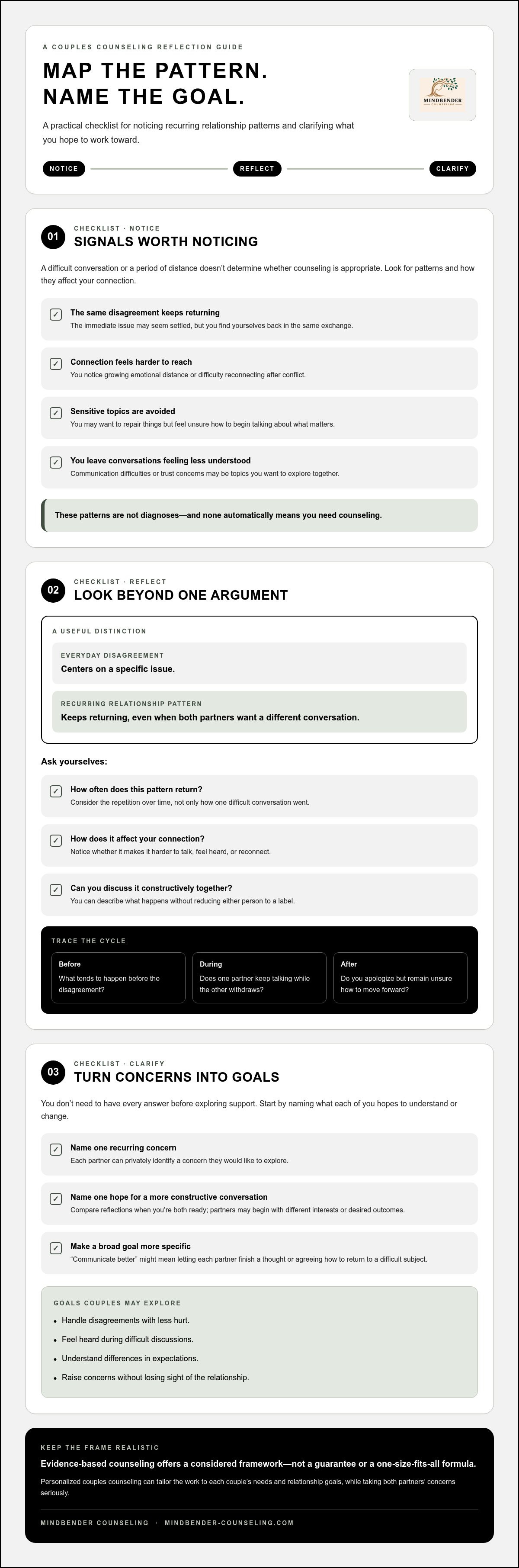
Other signs of strain may be less obvious: growing emotional distance, avoiding sensitive topics, or struggling to reconnect after conflict. You may want to repair things but not know how to begin. Or you may both explain your perspectives and leave feeling less understood. These patterns are not diagnoses, and none automatically means you need counseling. They can be a reason to pause and consider what kind of support might fit.
An everyday disagreement centers on a specific issue; a recurring relationship pattern keeps returning, even when both partners want a different conversation. Noticing that difference can help you look beyond who was right in one argument and pay attention to what happens between you over time.
Which relationship patterns might benefit from structured support?
Unresolved disagreements can resurface because the original concern never felt settled, or because the way you talk about it makes it difficult to hear each other. Communication difficulties, trust concerns, and trouble reconnecting are examples couples may want to explore. One difficult conversation or a period of distance doesn’t determine whether counseling is appropriate. Consider how often the pattern returns, how it affects your connection, and whether you can discuss it constructively together.
As you reflect, notice what tends to happen before, during, and after a disagreement. Does one partner try to keep the conversation going while the other withdraws? Do you apologize but remain unsure how to move forward? These observations help describe the pattern without reducing either person to a label. Couples therapy offers a broader overview of the field and its approaches. Your own needs and relationship goals remain central when deciding what support may fit.
Does a couple need to be in crisis before seeking counseling?
No. Counseling isn’t only for couples close to separating. Some partners seek support while they still feel connected because they want to understand a recurring issue or communicate more intentionally. Exploring couples counseling San Antonio options can be a proactive choice, not a declaration that the relationship is beyond repair.
Counseling can give partners space to examine concerns, understand different perspectives, and clarify what each hopes will change. You might share a goal, such as handling disagreements with less hurt, or realize you first need to discuss what a shared goal would mean. Partners don’t always begin with equal interest or the same desired outcome. Naming that honestly can help define what you want to address, without assuming counseling will lead to reconciliation or a particular decision.
If you’re unsure where to start, each partner can privately identify one recurring concern and one hope for a more constructive conversation. Compare those reflections when you’re both ready. This simple exercise can make a search for couples counseling San Antonio more focused, helping you consider whether structured support matches the pattern you’re facing and the goals you want to explore.
How Evidence-Based Couples Counseling Can Support Relationship Goals
Couples counseling is a structured process for exploring relationship concerns and working toward goals the partners identify. Rather than treating each disagreement as an isolated problem, counseling can help you look at how you respond to one another, what each person needs, and what changes might make conversations more constructive. Goals might include feeling heard during difficult discussions, understanding a difference in expectations, or raising concerns without losing sight of the relationship.
Useful counseling goals start with the concerns shaping your relationship, then turn them into changes you can work toward together. “Communicate better” can become more specific when you define what it looks like in daily life, such as letting each partner finish a thought or agreeing on how to return to a difficult subject.
Evidence-based care draws on research and established knowledge about supporting emotional and relational well-being. It provides a considered framework, not a guarantee or a one-size-fits-all formula. Mindbender Counseling uses evidence-based therapeutic techniques and personalized interventions, tailoring the work to each couple’s needs and relationship goals. This approach can keep sessions focused while making room for your circumstances and priorities.
What happens when partners bring different goals?
Partners can describe their perspectives without turning the conversation into a contest over who is right. One person might want more openness, while the other hopes to reduce tension around a recurring topic. Clarifying what each person means can reveal shared hopes, such as feeling more understood during difficult conversations, alongside differences that need further discussion. Counseling can support that process without making either partner’s perspective the verdict.
Different starting points don’t have to be resolved before counseling can be useful. Naming them can help each person understand what matters to the other and consider whether there is a goal they’re both willing to explore. You might agree on a broad hope, such as having more respectful disagreements, while still differing on what respectful communication looks like. That difference gives the conversation something concrete to work with.
How do evidence-based methods fit a couple’s situation?
Research-informed techniques can guide structured conversations and reflection, but they don’t predict exactly how a particular relationship will change. Personalized interventions connect that structure to your concerns, relationship context, and priorities. As you identify what feels useful and what remains difficult, the work can be adjusted to better fit your needs. Read more about how evidence-based therapy approaches work to understand this broader foundation.
For couples exploring couples counseling San Antonio, look beyond a method’s name. Consider whether the work connects to goals you actually care about. Mindbender Counseling combines evidence-based techniques with support tailored to each couple’s needs for couples in Texas and Arizona. Learn more about personalized couples counseling with Mindbender Counseling. No approach can promise a particular outcome, but a clear focus can give the process direction.
How to Compare Couples Counseling Options Without Focusing Only on Crisis
Choosing relationship support can feel like another decision to negotiate, especially if one partner worries counseling will turn into a search for someone to blame. A constructive process isn’t about declaring a winner. It makes room for both perspectives, examines what happens between you, and helps you identify what you each want to understand or change.
Therapeutic fit depends on the goals you bring and whether the work helps you explore them. Use that as a guide when you compare what matters in the process. Convenience and cost are valid practical considerations, but they don’t tell you whether an approach feels relevant, collaborative, and connected to your concerns.
| What to consider | What a helpful fit can look like |
|---|---|
| Approach | A structured, evidence-based process that supports exploration rather than assigning blame. |
| Goal-setting | Time to identify what each partner hopes to work on and clarify shared aims. |
| Personalization | Therapeutic work shaped around your relationship concerns, context, and priorities. |
| Communication style | Explanations and conversations that feel understandable, respectful, and open to both perspectives. |
This framework can make couples counseling San Antonio options easier to compare without treating urgency as the only measure of fit. A workable schedule can make participation more manageable, while cost can shape what feels realistic. These practical factors matter, but they answer a different question from therapeutic fit. Consider both while keeping your relationship goals in view.
Which questions help couples assess therapeutic fit?
Reflect together on whether the approach makes room for each partner’s perspective, how goals are clarified, and whether the work can address your specific concerns. You don’t have to arrive with matching answers. Mindbender Counseling provides couples counseling using evidence-based therapeutic techniques and personalized interventions tailored to each couple’s needs.
If one partner fears being judged or blamed, name that concern as part of what you hope counseling will address. A collaborative process can explore how each person experiences a conflict without reducing the conversation to who is right. Notice whether the goals feel meaningful to both of you, even if you define progress differently. That reflection offers a more useful basis for fit than choosing solely by a label or convenience.
Is couples counseling only for saving a relationship?
No. Couples may seek support to understand conflict, improve communication, or gain clarity about what they want from the relationship. Partners can begin with different hopes, such as rebuilding connection or understanding persistent differences. Counseling doesn’t promise preservation or agreement; it can offer a structured setting to explore concerns and consider next steps.
If you’re considering support, start by naming what you want the process to help you understand, not only the outcome you expect. If evidence-based, tailored couples counseling aligns with your priorities, explore Mindbender Counseling’s couples counseling.
Planning for Couples Counseling in San Antonio and Texas
A little preparation can make the search feel more manageable. If you’re looking for couples counseling San Antonio, first clarify what you hope to explore together, then consider practical details that affect whether counseling can fit your lives. Mindbender Counseling provides couples counseling in Texas and Arizona. You don’t need a perfect plan or identical levels of readiness to begin thinking through your questions.
- Name the concerns. Each partner can write down one relationship concern they’d like to discuss. Focus on what happens and how it affects you, rather than building a case against each other.
- Identify shared hopes. Consider what you’d like to understand or work toward, even if you don’t yet agree on every detail.
- Prepare questions. Note what you want to know about goals, therapeutic approach, and how sessions are structured.
- Review practical needs. Talk about scheduling, cost, insurance, and whether the format would work for both partners. These are planning considerations, not measures of therapeutic quality.
What should partners discuss before beginning?
Share one concern and one hoped-for change each. Then compare what you wrote. You may find a common aim, or learn that you’re approaching the relationship from different places. Either is useful to understand. Make room for hesitation, too. One partner may feel ready while the other has questions or reservations. You can discuss what support might involve without expecting both people to feel ready at the same time.
Writing questions down can help you stay focused when reviewing counseling information. You might ask how goals are shaped, how each partner’s perspective is included, and what a typical session structure involves. Keep practical questions about cost, insurance, scheduling, and format together so you can consider how counseling fits your circumstances without letting logistics alone define whether the approach feels right.
How can couples account for Texas credentials and access?
Credentials can help you understand a professional’s qualifications and scope of practice. In Texas, the Texas Behavioral Health Executive Council (BHEC) licenses and regulates Licensed Professional Counselors and Licensed Marriage and Family Therapists. Use the Texas Behavioral Health Executive Council as an official resource for applicable licensing information, rather than relying only on directory descriptions.
Access questions may also include whether the session format works for both partners and what practical arrangements support participation. If you’re weighing virtual counseling as a format, what to expect in online couples counseling can help you think through format-related considerations without assuming a particular option is right for you.
Once you’ve named your concerns and questions, you can take a considered next step. Mindbender Counseling provides personalized, evidence-based couples counseling in Arizona and Texas, shaped around each couple’s needs. Explore couples counseling with Mindbender Counseling as you consider support aligned with your relationship goals.
Explore Personalized Couples Counseling With Mindbender Counseling
Choosing support is less about reaching a crisis threshold and more about finding a process that speaks to what’s happening in your relationship. Consider the concerns you want to explore, the goals you hope to work toward, whether the approach is evidence-based, and whether its communication style feels like a good fit. These factors can help turn a general search for couples counseling San Antonio into a clearer sense of what you want from counseling.
Mindbender Counseling provides couples counseling in Arizona and Texas using evidence-based therapeutic techniques and personalized interventions. The work draws on established knowledge while being tailored to each couple’s needs. Your relationship concerns, circumstances, and priorities help shape what you focus on, rather than requiring your experience to fit a predetermined script.
Personalized counseling offers structured support for exploring relationship challenges, not a guarantee of a particular outcome. It creates room to examine what matters to you and work toward relationship goals with thoughtful support. Partners may bring different perspectives, and the process doesn’t assume that every concern has a simple answer or that both people will reach the same conclusion.
What can couples expect from a personalized approach?
Structured sessions provide a setting to examine relationship challenges with attention to the needs each partner brings. You might begin by identifying the concern you most want to understand, then discuss how it affects each of you and what you hope could change. Personalized therapeutic work keeps those specific concerns in view as you explore possible ways forward. The focus is on your relationship and priorities, not on applying a named method or promising a result.
Fit can also become clearer through reflection. After considering the approach together, notice whether the work feels relevant to your concerns and whether you can express what matters to you. You don’t need to know exactly where the process will lead before you begin. One focused question or goal can give the conversation direction.
What is a manageable next step for San Antonio couples?
Start with one question you’d most want counseling to help you explore. It might concern a recurring area of tension, feeling understood, or making decisions together. Share your question with your partner and talk about whether you’re ready to seek support. You can acknowledge uncertainty without forcing either person to feel differently right away.
If you’re looking for couples counseling in San Antonio, keep your next step simple: clarify what you hope to understand, consider whether personalized, evidence-based support fits those goals, and explore the counseling process. Mindbender Counseling offers couples counseling in Arizona and Texas, tailored to each couple’s needs. Explore couples counseling with Mindbender Counseling as a thoughtful first step toward support.
Take One Thoughtful Step Toward Relationship Support
You don’t need to have every concern resolved, or agree on everything, before deciding what you’d like to explore. A useful first step is naming one question you want help thinking through, then making space to hear what your partner hopes to understand. That conversation can bring your next step into clearer focus, even if you’re still deciding whether the timing feels right.
If you’re considering couples counseling San Antonio, look for support that respects your relationship goals and takes both partners’ concerns seriously. Mindbender Counseling provides couples counseling in Arizona and Texas, informed by evidence-based techniques and tailored to each couple. Counseling can offer a structured place to explore concerns, but it can’t guarantee a particular outcome. Beginning can simply be an opportunity to approach your relationship with intention.
Explore couples counseling with Mindbender Counseling when you’re ready to consider a next step. A thoughtful conversation can be a meaningful place to begin.
Frequently Asked Questions
Is couples counseling only for couples who are close to breaking up?
No. Couples can seek counseling before reaching a breaking point, including when a disagreement keeps resurfacing or everyday conversations feel tense. You might want help discussing a major decision, such as a move or a change in family responsibilities, before resentment builds. Counseling can help you explore what’s happening and what you want to address, but it can’t guarantee reconciliation or a specific relationship outcome.
Can couples counseling help when only one partner wants to go?
It may still be worth having an honest conversation about counseling, even if one partner feels unsure. Ask what feels uncomfortable: fear of blame, uncertainty about the process, or concern about what counseling might mean for the relationship. Listen without trying to persuade or pressure. Understanding each person’s hesitation can help you decide whether to explore support together or take more time.
How do couples choose counseling in San Antonio?
Start by writing down the concerns you want to address, then compare approaches based on how they include both partners and connect with your goals. For couples counseling San Antonio searches, separate therapeutic fit from logistics: note your questions about the process, then consider practical factors such as fees, format, and scheduling. For licensing information in Texas, consult the Texas Behavioral Health Executive Council’s official resources.
What happens in couples counseling?
Couples counseling generally involves guided conversations about relationship concerns and what each partner would like to understand or change. For example, you might discuss a decision that has become difficult to make together, with each person explaining how they see the situation. The counselor helps structure the discussion but doesn’t decide which partner is right or promise agreement. The process is shaped by the couple’s needs and priorities.
Can couples counseling help with recurring arguments?
It can give partners a structured way to examine how a recurring argument unfolds. Before a session, consider noting what tends to happen just before the disagreement, what each of you does during it, and how you reconnect afterward. These details make the discussion more specific than simply naming the topic. Counseling can help you explore what you want to change, but it can’t promise conflict will disappear.
How can we check a counselor’s credentials in Texas?
Use the Texas Behavioral Health Executive Council’s official resources to review applicable professional licensing information. Search by the counselor’s name or credential where the council’s tools allow, and make sure you understand what the listed credential represents. If a directory profile differs from the official record, rely on the state resource for licensing details. Credentials can inform your decision, but personal and therapeutic fit matter too.
Does couples counseling guarantee that a relationship will improve?
No. Counseling can’t guarantee that a relationship will improve, that partners will agree, or that they’ll choose to stay together. Instead, consider whether the process is helping you discuss concerns more openly, understand each other’s perspectives, or clarify what you want to do next. Those observations won’t predict a particular outcome, but they can help you and your partner reflect on whether the work feels useful.


