

What if burnout isn’t something you can solve by pushing through or getting one good night’s sleep? If you’re searching for “counseling for burnout Dallas,” you may already notice that exhaustion, low motivation, or difficulty focusing keeps returning, even when you try to rest. Ongoing work strain can affect how you feel and function, and needing support isn’t a personal failure.
It makes sense to wonder whether counseling is the right next step. Individual counseling can offer a collaborative space to understand what’s contributing to your stress, clarify your needs, and explore practical ways to rebuild balance. Mindbender Counseling provides individualized counseling in Texas and Arizona, using evidence-based approaches tailored to your emotional needs and personal goals.
This article can help you recognize when ongoing strain may call for added support, understand what individualized counseling may contribute, and choose a manageable first step toward care. You don’t need to have everything figured out before exploring what might help.
Key Takeaways
- Burnout-related strain can affect your emotions, focus, and work life. Noticing how long it lasts and how it affects daily routines can help you consider whether added support may be useful.
- Counseling for burnout Dallas can provide an individualized space to explore work pressures, personal needs, and meaningful goals.
- Self-care may support your wellbeing, while workplace changes can address external pressures. Each serves a different purpose.
- Before a first conversation, note how stress affects your rest, relationships, work, and daily routines.
- Mindbender Counseling offers evidence-based individual counseling tailored to your emotional needs and mental health goals in Texas and Arizona.
Counseling for Burnout in Dallas: Recognizing When Work Strain Needs Support
Occupational burnout is persistent work-related strain that can leave you depleted, detached from your job, or less confident in your effectiveness. It’s different from a demanding week: ordinary stress may ease when a deadline passes or you get a chance to rest, while burnout-like experiences can continue and affect how you feel about work over time. This description can help you reflect, but it isn’t a diagnosis.
The World Health Organization describes burnout as an occupational phenomenon associated with chronic workplace stress that hasn’t been successfully managed. It isn’t classified as a medical condition in the WHO’s terminology. For more context on understanding occupational burnout, consider how ongoing demands and their effects differ from a temporary period of pressure.
What burnout can feel like in everyday life
Experiences vary. You might finish the workday feeling depleted, struggle to regain energy after time away, or notice growing detachment from tasks that once mattered. Focus may feel less steady, small decisions may seem unusually difficult, or you may doubt the quality of work you used to handle with confidence. These experiences can overlap with other mental health concerns, so they don’t confirm burnout on their own.
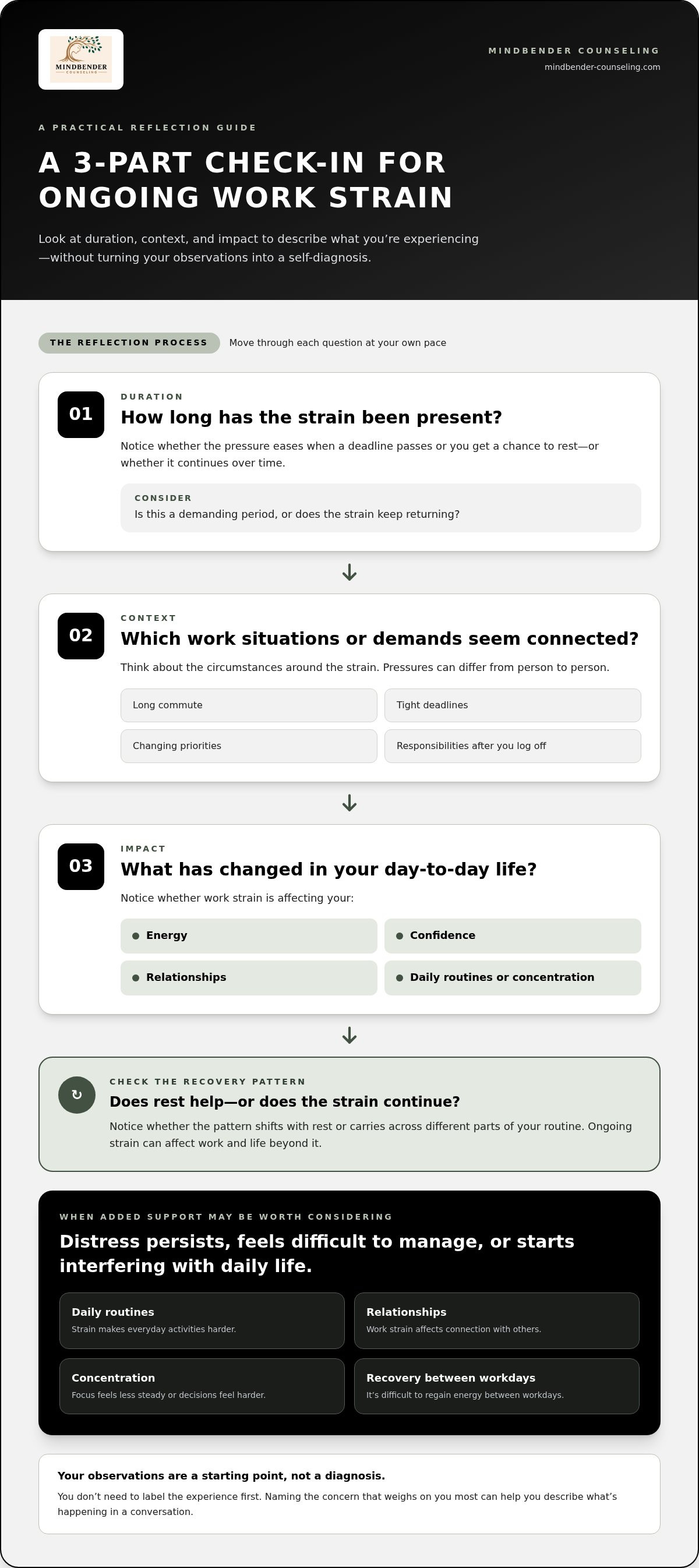
In Dallas, work strain may sit alongside a long commute, tight deadlines, changing priorities, or responsibilities that continue after you log off. The pressures differ from person to person. A busy season can be exhausting without becoming persistent burnout, and feeling tired doesn’t automatically mean something is wrong. Pay attention to whether rest helps and whether the strain continues to affect your work or life outside it.
When should you consider counseling for burnout?
Consider seeking support when distress persists, feels difficult to manage, or begins interfering with daily routines, relationships, concentration, or your ability to recover between workdays. You don’t need to label the experience first. Counseling can give you room to explore what’s happening and what support might fit, without guaranteeing a particular outcome.
It may help to reflect on three things: duration, how long the strain has been present; context, which work situations or demands seem connected to it; and impact, what has changed in your energy, confidence, relationships, or daily life. Note whether the pattern shifts with rest or continues across different parts of your routine. These observations can help you describe your concerns without turning them into a self-diagnosis.
If you’re considering counseling for burnout Dallas, begin with what feels most manageable: name the concern weighing on you most, then bring it into a conversation. Mindbender Counseling provides individual counseling in Texas and Arizona, offering a collaborative space to explore your emotional needs and personal goals. You don’t need certainty about what to call the problem to start understanding what you’re experiencing and consider a path forward.
How Counseling for Burnout Can Help You Rebuild a Sense of Balance
Counseling can help you make sense of work strain without treating it as a problem you must solve alone. It’s collaborative: you and your counselor explore what’s placing pressure on you, how you’re responding, and what support or change might fit your needs. The aim isn’t to follow a universal recovery formula. It’s to understand your situation and identify personally meaningful goals.
That exploration can include both what’s within your influence and what isn’t. A counselor may help you consider possible boundaries or ways to respond to stress while recognizing that workload, workplace expectations, and organizational pressures can also contribute. Responsibility for changing those conditions doesn’t automatically rest on you alone. Gallup’s discussion of workplace burnout and its impact offers broader context for the connection between work environments and employee wellbeing.
What might you explore with a counselor?
You might look at which situations leave you most strained, what happens emotionally when demands build, and whether work is affecting rest or connection with people you care about. You could also consider boundaries: where they feel difficult to maintain, what makes them hard to communicate, and what a realistic adjustment might look like in your circumstances. The conversation can help clarify what matters most to you rather than assume a particular solution.
Ask yourself what “feeling more supported” would mean in practice. Perhaps it means having space to process a difficult work situation, feeling more able to make decisions, or identifying a change you want to discuss at work. You don’t need a complete plan before starting. Your priorities can become clearer as you talk them through.
Why personalized, evidence-based support matters
Evidence-based therapy gives a counselor a grounded way to work with concerns, while personalization keeps the conversation connected to your actual life. The approaches considered should relate to your needs, circumstances, and goals, rather than being applied as a standard script. Your counselor can support reflection, offer relevant approaches, and work with you to decide what feels useful.
Individualized counseling connects the therapeutic process to your personal mental health goals and emotional needs. Two people facing similar work demands may have different pressures, resources, relationships, and definitions of balance. Counseling can help you explore those differences and consider gradual changes at a workable pace. Progress isn’t always linear, and there’s no fixed timeline or guaranteed result. Even small shifts in understanding may help you decide what to try next.
If you’re considering counseling for burnout Dallas, individual counseling can offer a place to discuss your concerns and goals in a personalized setting. Read more about individual counseling, or learn about individual counseling at Mindbender Counseling.
Burnout Counseling, Self-Care, and Workplace Changes: Understanding the Difference
Burnout can call for support on more than one level. Personal recovery practices may help you care for your wellbeing, counseling can help you understand your experience and consider your needs, and workplace changes may address pressures tied to the job itself. These options can complement one another, but they serve different purposes. Counseling for burnout Dallas can be one part of a broader response, not a replacement for changes an employer may need to consider.
What can self-care support, and what may remain unchanged?
Rest, a steadier daily routine, enjoyable activities, and connection with someone you trust can create space to recover and notice how you’re feeling. These practices may support everyday wellbeing, especially when work has crowded out time for basic needs or relationships. They aren’t a test of discipline, and they won’t necessarily remove the source of ongoing strain.
If workload, staffing, unclear expectations, or pressure to remain available are contributing to your distress, a bedtime routine alone may not change those conditions. Notice whether your current supports feel sufficient: do they help you feel more restored, or does work pressure quickly overwhelm any relief? That reflection can help you identify whether you need additional support or a conversation about your circumstances at work.
How counseling can complement practical workplace steps
Counseling offers a place to reflect on what you need and which options feel realistic. You might explore how to set a boundary, prepare to raise a concern, or decide what matters most before a workplace conversation. A counselor can help you think through your priorities, though they can’t promise how an employer will respond or determine which workplace decision is right for you.
Practical steps may be personal, organizational, or both. Depending on your circumstances, you might consider clarifying priorities with a manager, discussing workload, or learning what workplace support is available. These choices belong to you, and they may not be possible or appropriate in every situation. Counseling can help you weigh potential next steps without suggesting that workplace pressure is solely your responsibility to fix.
Think of the three forms of support by their purpose:
- Self-care supports everyday recovery and wellbeing.
- Counseling helps you explore your experience, emotional needs, and possible responses.
- Workplace changes address job conditions and expectations that may be contributing to strain.
You don’t have to choose only one. A supportive routine may help you feel steadier while counseling helps you clarify what needs attention. Workplace conversations may address conditions beyond your control alone. For related context on counseling for work stress, consider how support can make room to reflect on your needs while you decide which practical steps fit your circumstances.
Choosing a Next Step: Preparing to Seek Burnout Counseling in Dallas
Taking a first step toward counseling doesn’t require a complete explanation of what’s wrong. You don’t need a formal diagnosis or the perfect words for your experience. A few notes about what has changed, what feels hardest, and what you hope might improve can give you a place to begin. If you’re considering counseling for burnout Dallas, preparation can be light and flexible, not another task to get right.
What to reflect on before reaching out
Start with what feels most difficult right now. Notice whether strain is affecting your work, relationships, rest, or everyday routines, and consider when you first noticed a change. You might also note recurring pressures and what already helps, even a little. If your thoughts feel unclear, that’s a valid starting point too. You can bring questions and uncertainty into the conversation rather than resolving them first.
A simple four-step outline can help you move forward at your own pace:
- Name your concerns. Jot down what’s been weighing on you and how it shows up in your work, relationships, rest, or daily routines.
- Identify a goal. Consider what you’d like support with, such as understanding your reactions or finding a steadier way to approach a recurring challenge.
- Choose questions. Write down anything you’d like to understand about the counselor’s approach, how goals are shaped, or how you’ll discuss progress.
- Take one manageable action. Decide on a small next step, such as reaching out to begin a conversation. You can pause and take the process one step at a time.
Questions that can make a counseling conversation feel clearer
You’re allowed to ask questions and share what matters to you. The conversation can help you understand how counseling may fit your concerns, without requiring you to arrive with a fixed plan. Consider asking how goals are developed, how the counselor’s approach relates to your circumstances, and how you can review whether the work feels relevant as it continues.
- How will we shape counseling goals around the concerns I bring?
- What approaches might relate to my circumstances, and how do we decide what to try?
- How can we talk about progress if my needs or priorities change?
Your first conversation doesn’t need to settle everything. It can help you describe what you’re experiencing and explore whether individualized support feels like a useful next step. If you’re ready to begin, connect with Mindbender Counseling to explore support shaped around your personal needs and goals.
Mindbender Counseling: Burnout Support for Dallas Readers
If work strain is affecting how you feel and function, you deserve space to talk through your experience without pressure to arrive with a clear label or ready-made plan. Mindbender Counseling provides individualized counseling in Texas and Arizona, using evidence-based approaches with attention to your emotional needs and personal mental health goals. For Dallas readers considering counseling for burnout, the work begins with understanding what matters to you and what you’d like support to address.
What personalized counseling can make room to explore
Burnout concerns can involve more than a busy schedule. You may want to understand how ongoing pressures are shaping your mood, motivation, relationships, or sense of direction. Counseling can provide a supportive setting to examine those concerns, notice what feels most important, and reflect on possible next steps in a way that respects your circumstances.
There isn’t one counseling formula for everyone. Your priorities may differ from someone else’s, even if your work situations seem similar. An individualized approach makes room for your specific concerns and goals rather than treating your experience as a standard program to complete. Together, you can explore what feels relevant and consider which evidence-based approaches may support the work you want to do. The process is collaborative, and the focus can adapt as your needs become clearer.
That can also mean taking time to define what support would look like for you. Perhaps you want to make sense of what has changed, consider how to respond to a recurring challenge, or reconnect with goals that have been pushed aside. You don’t need to know which direction to take before beginning. Your needs and priorities can guide the conversation as it unfolds.
Taking the next step with Mindbender Counseling
Exploring counseling doesn’t commit you to having every answer. It gives you an opportunity to share what you’re experiencing and begin considering what kind of support feels useful. Counseling can help you reflect and work toward personal goals, but it doesn’t promise a particular outcome or timeline. The pace and focus remain connected to your individual needs.
If you’re weighing counseling for burnout Dallas, take one manageable step: consider what you’d most like to feel understood or supported around. You can bring that thought, even if it’s only a starting point, into a conversation. Mindbender Counseling’s individualized, evidence-based approach centers your emotional needs and personal goals, not a one-size-fits-all plan.
Read more about private therapy as you consider what support could look like for you.
Take One Steady Step Toward More Balance
You don’t have to solve every part of work or life before seeking support. A useful next step can be as small as naming what you want to feel different, then giving yourself room to explore it with care. If you’re considering counseling for burnout Dallas, let your own needs guide the pace and direction of that decision.
At Mindbender Counseling, individual counseling is shaped around personal mental health goals and emotional needs, with evidence-based approaches selected to fit the person rather than a preset formula. That creates room to begin with what’s present for you now and consider what support could look like over time. You don’t need to have the whole path mapped out before you start.
Explore individual counseling with Mindbender Counseling and take one manageable step toward support. Your next move can begin with a conversation.
Frequently Asked Questions
Can counseling help with burnout?
Counseling can help you explore how work pressures are affecting you and consider responses that fit your circumstances. In individual counseling, you might discuss a recurring source of strain, how it shapes your choices, or what you want to prioritize next. If you’re looking into counseling for burnout Dallas, an initial conversation can help clarify your concerns and whether personalized, evidence-based support feels useful. It can’t guarantee a particular result.
How do I know if I am experiencing burnout or ordinary work stress?
You can’t determine that from one difficult day, and this FAQ can’t diagnose you. Consider whether the strain eases after a deadline or time away, or whether you remain depleted, detached, or less confident even when immediate demands have passed. Also notice whether your response is changing, such as needing more effort to complete familiar tasks or withdrawing from coworkers. A counselor can help you explore these patterns alongside other possible concerns.
What happens in counseling for burnout?
Early conversations often focus on what brings you in, relevant personal context, and what you’d like to understand or change. You might talk about a recent work situation, your reactions to it, and what you’ve already tried. A counselor can work with you to identify priorities and discuss approaches that fit your needs. You can ask questions, share when something doesn’t feel relevant, and revisit goals as your concerns shift.
How long does counseling for burnout take?
There isn’t one set duration that applies to everyone. The length and pace of counseling can depend on your concerns, priorities, circumstances, and what you find helpful as you go. You might discuss your goals with your counselor and review them over time, including whether the focus still fits. Rather than treating a specific number of sessions as a promise, think of counseling as an ongoing conversation about what support makes sense for you.
Can counseling help if my workplace is the main source of burnout?
Yes. Counseling can support you in thinking through a difficult work situation, identifying what you need, and preparing for choices that are within your control. For instance, you might explore how to raise a workload concern or weigh the personal implications of a job change. Counseling can’t ensure that an employer will respond a certain way, and it doesn’t replace organizational responsibility for working conditions. Your options depend on your circumstances.
Is online counseling available for people in Dallas?
For Dallas residents, individual counseling can provide a space to discuss work strain, emotional needs, and personal mental health goals. Mindbender Counseling provides individual counseling in Texas using evidence-based approaches tailored to each person’s needs. When considering counseling, think about what setting would help you speak openly and focus on the conversation.
What should I do if burnout symptoms feel overwhelming or urgent?
If you may hurt yourself or someone else, or you’re in immediate danger, call 911 or go to the nearest emergency department. In the United States, call or text 988 to reach the Suicide & Crisis Lifeline for urgent emotional support. If you’re overwhelmed but not in immediate danger, tell someone you trust and contact a mental health professional. Counseling appointments aren’t a substitute for emergency help when safety is at risk.


