

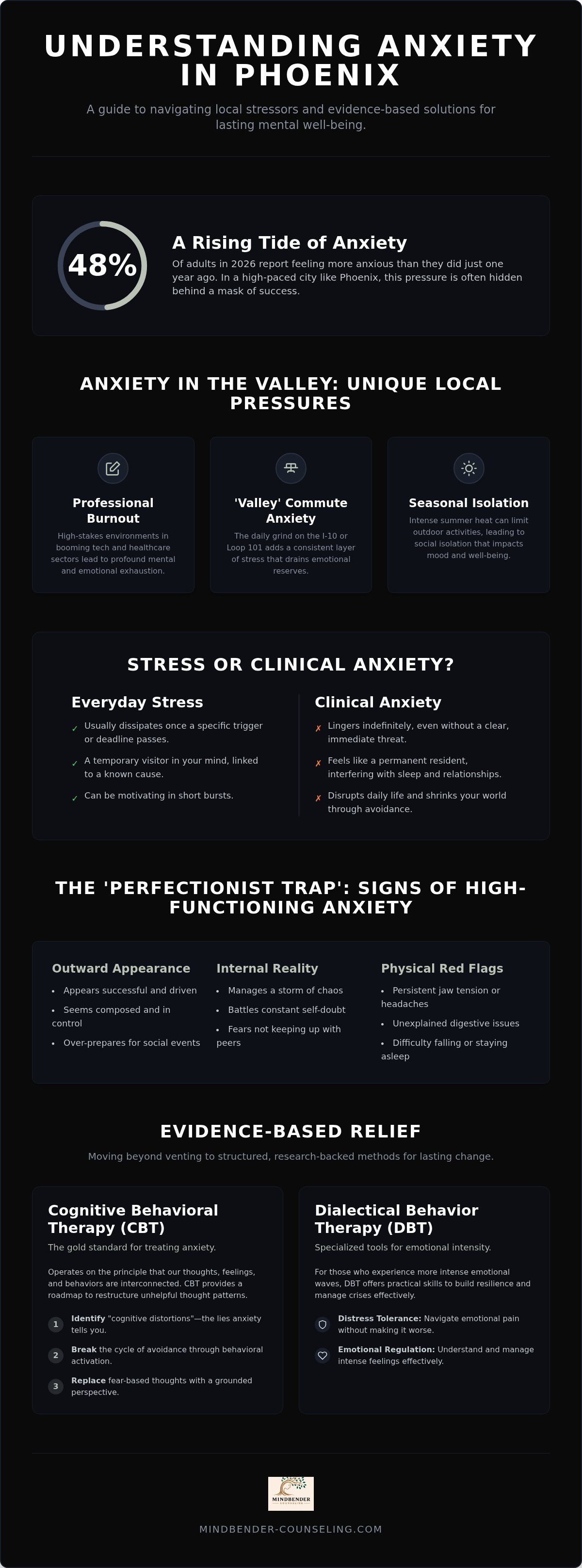
Did you know that 48% of adults in 2026 report feeling more anxious than they did just one year ago? In a fast-paced city like Phoenix, this tension often hides behind a mask of high-functioning success, even as the physical toll of stress begins to feel unsustainable. You might feel like you're constantly performing, yet beneath the surface, the weight of worry never truly lifts.
It's natural to feel overwhelmed by clinical jargon or to worry that seeking help will lead to a series of endless venting sessions without tangible results. You're looking for progress, not just a place to talk. Finding the right anxiety therapist in Phoenix means choosing a compassionate guide who uses structured, research-backed methods to help you find your footing again. This article will help you discover how to identify the right professional and leverage evidence-based strategies to reclaim your emotional balance. We will look at how to move past the confusion of different therapy types, what to expect from modern interventions, and how to build a solid internal foundation for lasting peace.
Key Takeaways
- Identify how specific local stressors, such as professional burnout and commuting, impact your mental well-being to gain clarity on your current needs.
- Understand the value of evidence-based therapy and why research-backed methods like CBT are effective for managing high-functioning anxiety.
- Learn how to select an anxiety therapist Phoenix who fosters a strong therapeutic alliance, a key predictor of successful long-term outcomes.
- Demystify the intake process and learn practical ways to organize your thoughts before your first session, whether in-person or via telehealth.
- Discover how a combination of individual and couples counseling can bridge the gap between personal healing and relationship health.
Understanding the Landscape of Anxiety in Phoenix
Anxiety isn't just a feeling of being worried; it's your body's survival system misfiring. It's a complex physiological and psychological response to a perceived threat, often triggered when your internal alarm bell gets stuck in the 'on' position. If you find yourself constantly on edge, connecting with an anxiety therapist Phoenix can provide the tools needed to reset that alarm and regain control of your daily life.
In the Valley, this response is often fueled by specific local pressures. Professionals in our booming tech and healthcare sectors frequently face high-stakes environments that lead to profound burnout. Additionally, the daily grind of the I-10 or Loop 101 commute adds a layer of 'Valley' commute anxiety that many residents accept as a normal part of life, even though it consistently drains emotional reserves. Take a moment to reflect on whether your stress feels like a temporary visitor or a permanent resident in your mind.
Distinguishing between ordinary stress and a clinical disorder is a vital first step. While stress usually dissipates once a specific deadline passes, clinical anxiety lingers, interfering with your sleep, your relationships, and your ability to enjoy the weekend. Choosing to consult a professional anxiety therapist Phoenix is a proactive investment in your long-term health. It allows you to utilize Evidence-Based Approaches for Lasting Anxiety Relief, moving you from a state of constant reaction to one of internal stability.
Common Signs You’re Experiencing High-Functioning Anxiety
Many people in Phoenix and Scottsdale fall into the 'perfectionist trap.' On the outside, you appear successful, driven, and composed. Internally, however, you're managing a storm of chaos and self-doubt. You might ignore physical red flags like persistent jaw tension, digestive issues, or difficulty staying asleep. In the local professional networking scene, this often manifests as social anxiety masked by intense over-preparation or a quiet fear that you aren't doing enough to keep up with your peers.
Why Local Context Matters in Therapy
The Arizona climate and lifestyle create a unique backdrop for your emotional health. The intense summer heat often leads to a form of seasonal isolation that can impact your mood and activity levels. A therapist who understands the specific culture of the Valley can help you navigate these work-life balance challenges more effectively. Local context ensures your strategies are practical for life in the desert, providing a sturdy anchor for your personal growth journey as you seek to restore balance.
Evidence-Based Approaches for Lasting Anxiety Relief
Effective relief from persistent worry isn't found in vague advice; it's found in the rigorous application of methods proven to work. When you partner with an anxiety therapist Phoenix, you're engaging in evidence-based therapy. This approach moves beyond simple venting and utilizes protocols that clinical research has shown to be effective for Understanding the Landscape of Anxiety. By focusing on measurable progress, you can begin to see a tangible shift in how you navigate your daily challenges.
The core philosophy of this work is that healing should be predictable and structured. It's about providing you with a roadmap that has been tested and refined by experts. This scientific foundation offers a sense of safety, knowing that the steps you're taking are grounded in what actually helps the human brain find its way back to calm. You aren't just talking about your problems; you're actively learning the mechanics of how to solve them.
The Mechanism of Cognitive Behavioral Therapy (CBT)
Cognitive Behavioral Therapy (CBT) stands as the gold standard for treating anxiety disorders. It operates on the principle that our thoughts, feelings, and behaviors are deeply interconnected. In sessions, you'll learn to identify "cognitive distortions," which are essentially the lies anxiety tells you to keep you in a state of fear. Through behavioral activation, you'll break the cycle of avoidance that often shrinks your world. CBT is a collaborative process designed to restructure unhelpful thought patterns and replace them with a more grounded perspective.
For those who experience more intense emotional waves, Dialectical Behavior Therapy (DBT) offers specialized tools for distress tolerance and emotional regulation. This integration of skills ensures that individual counseling for anxiety creates a foundation for long-term resilience. You aren't just managing symptoms; you're building a sturdier version of yourself. If you're ready to explore these tools, you might consider how personalized support can help you restore balance to your life.
Integrating Individual and Relational Healing
Anxiety rarely stays confined to one person. It often ripples outward, manifesting as withdrawal from a partner or heightened conflict over minor issues. A therapist who understands both individual and couples dynamics can help you see how your internal struggle affects your closest bonds. This is where therapy behavioral therapy bridges these two worlds, allowing you to heal personally while simultaneously strengthening your relationship. By addressing the individual roots of anxiety and their relational impact, you create a more comprehensive path toward stability.
Choosing the Right Anxiety Therapist in Phoenix
Finding the right support is a deeply personal decision that goes beyond simply checking an insurance directory. It's about finding a guide who understands the unique intersection of your biology and your environment. When you begin your search for an anxiety therapist Phoenix, you're looking for more than just a credential on a wall; you're seeking a "therapeutic alliance." This term describes the collaborative bond between you and your provider. Clinical research indicates that this alliance predicts approximately 30% of therapy's success, making the quality of your connection one of the most significant factors in your healing journey.
As you navigate your options, you'll encounter different professional titles. Licensed Professional Counselors (LPC) often focus on clinical mental health and practical coping strategies. Psychologists (PhD or PsyD) typically have extensive training in research and psychological testing. Licensed Clinical Social Workers (LCSW) often view mental health through the lens of social systems and community support. While all are qualified to provide care, the key is finding a professional who specializes specifically in anxiety disorders. A specialist possesses a deeper mastery of the evidence-based tools required to dismantle chronic worry, ensuring your care is focused rather than general.
Your journey toward stability requires personalized therapeutic interventions. No two people experience anxiety the same way, especially in a city as diverse as Phoenix. Whether you're dealing with the pressures of a Scottsdale corporate office or the challenges of a growing family in the East Valley, your treatment plan should reflect your specific reality. A structured, research-backed approach provides the anchor, but personalization provides the movement.
Questions to Ask During a Consultation
Many providers offer a brief initial call. Use this time to move past the surface and gauge if their approach aligns with your needs. Consider asking these specific questions:
- "What is your specific experience treating my type of anxiety?" General anxiety requires different tools than panic disorder or social anxiety.
- "How do you measure progress in our sessions?" You deserve to know how you'll track your growth over time.
- "How do you incorporate evidence-based methods into your practice?" This ensures the techniques used are rooted in proven science rather than just "venting."
Red Flags vs. Green Flags in an Anxiety Therapist
Knowing what to look for can help you feel more confident in your choice. A "Green Flag" is a therapist who presents a clear, structured plan for your first 90 days. This indicates they have a roadmap for your recovery. Conversely, a "Red Flag" is a "one-size-fits-all" approach that ignores your unique Phoenix lifestyle. If a therapist doesn't seem curious about how your environment impacts your stress, they may miss crucial triggers. Finally, look for empathy paired with professional, authoritative guidance. You need someone who can sit with you in your pain while also showing you the way out.
Your First Session: What to Expect and How to Prepare
Walking into a new space or clicking a link for your first appointment often triggers a fresh wave of the very worry you're seeking to resolve. It's helpful to remember that the initial intake session is primarily about fit. While you will share some background, your anxiety therapist Phoenix is mainly looking to see how you work together. Think of it as a mutual evaluation of the therapeutic alliance. You are checking to see if their style feels supportive and if their plan for your progress resonates with your personal goals.
A common worry is that you'll spend hours dissecting your childhood before finding any relief. While your past provides important context, modern evidence-based therapy focuses heavily on your present experience. We look at what is happening in your life right now to give you immediate tools for stability. We also shift the focus from the impossible goal of "stopping anxiety" to the much more empowering goal of building resilience. Anxiety is a natural human response; the objective is to ensure it no longer runs your life. By building internal strength, you become the sturdy anchor in your own storm.
Preparing Your Anxiety 'History'
To make the most of your time, spend a few minutes organizing your thoughts before your session. Note your primary triggers and physical symptoms from the last two weeks, such as persistent jaw tension, digestive issues, or racing thoughts during your commute. List what you've tried before, whether it was specific breathing techniques or simply avoiding social events. Identifying which areas of your life are most affected, like your performance at a Phoenix tech firm or your connection with your partner, helps your therapist tailor their approach to your specific needs.
The Logistics of Modern Therapy in 2026
In 2026, you have the flexibility to choose between in-person offices in Phoenix or the convenience of telehealth. If you choose virtual sessions, ensure you have a quiet, safe space where you won't be interrupted. This privacy is essential for the deep work of therapy. Finally, be prepared for what many call a "vulnerability hangover." It’s normal to feel emotionally drained after a deep session. Give yourself permission to rest and process what you’ve learned as you transition back into your daily routine. If you're ready to take this first step, you can schedule an initial consultation to begin your journey toward emotional resilience.
Mindbender Counseling: A Compassionate Path to Stability
At Mindbender Counseling, we believe that effective healing requires a delicate balance of professional expertise and deep compassion. When you seek an anxiety therapist Phoenix, you aren't just looking for someone to listen; you're looking for a partner who can provide a steady, research-backed framework for your growth. Our philosophy is rooted in the idea that you deserve more than generic advice. You deserve a personalized strategy that respects your intelligence and your unique history.
We recognize that anxiety doesn't exist in a vacuum. It often bridges the gap between your internal world and your closest relationships. This is why we emphasize both Individual and Couples Counseling as a dual-path to wellness. By addressing how worry impacts both your personal peace and your relational health, we help you build a more comprehensive foundation for stability. We act as your compassionate guide, providing the structured support you need to move from a state of constant reaction to one of calm assurance. In a world that often feels unpredictable, therapy serves as a sturdy anchor for your emotional well-being.
Personalized Interventions for Arizona Residents
Our approach is specifically designed to address the unique stressors found within the Phoenix metropolitan area. From the high-pressure environments of the local tech and healthcare sectors to the daily grind of the Valley commute, we understand the context of your life. We use active voice and direct address in our sessions to ensure you feel seen and spoken to personally. This isn't a clinical exercise; it's a therapeutic partnership. Our commitment is to move at a pace that allows you to process information thoroughly. We ensure you feel supported rather than rushed, mirroring the patient and methodical nature of the therapeutic process.
Taking the Next Step Toward Balance
The journey from feeling overwhelmed to feeling empowered is a profound transformation. It begins with the decision to view therapy as a catalyst for your personal evolution. By choosing a structured and evidence-based path, you're taking a proactive step toward reclaiming your emotional balance and restoring your internal strength. We've created a low-friction path to help you begin this process without added stress. You don't have to navigate this journey alone; you have access to a professional facilitator who treats your progress with fresh attention and care. Your path to a more stable, resilient life is ready when you are.
Schedule your consultation with a Mindbender therapist today and take the first step toward building a solid internal foundation for your future.
Reclaiming Your Internal Balance
Finding a path through persistent worry requires more than just endurance; it requires the right tools and a supportive partnership. We've explored how understanding the unique stressors of the Valley and prioritizing evidence-based methods can transform your daily experience. By focusing on the therapeutic alliance and moving toward resilience rather than just symptom management, you can build a foundation that withstands the pressures of professional and personal life. Whether you're navigating high-stakes career demands or seeking to strengthen your closest bonds, working with a specialized anxiety therapist Phoenix offers a structured way forward.
At Mindbender Counseling, we provide professional, compassionate guidance tailored to the needs of modern professionals. Our dual specialization in individual and couples counseling ensures that your healing is comprehensive and lasting. You don't have to carry the weight of anxiety alone. Begin your journey toward emotional resilience with Mindbender Counseling today. You deserve to feel empowered, centered, and ready for whatever comes next.
Frequently Asked Questions
How do I know if I need an anxiety therapist or just a life coach?
An anxiety therapist is necessary when your symptoms interfere with daily functioning or cause clinical distress, whereas a life coach focuses on achieving specific future goals. Therapy involves a deeper exploration of behavioral patterns and physiological responses to help you build a solid internal foundation. If you find that worry is impacting your health or sleep, professional therapeutic support is the most effective path forward.
Is online anxiety therapy as effective as in-person sessions in Phoenix?
Current research confirms that telehealth is just as effective as in-person sessions for treating most anxiety concerns. Virtual therapy offers the flexibility to receive high-quality care from the comfort of your home, reducing the stress of a Valley commute. This ensures that you can maintain a consistent schedule, which is vital for long-term progress and the restoration of emotional balance.
How long does it typically take to see results from evidence-based anxiety therapy?
Most individuals begin to experience a noticeable shift in their symptoms within 8 to 12 weeks of starting evidence-based protocols. While the timeline for healing is personal, your anxiety therapist Phoenix will work with you to set measurable milestones so you can track your growth. Consistent engagement with your treatment plan allows you to see the tangible benefits of your hard work and internal progress.
Can an anxiety therapist help with my relationship problems as well?
Yes, anxiety often manifests as relationship tension, and addressing it can significantly improve your connection with your partner. We offer both individual and couples counseling to help you navigate these relational dynamics with fresh attention and care. This dual approach ensures that your personal growth and your relationship health move forward in harmony, creating a more stable environment for your shared life.
What happens if I don't feel a 'click' with my therapist after the first session?
It is completely normal to prioritize the connection with your provider, as the therapeutic alliance is a major predictor of your success. If you don't feel a natural sense of safety after the first meeting, we encourage you to share your feedback openly. A compassionate professional will treat this with care and can even assist you in finding a better match for your specific personality and needs.
Do you offer specialized support for professional burnout and workplace anxiety?
We provide targeted support for professionals in the Valley who are navigating the unique pressures of burnout and workplace anxiety. Our interventions are tailored to those in demanding fields like tech and healthcare, where high-functioning stress is often expected. We help you develop practical strategies to manage these professional demands without sacrificing your mental well-being or your long-term career stability.
How much does a typical anxiety therapy session in Phoenix cost?
In the Phoenix market, session costs generally range from $100 to $350 depending on the therapist's level of experience and specialization. Many providers operate on a private pay basis to ensure higher levels of personalized care and clinical privacy. It is helpful to verify specific rates and insurance compatibility during your initial consultation with an anxiety therapist Phoenix to ensure the path forward feels secure.
Can therapy help with physical symptoms of anxiety like chest pain or insomnia?
Evidence-based therapy is highly effective for reducing physical symptoms like insomnia, digestive issues, and muscle tension. By learning to regulate your nervous system, you can decrease the intensity of these bodily responses and improve your physical health. This mind-body approach helps you regain a sense of physical calm while you work on building your emotional resilience and long-term stability.


