

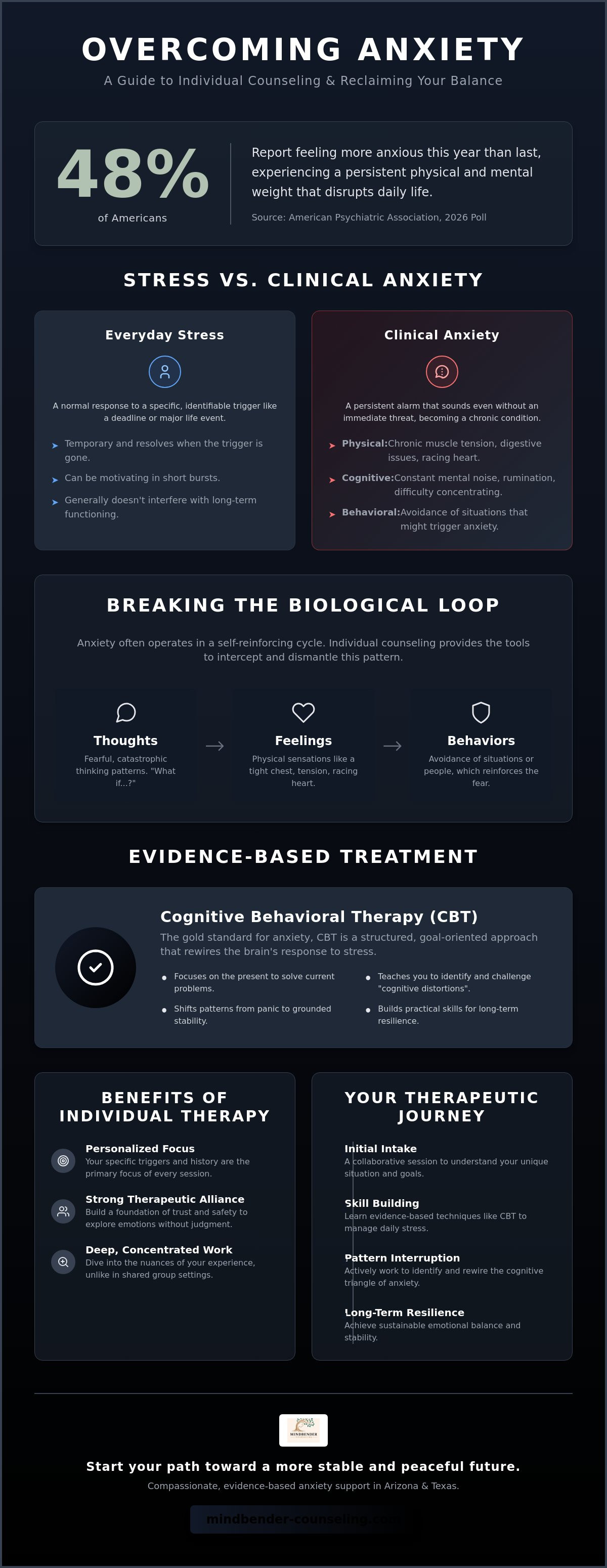
Nearly half of Americans, roughly 48 percent, report feeling more anxious this year than they did just twelve months ago, according to a 2026 poll by the American Psychiatric Association. If you're part of this growing number, you likely know that anxiety isn't just a temporary worry; it's a persistent physical weight. You might feel a constant tightness in your chest or a racing mind that refuses to quiet down, even when you're exhausted. Seeking individual counseling for anxiety often feels daunting because you don't want to sit through cold, clinical sessions that feel like a waste of time. You're looking for a path that feels personal and effective.
We believe that anxiety isn't a flaw to be cured, but a biological loop that we can systematically dismantle together. You can reclaim your emotional balance and quiet the mental noise through research-backed therapeutic techniques. This guide explores how personalized individual counseling provides the practical tools you need to manage daily stress, identify your specific triggers, and build long-term resilience. Whether you're in Arizona or Texas, you'll discover how a tailored approach to evidence-based therapy can help you move toward a more stable and peaceful future.
Key Takeaways
- Learn to distinguish between everyday stress and clinical anxiety patterns through a collaborative, professional partnership.
- Discover how evidence-based methods like CBT and DBT are utilized in individual counseling for anxiety to rewire your body's stress response.
- Understand why clinical therapeutic work provides a deeper, more sustainable foundation for healing than self-help tools or casual support.
- Gain a clear understanding of the therapeutic journey, from your initial intake session to achieving long-term emotional resilience.
- Explore how a personalized, compassionate approach to therapy helps individuals across Arizona and Texas reclaim their sense of balance.
Understanding the Cycle: What is Individual Counseling for Anxiety?
Individual counseling for anxiety is a collaborative, one-on-one relationship designed to help you navigate the complexities of your internal world. While many people view therapy as simply "venting," our approach at Mindbender is structured and goal-oriented. We move beyond the traditional model of open-ended talk therapy to focus on specific outcomes that help you regain control. You aren't just a patient in a clinical setting; you're an active partner in a process that transforms how you relate to your thoughts and fears.
To understand why this works, we must look at the cycle of an Anxiety Disorder. This cycle often involves a "Cognitive Triangle" where your thoughts, feelings, and behaviors are inextricably linked. For example, a fearful thought leads to a physical sensation of tension, which then leads to avoidant behavior. This loop reinforces the anxiety, making it feel inescapable. Individual counseling for anxiety provides the space to identify these patterns in real-time. This awareness allows you to intercept the cycle before it spirals, creating a safe, non-judgmental environment for emotional exploration.
The Difference Between Normal Stress and Anxiety Disorders
Everyone feels stress when facing a deadline or a major life change. However, clinical anxiety is different. It's a persistent alarm that sounds even when there's no immediate threat. Physical markers often include chronic muscle tension, digestive issues, or a heart that races for no clear reason. Cognitively, it manifests as mental noise; a constant stream of rumination that interferes with your ability to make decisions or perform at your best professionally. You've reached a tipping point when standard self-care habits like getting more sleep or exercise no longer quiet the noise. This is when professional support becomes an essential tool for restoration.
Why a One-on-One Approach is Most Effective
A personalized approach ensures that your specific triggers and history are the primary focus of every session. Unlike group settings where the conversation is shared, individual therapy allows for a deep, concentrated dive into the nuances of your experience. This one-on-one environment fosters a strong therapeutic alliance. This alliance is the foundation of trust and safety that allows you to explore difficult emotions without judgment. By focusing solely on your journey, we can adapt evidence-based techniques to fit your lifestyle, ensuring that the work we do together translates into practical, long-term stability in your daily life.
Evidence-Based Approaches: How CBT and DBT Rewire the Anxiety Response
Rewiring the brain is a biological reality, not just a metaphor. Through the lens of neuroplasticity, we know that the brain's pathways are malleable and can be reshaped through consistent, intentional practice. When you engage in individual counseling for anxiety, you aren't just discussing your fears; you're actively training your nervous system to respond differently to stress. This process directly targets the "Cognitive Triangle," a framework where your thoughts, feelings, and behaviors constantly influence one another. By intervening at any point in this triangle, we can shift the entire emotional experience from one of panic to one of grounded stability.
The science behind these changes is well-documented. Research shows that structured therapeutic interventions can actually alter brain activity in regions associated with fear and emotional regulation. This is why individual counseling for anxiety is so effective; it provides a laboratory for you to test new ways of thinking and being in a controlled, supportive environment. Over time, these new patterns become your default response, replacing the old, automatic loops of worry and tension.
Cognitive Behavioral Therapy (CBT) for Anxiety
Widely recognized as the gold standard for treating anxiety disorders, Cognitive Behavioral Therapy focuses on the present rather than the distant past. It teaches you to identify "cognitive distortions," which are inaccurate or exaggerated thought patterns that fuel anxiety. For instance, you might find yourself catastrophizing a minor social interaction, assuming it will lead to total rejection. Through CBT, you learn to challenge these thoughts with objective evidence. We also utilize "exposure" techniques, where you gradually and safely face situations you've been avoiding. This process reduces the power of phobias or social fears by teaching your brain that you are safe. CBT serves as a powerful tool for restructuring your internal narrative to reflect resilience rather than constant threat.
DBT and Mindfulness: Building Emotional Resilience
While CBT focuses on the logic of thoughts, Dialectical Behavior Therapy (DBT) prioritizes emotional regulation and distress tolerance. This is particularly effective for managing the overwhelming physical surge of a panic attack. DBT teaches you how to stay present in the moment using mindfulness, allowing you to observe your anxiety without being consumed by it. Learning how to practice self-care is a vital part of this journey, as it builds the foundational strength needed to apply these clinical skills. A core tenet of this approach is "radical acceptance," which involves acknowledging your current reality without judgment. This reduces the shame often associated with anxiety, allowing you to move forward with quiet confidence. If you're ready to see how these methods apply to your specific situation, you might consider how personalized individual counseling can facilitate your growth.
The Benefits of Individual Therapy vs. Generic Support Systems
Many people begin their journey toward mental wellness by downloading a self-help app or reaching out to a trusted friend. While these resources offer temporary relief, they rarely address the structural roots of a chronic condition. Choosing individual counseling for anxiety means moving beyond surface-level comfort into a space of professional clinical expertise. Unlike a casual conversation, therapy is a regulated, confidential process designed to build a solid internal foundation. You're investing in a partnership that prioritizes your long-term emotional resilience over a quick fix.
One of the most significant advantages of a clinical practice is the guarantee of privacy. When you speak with a licensed professional, you don't have to worry about the social repercussions of your vulnerability. This safety allows you to be completely honest about your experiences, which is the first step toward genuine change. Over time, the return on this investment is clear; you gain the ability to manage stress independently, reducing the need for constant external reassurance.
Individual Counseling vs. Self-Guided Recovery
Self-guided recovery often falls victim to "avoidance behaviors." It's natural to shy away from the thoughts or memories that trigger the most discomfort. A professional therapist acts as a steady mirror, gently identifying the blind spots you might overlook on your own. This external perspective is vital for growth. Additionally, the accountability inherent in scheduled sessions ensures you stay committed to the work, even when the process feels challenging. You aren't just reading about healing; you're actively practicing it with a guide who ensures you don't stall out.
Personalized Care: Moving Beyond "One-Size-Fits-All"
Generic advice often fails because it doesn't account for your specific life stage or unique environmental stressors. Whether you're a professional in Phoenix or a parent in Austin, your anxiety has its own flavor. Individual counseling for anxiety allows for the precise tailoring of techniques to fit your reality. You can prepare for these focused sessions by reviewing an individual therapy sessions checklist to maximize your progress. Today's therapeutic landscape also offers incredible flexibility. With telehealth options available across Arizona and Texas, you can access high-quality, evidence-based care from the comfort of your own home, ensuring that your path to balance fits seamlessly into your life.
Navigating the Path: What to Expect in Your Anxiety Counseling Journey
Entering individual counseling for anxiety isn't about finding a magic switch; it's about embarking on a methodical journey toward stability. Many people worry that the process will feel clinical or cold. In reality, your journey is a structured evolution that prioritizes your comfort while pushing for meaningful change. We move from the immediate need for relief to the deeper work of identifying root causes. This progression ensures you have the tools to handle today's stress before we begin exploring the foundational experiences that shaped your anxiety.
You might have heard that emotional work gets harder before it gets easier. While looking at your fears can feel heavy, this phase is actually a sign of progress. It means you're no longer avoiding the discomfort that kept you stuck. We measure your success through tangible markers rather than vague feelings. These markers include:
- A reduction in the frequency or intensity of physical panic symptoms.
- Improved sleep quality and a quieter "mental noise" during the day.
- An increased ability to engage in social or professional situations you once avoided.
- A shift in how you talk to yourself during moments of high stress.
The First Session: Setting Your Foundation
Your first meeting is primarily an assessment of where you are right now. We'll discuss your history, your current symptoms, and what you hope to achieve. This isn't a test; it's a collaborative effort to set measurable goals that actually matter to your life. The intake process is a safe gateway to personal growth, designed to ensure you feel heard and understood from the very beginning.
Mid-Term Progress and Skill Building
As you move into the middle phase of therapy, the focus shifts to active skill building. You'll likely practice small daily exercises that reinforce what we discuss in session. It's normal to experience occasional setbacks or anxiety spikes during this time. These aren't failures; they're opportunities to test your new coping tools in real-world scenarios. Eventually, you'll notice the sessions become less about the therapist's guidance and more about your own growing resilience. If you're ready to begin this structured path, you can contact us to schedule an intake session and take the first step toward reclaiming your peace.
Mindbender Counseling: Compassionate Anxiety Support in Arizona & Texas
At Mindbender Counseling, we view our role as that of a wise and compassionate guide. We don't just provide a service; we act as a steady anchor while you navigate the often turbulent waters of personal growth. While we utilize the rigorous, evidence-based methods discussed earlier, we treat every person with fresh attention and individualized care. Our practice focuses on high-functioning professionals who deal with modern relational stress and the unique pressures of leadership. We understand that your anxiety doesn't exist in a vacuum. It's often tied to the high expectations you place on yourself and the complex environments you navigate daily. By choosing individual counseling for anxiety with our team, you're opting for a professional facilitator who respects your expertise in your own life while providing the clinical tools to enhance it.
The personality of our practice is rooted in quiet confidence and optimism. We believe in the possibility of positive change and work methodically to help you achieve it. Our approach is designed to lower your defenses and build immediate trust, creating an atmosphere where you feel safe to explore the root causes of your tension. We avoid cold, clinical jargon in favor of language that resonates on an emotional and practical level. This ensures that the progress you make in our sessions translates directly into a more balanced and fulfilling daily life.
Serving the Phoenix and Texas Communities
The professional landscapes in Arizona and Texas are evolving rapidly. We see the impact of high-pressure tech and healthcare industries in hubs like Phoenix and Austin, where the "always-on" culture can easily lead to burnout and chronic tension. Our services are designed to meet you where you are, literally and figuratively. We offer the convenience of telehealth for busy professionals across both states, allowing you to prioritize your mental health without the added stress of a commute. This digital approach maintains our unwavering commitment to private therapy and total confidentiality. You can find support that fits into your schedule, whether you're between meetings in Scottsdale or finishing a long day in Dallas.
Your Invitation to Inner Calm
If you've felt like you're carrying the weight of your world alone, we invite you to lean on our expertise. We provide a sturdy anchor and a catalyst for movement, helping you transition from a state of constant mental noise to one of quiet confidence. You don't have to wait for a crisis to seek a better way of living. Reclaiming your emotional balance is a process that begins with a single, low-friction step. We've made it simple to move forward; you can schedule a therapeutic appointment today to begin your journey toward lasting resilience. Our team is ready to help you build the solid internal foundation you deserve, ensuring that your future is defined by stability rather than stress.
Reclaiming Your Emotional Balance
You now understand that anxiety is a biological loop that can be systematically dismantled. By moving beyond generic support and embracing structured, evidence-based methods like CBT and DBT, you can reshape your internal response to stress. Individual counseling for anxiety offers the personalized depth needed to address your specific professional and personal challenges. It's about building a foundation that lasts long after your sessions conclude, allowing you to navigate high-pressure environments with newfound clarity. We've explored how a one-on-one approach identifies blind spots that self-guided recovery often misses, ensuring your progress is both measurable and sustainable.
Our licensed experts in Arizona and Texas provide specialized care designed for high-functioning professionals who refuse to let mental noise dictate their future. We are here to act as your steady anchor and wise guide, facilitating a transition from chronic tension to long-term resilience. Begin your journey toward a calmer, more resilient life with Mindbender Counseling. You deserve to move through your days with a sense of quiet confidence and enduring stability. The path to a more peaceful version of yourself is open, and we're ready to walk it with you.
Frequently Asked Questions
How do I know if my anxiety is "bad enough" for individual counseling?
You don't need to be in a state of crisis to benefit from professional support. If your worries interfere with your sleep, your focus at work, or your ability to enjoy relationships, it's the right time to seek help. Individual counseling for anxiety is most effective when used as a proactive tool to build resilience before your symptoms become overwhelming. If you feel a persistent sense of dread or physical tension that you can't quiet on your own, therapy can provide the relief you're looking for.
How long does individual counseling for anxiety typically take to see results?
The timeline for progress is unique to every person, though many clients begin to feel a sense of relief and increased control within eight to twelve sessions. Initial work often focuses on immediate symptom management to help you feel better quickly. Long-term emotional stability involves deeper work to dismantle the underlying patterns that fuel your anxiety. We move at a steady, methodical pace that allows you to process new tools without feeling rushed or pressured.
Will I have to take medication if I start individual therapy for anxiety?
No, starting therapy does not mean you are required to take medication. At Mindbender Counseling, we focus on evidence-based therapy techniques that provide you with cognitive and behavioral tools to manage your symptoms. We do not offer psychiatric medication management. Many individuals find that the skills they learn in individual counseling for anxiety are sufficient to reclaim their balance. If you're interested in medication, that's a separate conversation you would have with a medical doctor or psychiatrist.
Can individual counseling help with physical symptoms like panic attacks?
Yes, individual therapy is highly effective at reducing the frequency and intensity of physical symptoms. Techniques from CBT and DBT specifically target the body's "fight or flight" response to help you stay grounded during a surge of panic. You'll learn how to recognize the early physical cues of anxiety, such as a racing heart or shallow breathing. By intervening early with specific physiological tools, you can prevent a full panic attack from developing and regain a sense of safety in your body.
Is individual therapy for anxiety covered by insurance in Arizona or Texas?
Coverage for mental health services depends entirely on your specific insurance provider and your individual plan. Many insurance companies do provide benefits for out-of-network therapy, which can significantly reduce your out-of-pocket costs. It's best to contact your insurance carrier directly to confirm your "out-of-network behavioral health" benefits. We prioritize transparency and can provide you with the necessary documentation, often called a superbill, to submit to your insurance company for potential reimbursement.
What is the difference between an individual counselor and a life coach?
The primary difference lies in clinical training, licensure, and the ability to treat mental health disorders. A licensed individual counselor has completed thousands of hours of supervised clinical work and is regulated by state boards in Arizona or Texas. Counselors are trained to diagnose and treat clinical conditions like generalized anxiety or panic disorder using evidence-based methods. Life coaches generally focus on future goal setting and do not have the clinical background required to treat the biological and psychological roots of anxiety.
How often should I attend sessions for the best results?
Most clients find that meeting once a week provides the best momentum for growth and skill building. This frequency allows us to stay current with your weekly stressors while consistently practicing new coping strategies. As you build resilience and feel more stable, we may move to bi-weekly sessions to support your transition toward independent management. This methodical rhythm creates a sense of order and predictability, which is often very reassuring when you're working through anxiety.
Can I do individual anxiety counseling online if I live in rural Texas or Arizona?
Yes, we offer telehealth services that allow you to access high-quality care from anywhere within the states of Arizona or Texas. Modern secure video platforms ensure that your sessions remain private and confidential, matching the security of an in-person office visit. Telehealth is an excellent option for busy professionals or those living in areas where specialized anxiety care may be limited. You can receive the same evidence-based interventions from the comfort and safety of your own home or office.


