

What if the right first step toward therapy isn’t finding a perfect answer, but finding support that feels clear, respectful, and workable? If you’re considering individual therapy Plano TX, you may be wondering whether one-on-one counseling fits what you’re facing, or how you’ll know if a therapist’s approach feels right. For people in Plano and elsewhere in Texas, as well as Arizona, understanding what to expect can make the search feel more manageable.
Therapy can offer a dedicated space to explore personal concerns and work toward goals, but it isn’t a promise of quick fixes or a one-size-fits-all process. At Mindbender Counseling, individual sessions are personalized around your needs and goals, using evidence-based approaches to provide structure for personal growth. Feeling uncertain or intimidated at the beginning doesn’t mean you’re not ready; it can be part of deciding what kind of support would feel manageable.
This guide explains what individual therapy may involve, how to think about your goals and therapist fit, and what to consider before taking a next step. You’ll find practical ways to prepare and evaluate support, without pressure to have everything figured out first.
Key Takeaways
- Individual therapy offers one-on-one support shaped around your concerns, priorities, and personal mental health goals.
- When searching for individual therapy Plano TX, consider whether the therapist’s approach and communication style feel workable for you.
- You don’t need a complete plan before beginning; therapy goals can take shape through conversation.
- A few notes about what’s troubling you, what you hope to change, and questions you have can help you prepare without needing to recount your whole history.
- Mindbender Counseling uses personalized, evidence-based approaches to support a collaborative process, without promising a particular outcome or timeline.
What Individual Therapy in Plano, TX Can Help You Work Through
Reaching out for support can feel like a significant step, especially when something feels wrong but you can’t yet put it into words. You don’t need a clear diagnosis or a complete explanation to begin exploring what might help. Individual therapy offers one-on-one professional support shaped around your concerns, experiences, and goals.
Individual therapy is a collaborative space to understand what’s affecting you and work toward personal goals, rather than receive generic advice that may not fit your life. It’s one form of Psychotherapy, a broad term for professional approaches that support mental and emotional well-being. In individual sessions, the focus is on your circumstances and the priorities you identify with your therapist.
What concerns can individual therapy address?
People explore therapy for many reasons, and these concerns don’t have to be diagnoses. You might be managing anxiety or ongoing stress, grieving a loss, adjusting to a major transition, working through relationship difficulties, or feeling stuck in a pattern you’d like to understand. You may also want space for personal growth, even if there’s no single urgent problem.
For someone considering individual therapy Plano TX, the useful question may be less “Is my concern serious enough?” and more “Would it help to have thoughtful support as I work through this?” You don’t need to wait for a crisis or find the perfect label before asking that question.
Does therapy have to begin with a specific diagnosis?
No. You can start with a goal, question, or concern: “I want to feel less overwhelmed,” “I’m having trouble adjusting,” or “I’d like to understand why this keeps affecting me.” Even a broad sense that something feels off can be a starting point.
As you talk, you and your therapist can clarify what matters most and shape priorities over time. Goals may change as you gain perspective, and you don’t have to arrive with a polished plan. Individual counseling at Mindbender Counseling centers on your personal mental health goals, with evidence-based approaches and interventions tailored to your needs. These provide structure for the work, not a guarantee of a particular outcome.
Individual therapy is a form of ongoing professional support; it isn’t a substitute for urgent or emergency care when immediate safety is at stake. For concerns that can be explored through a collaborative process, beginning with what you’re experiencing now is enough.
How Individual Therapy Works: Goals, Sessions, and Personal Progress
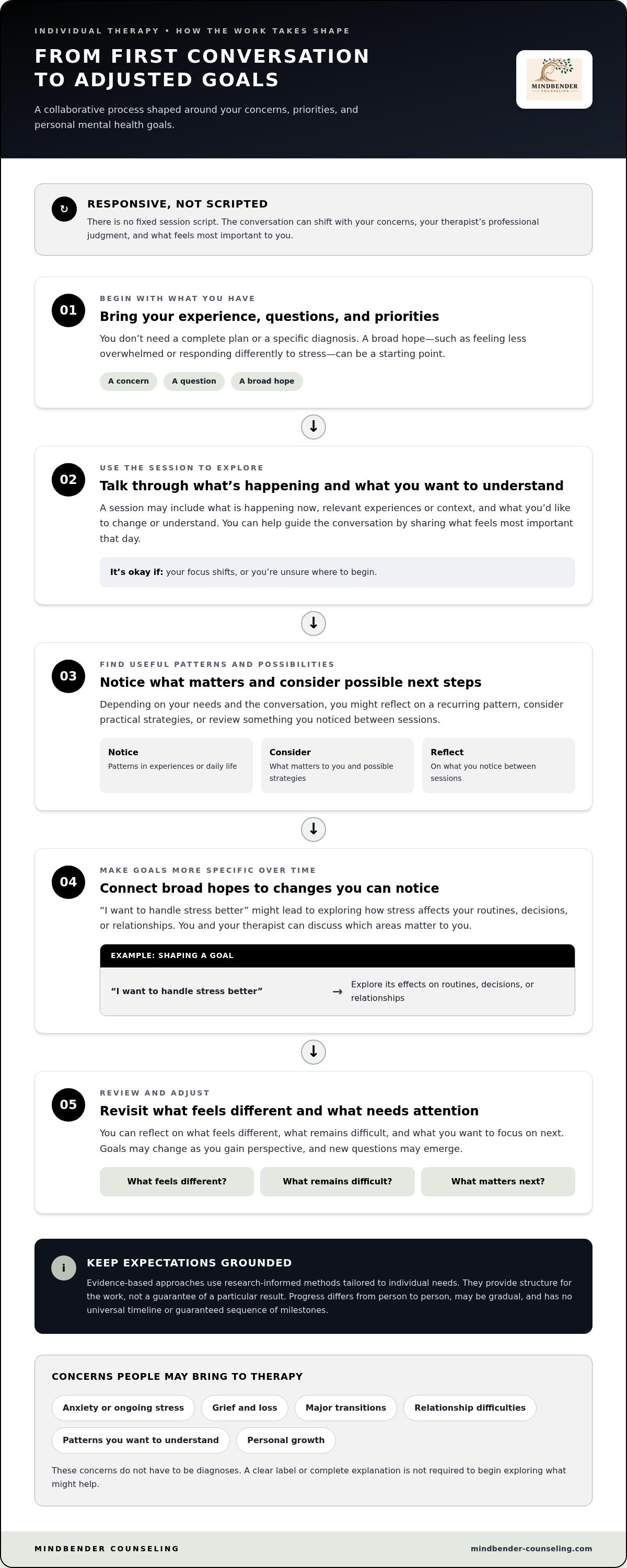
Individual therapy is a collaborative process. You bring your experiences, questions, and priorities; the therapist contributes professional judgment to help explore them and shape the work. You don’t need a complete plan before beginning. A broad hope, such as feeling less overwhelmed or responding differently to stress, can become clearer through conversation.
The American Psychological Association describes psychotherapy as a collaborative process that can help people develop healthier, more effective habits. In practice, sessions can help you notice patterns, consider what matters to you, and explore possible next steps. Evidence-based care applies research-informed methods to your individual needs, using structure to guide the work without guaranteeing a particular result.
What happens in an individual therapy session?
A session may include talking about what’s happening now, relevant experiences or context, and what you’d like to change or understand. Depending on your needs and the conversation, you might reflect on a recurring pattern, consider practical strategies, or review something you noticed between sessions. There isn’t one fixed script; the focus can respond to your concerns and the therapist’s professional judgment.
You can help guide the conversation by sharing what feels most important that day. It’s also okay if your focus shifts or you’re unsure where to begin. Individual counseling at Mindbender Counseling uses personalized therapeutic interventions, so the work can stay connected to your goals rather than follow a generic checklist.
How are therapy goals and progress shaped?
Broad hopes can become more useful when you connect them to changes you can notice in daily life. For example, “I want to handle stress better” might lead to exploring how stress affects your routines, decisions, or relationships. You and your therapist can discuss which areas matter to you and revisit them as your understanding develops.
Goals aren’t set in stone. A priority that feels urgent at first may change as you gain perspective, and new questions may emerge. Reviewing what feels different, what remains difficult, and what you want to focus on next can help keep therapy responsive to your needs.
Progress looks different from person to person. It may be gradual, and it doesn’t follow one universal timeline or guaranteed sequence of milestones. If you’re considering individual therapy Plano TX, you can explore personal goals through a process that makes room for reflection and adjustment. Explore individual counseling with Mindbender Counseling as a possible next step.
How to Decide Whether Individual Therapy in Plano Feels Like the Right Fit
It’s common to feel unsure whether a therapist’s approach or communication style will suit you. That uncertainty doesn’t mean therapy can’t be useful. Fit often becomes clearer through conversation and experience, as you notice whether you feel respected, understood, and able to take part in the work.
What can help therapy feel like a good personal fit?
Pay attention to whether you have room to speak honestly, ask questions, and explain what matters to you. A good fit doesn’t require instant comfort or agreement on every point. It does involve clear, respectful communication about your goals, what the therapeutic approach involves, and how you and the therapist will work together.
It can help to notice whether conversations feel collaborative rather than prescriptive. At Mindbender Counseling, individual care is personalized around your needs and goals, using evidence-based approaches as structured support. Those approaches can inform the work while leaving room for your perspective and the therapist’s professional judgment.
What should Plano-area readers consider when comparing care?
Rather than relying on broad promises or rankings, compare the details that shape your experience. A clinician’s credentials can help you understand their training and professional scope; trust, clarity, and a collaborative relationship matter too. Consider how these areas align with what you need:
- Goals: Does the care make room for concerns and goals that are personally meaningful to you?
- Communication style: Do you feel listened to, and can you raise questions or concerns openly?
- Approach: Is the therapeutic approach explained clearly, with room to discuss how it relates to your needs?
- Practical fit: Do the location and session arrangements fit your routine and make it manageable to participate consistently?
Practical fit matters because support needs to work in everyday life. Think about how travel, scheduling, and the structure of sessions would fit alongside your work, caregiving, or other responsibilities. For people in Plano, Texas, and across Arizona and Texas, these details can help narrow the search to care that is realistic to attend. The aim isn’t to find a universally “best” approach, but to understand what feels clear and appropriate for you.
If you’re exploring individual therapy Plano TX, consider fit as an ongoing conversation, not a test you must pass before starting. You can bring questions, share what feels important, and see whether the process supports the kind of work you want to do.
How to Prepare for Starting Individual Therapy in Plano
You don’t need to arrive with a complete account of your life or a perfectly defined problem. A little reflection can help you use your first conversations in therapy to focus on what feels important now. If you’re looking into individual therapy in Plano, try this simple preparation:
- Name the concern. Note what prompted you to consider support at this point. It could be a recent change, an ongoing source of stress, or a general sense that something needs attention.
- Choose a first goal. Identify one or two changes you’d like to work toward, such as understanding a recurring reaction or feeling more grounded in a challenging situation.
- Identify your questions. Write down anything you’d like to understand about the therapist’s approach, how goals are set, or what taking part in therapy may involve.
These notes are prompts, not a script. You don’t need to prepare a perfect personal history or share everything at once. It’s okay to begin with “I’m not sure where to start.” Uncertainty itself can be part of the conversation, and your priorities can become clearer as you talk.
What should you think about before a first session?
Consider what made support feel worth exploring now, and what you hope might feel different over time. You might also reflect on what helps you feel comfortable speaking openly. There’s no right answer to these questions. If you’re nervous, unsure how much to share, or concerned about the pace, you can say so. Naming a concern can help make the conversation more responsive to you.
What questions can help clarify the therapy process?
As you explore individual therapy Plano TX, it may help to prepare a few practical questions. Choose the ones that would make the process feel clearer:
- How do we decide what goals to focus on, and how can we revisit them?
- How would you describe your approach in everyday language?
- What might we do if I’m unsure about a topic or need to slow down?
- How can I raise concerns about communication or the direction of our work?
You can also consider practical details that matter to you, such as whether the location, schedule, and session arrangements fit your routine. Thinking through these considerations can help you understand what feels workable in the Plano area. Clear answers and space for honest questions can help you make a considered decision.
Mindbender Counseling’s individual counseling centers on personal mental health goals and interventions tailored to individual needs. If you’re ready to explore support, learn about individual counseling with Mindbender Counseling.
Explore Individual Therapy with Mindbender Counseling
Choosing to explore counseling doesn’t require certainty about every concern or what progress should look like. It can begin with a conversation about what feels important now and what kind of support might help you understand it. At Mindbender Counseling, individual counseling is shaped around your personal mental health goals, with attention to your needs and perspective throughout the process.
What makes personalized individual counseling meaningful?
Your concerns don’t exist in a vacuum. Personal history, current pressures, relationships, and day-to-day responsibilities can all influence what you want from therapy. Personalized care makes room for that context rather than treating every person’s goals as interchangeable. You can start with what matters most to you, then work collaboratively to clarify priorities as you gain a better understanding of your needs.
Mindbender Counseling uses evidence-based approaches and therapeutic interventions tailored to individual needs. Evidence-based care brings research-informed tools into a collaborative process, adapting the work to the person rather than promising the same result for everyone. That offers structure while recognizing that your circumstances and goals are your own.
Take a considered next step toward support
Before exploring care, you might take a moment to name what you’d like help addressing. Perhaps you’re managing stress, facing a difficult transition, or hoping to understand a recurring pattern. If anxiety is a concern, learning more about individual counseling for anxiety may help you think about the kind of support you’re seeking.
As you consider individual therapy Plano TX, remember that you don’t need a perfect plan to take a first step. You can bring questions, share what feels uncertain, and talk about the goals that matter to you. The process can develop through conversation, with room to revisit what feels useful as your needs become clearer.
If you’d like to explore a supportive, individualized approach, learn about individual counseling with Mindbender Counseling. It’s a straightforward place to begin considering support for your personal mental health goals, without pressure to predict the outcome.
Take a Thoughtful Next Step Toward Support
Finding the right support doesn’t require a perfect plan or certainty about what comes next. Individual therapy can begin with a concern, question, or goal, then develop through conversation. As you consider individual therapy Plano TX, focus on whether the process feels collaborative, the approach is explained clearly, and your personal priorities have room to guide the work.
At Mindbender Counseling, individual counseling uses evidence-based approaches and therapeutic interventions shaped around individual needs. This offers thoughtful structure for exploring your mental health goals, without promising a particular outcome or timeline. You can begin by considering what you’d like help understanding and what would make therapy feel workable for you.
To explore individual counseling with Mindbender Counseling, visit the practice website. You can take a considered first step toward support for your personal mental health goals.
Frequently Asked Questions
What is individual therapy?
Individual therapy is one-on-one professional support focused on your emotional or mental health concerns and goals. Sessions provide space to discuss experiences, understand patterns, and consider useful ways forward. The process is collaborative, and the focus can be personalized over time. You don’t need a diagnosis or a complete plan before beginning. A question, concern, or sense that something feels difficult can be enough to start.
Can individual therapy help with anxiety or stress?
Individual therapy can help you explore anxiety or stress, understand how these experiences affect daily life, and work toward goals that matter to you. For people considering individual therapy Plano TX, the process can start with discussing what feels difficult and what you hope to change. The approach and benefits differ from person to person, so a particular outcome or timeline can’t be guaranteed. Your therapist can help clarify concerns and discuss a suitable way forward.
How does individual therapy work?
Individual therapy usually involves conversations between you and a therapist about your concerns, goals, and experiences. You may explore relevant context, notice patterns, and consider strategies or next steps that relate to your needs. Goals can be revisited as your understanding develops. The structure varies with the person and therapeutic approach, so therapy isn’t a single fixed formula. Mindbender Counseling provides individual counseling using evidence-based approaches and personalized interventions for clients in Arizona and Texas.
How do I know if an individual therapist is a good fit?
A promising fit may include feeling heard, having room to speak openly, and understanding how the therapist approaches goals and progress. Fit is personal, and it can take time to assess. Notice whether conversations feel respectful and clear, and whether you can ask questions without feeling dismissed. It’s appropriate to raise concerns directly as the therapeutic relationship develops, so you can discuss what would help the process feel more collaborative.
What should I talk about in my first individual therapy session?
You can begin with what led you to seek support, what feels most difficult now, or what you hope might change. You don’t need to prepare a complete personal history or know exactly what to say. Notes can help you remember what matters, but they’re optional. It’s also appropriate to share uncertainty, ask how therapy works, and talk about what would help you feel comfortable continuing.
Is individual therapy confidential?
Therapy conversations are generally treated as private, but confidentiality has professional and legal limits that depend on the situation and applicable rules. Your therapist can explain how privacy works and answer questions about how your information is handled. If you’re considering counseling, you can bring up confidentiality early in the process. Understanding the boundaries can help you make an informed decision about what you feel ready to discuss.


