

What if progress between counseling sessions doesn’t mean doing therapy on your own? If you’re wondering what to do between counseling sessions for best results, small practices connected to your counseling goals can help you use insights in everyday life without turning the week into a string of assignments.
It’s common to leave a session with something important to think about, then feel unsure how to use it, whether an exercise is expected, or how to reflect without getting overwhelmed. Between-session work doesn’t need to be perfect or extensive. Shape it around your goals and the ideas you and your counselor have discussed.
This article offers a manageable way to notice patterns, practice agreed-upon skills, and bring useful observations and questions to your next session. It also covers when to pause an exercise and seek support. Everyday practice can complement counseling, not replace the collaborative support of your counselor.
Key Takeaways
- Choose one small practice connected to a counseling goal, then notice what you learn from trying it.
- Use journaling, an agreed-upon skill, or restorative time according to its purpose and your counselor’s plan.
- To decide what to do between counseling sessions for best results, collaborate with your counselor on an approach that fits your needs.
- Bring a brief note to your next session: one meaningful moment, one question, and one topic to revisit.
- Share what felt helpful or difficult so you and your counselor can adjust your plan together.
Why What You Do Between Counseling Sessions Can Support Your Progress
Progress doesn’t depend on analyzing every thought or completing every suggested activity perfectly. Everyday moments can give you material to bring back to counseling, but you don’t need to solve difficult feelings by yourself. A between-session practice might be as simple as noticing what happened during a conversation, briefly reflecting on an emotion, or trying a skill you and your counselor discussed.
These observations can add real-life context to your next session. You might notice that a familiar worry appears before a particular task, or that a conversation feels easier after you pause before responding. You don’t have to draw conclusions or judge yourself. Note what happened, when it happened, and what you noticed. That gives you and your counselor something specific to explore together.
What counts as useful work between counseling sessions?
Useful practice is not the same as conducting therapy on yourself. You’re not expected to diagnose a pattern, force an emotional breakthrough, or keep a detailed record of every feeling. Follow guidance you’ve agreed on with your counselor and keep the effort manageable. Sometimes the most supportive choice is to rest, maintain a familiar routine, or take a break from reflection.
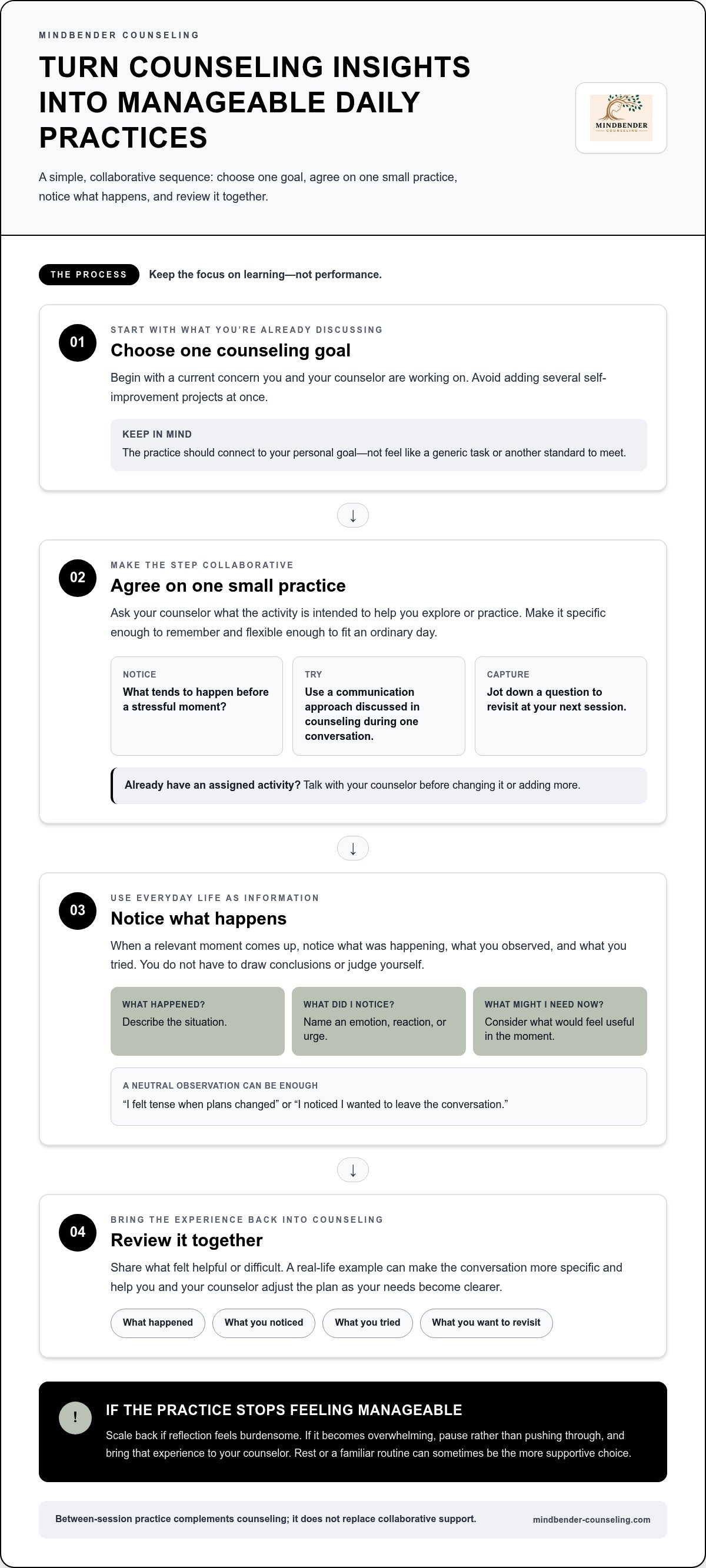
A useful observation can be neutral: “I felt tense when plans changed,” or “I noticed I wanted to leave the conversation.” You don’t need to label the moment as good or bad. If reflecting starts to feel overwhelming, pause and bring that experience to your counselor rather than pushing yourself to continue.
How does between-session practice connect to counseling goals?
A real-life example can make a counseling conversation more specific. Instead of trying to remember a general feeling, describe what was happening, what you noticed, and what you tried. If similar moments come up more than once, those observations may reveal a pattern worth discussing, without requiring you to interpret it alone.
Between-session practice is a small way to notice what happens in daily life and bring that experience back into counseling. Some counselors may suggest therapeutic homework, such as reflection or practicing an agreed-upon skill. These activities should connect to your personal goals, not become another standard you have to meet. If you’re unsure what to do between counseling sessions for best results, discuss what feels relevant and manageable with your counselor.
How to Turn Counseling Insights Into Manageable Daily Practices
A useful insight can be hard to apply when the week gets busy. Rather than turning it into a long list of goals, choose one counseling goal and work with your counselor to identify one small practice that fits your life. You might notice when a particular reaction appears, try a communication skill during one conversation, or jot down a question to revisit in your next session.
Use a simple sequence: choose a goal, agree on a practice, notice what happens, then review the experience together. Ask your counselor what the activity is intended to help you explore or practice. The reason matters: it should connect to your goals, not feel like a generic task you have to complete.
How can I choose one realistic practice for the week?
Start with a current concern you’re already discussing, rather than adding several self-improvement projects. Make the practice specific enough to remember and flexible enough to fit an ordinary day. For example, notice what tends to happen before a stressful moment, or try a communication approach you and your counselor discussed during one conversation. If you have an assigned activity, talk with your counselor before changing it or adding more.
Keep the focus on learning, not performance. If the practice doesn’t fit your routine or feels difficult to use, that’s useful information to bring back. Resources such as Caltech’s guide to getting the most out of therapy offer general ideas, while your counselor can help you decide what fits your personal goals.
How can I reflect without turning it into a source of pressure?
You don’t need to journal every day or capture every detail. If it helps, pause after a relevant moment and consider: What happened? What did I notice? What might I need now? Record only what feels useful, such as a trigger, a response you tried, or a question for your next session. If reflection starts to feel burdensome, scale it back and discuss that with your counselor.
Small, repeatable practices can be easier to sustain because they fit into real life rather than compete with it. That’s a practical way to approach what to do between counseling sessions for best results: choose an agreed-upon step and learn from what happens. In personalized counseling, you and your counselor can shape the practice and adjust it as your needs become clearer. Mindbender Counseling offers individual and couples counseling to support collaborative work toward personal goals in Arizona and Texas.
Journaling, Skill Practice, or Rest: Which Between-Session Approach Fits?
There isn’t one right activity for every week. Journaling can help you capture an experience, practicing a skill can help you try something discussed with your counselor, and rest can give you room to recover when you feel overloaded. These are different ways to support your counseling goals, not competing treatments or substitutes for your counselor’s plan.
| Activity | When it may help | A gentle starting point |
|---|---|---|
| Journaling or brief reflection | You want to remember a situation, feeling, or question for your next session. | Write a few keywords, make a short voice note, or describe one moment. |
| Practicing an agreed skill | Your counselor has suggested a specific approach that fits a goal you’re working on. | Try it in one relevant situation, then note what felt easy or difficult. |
| Restorative time | You feel worn down or reflection and practice feel like too much. | Choose a familiar, calming routine and let that be enough for now. |
When might journaling or brief reflection be helpful?
A brief note can preserve details that might otherwise fade before your next appointment: what happened, what emotion you noticed, or what you’d like to ask about. You don’t need a polished account. A few words or a voice memo can be enough to help you recall the moment later.
Notice how reflecting affects you. If writing brings up distress or turns into repetitive, unhelpful rumination, stop and set the notes aside. Tell your counselor what happened and decide together whether to adjust the activity. The point is to support your work, not force yourself to keep going.
When might practicing a skill, or choosing rest, make more sense?
If a skill is part of your counseling plan, try it in a situation where it feels relevant, such as pausing before responding during a tense conversation. Keep the focus on what you observed, not on getting it “right.” To understand how approaches can relate to counseling goals, explore evidence-based therapy and behavioral approaches.
Some weeks, rest may be the more supportive choice. A familiar routine or a quiet break can help you avoid turning between-session work into another demand. If you’re unsure what to do between counseling sessions for best results, or an activity feels uncomfortable, bring that uncertainty to your next session. Your counselor can help you decide whether to continue, adapt, or pause it.
How to Prepare for Your Next Counseling Session Without Overdoing It
You don’t need a complete record of your week to make your next counseling session useful. A few notes can help you remember what matters without turning preparation into another task to get right. Try keeping a short list with one meaningful moment, one question, and one topic you’d like to revisit.
- One meaningful moment: Something that stood out, felt different, or connected to a goal you’re working on.
- One question: A point you’re unsure about or would like your counselor to explain.
- One topic to revisit: A concern or experience you don’t want to lose track of.
What should I bring up at the next counseling session?
Prioritize what feels relevant now: a change you noticed, a concern that keeps returning, or a moment connected to your current goals. If you tried an activity, share whether it felt helpful, confusing, uncomfortable, or difficult to complete. Your honest feedback gives you and your counselor a chance to adjust the plan together instead of continuing with an exercise that doesn’t fit.
You don’t need to explain everything perfectly. A few keywords can be enough to start the conversation. If the reason you’re seeking support involves anxiety, you can also explore individual counseling for anxiety in Arizona and Texas.
What if I did not complete the practice or do not know what to say?
Tell your counselor plainly. You don’t need to make up results or spend time apologizing. If you didn’t try the activity, you might say, “I didn’t get to it this week,” then explain what got in the way. Time, privacy, emotional energy, or unclear instructions can all affect whether a practice feels manageable.
That information can help your counselor understand what needs to change, whether that means clarifying the instructions, adapting the activity, or choosing a different next step. Not completing a practice isn’t a reason to arrive unprepared. Start with what you remember, even if it’s simply, “I’m not sure what to focus on today.” If you’d like support connecting everyday experiences with your goals, explore counseling with Mindbender Counseling.
How Counseling Helps You Build a Sustainable Between-Session Plan
A between-session plan works best when it connects to your goals and real circumstances. In personalized, evidence-based counseling, you and your counselor can decide whether a practice makes sense, what it’s meant to support, and when you’ll revisit it. The plan isn’t a test of commitment. It’s a shared guide that can change as your needs, priorities, or routine change.
How can a counselor help tailor between-session work?
Talk together about a manageable activity, its purpose, and how you’ll discuss your experience at a future session. If instructions feel unclear or impractical, say so. You might ask, “What should I pay attention to?” or “Could we make this fit my week better?” This helps ensure the activity supports your counseling goals instead of adding pressure.
There’s no need to stick with a practice simply because it was suggested earlier. Your counselor can help you review what felt useful, what got in the way, and whether the plan still fits. This collaborative approach can be part of individual or couples counseling, with the focus and between-session activities shaped around the people involved. If you’re wondering what to do between counseling sessions for best results, bring your questions and preferences into the conversation.
When should I pause an exercise and ask for support?
If an activity feels overwhelming, increases distress, or leaves you feeling less steady, pause rather than forcing yourself to continue. Make a note of what felt difficult if that’s manageable, and bring it up with your counselor. You can work together to understand your reaction and consider whether the practice should be adjusted or set aside.
Between-session exercises support counseling, but they aren’t a replacement for urgent help. If you’re in the United States and experiencing a mental health crisis or immediate safety concern, call or text 988 for crisis support. If there’s immediate danger, call 911.
Mindbender Counseling provides individual and couples counseling with a personalized, evidence-based approach. For general information about online couples counseling, explore how online couples counseling works.
Carry One Small Step Into Your Week
Between-session progress doesn’t require perfect follow-through or constant self-analysis. Choose a small practice that fits your counseling goals, notice what happens, and bring a question or useful observation to your next session. Journaling, trying an agreed-upon skill, or taking restorative time can each have a place, depending on your needs and your counselor’s guidance.
If you’re considering what to do between counseling sessions for best results, remember that the plan is something you can shape together. Talk openly about an activity that felt confusing, uncomfortable, or difficult to complete. That feedback helps keep the work personal and manageable.
Mindbender Counseling offers personalized individual and couples counseling using evidence-based therapy approaches in Arizona and Texas. Explore personalized counseling with Mindbender Counseling and take a thoughtful next step at a pace that feels right for you. Small steps count, and you don’t have to figure them out alone.
Frequently Asked Questions
What should I do between counseling sessions?
Choose one manageable practice connected to a goal you and your counselor have discussed. You might notice when a recurring situation comes up, jot down a question, or try a skill you’ve agreed to practice. Keep the activity flexible and bring useful observations to your next session. If it feels overwhelming or unclear, pause and discuss what happened with your counselor rather than pushing yourself to continue.
Is it necessary to do homework between counseling sessions?
No, not every counseling plan includes formal homework, and completing an exercise isn’t a measure of how hard you’re trying. Ask your counselor whether an activity is optional, what it’s intended to support, and how you might adapt it to your routine. If you didn’t do it, be open about what got in the way. You and your counselor can decide together what feels practical next.
How can I make the most of counseling between appointments?
Focus on one or two useful observations instead of monitoring every thought or feeling. Notice moments connected to your counseling goals, record questions when they come up, and practice a skill only if it fits the plan you discussed. Bringing both helpful and difficult experiences to your next appointment can make the conversation more specific. For what to do between counseling sessions for best results, let your counselor help tailor the practice to your needs.
Should I journal between counseling sessions?
Journaling can help you remember events, emotions, or questions you’d like to discuss, but it isn’t required for everyone. A few keywords, a brief voice note, or no written record may suit you better. If writing increases distress or repetitive thinking, stop rather than forcing yourself to continue. Tell your counselor how the activity affected you and discuss whether another approach might feel more supportive.
What if I feel worse after counseling or while doing an exercise?
Pause an exercise that feels overwhelming, and use any safety or coping plan you’ve already discussed with your counselor. If it feels manageable, note what was difficult so you can bring it up at your next session. If you may harm yourself or someone else, call or text 988 in the United States. Call 911 if there’s immediate danger. An exercise isn’t a substitute for urgent help.
Can couples practice counseling skills between sessions?
Yes, couples may practice a communication skill between appointments when it fits their counselor’s guidance and feels emotionally safe for both partners. Keep the practice brief, and don’t use it to force a difficult conversation or settle a conflict. Share what felt helpful, uncomfortable, or hard to follow at your next session. Mindbender Counseling offers couples counseling in Arizona and Texas, with care shaped around each couple’s needs.
How do I know whether counseling is helping between sessions?
Progress can include noticing a pattern sooner, trying a different response, or finding it easier to name a concern. It doesn’t have to mean feeling better every day, and there’s no single timeline or checklist for everyone. Tell your counselor what seems different and what still feels difficult. Together, you can review whether your goals or approach need adjusting as your circumstances change.


