

What if the persistent feeling of being "stuck" isn't a sign of personal failure, but a signal that your internal foundation is ready for a professional upgrade? In 2026, over 23% of U.S. adults are navigating mental health challenges, yet many hesitate when seeking professional counseling due to the fear of being judged or confusion surrounding clinical methods. You likely want a clear path toward emotional resilience and improved communication with your partner, but the technical language of modern psychology often feels like a barrier to entry.
This guide simplifies the therapeutic landscape by offering a clear, compassionate roadmap for your growth. We'll explore how evidence-based therapy provides a sturdy anchor for your mental health, moving beyond the "embarrassment barrier" to build lasting stability. You'll discover how individual and couples counseling work in practice, the specific benefits of proven therapeutic modalities, and how to find a partner in your healing process who treats your journey with the fresh attention it deserves.
Key Takeaways
- Understand how professional counseling functions as a structured partnership to help you move beyond temporary relief and toward lasting emotional wellness.
- Discover the benefits of evidence-based therapy and how these scientifically validated methods provide a reliable framework for your personal growth.
- Learn the essential criteria for seeking professional counseling to decide if individual support or couples therapy best addresses your current needs.
- Gain clarity on navigating state-specific licensing in Arizona and Texas to ensure you find a qualified, professional guide for your healing process.
- Identify the first steps toward restoring internal balance and building the resilience required to navigate life's challenges with confidence.
What is Professional Counseling? Defining the Path to Wellness
Seeking professional counseling is a courageous decision to prioritize your internal health. It isn't merely a conversation; it's a collaborative partnership between you and a licensed expert. Unlike the casual support of a friend or family member, this relationship is built on a foundation of clinical expertise and objective perspective. Within the field of Counseling psychology, practitioners use structured frameworks to help you identify patterns that may be holding you back. Your counselor acts as a compassionate guide who facilitates your journey without judgment, providing a safe space where you can dismantle complex emotions and rebuild a sense of personal agency.
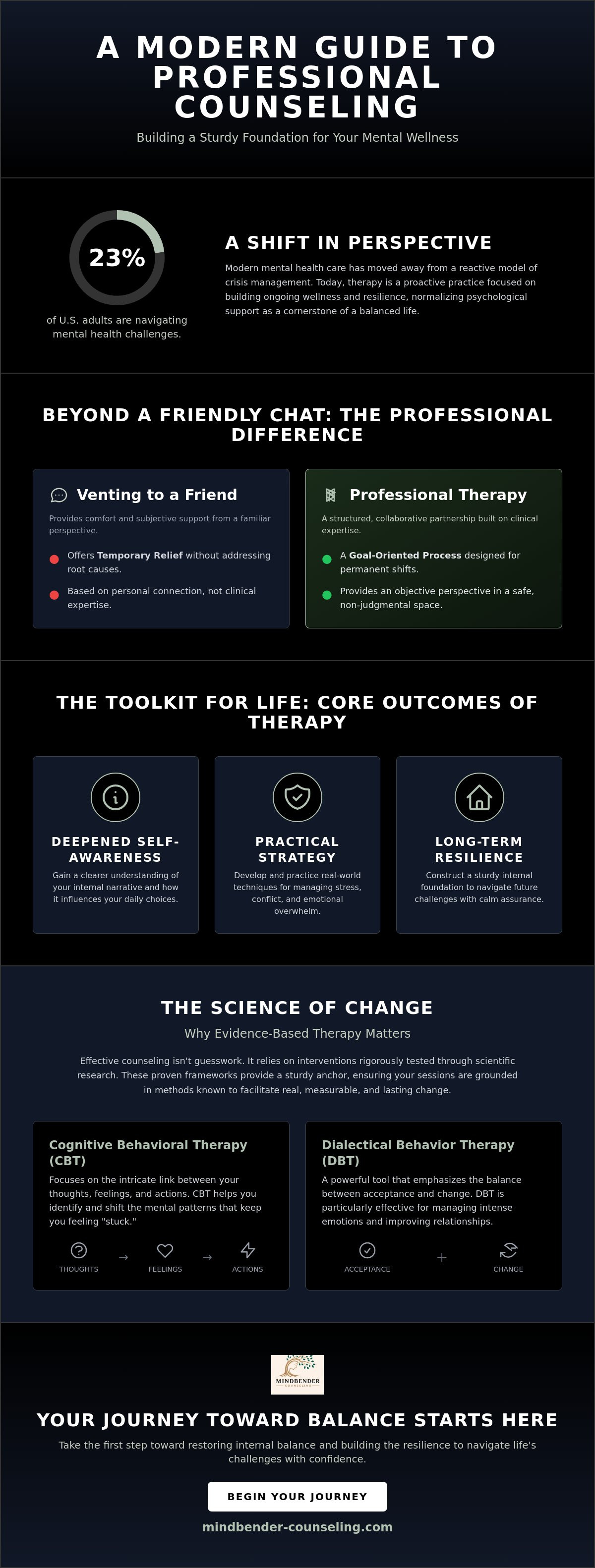
In 2026, the way we view mental health has undergone a significant transformation. We've moved away from a reactive model where people only seek help during a breakdown. Instead, modern therapy focuses on proactive wellness. With over 23% of U.S. adults living with a mental illness as of 2025, the normalization of psychological support has become a cornerstone of a balanced life. While "venting" to a friend provides temporary relief, professional therapy offers a goal-oriented process designed to create permanent shifts in how you relate to yourself and the world around you.
The Core Purpose of Modern Therapy
Modern therapy is designed to do more than just solve immediate problems. It's about equipping you with a toolkit for life. When you engage in this process, you are working toward several meaningful outcomes:
- Deepened Self-Awareness: You'll gain a clearer understanding of your internal narrative and how it influences your daily choices.
- Practical Strategy Development: Your sessions provide a space to practice real-world techniques for managing stress, conflict, and emotional overwhelm.
- Long-Term Resilience: By constructing a sturdy internal foundation, you become better prepared to navigate future challenges with calm assurance.
Common Misconceptions vs. Reality
A persistent myth suggests that you only need a therapist if you're in the midst of a life-altering crisis. In reality, seeking professional counseling is a sophisticated investment in your ongoing evolution. Many individuals find that starting therapy during periods of relative stability allows them to do the "deep work" required for lasting change. By breaking the stigma associated with mental health care, you open the door to a more vibrant and connected version of yourself. It's not about being "broken"; it's about the restoration of balance and the pursuit of a more meaningful existence.
The Science of Change: Why Evidence-Based Therapy Matters
When you begin the process of seeking professional counseling, it's natural to wonder if the time you invest will lead to tangible results. The answer lies in the application of evidence-based therapy. This approach isn't based on guesswork or intuition alone; it relies on interventions that have been rigorously tested through scientific research and clinical trials. By utilizing these proven frameworks, a therapist provides you with a sturdy anchor. This ensures that your sessions are grounded in methods known to facilitate real, measurable change rather than just providing temporary emotional relief.
While the science provides the structure, the most effective care remains deeply personal. A compassionate guide doesn't simply apply a one-size-fits-all formula. Instead, they tailor research-backed methods to fit your unique history, personality, and goals. This blend of clinical data and individualized attention is what allows for long-term stability. It helps you construct a solid internal foundation that remains resilient even after your formal sessions have concluded. Understanding these methodologies is a key step in learning how to find a qualified therapist who can offer the specific support you require for your journey.
Popular Evidence-Based Modalities
Several well-established frameworks serve as the pillars of modern counseling. Cognitive Behavioral Therapy (CBT) is perhaps the most widely recognized, focusing on the intricate link between your thoughts, feelings, and actions. It helps you identify and shift the mental patterns that keep you feeling "stuck." Another powerful tool is Dialectical Behavior Therapy (DBT), which emphasizes mindfulness and emotional regulation. These structured sessions allow for clear progress tracking, ensuring that every meeting moves you closer to the restoration of balance in your life.
In addition to these frameworks, many individuals are finding success by exploring the biological foundations of mental health through neurofeedback. To see how this technology-driven approach can enhance cognitive performance and emotional wellness, you can learn more about Neurobics and their specialized work in improving brain functions.
Beyond these primary frameworks, some individuals find success by incorporating specialized approaches such as clinical hypnotherapy or neuro-linguistic programming (NLP) to target specific behavioral patterns. To see how these professional clinical services function, you can learn more about London Hypnotherapy & NLP.
The Role of Research in Your Healing
In the 2026 therapeutic landscape, there is a distinct shift toward results-oriented care. Clinical data acts as a roadmap, informing the specific strategies your counselor selects for you. Because the field of neuroscience is constantly evolving, professional counselors prioritize ongoing education to stay current with the latest findings. This commitment to staying informed means your care is always supported by the most effective, modern tools available. If you're ready to experience the difference that structured support can make, exploring Evidence-Based Therapy is an excellent way to start your healing process with confidence.
Individual vs. Couples Counseling: Choosing Your Starting Point
Deciding where to begin your therapeutic journey requires a moment of honest reflection. When you're seeking professional counseling, the first question to ask is: who is the primary client? In some seasons, the "client" is your own internal world, your thoughts, and your emotional stability. In others, the "client" is the space between you and your partner. Understanding this distinction helps you choose a path that offers the most immediate and meaningful support for your current circumstances. Both paths are valid, and both lead toward the restoration of balance, but they address different layers of your experience.
Individual counseling is a dedicated space for personal evolution. It allows you to explore the nuances of what psychotherapy is and how it can be tailored to your specific mental health goals. This one-on-one environment is designed for deep reflection, where the focus remains entirely on your healing and growth. It's an opportunity to build a sturdy internal foundation without the influence of external relational dynamics. By focusing on your own narrative, you gain the clarity needed to navigate life's daily challenges with renewed confidence.
Conversely, couples counseling shifts the focus to the relationship itself. It isn't about deciding who is "right" or "wrong," but about understanding the patterns that govern your interactions. This specialized space provides the tools needed to strengthen relational bonds and improve communication. It acts as a facilitator for mutual growth, helping both partners feel seen and heard within the safety of a professional framework. When the relationship becomes the focus, the goal is to create a shared language that fosters deeper connection and long-term stability.
Think of this choice as a gentle invitation to address what needs your attention most right now. If your relationship feels like a source of constant stress, starting together may be the most effective route. If you feel that your own internal struggles are impacting your ability to connect with others, beginning with individual work might provide the resilience you need. Your counselor will help you navigate these paths, ensuring you feel supported regardless of your starting point.
When to Seek Individual Counseling
- Navigating Personal Challenges: If you're managing symptoms of anxiety, depression, or the lingering effects of personal trauma.
- Building Self-Esteem: When you need to work on establishing healthy boundaries or improving your relationship with yourself.
- Deep Reflection: If you desire a private space to explore your identity, career transitions, or personal goals without outside influence.
When to Choose Couples Therapy
- Breaking Cycles: When you find yourselves resolving recurring conflicts that always seem to end in the same "stuck" place.
- Restoring Trust: If you're working to rebuild the foundation of your relationship after a significant breach or period of distance.
- Enhancing Connection: When you want to improve your communication skills to foster a more empathetic and supportive partnership.
How to Find a Professional Counselor in Arizona and Texas
Finding a guide who understands your local context is essential when seeking professional counseling in the Southwest. In Arizona and Texas, the process is governed by specific state boards that ensure every practitioner maintains high clinical standards. Whether you live in Phoenix or Houston, your search should begin with a focus on both professional credentials and personal resonance. This combination of objective expertise and subjective comfort creates the safety required for deep internal work.
The logistical side of your search involves verifying that a provider is authorized to practice in your state. When you are seeking professional counseling, checking the e-licensing status of a provider is a vital first step to ensure they are in good standing with their respective regulatory body. This verification process acts as a sturdy anchor for your trust, allowing you to focus on the emotional aspects of your healing rather than worrying about the legitimacy of your care.
Verifying Credentials and Licensing
In Arizona, the Arizona Board of Behavioral Health Examiners (AZBBHE) manages licensing, while the Texas Behavioral Health Executive Council (BHEC) oversees practitioners in the Lone Star State. You should look for designations like Licensed Professional Counselor (LPC) or Licensed Clinical Social Worker (LCSW). Professional counselors in Arizona and Texas must meet strict educational and supervised-hour requirements to practice. These credentials guarantee that your therapist has the rigorous training necessary to facilitate your personal evolution.
The Importance of Therapeutic Fit
Beyond the license on the wall, the "therapeutic fit" is a critical factor in your success. This is the quiet confidence you feel when speaking with a counselor, a sense that you are truly seen and heard without judgment. Trust isn't always immediate; it often builds over the first few sessions. If you don't feel a sense of safety during your initial consultation, it's perfectly acceptable to continue your search until you find a professional facilitator who feels like the right partner for your journey toward balance.
Questions to Ask During a Consultation
To reduce entry anxiety, arrive at your first appointment with a clear understanding of your goals. Use the following questions to gauge if a provider aligns with your needs:
- What is your specific experience helping individuals or couples with [your concern]?
- Which evidence-based approaches do you primarily use to build emotional resilience?
- How do you measure progress to ensure our sessions are moving toward my desired outcomes?
If you are ready to take the next step toward a more balanced life, you can explore our Individual Counseling Services to see how we support residents across Arizona and Texas with personalized, research-backed care.
Your Journey Toward Balance with Mindbender Counseling
At Mindbender Counseling, we believe that seeking professional counseling should feel like a relief rather than a burden. Our practice is specifically designed to serve the diverse communities of Arizona and Texas, providing a bridge between the complexities of life and the clarity of emotional wellness. We don't just offer sessions; we offer a partnership. By combining clinical expertise with a deeply compassionate style, we create an environment of calm assurance where you can lower your defenses and begin the vital work of self-discovery. Our commitment to evidence-based therapy ensures that every step you take is supported by proven methods that lead to lasting stability.
The goal of our work together is the restoration of balance. Whether you're navigating the nuances of your own internal world or seeking to repair a connection with a partner, we act as a wise and steady guide. We understand that the path to healing is rarely a straight line. Because of this, we provide a sturdy anchor during times of turbulence while remaining a catalyst for your forward movement. Every intervention we use is selected for its ability to foster mental health and emotional growth, helping you build a life that feels authentic and manageable.
A Personalized Approach to Individual and Couples Care
No two journeys are identical, which is why we reject one-size-fits-all solutions. We prioritize individualized attention, tailoring every session to the specific needs of the person or couple in front of us. In our Individual Counseling Services, the focus remains on your personal evolution and the construction of a solid internal foundation. For those in our Couples Counseling sessions, we work to identify the specific patterns that hinder your connection, replacing them with healthy communication strategies. You deserve a space where your growth is the priority, and we're here to facilitate that transition with fresh attention and care.
Next Steps: Scheduling Your Therapeutic Appointment
Taking the first step toward change is often the most difficult part of the process. We've designed our intake system to be a low-friction experience, allowing you to move from a place of uncertainty to a clear path forward without unnecessary stress. When you're ready to begin seeking professional counseling, the process is simple and structured. We encourage you to listen to that internal nudge suggesting that things can be better. Positive change isn't just a possibility; it's a goal we can achieve together through steady, unwavering support. Schedule your first session with Mindbender Counseling today and begin the process of building the resilience you need for a more balanced future.
Embracing Your Path to Emotional Resilience
Your journey toward a more balanced life starts with the recognition that you don't have to navigate life's complexities alone. We've explored how modern therapy has shifted toward proactive wellness, offering you a structured environment to build a sturdy internal foundation. Whether you choose to focus on your personal growth or strengthen your relational bonds, the use of evidence-based therapeutic techniques ensures that your progress is grounded in proven science. Positive change is possible.
Seeking professional counseling is a meaningful investment in your long-term stability and resilience. By choosing a partner who understands the specific licensing standards in Arizona and Texas, you ensure that your care is both high-quality and personally resonant. At Mindbender Counseling, we provide specialized care for individuals and couples, acting as a compassionate guide through every stage of your evolution. You deserve a space where your well-being is treated with fresh attention and professional expertise.
This commitment to evolution often extends beyond therapy to include physical health. High-performers looking to complement their mental wellness with functional health strategies can learn more about 5280 Restorative Medicine to discover how they help clients reclaim their vitality.
Begin your journey to emotional wellness with Mindbender Counseling
The restoration of your internal balance is within reach, and we're here to support you as you move toward a more vibrant future.
Frequently Asked Questions
How do I know if I actually need professional counseling or if I’m just having a bad week?
You should consider professional support if your emotional distress persists for more than two weeks or begins to interfere with your daily responsibilities. While everyone experiences "bad weeks," professional therapy is designed to address deeper patterns that keep you feeling stuck. If you notice a decline in your sleep quality, appetite, or ability to focus on your relationships, these are clear signals that your internal foundation requires extra attention.
What is the difference between a therapist, a counselor, and a psychiatrist?
The primary difference lies in their focus of care and medical training. Counselors and therapists are licensed professionals who provide talk therapy to help you navigate emotional and relational challenges. Psychiatrists are medical doctors who primarily focus on the biological aspects of mental health and medication management. If you're looking to build emotional resilience and change behavioral patterns, a professional counselor is often the best starting point.
Is professional counseling covered by my insurance in Arizona or Texas?
Coverage for mental health services varies significantly depending on your specific insurance provider and plan. As of 2026, many private plans and Medicare recognize Licensed Professional Counselors (LPCs) as eligible providers. You should contact your insurance carrier directly to verify your out-of-pocket costs and network status. Our team can also provide you with the necessary documentation to help you navigate your benefits with confidence.
How long does a typical course of professional counseling last?
The duration of your therapeutic journey is highly individualized and depends on your specific goals. Some clients find that 8 to 12 sessions provide the tools they need to manage a specific life transition or challenge. Others choose to engage in longer-term therapy to foster deep personal evolution and long-term stability. Your counselor will work with you to establish a timeline that feels manageable and aligned with your needs.
What should I expect during my very first therapy session?
Your first session is primarily an intake process designed to build a compassionate understanding of your history and goals. You can expect your counselor to ask questions about your current challenges, past experiences, and what you hope to achieve. This meeting is also an opportunity for you to gauge the "therapeutic fit" and ensure you feel safe and heard. It's a low-pressure environment focused on creating a roadmap for your growth.
Can I switch counselors if I don’t feel a strong "fit" after the first few sessions?
Yes, you are encouraged to find a counselor who feels like the right partner for your journey. The relationship between you and your therapist is one of the most significant factors in your success. If you don't feel a sense of calm assurance or trust after a few meetings, it's perfectly professional to seek a different provider. A wise guide understands that personal resonance is essential for the healing process to be effective.
Is my information confidential when I seek professional counseling?
Your privacy is legally protected under federal HIPAA regulations and state laws in Arizona and Texas. When seeking professional counseling, you can trust that your sessions are a private space for honest reflection. There are very few legal exceptions to this confidentiality, such as situations involving immediate safety risks. Your counselor will review these specific privacy standards with you during your first appointment to ensure you feel completely secure.
How much does professional counseling usually cost per session?
The cost of therapy is influenced by the counselor's level of specialization, the length of the session, and the geographic location of the practice. Rates in major metropolitan areas of Texas and Arizona may differ from those in smaller communities. Many individuals view this cost as a structured investment in their internal foundation and future well-being. We recommend discussing fee structures during your initial consultation to ensure the path forward is clear and predictable.


