

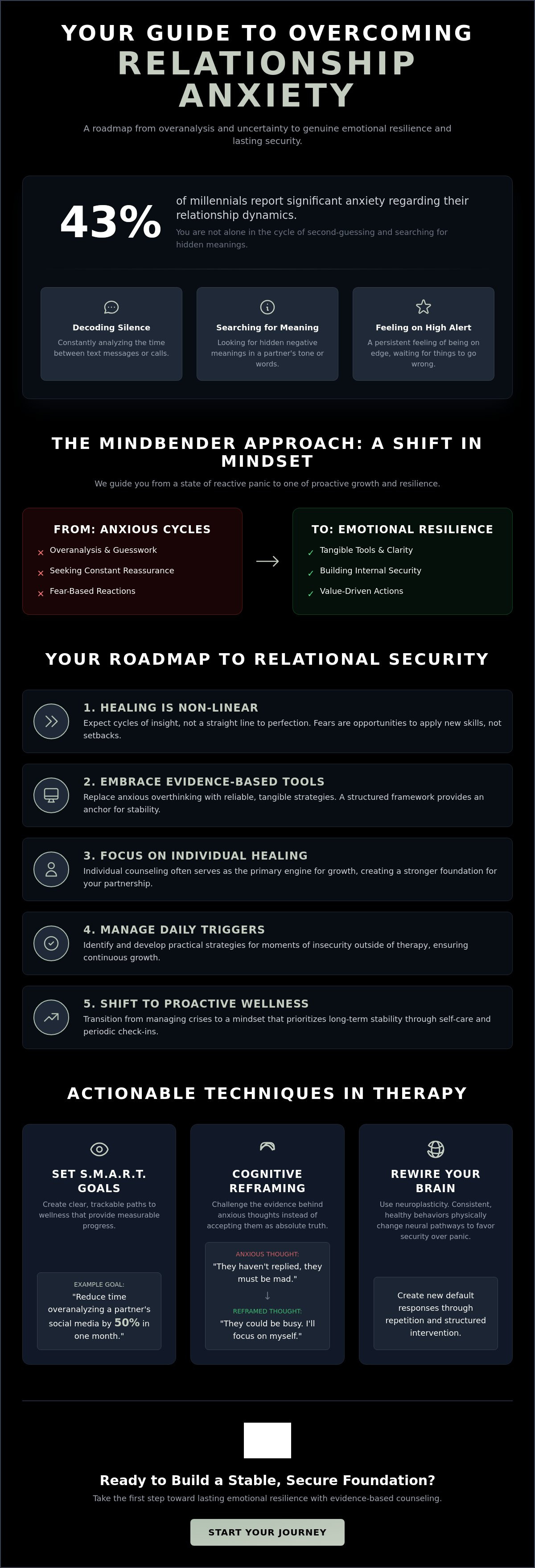
With 43% of millennials reporting significant anxiety regarding their relationship dynamics, you aren't alone if you spend your evenings decoding the silence between text messages or searching for hidden meanings in a partner’s tone. It's exhausting to feel like you're constantly on high alert, and it's natural to worry that counseling for relationship anxiety might just be another place where you feel exposed without seeing real results. You want to know that the emotional energy you invest will actually lead to a stable, secure foundation rather than more uncertainty.
At Mindbender, we believe that therapy shouldn't feel like a guessing game or a source of further stress. By mastering our specific approach to counseling for relationship anxiety, you can move past the cycle of overanalysis and start building genuine emotional resilience. This guide offers a clear roadmap to help you navigate your sessions with confidence. We'll explore ten essential tips to accelerate your healing, providing you with tangible tools to quiet the noise and find the lasting security you deserve in your partnership.
Key Takeaways
- Understand that healing is a non-linear process where cycles of insight help you build a personalized foundation for lasting emotional security.
- Learn how to embrace evidence-based counseling for relationship anxiety to replace anxious overthinking with reliable, tangible tools for connection.
- Discover why individual counseling services often serve as the primary engine for personal healing and emotional independence within your partnership.
- Identify practical strategies to manage triggers in your daily life, ensuring that growth continues during the hours you spend outside the therapy room.
- Transition from managing immediate crises to a proactive wellness mindset that prioritizes long-term relational stability through periodic check-ins.
Defining Your Path: Tips for Relationship Anxiety Counseling Success
You've taken a significant step toward personal stability, but you might be wondering how to measure your progress. Success in counseling for relationship anxiety isn't about the immediate disappearance of every doubt or the total absence of fear. Instead, it's a personalized metric based on your specific security and resilience goals. At Mindbender, we view your journey as a collaborative architecture. You're the expert on your own life, while your therapist acts as a wise guide who facilitates your internal progress and helps you construct a sturdier emotional foundation.
It's vital to understand that progress in relationship anxiety therapy is rarely a straight line. You should expect cycles of insight; some weeks you'll feel grounded and secure, while others might trigger old fears. These moments aren't setbacks. They're opportunities to apply your new skills in real-time. Ultimately, counseling success is the intentional alignment of evidence-based tools with your unique relational values. When your actions start to reflect your values rather than your fears, you know you're moving in the right direction.
Setting Intentional Goals in Arizona and Texas
Residents in the Phoenix professional scene or busy Texas hubs often face unique stressors that bleed into their personal lives. High-stakes careers, long commutes, and rapid urban growth can intensify an anxious-preoccupied attachment style, making it harder to disconnect work-related burnout from your partnership. When we set goals, we distinguish between short-term reassurance-seeking, which provides only temporary relief, and long-term emotional resilience. We'll work together to set "SMART" goals that address obsessive thoughts. For example, a goal might be to reduce the time spent overanalyzing a partner's social media activity by 50% within the first month. This creates a clear, trackable path toward wellness.
The Collaborative Nature of Mindbender Sessions
Think of your sessions as a partnership where we work to dismantle anxious attachment patterns together. Active participation is the catalyst that accelerates breakthroughs in both individual and couples counseling sessions. Your therapist provides the framework, but your honesty provides the raw material for change. Transparency about your "off-session" triggers is critical for our local clients. Many people in our community feel pressure to project an image of perfection in their professional lives. In the therapy room, letting go of that performance allows us to address the root of your anxiety. By sharing the specific moments when you felt a spike in insecurity, you give us the data we need to build your resilience.
Embracing the Evidence-Based Therapy Mindset
While many seek a safe space to vent, Mindbender prioritizes evidence-based therapy because it offers more than just temporary relief. For those navigating the complexities of counseling for relationship anxiety, having a structured framework is essential. It transforms the therapeutic process from a series of conversations into a focused strategy for change. Evidence-based therapy serves as a sturdy anchor for emotional stability, ensuring that every session builds toward a specific, measurable outcome rather than just circling the same fears. This approach moves you from a state of reactive panic to one of proactive growth.
When you're in the middle of an anxious spiral, your thoughts often feel like absolute truths. Learning how to deal with relationship anxiety requires a willingness to engage in cognitive reframing. This isn't about ignoring your feelings; it's about examining the evidence behind them. By consistently challenging these internal narratives, you leverage the science of neuroplasticity. Your brain's fear response isn't fixed. Through repetitive engagement with new, healthier behaviors, you actually physically rewire your neural pathways to favor security over panic. Consistency is the key to this biological transformation.
Trusting the Process of Proven Methodologies
Structured behavioral interventions can feel uncomfortable at first because they require you to act against your immediate impulses. For example, you might be asked to delay a text message or sit with a difficult emotion without seeking immediate reassurance. These tools, often drawn from DBT, create a solid internal foundation that helps you stay grounded when your attachment system is triggered. A structured approach at Mindbender doesn't mean your care is impersonal. It means we value your time enough to use methods that have been scientifically validated to restore balance to your life.
Measuring Progress Through Clinical Insights
We track your progress using specific clinical markers, such as a reduction in the frequency of reassurance-seeking behaviors or a decrease in heart-rate spikes during conflict. In 2026, data continues to show that evidence-based models like Emotionally Focused Therapy (EFT) have a recovery rate of 70% to 75% for couples in distress. We use consistent feedback loops to identify which cognitive tools are yielding the best real-world results in your partnership. If you're ready to move beyond just talking about your fears, exploring our evidence-based therapy options for counseling for relationship anxiety is the first step toward lasting change. Identifying these shifts early on builds the confidence you need to stay committed to the process.
Success Strategies: Individual vs. Couples Counseling for Relationship Anxiety
Choosing between individual and couples sessions is a pivotal decision in your journey toward emotional security. While both paths offer significant benefits, success in counseling for relationship anxiety often depends on selecting the format that best matches your current emotional capacity. At Mindbender, we view individual work and couples work as complementary forces. We integrate both service lines to ensure that Arizona and Texas couples receive a holistic experience that addresses both personal history and shared relational dynamics.
Individual counseling often serves as the primary engine for healing from relationship obsession. It provides a private space for understanding relationship anxiety as an internal process rather than just a reaction to your partner's actions. When you choose to work individually, you gain the freedom to explore your own attachment history without the immediate pressure of your partner’s presence. Conversely, couples work requires a distinct mindset shift. You must move away from the urge to "fix" your partner and instead focus on healing the relational space between you. This collaborative approach ensures that the relationship itself becomes a container for safety and growth.
Individual Counseling: Internal Progress and Stability
Our Individual Counseling Services focus on building a solid internal foundation before or during relational work. For many of our clients in Texas, the high-pressure environment of modern career paths makes self-care a therapeutic necessity rather than a luxury. These sessions allow you to process past traumas that might be fueling your current fears of abandonment. By establishing internal stability first, you're better equipped to handle the natural ebbs and flows of a partnership without falling into a spiral of overanalysis.
Couples Counseling: Strengthening Relational Bonds
In Couples Counseling, the goal is to provide you with practical tools to resolve conflicts without triggering a sense of panic. Success in this format relies heavily on both partners committing to evidence-based "homework" between sessions. We also address unique regional challenges, such as the complex family dynamics often found in Southwest communities. Whether you're navigating multigenerational expectations or the stress of relocating to a new city like Phoenix, we help you improve communication patterns to ensure your bond remains resilient against external pressures.
Practical Habits for Growth: Managing Triggers Between Sessions
While a single hour of counseling for relationship anxiety provides the vital blueprint for change, the actual construction of your emotional security happens during the other 167 hours of your week. Growth is a continuous process that requires you to create a "therapeutic space" within your daily Arizona or Texas routine. It's during these moments, perhaps while navigating a high-pressure workday in Phoenix or managing family expectations in Dallas, that you apply the insights gained in the therapy room. By intentionally carving out time to process anxious thoughts rather than letting them simmer, you ensure that your progress remains steady and sustainable.
Immediately following a heavy counseling session, prioritize "integration time." Give yourself at least twenty minutes to decompress before jumping back into professional or domestic responsibilities. This pause allows your nervous system to settle and helps the work take root in your long-term memory. Small, consistent behavioral changes are the most powerful tool for reducing relationship anxiety over time. When you choose to respond differently to a familiar trigger, you're actively rewiring your brain for security.
The Art of Mindful Integration
Applying evidence-based techniques to real-world triggers is where your transformation truly begins to show. When a partner is slow to text back or seems emotionally distant after a long day, use that moment as a "growth opportunity." Instead of spiraling into overanalysis, reference your journaling from your last Mindbender session. Writing down your feelings helps maintain momentum and keeps you tethered to the logic of your therapeutic goals. It turns a potential crisis into a practical exercise in resilience, allowing you to maintain your foundation even when external cues feel uncertain.
Managing Resistance and Emotional Burnout
It's common to feel "stuck" or unmotivated to challenge your anxious thoughts, especially when life feels overwhelming. Recognizing the signs of emotional burnout early, such as increased irritability or a desire to withdraw from the process, is vital for maintaining your relationship health. If you feel resistance toward your therapeutic "homework," don't view it as a failure. Instead, bring these "stuck" feelings back to your therapist during your next session. These moments often lead to the most significant breakthroughs because they reveal the deeper layers of your protective patterns. If you're ready to start building these habits with professional support, we invite you to explore our Individual Counseling Services to begin your journey toward lasting stability.
Partnering for Long-Term Relational Stability and Wellness
As you move through the initial stages of counseling for relationship anxiety, your focus naturally shifts from extinguishing immediate fires to building a durable structure for the future. This transition from "crisis management" to proactive "wellness maintenance" is a significant milestone in your therapeutic journey. You're no longer just reacting to triggers; you're actively cultivating a lifestyle that prioritizes emotional health and connection. For many of our clients in Arizona and Texas, private therapy becomes a valuable professional and personal asset. It provides the clarity and internal stability needed to navigate high-pressure environments without sacrificing the peace of your partnership. To explore how the perception of mental health care is evolving, learn more about Breaking the Stigma: A Comprehensive Guide to Private Therapy in 2026.
Periodic "check-ins" play a vital role in this long-term strategy. Even after your primary goals are met, returning to the therapy room once or twice a year helps you stay aligned with your values. These sessions act as a preventative measure, ensuring that old patterns of overanalysis don't quietly resurface during periods of high stress. It's about maintaining the emotional growth you've worked so hard to achieve, keeping your foundation solid regardless of external circumstances.
Building a Sturdy Anchor for the Future
At Mindbender, our goal is to help you construct a permanent toolkit for any future relational challenges. We don't just want to help you feel better today; we want you to possess the skills to navigate the complexities of life for years to come. By maintaining the progress made during your evidence-based therapy sessions, you become a catalyst for movement in your own life and community. You'll find that as you grow more secure, your presence naturally encourages stability in those around you. This ripple effect transforms not only your partnership but also your broader social and professional circles.
Taking the Next Step Toward Your Best Self
Starting your journey toward security is a straightforward, low-friction process. When you first reach out to Mindbender Counseling, you can expect a compassionate, professional response designed to lower your defenses and build immediate trust. We'll match you with a therapist who understands the specific nuances of your experience and the regional stressors you face. Whether you're seeking to dismantle long-standing attachment patterns or simply want to strengthen your current bond, we're here to act as your expert guide. Ready to find peace in your relationship? Schedule your first individual or couples session with Mindbender today.
Building Your Foundation for Lasting Security
Mastering the tools for emotional resilience is a journey of intentional progress and self-discovery. You've learned that success in counseling for relationship anxiety depends on your active participation and the willingness to apply evidence-based strategies in your daily life. Whether you're navigating the professional pressures of Phoenix or the unique community dynamics in Texas, having a clear roadmap for managing triggers ensures that your growth remains steady and sustainable.
Our compassionate, professional licensed therapists at Mindbender are dedicated to providing the specialized care you need to thrive. We combine evidence-based therapy techniques with a deeply personalized approach to help you find the security you deserve. You don't have to navigate these fears alone. Begin your journey to emotional resilience, schedule your Mindbender session today. We look forward to supporting your transition from uncertainty to a life of calm assurance and relational wellness.
Frequently Asked Questions
How long does it take to see success with counseling for relationship anxiety?
Most individuals begin to experience noticeable shifts in their emotional regulation and a reduction in panic within 8 to 12 weekly sessions. While long term healing of deep attachment patterns is a gradual process, you'll likely gain practical tools for managing immediate triggers during your first month of care. Every journey is unique, and we move at a pace that ensures you feel safe and supported while making steady progress toward your goals.
What if I don’t know what to talk about in my first session at Mindbender?
You don't need a prepared script or a list of topics to have a successful first session. Your therapist will act as a compassionate guide, asking gentle questions about your current relationship dynamics and the specific fears that brought you to counseling. This initial conversation is a collaborative discovery process where we identify your needs and begin to map out a clear path for your personal growth.
Can I switch between individual and couples counseling for my anxiety?
Yes, many clients find that integrating both Individual Counseling Services and couples work provides the most comprehensive results. You might start with individual sessions to build your own internal foundation before bringing your partner into the process. We can help you determine which format or combination of services best supports your current emotional capacity and your partnership’s long term wellness.
How do I know if my therapist is the right fit for my specific anxiety goals?
A good therapeutic fit feels like a balance of being deeply understood and being gently challenged to evolve. Within the first few sessions, you should feel a sense of calm assurance and trust in your therapist’s expertise. It's important that you feel safe being vulnerable while also seeing a clear, logical structure in the evidence-based methods we use to address your specific anxiety goals.
Is "homework" always required for evidence-based therapy success?
While we don't use a rigid school-like structure, practicing new behaviors between sessions is a vital component of successful counseling for relationship anxiety. These small, intentional exercises allow you to test new insights in real world situations, such as during a difficult conversation or a moment of uncertainty. This active participation helps you integrate what you learn into your daily routine, making your emotional resilience much more durable.
What happens if I feel like I am not making progress with my anxiety?
If you feel like your progress has stalled, we encourage you to share these feelings openly with your therapist. This transparency is a powerful part of the therapeutic process and often leads to a significant breakthrough. We view your feedback as essential data that helps us refine your personalized treatment plan, ensuring that our approach remains aligned with your evolving needs and goals.
How does living in Arizona or Texas impact my relationship counseling goals?
Local lifestyle factors, such as the high stakes professional environments in Phoenix or specific family traditions in Texas, can create unique stressors for your partnership. We tailor our Evidence-Based Therapy to account for these regional influences, helping you build resilience against the specific pressures of your community. This localized focus ensures that the tools you develop are practical and effective for your actual daily life in the Southwest.
Is private therapy more effective than group sessions for relationship anxiety?
Private therapy offers a level of individualized attention and focused depth that group sessions typically cannot provide. For relationship anxiety, which is often rooted in personal attachment history, the one on one environment allows us to explore your specific triggers without distraction. This personalized care helps you build a solid internal foundation more quickly, providing a sturdy anchor for your long term relational stability.


