

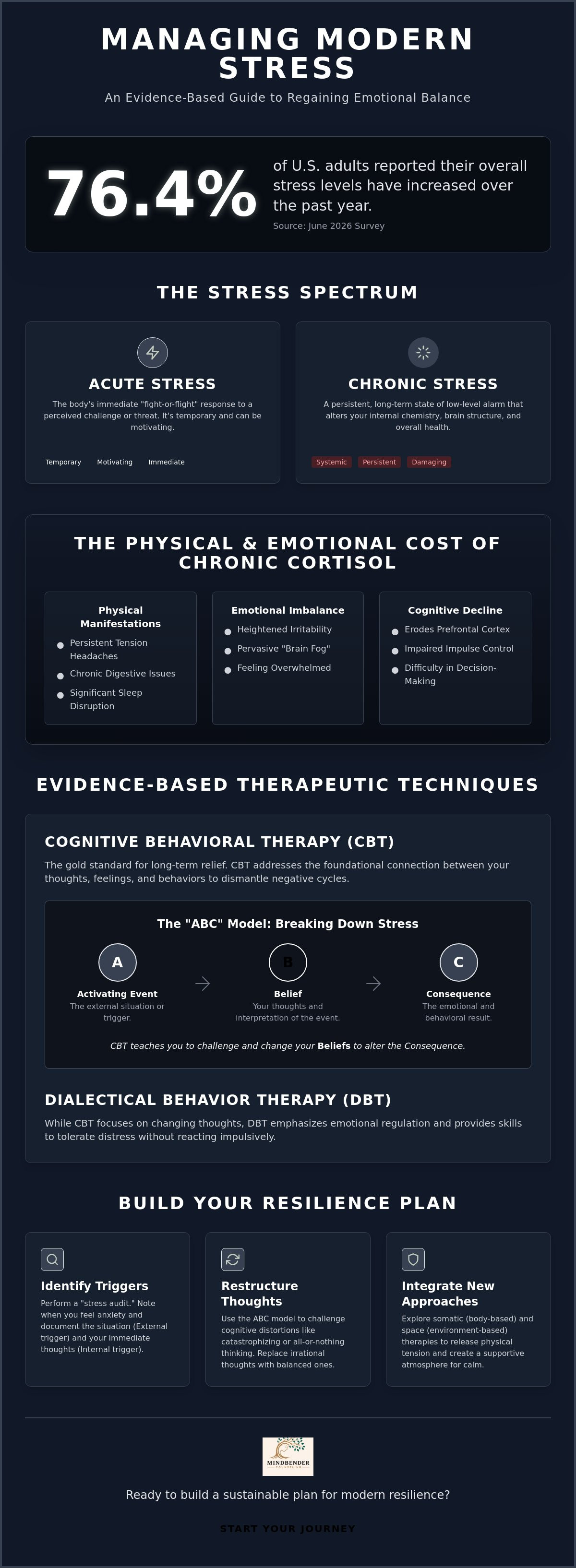
In a June 2026 survey, a staggering 76.4% of U.S. adults reported that their overall stress levels have increased over the past year. You likely recognize this weight. It's the persistent physical hum of chronic cortisol that a simple walk or a warm bath no longer seems to quiet. When traditional self-care feels like a temporary bandage rather than a lasting solution, it's time to explore professional therapeutic techniques for stress management that address the root of your exhaustion.
We understand that decision fatigue often makes choosing a path forward feel like just another item on an endless to-do list. You deserve a clear, evidence-based approach that offers more than just a momentary escape. This guide provides the tools to help you regain emotional balance and mental clarity by bridging the gap between clinical expertise and your daily life.
We'll examine the practical applications of CBT and DBT while introducing the emerging science of space therapy to show how your environment impacts your internal peace. You'll find actionable grounding techniques and a deeper understanding of how to build a solid foundation for modern resilience.
Key Takeaways
- Identify the physiological shift from acute to chronic stress to better understand how cortisol affects your long-term mental clarity.
- Discover how evidence-based therapeutic techniques for stress management, like CBT and DBT, provide a structured path to emotional stability.
- Move beyond traditional talk therapy by exploring somatic approaches that help your nervous system release deep-seated physical tension.
- Learn to harness environmental psychology through space therapy, transforming your physical surroundings into a supportive tool for mental health.
- Build a sustainable resilience plan by combining cognitive, physical, and environmental changes into a personalized and actionable routine.
Understanding the Spectrum of Stress: From Acute to Chronic
Stress is more than a fleeting feeling of being overwhelmed. It's a complex physiological and psychological response to perceived demands. When you encounter a challenge, your nervous system initiates the "fight-or-flight" mechanism, releasing a surge of adrenaline and cortisol. This response was designed to protect you from immediate physical danger, yet in our modern world, the "threat" is often a looming deadline or a difficult conversation. While acute stress is temporary and can even be motivating, chronic stress is systemic and persistent. In high-energy cities like Phoenix and Dallas, the background noise of traffic, long commutes, and a culture of constant connectivity can keep your body in a state of low-level alarm for years.
Recognizing where you fall on this spectrum is vital for choosing the right stress management techniques to regain your balance. When stress moves from a momentary reaction to a permanent state of being, it begins to alter your internal chemistry and even your brain structure. This transition often happens quietly, making it essential to understand the specific ways chronic tension impacts your life.
The Physical and Emotional Cost of Chronic Cortisol
When cortisol remains elevated for extended periods, your body never receives the signal to return to a state of rest. You might notice physical manifestations like persistent tension headaches, digestive issues, or significant sleep disruption. Emotionally, this chemical imbalance often leads to heightened irritability and a pervasive sense of "brain fog" that makes focusing on daily tasks feel like an uphill battle. Research indicates that long-term stress can even erode functions in the prefrontal cortex, the area of the brain responsible for impulse control and complex decision-making. Utilizing professional therapeutic techniques for stress management can help mitigate these effects and restore your cognitive clarity.
Identifying Your Specific Stress Triggers
Effective intervention starts with a clear understanding of your personal triggers. These are often divided into external and internal categories. External triggers are outside influences like a demanding boss or financial pressures. Internal triggers are your own thoughts and expectations, such as perfectionism or a fear of failure. To gain clarity, try a brief "stress audit" this week. Carry a small notebook and record every moment you feel a physical "tightness" or a spike in anxiety. Document the time, the situation, and your immediate thoughts. This simple act of awareness is the first step toward meaningful change. It allows you to move from a state of reactive survival toward a path of intentional, evidence-based healing.
Evidence-Based Cognitive Therapeutic Techniques for Stress
The way you perceive a challenge often dictates your body's physiological response to it. Cognitive Behavioral Therapy (CBT) remains the gold standard for long-term relief because it addresses the foundational connection between your thoughts, feelings, and behaviors. It's one of the most reliable therapeutic techniques for stress management, providing a structured framework to dismantle the negative cycles that keep you in a state of high alert. By learning to identify and adjust these mental patterns, you can effectively lower your baseline anxiety and build lasting resilience. For a comprehensive look at how these modalities work together, you may find our guide on therapy and behavioral therapy helpful for your journey.
Cognitive Restructuring: Challenging the Stress Narrative
At the heart of CBT is the "ABC" model. This tool helps you break down an experience into three parts: the Activating event, your Belief about that event, and the emotional Consequence. Most people assume the event causes the emotion, but it's actually your belief that creates the stress. You might fall into "cognitive distortions," such as catastrophizing, where you imagine the absolute worst-case scenario, or all-or-nothing thinking, where a small mistake feels like a total failure. Cognitive restructuring is the practice of replacing irrational thoughts with balanced, evidence-based perspectives. Identifying these distortions allows you to pause and choose a more constructive response, reducing the weight of everyday pressures.
DBT and Distress Tolerance Skills
While CBT focuses on changing thoughts, Dialectical Behavior Therapy (DBT) emphasizes emotional regulation and staying grounded during intense moments. This is particularly useful when you're exploring integrative treatments for stress that require both mental and physical intervention. One effective DBT tool is the "TIPP" skill, which stands for Temperature, Intense exercise, Paced breathing, and Paired muscle relaxation. Splashing cold water on your face or engaging in a minute of intense movement can physically reset your nervous system when you feel a spike in cortisol.
DBT also introduces the concept of radical acceptance. This isn't about liking a difficult situation; it's about accepting reality as it is to reduce the "secondary stress" of fighting against things you cannot control. Mindfulness plays a key role here, creating a vital gap between a stimulus and your response. If you're feeling overwhelmed by the process of implementing these changes, individual counseling services can provide a supportive environment to practice these skills at your own pace. By integrating these cognitive tools, you move from feeling like a passenger in your own mind to becoming an active architect of your emotional well-being.
Integrative and Somatic Approaches to Nervous System Regulation
Sometimes, words aren't enough to calm a body that feels perpetually on edge. While cognitive tools help rewire your thoughts, deep-seated physiological stress often requires a more direct approach to the nervous system. This is where somatic experiencing becomes essential. Instead of focusing solely on the narrative of your stress, you learn to observe bodily sensations, like a tightness in the chest or a knot in the stomach, to gently release pent-up tension. These therapeutic techniques for stress management acknowledge that your body often remembers what your mind tries to move past.
Central to this process is the vagus nerve, the primary component of your parasympathetic nervous system. Think of it as your body's internal reset button. When stimulated, it signals your heart rate to slow and your muscles to soften, effectively triggering a "rest and digest" state. Structured clinical programs like Mindfulness-Based Stress Reduction (MBSR) utilize these biological pathways to help individuals manage chronic tension. By focusing on the present moment, you provide your nervous system with the safety it needs to disengage from the fight-or-flight response.
Grounding Techniques for Immediate Relief
When you feel a sudden spike in anxiety, grounding techniques offer a way to anchor yourself in reality. The 5-4-3-2-1 sensory method is a reliable favorite: acknowledge five things you see, four you can touch, three you hear, two you can smell, and one you can taste. This shifts your brain's focus from internal distress to your external surroundings. For physical regulation, "box breathing"—inhaling, holding, exhaling, and holding again for four seconds each—directly improves heart rate variability. You might also find relief through progressive muscle relaxation (PMR), where you systematically tense and release different muscle groups to eliminate physical "armoring." These tips to tame stress work best when practiced before you reach a breaking point.
The Role of Mindfulness in Daily Resilience
Mindfulness isn't limited to sitting on a cushion for an hour. It includes "informal" practices like mindful eating or simply noticing the sensation of your feet on the ground as you walk. Consistent practice actually changes the brain's architecture, lowering the amygdala's reactivity so you don't overreact to minor inconveniences. It's about creating a buffer between a stressful event and your reaction. Many people find that phoenix evidence-based counseling successfully integrates these somatic and mindfulness tools into telehealth sessions, making it easier to build resilience from the comfort of your own home. By combining these physical approaches with cognitive work, you create a comprehensive strategy for lasting calm.
Space Therapy: Harnessing Environmental Psychology for Calm
Your physical environment acts as a silent partner in your mental health. While we often focus on internal shifts, the rooms you inhabit every day constantly feed sensory data to your brain. Space therapy is the intentional use of physical surroundings to support mental well-being, rooted in the "Restorative Environment" theory. This branch of environmental psychology suggests that certain settings can actually help you recover from mental fatigue and lower your baseline anxiety. By understanding how lighting, clutter, and "biophilic design"—the integration of natural elements—impact your brain chemistry, you can transform your home from a source of stress into a tool for resilience.
For those living in Phoenix or Dallas, the environment presents a unique challenge during extreme weather months. When triple-digit temperatures force you to stay indoors for weeks at a time, your home can begin to feel like a cage rather than a sanctuary. This confinement often increases "background" stress, making it harder to regulate your emotions. Integrating environmental adjustments with other therapeutic techniques for stress management ensures that your recovery isn't undermined by the space where you sleep and work.
Architecting Your Internal Sanctuary
You don't need a total home renovation to benefit from environmental psychology. Start by creating a "low-stimulation" zone in your house or office, characterized by soft lighting, minimal noise, and the absence of screens. Access to "green space" through indoor plants or "blue space" via water features can significantly lower heart rates and improve focus. Space therapy is a clinical approach that optimizes a client’s physical environment to reduce sensory overload and promote nervous system regulation. These small, intentional changes help signal to your brain that it's safe to move out of a high-alert state.
Digital Space and Mental Boundaries
In our modern landscape, your digital environment is just as impactful as your physical one. A cluttered desktop or a constant stream of notifications increases your cognitive load, leaving less energy for emotional regulation. Practice "digital decluttering" by organizing your apps and setting strict "no-phone" zones in your home. For work-from-home professionals in Phoenix, setting physical boundaries is essential. If possible, keep your workspace entirely separate from your rest areas to help your brain distinguish between high-performance mode and relaxation. If you're finding it difficult to establish these boundaries on your own, Individual Counseling Services can provide the personalized guidance you need to architect a more balanced life. By refining your surroundings, you create a sturdy foundation for all other therapeutic work.
Building Your Personalized Stress Management Plan
Effective stress management is not a one-size-fits-all endeavor. While the tools discussed in previous sections are powerful on their own, their true impact emerges when you integrate them into a cohesive strategy that fits your unique lifestyle. We suggest a "stacking" approach to build a sustainable foundation for resilience. By choosing one cognitive shift, one somatic grounding tool, and one environmental change, you address stress from every possible angle. This multi-layered strategy ensures that if one method feels difficult to access on a particularly hard day, you have other reliable private therapy insights to lean on.
When implementing these therapeutic techniques for stress management, remember that consistency always outperforms intensity. It's more effective to practice two minutes of box breathing every morning than to attempt an hour of meditation once a month. Small, rhythmic actions signal safety to your nervous system, gradually lowering your baseline cortisol levels over time. As you begin to stack these habits, pay close attention to which combinations provide the most relief. This self-observation helps you move from a state of reactive survival to a life of intentional balance.
When to Transition from Self-Help to Professional Counseling
There are times when self-help strategies reach their limit, and that's a signal to seek deeper support. Certain "red flags" indicate that your stress has moved beyond a temporary challenge and into a systemic issue. If you're experiencing persistent insomnia, social withdrawal, or a feeling that you're no longer able to function effectively at work or home, it's time to reach out. A professional provides the outside perspective necessary to identify blind spots in your current coping mechanisms. Our individual counseling sessions in Arizona and Texas offer a safe space to explore these patterns without judgment, helping you regain the clarity you deserve.
Next Steps: Scheduling Your Therapeutic Appointment
Taking the first step toward professional support should feel empowering, not overwhelming. At Mindbender Counseling, our intake process is designed to be straightforward and supportive. We focus on matching you with a professional who understands your specific needs and goals. Through Evidence-Based Therapy, we provide a structured roadmap for your recovery, ensuring that every session moves you closer to emotional stability.
Your stress is a signal that something in your life needs attention; it isn't a permanent state of being or a reflection of your worth. By choosing to engage with professional Individual Counseling Services, you're investing in your own long-term well-being. We invite you to reach out today to begin architecting a life defined by calm, clarity, and modern resilience. You don't have to navigate this journey alone.
Embracing Your Path to Lasting Resilience
Moving from a state of chronic alarm to one of quiet confidence requires more than just willpower. It requires a strategic integration of internal and external shifts. You've seen how cognitive restructuring and somatic grounding can settle your nervous system, while space therapy ensures your physical environment supports your healing. By utilizing these evidence-based therapeutic techniques for stress management, you can build a sturdy foundation that remains intact even during life's most demanding seasons.
We're here to guide you through every step of this evolution. Mindbender Counseling offers compassionate care for Arizona and Texas residents, providing specialized individual and couples counseling tailored to your specific needs. Our evidence-based methods are designed to fit your unique lifestyle, ensuring your progress is both meaningful and sustainable. Begin your journey toward a more balanced life with Mindbender Counseling and reclaim the mental clarity you deserve.
The weight you feel today is a signal, not a permanent destination. With the right support, you can transform your relationship with stress and step into a future defined by stability and peace. You don't have to carry this burden alone.
Frequently Asked Questions
What is the most effective therapeutic technique for stress?
There isn't a single method that works for everyone, but Cognitive Behavioral Therapy (CBT) is widely regarded as the gold standard. It's highly effective because it targets the specific thought patterns that fuel emotional distress. Many people find the most success by combining CBT with somatic practices to address both the mind and the body's physical response to pressure simultaneously.
Can I practice CBT for stress management on my own?
You can certainly practice basic CBT skills, such as identifying cognitive distortions or using thought records, through self-help resources. However, working with a professional is often more effective for uncovering deep-seated patterns you might miss on your own. A therapist provides the structured guidance and objective perspective necessary to ensure you're applying these therapeutic techniques for stress management correctly for your specific situation.
How is space therapy different from just cleaning my house?
While cleaning focuses on tidiness, space therapy is the intentional application of environmental psychology to regulate your nervous system. It involves adjusting specific elements like lighting, color, and biophilic natural features to reduce sensory overload. The goal is to create a restorative environment that actively lowers your cortisol levels; it moves beyond a clutter-free aesthetic to prioritize your internal peace.
What are the signs that my stress has become chronic?
Chronic stress reveals itself through persistent physical and emotional symptoms that don't resolve after a period of rest. You might notice ongoing tension headaches, digestive issues, or a constant sense of irritability and "brain fog" that lingers for weeks. If you feel like you're perpetually in survival mode and traditional self-care no longer provides relief, your stress has likely transitioned from acute to chronic.
Does individual counseling help with work-related burnout?
Individual counseling is highly effective for addressing burnout by helping you establish firmer professional boundaries and reframe your relationship with your career. It provides a safe space to explore the internal triggers, such as perfectionism, that often contribute to exhaustion. Your therapist can help you develop a personalized resilience plan that protects your mental energy while you navigate a demanding work environment.
How long does it take to see results from stress management therapy?
Many clients experience a sense of immediate relief after learning simple grounding tools in their first few sessions. However, achieving deep, structural changes in how you process stress typically takes several weeks or months of consistent practice. The timeline depends on your unique history and how frequently you apply your new skills outside of the therapy room to build a solid foundation.
Is telehealth as effective as in-person therapy for stress?
Research consistently shows that telehealth is just as effective as in-person sessions for managing stress and anxiety. It offers the added benefit of receiving care from your own safe space, which can actually make it easier to practice environmental adjustments in real-time. This accessibility reduces the logistical stress of commutes, allowing you to focus entirely on your personal growth and stability.
What is the TIPP skill in DBT and how do I use it?
The TIPP skill is a distress tolerance tool designed to physically change your body chemistry when emotions feel overwhelming. It stands for Temperature, Intense exercise, Paced breathing, and Paired muscle relaxation. You can use it by splashing cold water on your face or engaging in sixty seconds of jumping jacks to quickly reset your nervous system during a moment of high emotional intensity.


