

What if the true sign of success in your counseling journey isn't the total absence of stress, but the quiet strength and resilience of your response to it? You might feel professionally accomplished yet emotionally stagnant, or find yourself trapped in the same cyclical arguments with your partner night after night. It's natural to feel uncertain about how to measure progress in therapy when the most significant changes often happen beneath the surface. You deserve to know that your investment of time and emotional energy is building a solid foundation for a more balanced life.
This guide provides the clarity you've been seeking by introducing evidence-based frameworks to track your personal and relational evolution. You'll learn to identify tangible signs of improved communication and discover practical tools to manage professional pressure with greater ease. We will explore how to move beyond simply discussing your problems toward a structured roadmap for growth. By focusing on measurable milestones, you can ensure your journey leads to the lasting emotional stability and connection you've been working toward.
Key Takeaways
- Understand that true progress isn't just the absence of symptoms, but the presence of proactive resilience and internal stability.
- Identify internal milestones like pattern recognition and emotional regulation to build a stronger psychological foundation.
- Recognize signs of growth in your relationship by shifting from cyclical arguments to constructive, supportive communication.
- Discover how to measure progress in therapy by setting SMART objectives that transform vague goals into a clear roadmap for change.
- Learn why partnering with an expert in evidence-based therapy can offer the calm assurance you need to navigate your personal evolution.
Decoding Progress: How to Define Success in Evidence-Based Therapy
You might think therapy is only for times of crisis. While it's a sturdy anchor during life's storms, progress-oriented counseling is actually a proactive tool for long-term health. It shifts the focus from survival to evolution. If you feel stuck in your routine despite your career success or personal efforts, that "stagnation" isn't a failure. It's a signal. It tells you that your current coping mechanisms have reached their limit. It's a call for professional intervention that looks forward, not just backward. We view this plateau as an invitation to build a more resilient version of yourself.
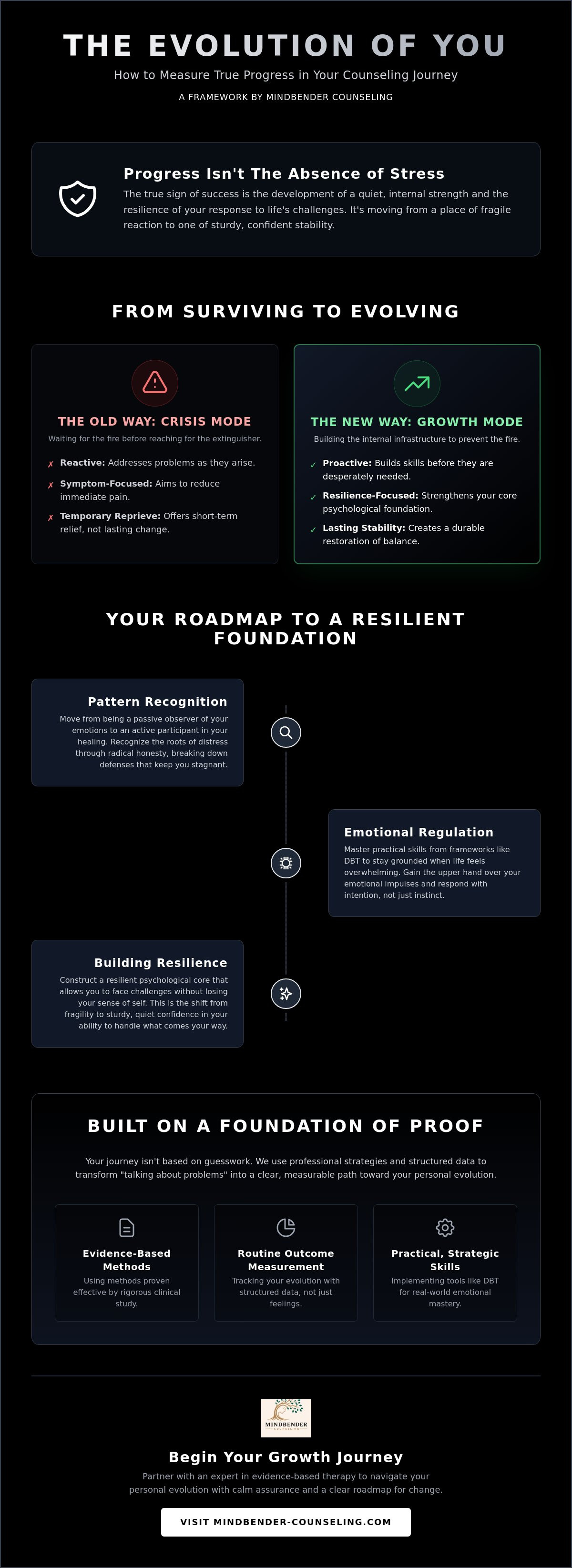
Understanding how to measure progress in therapy requires moving away from vague feelings and toward concrete outcomes. Traditional models often wait for a fire to start before reaching for the extinguisher. In contrast, proactive growth models use personalized interventions as the engine for change. We don't just wait for the next argument or anxiety spike to happen. We build the internal infrastructure to prevent them. This shift from "crisis mode" to "growth mode" ensures that your time in counseling produces a lasting restoration of balance rather than just a temporary reprieve from pain.
The Mindbender Framework for Emotional Maturity
Self-awareness is a beautiful starting point, but it isn't the finish line. Our framework focuses on the transition from knowing why you feel a certain way to actively changing how you behave in the world. When you hit an internal plateau, a wise guide provides the steady support needed to climb higher. These research-backed sessions replace generic advice with specific strategies tailored to your unique internal foundation. You'll learn to move through discomfort with quiet confidence, turning insights into the tangible actions that define true emotional maturity.
Why Evidence-Based Therapy is the Foundation of Progress
Evidence-based therapy is the practice of using methods proven to work through rigorous clinical study. It's the difference between a friendly chat and a professional strategy. By utilizing Routine Outcome Measurement (ROM), we use structured data to inform your individual growth. This approach transforms your sessions from "talking about problems" to "strategizing solutions."
This methodology provides a clear way to see your evolution in real time. It allows us to track how to measure progress in therapy by looking at specific markers of stability and resilience. Every hour spent in our Individual Counseling Services becomes a deliberate step toward your personal evolution. You aren't just hoping for change; you're following a proven path toward a healthier, more connected life.
Individual Milestones: Measuring Your Internal Foundation and Resilience
Building a life of stability begins with a strong internal foundation. When you start to understand how to measure progress in therapy, the most reliable indicators are often found in your private reactions rather than your public achievements. You might still face the same external stressors, but your internal response undergoes a profound shift. This evolution starts with the construction of a resilient psychological core that allows you to face challenges without losing your sense of self. It's about moving from a place of fragile reaction to one of sturdy, quiet confidence.
One of the earliest milestones is pattern recognition. You begin to notice the subtle shift from being a passive observer of your emotions to an active participant in your healing. This transition requires a space for radical honesty where you can examine your thoughts without judgment. Radical honesty isn't just about telling the truth to your therapist; it's about being truthful with yourself about the roots of your distress. This level of transparency acts as a catalyst for movement, breaking down the defenses that have kept you stagnant for years. Our Individual Counseling Services provide this sanctuary, helping you build strength from within.
We often utilize Dialectical Behavior Therapy (DBT) elements to help you master emotional regulation. These tools aren't just clinical concepts; they're practical skills that help you stay grounded when life feels overwhelming. Mastering these techniques is a clear sign that you are gaining the upper hand over your emotional impulses. By implementing a structured framework for measuring therapeutic change, we can track how to measure progress in therapy through your ability to remain balanced during difficult moments.
Identifying and Replacing Maladaptive Patterns
Maladaptive patterns are recurring reactions that hinder long-term stability. In your professional life, these might look like loops of perfectionism that lead to procrastination or a fear of delegation that causes chronic stress. Unlearning these behaviors is a methodical process. It involves identifying the trigger, pausing, and choosing a response that aligns with your values rather than your fears. As you replace these habits with healthier alternatives, you'll notice a restoration of balance in your daily routine.
Building Emotional Resilience for Arizona and Texas Professionals
Professionals in fast-paced hubs like Phoenix or Austin often face unique high-stakes burnout. The pressure to perform at peak levels can erode your well-being if you don't have a plan for recovery. Maintaining a sense of calm assurance during major life transitions or intense quarters at work is a sign of true growth. If you're seeking a more personalized approach to these challenges, exploring a comprehensive guide to private therapy can help you understand the benefits of individualized attention. If you're ready to start building your own foundation, consider reaching out for Evidence-Based Therapy tailored to your lifestyle.
Relational Evolution: Signs of Progress in Couples Counseling
A partnership is more than just two people sharing a life; it's a living entity that requires active, strategic maintenance to thrive. While your internal work builds a sturdy foundation, how to measure progress in therapy as a couple involves looking at the space between you. True relational evolution occurs when individual growth becomes the fuel for a shared transformation. You'll know you're moving forward when the relationship stops feeling like a source of stress and starts feeling like a sanctuary of support.
Couples in the Phoenix and Austin metro areas often navigate unique challenges that can strain even the strongest bonds. High-pressure careers in tech or healthcare, combined with the rapid pace of urban growth, often lead to emotional distance. When your professional life demands all your energy, your relationship can inadvertently fall into a "maintenance mode" that lacks depth. Our Evidence-Based Therapy approach helps you recognize these external pressures so they don't dictate your internal connection. Progress is visible when you and your partner begin to prioritize the relational bond as a vital asset rather than an afterthought.
From Conflict to Connection: Strategic Communication
Many couples fall into the "active listening" trap, where they simply wait for their turn to speak or parrot back words without understanding the underlying emotion. We focus on "empathetic engagement" strategies instead. This involves learning to hear the unmet need behind your partner's frustration. By establishing clear "Rules of Engagement" for healthy disagreement, you can resolve recurring arguments without the conversation spiraling into a cycle of blame. You'll find that how to measure progress in therapy often comes down to how quickly you can repair a connection after a conflict occurs.
Rebuilding Trust and Relational Foundations
Recovering from emotional distance or a breach of trust requires a patient, methodical approach. It starts by aligning your individual growth goals with a shared vision for the future. We use practical exercises to foster a sense of quiet confidence within the partnership, allowing both people to feel seen and valued. As you rebuild your foundation, you'll notice a restoration of balance where trust isn't just a concept, but a daily practice. This steady movement toward intimacy is the ultimate sign of a successful Couples Counseling journey.
The Roadmap to Results: A Step-by-Step Framework for Measuring Change
To understand how to measure progress in therapy, you must first establish a clear baseline of your current emotional and relational state. This audit involves looking honestly at your recurring triggers, the frequency of your arguments, and your general sense of internal peace. You might record how often you feel overwhelmed at work or the specific moments when communication breaks down at home. Once you have this starting point, you can set "SMART" therapeutic objectives. These goals are specific, measurable, achievable, relevant, and time-bound. They move you away from vague hopes toward a concrete plan for evolution. By matching the right evidence-based method to your specific needs, your sessions become a targeted strategy for restoration rather than just a place to vent.
Your roadmap isn't static. It requires you to implement new strategies in your daily life and then review those results with your therapist regularly. This cycle of action and refinement is what builds a solid internal foundation and ensures your time is well-spent. Regularly reviewing these markers with your guide ensures you stay on the path toward your desired outcomes while learning how to measure progress in therapy through tangible life changes. If you're ready to begin this structured journey, our team provides Evidence-Based Therapy designed to facilitate your unique personal evolution.
Addressing the #1 Growth Killer: Fear of Vulnerability
Growth feels uncomfortable because it often requires you to lean into friction. In a professional counseling setting, we create a safe environment where you can explore this discomfort without fear of judgment. This safety allows you to lower your defenses and speak with radical honesty. Vulnerability is a clinical tool for strength, not a sign of weakness. By embracing this openness, you break through the plateaus that previously kept you stuck in cyclical patterns and professional burnout.
Maintaining Momentum Between Sessions
The work you do between sessions is just as vital as the time spent in the office. Real-world application of your new tools helps maintain your momentum and builds long-term optimism. You might practice a new communication technique during a difficult conversation or use a grounding exercise before a high-stakes presentation. Tracking small wins, such as choosing a calm response during a stressful meeting, provides the evidence you need to see your growth. Using self-care as a proactive therapeutic strategy ensures you have the energy required for this deep, transformative work.
Navigating Your Growth Journey with Mindbender Counseling
Choosing to begin counseling is a significant step toward the restoration of balance in your life. At Mindbender Counseling, we remain deeply committed to providing professional, evidence-based care that honors your unique experience. Our sessions aren't just about temporary relief; they're about building a solid internal foundation that supports your long-term stability. When you work with our therapists, you'll experience a sense of calm assurance. This feeling comes from knowing you're partnered with an expert who uses proven methods to facilitate your movement toward well-being.
Our practice serves as a sturdy anchor during your personal evolution. We provide the frameworks you need to understand how to measure progress in therapy from your very first session. This structured approach reduces the friction often associated with seeking professional help. By moving at a methodical pace, we ensure you have the space to process information without feeling rushed. You'll find that the path forward becomes clearer as we acknowledge your specific needs and apply a supportive methodology to address them. This organized rhythm mirrors the patient nature of the therapeutic process itself.
Personalized Interventions for Arizona and Texas Residents
Our local expertise allows us to address the specific professional stressors faced by residents in high-growth hubs like Phoenix and Austin. We understand the unique pressures of these regional markets, from the fast-paced tech industry to the demands of metropolitan life. Whether you're seeking Individual Counseling Services to build personal resilience or Couples Counseling to restore a relational bond, our programs are research-backed and highly personalized. Starting with us is a low-friction process designed to help you regain your equilibrium and focus on your long-term goals.
Taking the First Step Toward Growth
To maximize your growth, we encourage you to view your first session as a valuable workplace and life asset. Prepare by reflecting on the specific "SMART" objectives we discussed earlier in this guide. Think about the internal plateaus you've encountered and the communication loops you wish to break. This preparation allows us to dive deeper into the work of strategizing solutions from the very start. We invite you to experience the Mindbender difference. Scheduling an appointment in Arizona or Texas is the first step toward a more balanced, resilient, and connected version of yourself. Your journey toward lasting emotional and relational health begins with a single, deliberate choice to prioritize your evolution.
Embracing Your Path to Lasting Stability
Realizing that growth is a methodical process allows you to approach your mental health with quiet confidence. You've learned that success in the therapeutic space isn't a vague feeling; it's the result of building a sturdy internal foundation and applying research-backed strategies to your daily life. Understanding how to measure progress in therapy transforms your sessions from a series of conversations into a strategic roadmap for change. Whether you're mastering emotional regulation or shifting from conflict to connection in your partnership, these milestones mark your evolution toward a more balanced life.
Our compassionate, professional licensed therapists are here to act as your wise guides. We utilize evidence-based therapy techniques to ensure your journey is both effective and supportive. With a specialized focus on individual and couples growth, we help you navigate the unique stresses of your professional and personal world. Begin your journey toward personal evolution with Mindbender Counseling today. You don't have to navigate this path alone; we provide the steady support you deserve as you build a resilient future.
Frequently Asked Questions
What are the specific benefits of growth-oriented counseling versus traditional therapy?
Growth-oriented counseling prioritizes your long-term evolution and proactive resilience over simple crisis management. While traditional models often focus on returning you to a baseline after a setback, our approach helps you build a new, stronger internal foundation. You gain practical tools to prevent future stagnation and foster a sense of calm assurance in your daily life. This forward-looking methodology ensures that your sessions act as a catalyst for permanent personal growth.
How long does it typically take to see measurable growth in individual therapy?
The timeline for change is highly personal, though many clients begin to notice internal shifts within the first eight to twelve sessions. You'll likely see early progress in your ability to recognize maladaptive patterns before they spiral into larger issues. Understanding how to measure progress in therapy involves tracking these small wins, such as a shift in your reaction to professional stress. Consistent attendance and real-world application of your new tools will help you reach your therapeutic objectives more efficiently.
Can couples counseling help if only one partner is interested in personal growth?
Yes, because a relationship is a dynamic system where a change in one person inevitably influences the other. When you work on your own emotional regulation and communication, you shift the relational bond in a positive direction. However, the most profound transformations occur when both partners commit to the process together. If your partner is hesitant, starting with Individual Counseling Services can still provide you with the strategies needed to navigate your relationship with greater clarity and strength.
What evidence-based therapy methods does Mindbender Counseling use for anxiety?
We utilize a sophisticated blend of Cognitive Behavioral Therapy (CBT) and Dialectical Behavior Therapy (DBT) elements to address anxiety at its root. These methods focus on restructuring the thought patterns that lead to distress while providing immediate grounding techniques for emotional regulation. By using research-backed interventions, we help you restore balance to your nervous system and your life. This structured approach ensures that you aren't just talking about your fears, but actively building the resilience to overcome them.
Is professional counseling considered a workplace asset for high-level executives?
High-level executives often view professional counseling as a vital tool for maintaining peak performance and emotional intelligence. It provides a private space to manage the unique pressures of leadership and high-stakes decision-making. By refining your communication skills and building a sturdy internal foundation, you become a more effective and resilient leader. Many professionals in Phoenix and Austin use these sessions to prevent burnout and ensure their career success doesn't come at the cost of their personal well-being.
How do I know if I need individual counseling or couples therapy first?
You should consider where the primary source of your distress currently resides to determine your starting point. If your personal struggles with stress or self-esteem are bleeding into your partnership, starting with individual work may be the most effective path. Conversely, if your relationship arguments are the main cause of your emotional fatigue, Couples Counseling can address those dynamics directly. During your initial consultation, we can help you determine which approach will best facilitate your restoration of balance.
What should I expect during my first therapeutic appointment at Mindbender?
Your first session is a structured assessment designed to audit your current emotional baseline and establish your growth goals. We will discuss your history and the specific challenges you face in your professional and personal life. This is also where we begin to define how to measure progress in therapy by setting clear, achievable objectives tailored to your needs. You'll leave the first appointment with a sense of the path forward and a better understanding of our supportive methodology.
Are these growth strategies applicable for LGBTQIA+ individuals and couples in Texas?
Our evidence-based strategies are fully inclusive and designed to support the unique needs of LGBTQIA+ individuals and couples across Texas. We provide a safe, affirmative environment where you can explore your personal evolution without fear of judgment. Our therapists are trained to understand the specific stressors that can impact the queer community, ensuring your care is both compassionate and culturally sensitive. We remain committed to helping every client build a resilient and authentic life based on their personal values.


