

You're sitting across from each other, but the distance between you feels like miles. Another argument has reached its familiar, exhausting stalemate, and you're left wondering if you're even speaking the same language anymore. It is deeply painful to feel unheard or dismissed by the person who is supposed to be your closest ally. Most partners eventually face these moments of emotional disconnection, where every conversation feels like a minefield. However, these cycles don't have to define your future. By practicing intentional communication exercises for couples, you can begin to dismantle the barriers that keep you apart.
This article provides a clear path forward through ten evidence-based tools used by professional therapists to restore balance and trust. You'll learn practical, research-backed skills designed to lower defenses and turn repetitive conflicts into opportunities for growth. We'll explore how to handle difficult conversations with calm assurance; this helps you feel like a unified team again. Whether you're looking to soften the intensity of your disagreements or simply want to deepen your intimacy, these proven methods offer the steady support needed for a lasting, healthy bond.
Key Takeaways
- Reframe your daily interactions as "bids for connection" to shift the focus from simple information exchange to emotional intimacy.
- Implement consistent communication exercises for couples, such as the 10-minute check-in, to maintain a healthy emotional bank account.
- Master de-escalation tools like the "Speaker-Listener" technique to ensure both partners feel fully understood during difficult conversations.
- Create intentional boundaries around digital devices and work stress to protect your relationship from the pressures of modern professional life.
- Recognize the repetitive cycles that indicate when professional, evidence-based therapy is the most effective path toward healing.
Understanding the Communication Gap: Why Even Good Couples Struggle
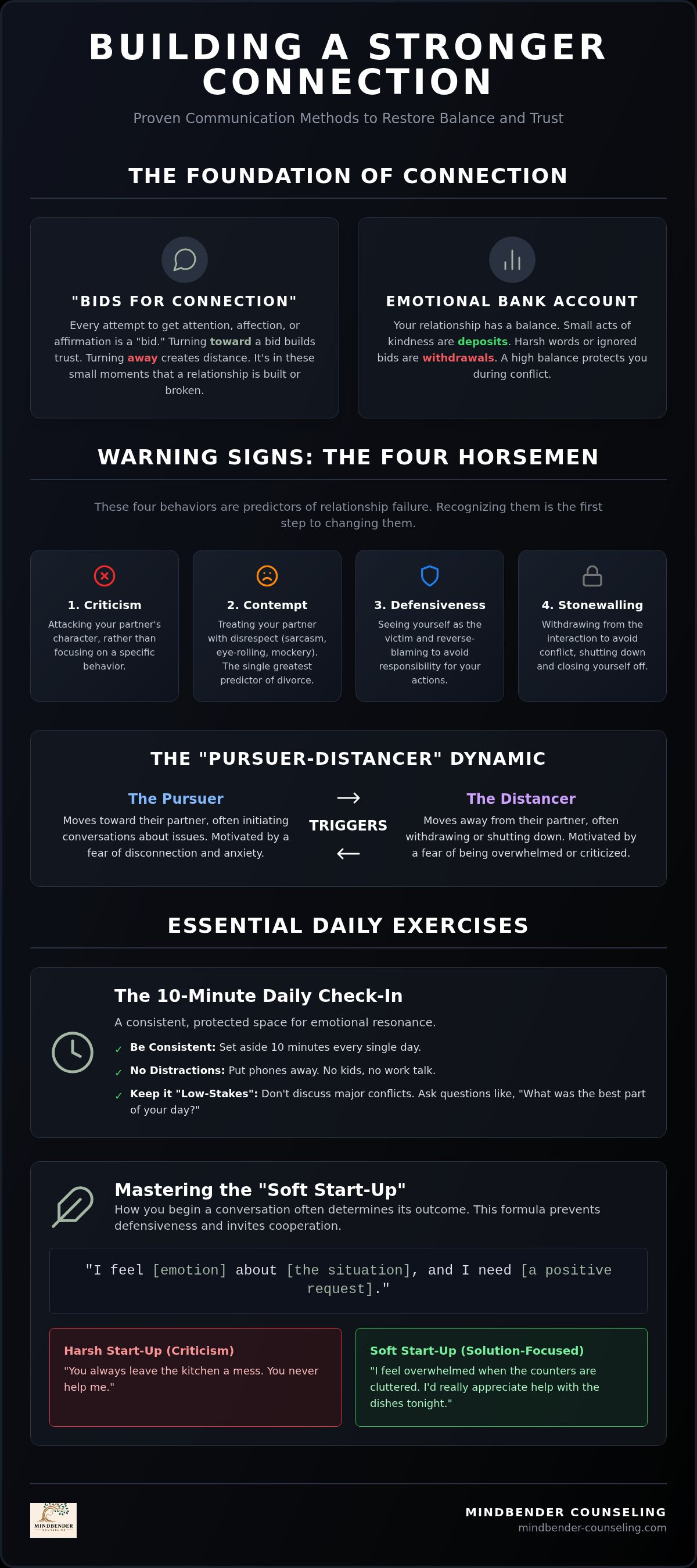
Communication in a healthy relationship is more than just an exchange of facts. It's a series of "bids for connection." In the study of Interpersonal communication, these bids represent any attempt to get attention, affirmation, or affection. If your partner turns toward your bid, you build trust. If they turn away, you create distance. This is why communication exercises for couples are vital. They help you notice these small moments before they turn into large divides. By focusing on these bids, you move from simple dialogue to deep emotional resonance.
Think of your relationship as having an "emotional bank account." Small acts of kindness, like a quick text or a warm greeting, act as deposits. Harsh words or ignored bids are withdrawals. When your balance is high, you can handle a disagreement without it spiraling because the foundation is secure. When it's low, even a minor comment feels like a personal attack. To protect this balance, you must identify the "Four Horsemen": criticism, contempt, defensiveness, and stonewalling. These behaviors shift the goal from mutual understanding to individual survival. Healing starts when you stop trying to "win" the argument and start trying to understand your partner’s reality as a valid truth.
The Science of Relational Friction
When conflict begins, your nervous system often shifts into a state of high alert. Your heart rate increases, and your capacity for logic decreases. This creates reactive communication, where you respond from a place of fear rather than love. Intentional dialogue requires you to recognize this physical shift and pause. Think of communication as a muscle. It needs regular communication exercises for couples to stay resilient under pressure.
Recognizing Your Unique Communication Style
Most couples fall into a predictable "Pursuer-Distancer" dynamic. One partner might push for answers when they feel anxious. The other may withdraw to avoid further pain. These aren't personality flaws; they're survival strategies. Neither role is inherently bad, but they often trigger one another's insecurities. Evidence-based therapy helps you decode these roles. It transforms the way you see your partner's silence or their intensity.
5 Essential Communication Exercises for Daily Connection
Building a resilient relationship happens in the small, quiet moments of the day. While grand gestures have their place, it's the consistent application of communication exercises for couples that creates lasting security. These five tools help you move from reactive patterns to intentional connection, ensuring your bond remains a source of strength rather than stress.
The Power of the Daily Check-In
Consistency is the anchor of a secure bond. Set aside 10 minutes every day to focus exclusively on each other. During this time, put your phones away and ensure there are no distractions from children or work. This is a protected space for emotional resonance.
The "Low-Stakes" rule is critical here. Don't use this time to solve the household budget or discuss major conflicts. Instead, ask, "What was the best part of your day?" and truly listen. This exercise mirrors the Gottman Institute communication exercises designed to foster positive sentiment. By sharing small wins, you reinforce the feeling that you're on the same team.
Mastering the Soft Start-Up
How you begin a conversation often determines how it will end. A harsh beginning almost always leads to defensiveness, while a gentle approach invites cooperation. The Soft Start-Up acts as the essential antidote to criticism by framing needs through personal feelings rather than character attacks.
The formula is simple: "I feel [emotion] about [situation] and I need [positive need]." For example, instead of saying, "You always leave the kitchen a mess," try, "I feel overwhelmed when the counters are cluttered, and I'd really appreciate help with the dishes tonight." Avoiding "You" statements prevents your partner from feeling attacked and keeps the focus on the solution. If you find that these tools are difficult to implement alone, evidence-based therapy can provide the personalized coaching needed to refine these skills.
Beyond these structured dialogues, integrate "Appreciation Rituals" into your routine. Expressing gratitude for small things, like making coffee or handling a school run, builds a foundation of positivity. Similarly, maintaining "Love Maps" involves staying curious about your partner’s changing inner world. Ask about their current stresses or new interests. Finally, don't underestimate the power of extended eye contact. Holding your partner’s gaze for just 30 seconds helps regulate the nervous system and lower cortisol levels, creating a sense of calm assurance in the relationship.
Advanced Techniques for De-escalation and Conflict Resolution
While daily habits build a foundation, high-stakes conflicts require a more specialized set of communication exercises for couples. When emotions run hot, the goal shifts from simple connection to de-escalation. You can move from blame to vulnerability by replacing "You" statements with "I" statements. Instead of saying, "You never listen," try, "I feel lonely when I don't feel heard." This shift invites your partner to see your internal world rather than defending against an attack.
The Speaker-Listener Floor
To ensure both partners feel 100% understood, use a physical object to designate the "floor." This could be a remote, a coaster, or a piece of paper. Only the person holding the object may speak. The listener’s primary job is to provide a calm, non-judgmental space and then paraphrase what they heard before responding. This is one of the most effective Gottman Institute communication exercises because it slows down the dialogue. Remember, validation does not mean you have to agree with your partner’s perspective. It simply means you recognize their feelings as a valid part of their experience.
Implementing Healthy Time-Outs
Sometimes, the best way to handle a conversation is to stop it. When your heart rate exceeds 100 beats per minute, you experience "flooding." In this state, your brain's logic centers shut down, and you enter a fight-or-flight response. Effective conflict resolution becomes impossible. Implement a "Twenty-Minute Time-Out" to allow for physiological cooling. During this break, avoid ruminating on the argument; instead, engage in a soothing activity like deep breathing or listening to music.
The "Return Clause" is the most important part of this exercise. You must always set a specific time to come back to the conversation. This prevents the partner who needs connection from feeling abandoned and ensures the issue isn't swept under the rug. Recognizing these moments and using "Repair Attempts," which are small gestures like a smile or a gentle touch, can stop an argument from escalating into a crisis. If you find that these advanced techniques still lead to a stalemate, Mindbender Counseling offers evidence-based therapy in Arizona and Texas to help you break these deep-seated cycles.
Overcoming Modern Barriers to Connection in Arizona and Texas
Living in Arizona or Texas often means balancing a fast-paced professional life with the intensity of urban sprawl and long commutes. Whether you're navigating the tech corridors of Austin or the corporate hubs in Phoenix, external stress inevitably follows you home. These regional pressures can create a sense of exhaustion that makes it difficult to engage in communication exercises for couples. When you're physically and mentally drained, your capacity for patience and active listening naturally diminishes. Acknowledging these environmental factors is the first step toward reclaiming your connection.
The Impact of Professional Stress on Intimacy
Arizona's professional culture is often relentless, and high-achieving couples frequently find that "work-talk" dominates their evening connection. To prevent professional burnout from eroding your intimacy, create a "Transition Ritual" between the office and the home. This buffer period allows your nervous system to downshift from a state of high-alert productivity to one of receptive connection. It might be a fifteen-minute walk or a shared coffee where work topics are strictly off-limits. If your schedule makes in-person visits difficult, you might wonder, How Does Online Couples Counseling Work? Many modern professionals find that on-demand therapy fits better into their high-pressure lifestyles, providing a supportive methodology without the added stress of a commute.
Creating a "Sacred Space" for Dialogue
Digital distractions are a silent barrier to intimacy in our hyper-connected world. Setting clear boundaries around phones and work tech is essential for emotional safety. Designate a "Sacred Space" in your home, like a specific chair or a tech-free dining table, intended solely for deep conversation. Implementing a "No-Tech Zone" rule for meal times and the bedroom ensures that your partner doesn't feel dismissed by a notification. Your physical environment directly influences your emotional state; when you remove the clutter of work and technology, you create the tranquility needed for effective dialogue. These environmental shifts can significantly strengthen the impact of your communication exercises for couples. If the pressures of your career or environment are consistently causing relational friction, evidence-based therapy can help you restore balance and build a more resilient partnership.
When Exercises Aren’t Enough: Integrating Professional Support
While the communication exercises for couples outlined in this guide provide a powerful starting point, there are times when self-directed practice reaches its natural limit. This doesn't mean your relationship is failing; instead, it often indicates that you've encountered deep-seated "stuck" patterns that have been reinforced over many years. When the same argument repeats with the same painful outcome, or when attempting these exercises leads to more conflict rather than less, it's a sign that your cycle requires the specialized intervention of a professional guide. Evidence-based therapy offers the structured, safe environment necessary to dismantle these rigid barriers and restore your emotional connection.
Signs You Could Benefit from Professional Counseling
Identifying when to transition from self-help to professional support is a vital step in relational health. One of the most significant indicators is the presence of "stonewalling," where one partner completely withdraws emotionally or physically during a disagreement. This withdrawal often signals that the nervous system is overwhelmed and no longer feels safe enough to engage. If your attempts to use communication exercises for couples are met with silence or increased defensiveness, the underlying issues may be too complex to navigate alone. For partners in Phoenix or across Texas, professional counseling provides a sturdy anchor during these turbulent times. You can explore how to navigate this transition in our Breaking the Stigma: Private Therapy Guide, which helps dismantle the barriers to seeking personalized, private care.
What to Expect from Mindbender’s Evidence-Based Approach
A listicle can offer valuable tools, but it cannot replace the nuanced, individualized attention of a licensed therapist. At Mindbender Counseling, we provide a sophisticated blend of professional expertise and deep compassion. Our intake process for couples counseling is designed to be a clear, low-friction path forward. We focus on understanding your unique history and the specific dynamics that keep you feeling disconnected.
Our approach utilizes research-backed methods tailored to your relationship's specific needs, ensuring that every session acts as a catalyst for movement and healing. We prioritize the construction of a solid internal foundation, helping you move beyond surface-level symptoms to address the root causes of friction. We invite you to schedule a therapeutic appointment to begin the process of restoring balance and strengthening your bond. Our team is here to act as a professional facilitator for your journey toward well-being, providing the steady support you need to feel like a team again.
Restoring Your Path to Connection
Building a resilient relationship is a continuous process of learning and adaptation. You've explored how small daily check-ins and structured communication exercises for couples can dismantle the barriers of emotional disconnection. By recognizing your unique dynamics and setting boundaries around modern stressors, you take active steps toward a more secure future. These tools aren't just about avoiding conflict; they're about creating a deep, lasting intimacy where both partners feel truly seen.
If you find that your patterns remain rigid despite your best efforts, remember that professional guidance is a sturdy anchor for growth. Mindbender Counseling provides compassionate care in Arizona and Texas through evidence-based therapy methods and personalized therapeutic interventions tailored to your specific needs. You don't have to navigate these complexities alone. Strengthen your bond with professional couples counseling at Mindbender Counseling today. Every intentional step you take is a powerful investment in the health and longevity of your partnership.
Frequently Asked Questions
How often should we practice these communication exercises?
Consistent practice is the foundation of relational growth. You should aim to integrate low-stakes communication exercises for couples, like the 10-minute check-in, into your daily routine. More intensive techniques, such as the Speaker-Listener floor, are best used weekly or when specific conflicts arise. This regular rhythm ensures that your emotional bank account stays balanced. It prevents small misunderstandings from accumulating into the heavy burdens of resentment or disconnection.
What if my partner refuses to do communication exercises with me?
You can begin by modeling healthy habits yourself even if your partner is hesitant. Shifting your own approach by using "I" statements or soft start-ups often invites a natural change in the relationship dynamic. If their refusal comes from feeling overwhelmed, try suggesting a very brief, low-pressure exercise first. Sometimes, seeing the positive impact of your own changes is the most persuasive way to encourage them to join you in the process.
Can communication exercises fix a relationship after infidelity?
These tools are essential for rebuilding transparency, but infidelity often requires deeper, professional intervention. Exercises help you navigate the difficult conversations required to understand the breach and restore trust. However, the trauma of betrayal is complex. Couples in Arizona and Texas often find that combining these at-home practices with evidence-based therapy provides the safety needed to process the pain. It ensures that the healing process is both thorough and sustainable for the long term.
Are these exercises effective for long-distance couples?
Long-distance couples benefit immensely from these structured interactions as they bridge the physical gap with emotional intimacy. Most exercises, including Love Maps and daily check-ins, translate perfectly to video calls or messaging. These intentional moments prevent the sense of drift that often occurs when partners aren't sharing a physical space. By prioritizing these communication exercises for couples, you maintain a shared inner world and reinforce your commitment despite the miles between you.
How long does it take to see results from these relationship tools?
You will likely notice a reduction in conflict intensity after just a few successful de-escalation attempts. However, building a truly resilient foundation typically takes several months of consistent practice. It takes time for the nervous system to stop reacting with fear during disagreements. Most partners report a significant shift toward feeling like a team again within 90 to 180 days. Patience and persistence are your most valuable allies as you construct this new internal foundation together.
What is the most important communication skill for a couple to learn?
The most vital skill is the ability to listen with the intent to understand rather than the intent to respond. This involves active listening and emotional validation. When you can mirror your partner's feelings without becoming defensive, you create an atmosphere of safety and trust. This single shift can stop the "Four Horsemen" in their tracks. It transforms a potential argument into a meaningful bid for connection, allowing both of you to feel heard and respected.


