

Imagine sitting at your desk in Dallas or Phoenix, staring at a screen while your heart races and "what-if" thoughts drown out your productivity. You want to engage with your colleagues, but the fear of saying the wrong thing makes social withdrawal feel like the only safe option. It's exhausting to live in a state of constant high alert. If you have considered individual therapy for anxiety, you already know that this internal noise is a heavy burden that impacts your career, your relationships, and your physical well-being.
Deciding to seek professional support is a powerful way to begin reclaiming the quiet confidence you deserve. This guide will show you how personalized, evidence-based care can help you navigate these overwhelming feelings and reclaim your sense of peace in 2026. We will explore the practical tools that lead to emotional stability and a renewed ability to focus on your professional goals. By building a solid internal foundation with a compassionate guide, you can move from a place of reactive fear to one of steady, lasting calm.
Key Takeaways
- Learn how evidence-based methods like CBT and ACT transform reactive fear into psychological flexibility and lasting resilience.
- Discover why individual therapy for anxiety provides a personalized, sturdy anchor that solitary apps and self-care books cannot replicate.
- Understand the step-by-step process of a therapeutic journey, from the initial consultation to identifying your unique anxiety blueprint.
- Recognize the importance of professional support over group settings when seeking a private, focused environment for personal growth.
- Find out how to access specialized care in Arizona and Texas to navigate high-pressure environments and reclaim your sense of peace.
Understanding Anxiety in 2026: Why Individual Therapy is the Gold Standard
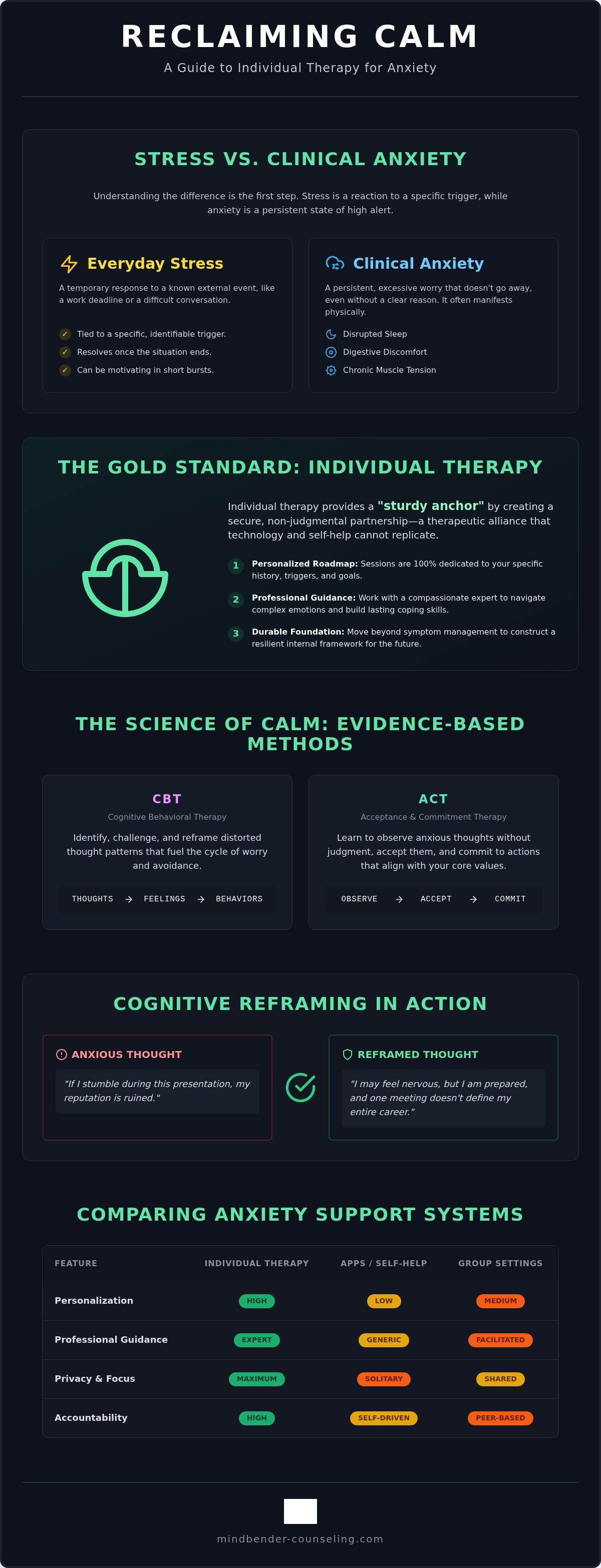
Anxiety is your body's survival mechanism operating on a loop. In its original form, it's a natural signal designed to keep you safe from perceived danger. However, in 2026, the constant hum of digital saturation, shifting economic realities, and lingering social isolation has caused this internal alarm to become overactive. It's no longer just about survival; it's about a nervous system that doesn't know how to turn off. While books or automated apps offer temporary relief, they can't provide the steady, human presence required to recalibrate this response. This is why individual therapy for anxiety remains the gold standard. It offers a "sturdy anchor" through the therapeutic alliance. This alliance is a unique partnership where a professional guide helps you process your specific fears in a secure, non-judgmental environment. Research consistently shows that the quality of this relationship is a primary driver of successful outcomes, providing a level of safety that technology cannot replicate.
The Difference Between Stress and Clinical Anxiety
It's helpful to recognize when everyday stress evolves into something more persistent. While stress is usually tied to a specific external event, a clinical Anxiety disorder often feels like a constant weight that doesn't lift once the problem is solved. You might notice physical markers like disrupted sleep, digestive discomfort, or chronic muscle tension in your shoulders and jaw. These physical symptoms are your body's way of communicating that it's stuck in a state of high alert. At its core, anxiety is an overestimation of threat and an underestimation of coping resources. When these feelings begin to interfere with your productivity at work or your ability to enjoy your personal relationships, professional support becomes a necessary step toward healing.
Why Personalized Attention Matters for Recovery
The "one-size-fits-all" approach found in mental health apps often fails because it ignores the complexity of your personal history. Recovery isn't a linear checklist; it's a nuanced process of discovery. Individual sessions allow you to deep-dive into the specific triggers that are unique to your life, whether those are professional pressures in a fast-paced city or complex family dynamics. By choosing individual counseling for anxiety, you ensure that every minute of your session is dedicated to your specific mental health goals. This focused attention allows for a level of insight and lasting change that generic tools simply cannot match. You aren't just managing symptoms; you're building a solid internal foundation. Engaging in individual therapy for anxiety provides the space to dismantle old patterns and construct a more resilient future.
The Science of Calm: Evidence-Based Techniques for Anxiety Relief
Effective individual therapy for anxiety relies on protocols that have been rigorously tested and refined over decades. Cognitive Behavioral Therapy (CBT) serves as the bedrock of modern treatment. It helps you recognize how your thoughts influence your feelings and behaviors. By identifying distorted patterns, you can begin to dismantle the cycle of persistent worry. However, a truly robust internal foundation requires more than just logic. While CBT focuses on changing thoughts, Acceptance and Commitment Therapy (ACT) introduces the power of psychological flexibility. ACT teaches you to observe anxious thoughts without judgment, allowing you to move toward what matters most to you. These research-backed but human-centered approaches ensure you aren't treated as a clinical case study. Instead, you are an individual learning to navigate your unique emotional landscape with confidence.
Cognitive Reframing: Moving Beyond Negative Thought Patterns
Anxiety often speaks in extremes. You might find yourself catastrophizing, which is assuming the absolute worst outcome, or mind reading, where you believe you know exactly what others are thinking of you. For instance, a professional in Dallas or Phoenix might think, "If I stumble during this board presentation, my reputation is ruined." Reframing allows you to shift that thought to, "I may feel nervous, but I am prepared and one meeting doesn't define my entire career." This practice isn't about forced positivity; it's about finding a balanced perspective. You can explore more about understanding therapy and behavioral therapy to see how these cognitive shifts create the space needed for emotional growth.
Mindfulness and Somatic Grounding
Anxiety lives in your body as much as your mind. When you're anxious, your system is often flooded with cortisol, the primary stress hormone that triggers a fight-or-flight response. Individual therapy teaches you to regulate your nervous system through somatic grounding. These techniques bring your awareness back to the present moment, physically lowering your heart rate and reducing systemic stress. According to the Mayo Clinic's guide on the Diagnosis and treatment of anxiety disorders, combining psychological strategies with physical regulation is a critical component of successful recovery. Mastering these internal tools provides a sense of calm assurance. You begin to trust your ability to handle challenges without becoming overwhelmed. If you're ready to develop these practical coping tools, you can connect with a supportive therapist to begin your journey.
Comparing Individual Therapy to Other Support Systems
Choosing the right support system is a vital step in your journey toward emotional resilience. While support groups offer a sense of community through shared experiences, they lack the clinical precision of a one-on-one session. Mindbender Counseling focuses exclusively on individual and couples work to ensure your specific needs remain the primary focus. In a group setting, your time is divided among many participants, but individual therapy for anxiety provides a dedicated space where every conversation is tailored to your unique history and goals. This environment allows for the depth required to dismantle complex anxiety blueprints that generic group discussions might overlook.
Many people attempt to manage their symptoms through self-care routines alone. Meditation apps, journaling, and exercise are excellent foundations for well-being, but they often act as temporary bandages for chronic anxiety rather than long-term solutions. Generic wellness programs cannot replicate the nuanced adjustments a professional guide provides. A personalized therapeutic plan is significantly more efficient because it targets your specific neurological triggers directly. The privacy and safety of a private therapy setting ensure you can speak freely, which is especially important for those in high-stakes professional roles who require absolute confidentiality.
Therapy vs. Medication: Finding Your Path
Mindbender focuses on evidence-based counseling rather than psychiatric medication management. While medication can be a helpful tool for suppressing acute physical symptoms, it doesn't teach you the underlying skills needed to navigate future challenges. By engaging in individual therapy for anxiety, you address the root causes of your distress. You develop a psychological toolkit that lasts a lifetime, ensuring you have the internal resources to maintain stability even after your formal treatment ends. This focus on skill-building empowers you to become the primary architect of your own calm.
The Role of Professional Guidance vs. Self-Help
Self-help books offer valuable insights, but they cannot observe your blind spots or challenge your recurring patterns in real-time. A therapist acts as a catalyst for movement, providing an objective perspective that is necessary for breaking deep-seated habits. This professional partnership transforms passive learning into active, sustainable growth. It's the difference between reading about a destination and having a seasoned guide walk the path with you. This steady support helps you stay committed to your progress, even when the work feels challenging.
What to Expect: Your Journey Through Individual Anxiety Sessions
Starting individual therapy for anxiety is a courageous step toward personal evolution. The process is designed to be methodical and steady, mirroring the patient nature of the healing journey itself. By understanding the structure of your sessions, you can lower your defenses and build the trust necessary for deep work. Your path typically follows four distinct stages:
- The Initial Consultation: This first meeting is about building safety. You and your therapist will identify your specific goals and ensure you feel comfortable in the therapeutic partnership.
- Assessment: We work together to understand your unique anxiety "blueprint." This involves identifying the specific triggers, thought patterns, and physical sensations that characterize your experience.
- Skill Building: In the security of the session, you will practice cognitive and behavioral tools. This safe space allows you to test new ways of responding to fear before applying them in high-pressure situations.
- Integration: This final stage focuses on applying your new toolkit to real-world challenges. Whether you are navigating a corporate environment in Phoenix or managing relocation stress in Dallas, you will learn to maintain your calm in the middle of daily life.
Creating a Safe Space for Vulnerability
The atmosphere of a Mindbender session is one of quiet confidence and compassion. We provide a non-judgmental environment where you can explore your internal world without the pressure of being "fixed." The rhythm of our work is intentional; we move at a pace that allows you to process information without feeling rushed. It's vital to remember that you are the expert on your own life. Your therapist acts as a professional facilitator and a supportive guide, helping you uncover the strengths you already possess. This collaborative approach ensures that the progress you make is authentic and sustainable.
Measuring Progress and Long-Term Resilience
You will know you are getting better when your baseline stress begins to lower and you recover more quickly from triggers. Progress isn't just the absence of anxiety; it's the presence of confidence in your ability to handle it. You will move from simply "surviving" your day to actively "thriving" in your personal and professional roles. For those looking to balance high-pressure careers with mental well-being, exploring wellness therapy resources can provide additional support. As you build this internal foundation, you'll find that your relationships improve and your focus at work returns. If you're ready to begin this transformative process, you can schedule your initial consultation today to take the first step toward lasting calm.
Finding Support in Arizona and Texas: The Mindbender Approach
Residents of the Southwest navigate a unique set of challenges that require more than generic advice. Mindbender Counseling serves as your local expert in Arizona and Texas, providing a bridge between evidence-based methods and the specific realities of life in these fast-growing regions. Whether you are dealing with the high-pressure professional expectations in Phoenix or the specific stress that comes with relocating to a booming Texas tech hub, our approach remains rooted in a compassionate, one-on-one partnership. We understand that individual therapy for anxiety isn't just about managing a clinical condition; it's about helping you maintain your equilibrium in an environment that often feels like it's moving at double speed.
Our commitment to your growth is reflected in our focus on personalized care. We don't use a "one-size-fits-all" model because your experience of anxiety is as unique as your fingerprint. By focusing exclusively on individual and couples work, we ensure that our expertise is never diluted. We act as a steady anchor for those who feel adrift in the modern world, offering a clear path toward internal progress. Scheduling a therapeutic appointment is a straightforward, low-friction process designed to respect your time and your need for immediate support.
Tailored Therapy for Local Professionals
Residents in cities like Phoenix, Dallas, and Austin often face a specific brand of work-life imbalance. The rapid expansion of tech hubs and professional sectors in these areas has created a culture of constant performance. This "always-on" mentality can lead to persistent "what-if" thinking and physical symptoms of panic that interfere with your career trajectory. To accommodate these demanding schedules, we offer flexible telehealth options across both states. Data from 2024 indicates that 54% of Americans have utilized telehealth services, with 89% reporting high levels of satisfaction. This modern delivery method ensures that individual therapy for anxiety remains accessible, even when your professional calendar is at capacity. You can receive expert care from the privacy of your home or office, maintaining the confidentiality you require.
Your Next Steps Toward Calm
Choosing to seek support is an act of profound strength and a commitment to your own personal evolution. It marks the moment you decide that your well-being is a priority. We invite you to view the therapeutic process not as a sign of struggle, but as a catalyst for movement toward a more resilient version of yourself. Our role is to facilitate this journey, providing the evidence-based tools and steady guidance needed to restore your internal balance. You don't have to navigate these challenges in isolation. By taking the first step today, you are choosing a future defined by emotional stability and quiet confidence. Simply reach out to begin your consultation and discover how a dedicated partnership can help you reclaim your sense of peace.
Your Path to Sustained Resilience
You've explored how evidence-based techniques like CBT and ACT transform reactive fear into psychological flexibility. By choosing individual therapy for anxiety, you move beyond generic self-help to receive personalized care that addresses your specific triggers and professional challenges. This journey isn't just about managing symptoms. It's about building a solid internal foundation that supports long-term emotional stability and improved relationships.
Mindbender Counseling provides experienced facilitators of personal growth dedicated to compassionate care for Arizona and Texas residents. Our approach utilizes evidence-based techniques tailored to your needs, ensuring your path forward is steady and predictable. You possess the strength to evolve, and we are here to support that movement with expert guidance and unwavering care. Begin your journey to lasting calm with Mindbender Counseling.
Reclaiming your peace is a powerful step toward a more fulfilling life. You don't have to navigate this transition alone; professional support is ready to help you return to a state of balance and quiet confidence.
Frequently Asked Questions
How many sessions of individual therapy will I need for my anxiety?
The number of sessions required varies depending on your unique anxiety blueprint and the complexity of your goals. Some clients notice a shift in their baseline stress within eight to twelve weeks of consistent individual therapy for anxiety. Others choose to engage in long-term support to maintain their emotional resilience. We prioritize a methodical pace that allows you to integrate new skills effectively without feeling rushed through your personal growth.
Is individual therapy more effective than group therapy for social anxiety?
Individual sessions offer a level of personalized attention and privacy that group settings cannot provide. While some find community in groups, individual therapy for anxiety allows your therapist to focus exclusively on your specific triggers and social fears. This one-on-one partnership ensures that every minute is dedicated to your unique needs, helping you build a solid internal foundation without the pressure of a social audience.
Can I do individual therapy for anxiety online if I live in rural Texas or Arizona?
Yes, telehealth is a highly effective option for residents in rural areas of Arizona and Texas. We provide secure online sessions that allow you to access professional support from the comfort of your home. This modern approach is particularly beneficial for those with busy professional schedules or limited local resources. Our therapists hold the necessary state licenses to ensure you receive high-quality care regardless of your physical location.
What is the difference between a counselor and a psychiatrist for anxiety?
The primary difference lies in the method of treatment. Counselors focus on talk therapy and evidence-based skill building to address the root causes of your distress. Psychiatrists are medical doctors who primarily manage treatment through medication. At Mindbender, we specialize in counseling services designed to help you develop lasting coping tools. We don't provide medication management, focusing instead on the psychological flexibility needed for long-term recovery.
Will my insurance cover individual therapy sessions for anxiety?
Most health insurance plans cover counseling services due to mental health parity laws. While out-of-pocket costs for a session typically range from $100 to $250, insurance copays are often between $20 and $50 after you've met your deductible. It's best to contact your provider directly to verify your specific benefits. Investing in professional support is a meaningful step toward restoring your balance and professional focus.
How do I know if my therapist is the right fit for my anxiety needs?
Finding the right fit is essential for a successful therapeutic alliance. You should feel heard, respected, and safe enough to share your vulnerabilities without judgment. A good therapist will collaborate with you to set clear goals and provide practical tools that resonate with your lifestyle. Trust your intuition during the initial consultation; the feeling of calm assurance is a strong indicator that you've found a supportive partner.
What should I do if I have a panic attack between therapy sessions?
You should utilize the somatic grounding and mindfulness tools developed during your sessions to navigate acute moments of distress. Practicing these techniques in a safe environment prepares you to regulate your nervous system when a panic attack occurs in the real world. Please remember that while we provide steady support, we don't offer 24/7 crisis intervention. If you experience an immediate emergency, you should contact local emergency services.
Is everything I say in my individual counseling session confidential?
Confidentiality is a cornerstone of the therapeutic relationship and is protected by law. Everything you share in your sessions remains private, allowing you to speak freely about your professional and personal challenges. There are very specific legal exceptions to this rule, such as situations involving immediate harm to yourself or others. Your therapist will review these boundaries with you during your first appointment to ensure you feel secure and informed.


