

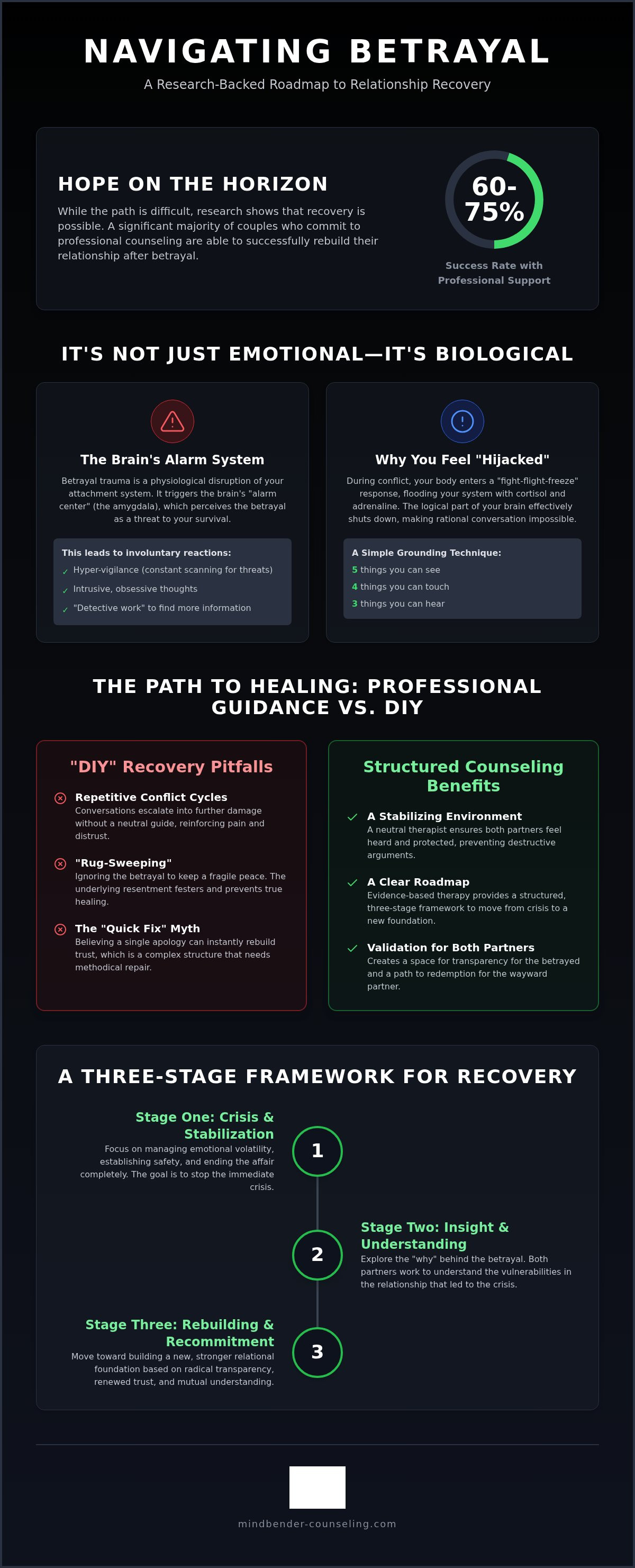
Research suggests that between 60% and 75% of couples who seek professional support after a betrayal are able to successfully rebuild their relationship. While these numbers offer a glimmer of hope, they often feel distant when you're caught in the immediate aftermath of a broken promise. You might find yourself trapped in a loop of obsessive thoughts, where every conversation feels like a minefield and the weight of shame makes you feel completely alone. It's an exhausting way to live, but seeking couples counseling for infidelity can provide the steady anchor you need during this crisis.
We understand that the road ahead feels uncertain and the pain feels permanent. This guide offers a research-backed path to help you navigate betrayal trauma and regain a sense of emotional stability. You'll discover a clear roadmap for rebuilding trust and gain an objective professional perspective on your relationship's viability. We'll explore how evidence-based methods can reduce daily volatility, helping you move from a place of reactive hurt toward a future built on clarity and mutual understanding.
Key Takeaways
- Learn why professional guidance is essential to break cycles of repetitive conflict and prevent the long-term damage of "rug-sweeping" after a discovery.
- Understand betrayal trauma as a physiological disruption of your attachment system rather than just an emotional reaction.
- Discover how specialized couples counseling for infidelity provides a structured, three-stage roadmap to move from crisis toward a new, stronger relational foundation.
- Identify practical, low-friction steps you can take at home today to reduce emotional volatility and demonstrate a renewed intent to rebuild.
- Learn what to look for when seeking evidence-based therapy in Arizona and Texas to ensure your provider has the specific training required for betrayal recovery.
Understanding the Impact: Why Infidelity Recovery Requires Professional Support
The discovery of infidelity is often described as a "shattering of the world." Every memory you share and every plan you've made for the future is suddenly cast in a different, more painful light. This experience isn't just an emotional hurdle; it's a profound psychological crisis that affects your sense of reality. Many couples initially attempt a "DIY" recovery, hoping that time or a sincere apology will mend the breach. However, without professional guidance, these attempts often devolve into repetitive conflict cycles or "rug-sweeping," where the betrayal is ignored but never actually healed. Seeking couples counseling for infidelity provides a neutral, stabilizing environment where you can begin to process this trauma without the conversation escalating into further damage.
A therapist acts as a steady guide, ensuring that both partners feel heard and protected. This process isn't always about "saving the marriage" in its old form. Often, it's about healing the individuals involved so they can make a clear-eyed, objective decision about the relationship’s viability. By focusing on individual restoration alongside relational repair, you ensure that any future you build is based on genuine health rather than obligation or fear.
The Myth of the "Quick Fix"
A common mistake is believing that an apology, no matter how sincere, can instantly restore foundational trust. Trust is a complex structure built over years; when it's demolished, it requires a methodical rebuilding process. Forgiving too quickly, before emotional safety is established, often creates a fragile peace that eventually collapses under the weight of unaddressed resentment. Evidence-based therapy moves away from superficial fixes. It utilizes structured frameworks to help you examine the relationship's integrity and build a more resilient foundation from the ground up.
Validation for the Betrayed and the Wayward Partner
Healing requires a balanced approach that validates the distinct experiences of both people. The betrayed partner needs radical transparency and consistent actions to help lower their biological "alarm" response. They need to know they're safe before they can even consider the possibility of trust. Simultaneously, the wayward partner needs a path toward redemption. They require a space where they can explore the "why" behind their choices without being defined solely by their mistakes. While the betrayal is not a shared fault, the construction of a new dynamic is a shared responsibility. We focus on creating a future where both partners feel empowered to contribute to a healthier, more transparent connection.
The Neurobiology of Betrayal Trauma
When infidelity is discovered, the pain you feel isn't just a collection of difficult emotions; it's a profound physiological event. Betrayal trauma is a disruption of the attachment system that triggers the brain’s "alarm" center. This reaction happens because your brain views your partner as a primary source of safety. When that safety is compromised, your internal biology reacts as if your physical survival is at risk. This is why you can't simply "let it go" or "move on" through willpower alone. Your body is working exactly as it was designed to, prioritizing your protection over your comfort.
The amygdala, a small almond-shaped structure in your brain, acts as a 24-hour smoke detector for danger. In the wake of betrayal, this "alarm" becomes hyper-sensitized. It remains in a state of constant high alert, scanning for any sign of further threat. This biological state leads to the hyper-vigilance, intrusive thoughts, and "detective work" that often characterize the early weeks of recovery. Understanding this neurobiology is a vital part of couples counseling for infidelity, as it helps both partners realize that these reactions are involuntary survival instincts rather than attempts to be difficult or punitive.
Why Your Brain Feels "Hijacked"
During a conflict or when a "trigger" occurs, your brain enters a fight-flight-freeze response. This biological hijacking floods your system with cortisol and adrenaline, which are designed to help you survive a physical threat, not to help you have a nuanced conversation about relationship repair. When these chemicals are surging, the logical part of your brain effectively shuts down. If you find yourself escalating into a heated argument, try a simple grounding technique: name five things you can see, four things you can touch, and three things you can hear. This helps pull your focus away from the internal alarm and back into the present moment.
The Path to Physiological Regulation
Recovery requires moving your nervous system from a state of high alert back into a state of regulation. Professional counseling helps by creating "islands of safety" where you can discuss the betrayal without the conversation spiraling into total biological overwhelm. By establishing clear boundaries and predictable routines, you begin to signal to your amygdala that the immediate crisis is being managed. For many, this process also involves addressing the benefits of therapy for adults who are dealing with heightened anxiety or trauma symptoms. If you feel stuck in a loop of panic, reaching out to Mindbender Counseling can help you find the steady guidance needed to re-establish a sense of internal and relational balance.
A Three-Stage Framework for Infidelity Recovery
Recovery from a breach of trust rarely follows a straight line. It's often a process of two steps forward and one step back. However, having a structured roadmap can provide a vital sense of progress when your world feels chaotic. By engaging in couples counseling for infidelity, you move through a deliberate process designed to transition the relationship from a state of crisis to a place of intentional reconnection. This phase-based approach, deeply rooted in evidence-based therapy, ensures that you don't rush into a fragile peace before the underlying damage is addressed. The ultimate goal isn't to return to the "Old Normal" that existed before the betrayal, but to build a "New Normal" characterized by greater transparency and resilience.
Stage 1: Crisis Management and Stabilization
The immediate goal in the wake of discovery is to "stop the bleeding." This stage focuses on establishing a baseline of emotional safety and physical stability. We prioritize immediate transparency and clear boundaries regarding outside communication. A critical part of this phase is avoiding "trickle-truth," which is the practice of drip-feeding information over weeks or months. This behavior is toxic to recovery because it forces the betrayed partner to relive the trauma repeatedly. Instead, we facilitate a structured disclosure process that allows for honesty without unnecessary, graphic details that might cause further trauma.
Stage 2: Meaning-Making and Understanding "Why"
Once the initial crisis has stabilized, we move into the deeper work of understanding the context of the betrayal. This isn't about blaming the betrayed partner; rather, it's about identifying the vulnerabilities that existed in the relationship dynamic. We explore the "why" behind the choices made, looking at individual history and relational gaps. Using professional guidance, you can navigate these difficult conversations safely, ensuring that the dialogue remains productive rather than destructive. This stage is where the foundation for a new, more honest connection is poured.
Stage 3: Vision-Building and Re-Attachment
In the final stage, the focus shifts toward the future. You'll decide what a renewed commitment looks like for your partnership in 2026. This involves developing new rituals of connection and communication that protect the relationship from future vulnerabilities. We work to integrate the betrayal into your shared history as a painful turning point that ultimately led to a more authentic bond. By the end of this stage, the goal is to see the relationship not just as "surviving," but as a space where both individuals feel truly seen and secure.
Practical Steps to Rebuild Trust at Home
While formal sessions provide the foundation, the most significant progress often occurs in the quiet moments at home. Rebuilding trust isn't about grand gestures or singular, intense displays of remorse; it's about the steady accumulation of small, consistent actions that signal a genuine shift in intent. For many, integrating on-demand therapy options can provide the consistent support needed to navigate these daily interactions without falling back into old habits. In the context of couples counseling for infidelity, we focus on creating low-friction habits that lower emotional volatility and foster a sense of security. Remember that showing up reliably every day matters more than a single week of perfection followed by a relapse into secrecy.
The Radical Transparency Protocol
Transparency is not about surveillance; it's about eliminating the need for it. A radical transparency protocol involves a mutual agreement on access to phones, social media, and daily schedules to rebuild the bridge of trust. The goal is for the wayward partner to proactively provide reassurance before they are even asked, which helps lower the betrayed partner's internal alarm system. For example, a simple text saying, "I'm leaving the office now and should be home by 6:00," can prevent the brain from entering a state of high alert. This shift from "checking up" on a partner, which is rooted in suspicion, to "checking in" with them, which is rooted in care, transforms a dynamic of fear into one of supportive partnership.
Managing Triggers and "Flashbacks"
Triggers are an inevitable part of the healing process and often appear without warning. When a "flashback" occurs, the goal is to communicate the pain without escalating into a destructive conflict cycle. The betrayed partner might use a script like: "I'm feeling a trigger right now because of [specific event]. I'm feeling unsafe and need some reassurance." In response, the wayward partner can practice an empathetic response rather than a defensive one: "I can see that you're hurting, and I'm here with you. What can I do right now to help you feel safer?" If the conversation becomes too heated, it's vital to take a "time-out." Agree to step away for twenty minutes to regulate your nervous systems before returning to the discussion with a calmer, more connected perspective.
If you're ready to move beyond the cycle of conflict, you can schedule a session with Mindbender Counseling to begin your personalized path toward restoration.
Finding Specialized Infidelity Counseling in Arizona and Texas
When you're dealing with the volatility of a recent betrayal, general therapy often isn't enough to manage the high-conflict nature of the situation. General practitioners may lack the specific tools required to handle the intense emotional "flooding" and physiological triggers we discussed earlier. Specialized couples counseling for infidelity requires a therapist who is trained in evidence-based frameworks like the Gottman Method, Emotionally Focused Therapy (EFT), or PACT. These methods are specifically designed to de-escalate crisis and build a new, more secure attachment. At Mindbender Counseling, we structure our sessions to provide maximum safety, acting as a steady guide through the initial crisis phase so that you don't have to navigate the wreckage alone.
Local Considerations for AZ and TX Couples
Choosing a local provider in Arizona or Texas ensures that your therapist understands the specific professional landscape and licensing standards of your region. Whether you're located in the Phoenix metro area or a major Texas hub like Austin or Houston, you can choose between in-person and online sessions. All our therapists are licensed by the Arizona Board of Behavioral Health Examiners or the Texas Behavioral Health Executive Council, ensuring they meet the rigorous clinical standards required in 2026. Online sessions have become a widely accepted and effective alternative, offering a low-friction way to maintain the consistency needed for long-term healing. This flexibility allows you to prioritize your recovery without the added stress of a difficult commute.
Taking the First Step Toward Healing
It's natural to feel hesitant about starting this process, especially if one partner is reluctant or feels defensive. If you're the one initiating the conversation, try to frame couples counseling for infidelity as a way to find clarity and reduce the daily pain you're both experiencing. Focus on your desire for a safe environment where you can both be heard without the conversation spiraling into conflict. During the initial intake and assessment phase, we work to understand the unique vulnerabilities of your relationship and provide an objective perspective on its viability. View this step not just as a way to address the past, but as an investment in your future emotional resilience. Taking this first step signals a commitment to growth and provides the structure you need to begin moving toward a place of restoration.
Reclaiming Your Future Together
The path from the shattering of betrayal to the restoration of trust is often long and demanding. You've learned that the pain you're experiencing is a physiological response, not just an emotional one, and that a structured, three-stage framework can provide the stability you need. By replacing secrecy with radical transparency and moving from crisis toward meaning-making, you create the space for a new kind of relationship to emerge. It's a journey that requires patience, but you don't have to navigate the wreckage of the past alone.
Choosing couples counseling for infidelity is an act of courage that prioritizes your long-term emotional resilience. Our licensed specialists in Arizona and Texas utilize evidence-based methods tailored specifically to betrayal recovery, providing a compassionate and non-judgmental environment for your growth. Whether you decide to rebuild or find a healthy way forward, you deserve the clarity and support that professional guidance provides.
Begin your healing journey with specialized couples counseling at Mindbender Counseling today. You possess the strength to move beyond this crisis and build a foundation rooted in genuine security and authentic connection.
Frequently Asked Questions
How long does it typically take to recover from infidelity in counseling?
Recovery from infidelity typically takes between six months and two years, though every couple's timeline is unique. The initial crisis phase often stabilizes within a few months of consistent work. Research indicates that 60% to 75% of couples who seek professional support are able to rebuild their connection. The duration depends on the depth of the betrayal and your commitment to the structured recovery stages.
Can a relationship really be better after an affair?
A relationship can become more resilient and transparent after an affair, though it will never return to the "old normal." Many couples find that the process of rebuilding requires them to address long-standing vulnerabilities they had previously ignored. This forced honesty often leads to a new foundation characterized by deeper intimacy and a more solid connection than existed before the crisis occurred.
What if my partner refuses to go to couples counseling?
If your partner refuses to attend sessions, you can still begin the healing process through individual counseling services. Focusing on your own emotional regulation and boundaries can often shift the dynamic of the relationship. Sometimes, when one partner begins making positive changes, the other becomes more open to joining the process later. Taking the first step for your own well-being is always a valid choice.
Is online couples counseling as effective as in-person for infidelity?
Online couples counseling for infidelity is consistently shown to be as effective as in-person sessions for rebuilding trust. Studies in 2026 confirm that the therapeutic bond and outcomes remain high in virtual settings. The convenience of online sessions often reduces the friction of attending regularly, which is vital for maintaining the consistency required during the stabilization phase of recovery.
What is "trickle-truth" and why is it so damaging to recovery?
Trickle-truth is the practice of revealing information in small, painful increments over a long period. This is incredibly damaging because it forces the betrayed partner to restart the trauma cycle every time a new detail emerges. It prevents the "alarm" center of the brain from ever feeling safe. A structured, full disclosure process in a therapeutic setting is essential to stop this toxic cycle.
How do we know if we should keep trying or just separate?
Deciding whether to stay or leave is a primary goal of the initial assessment phase in counseling. We look for specific indicators, such as the wayward partner's willingness to be transparent and the betrayed partner's ability to eventually move toward re-attachment. If both individuals are committed to the work, the success rate for saving the marriage is high, often reaching 73% using evidence-based methods.
Will our therapist take sides during the sessions?
Your therapist remains a neutral, stabilizing third party whose primary focus is the health of the relationship itself. While they will provide validation for the betrayed partner's trauma, they also offer a path toward redemption for the wayward partner. The goal is to facilitate productive dialogue rather than acting as a judge. This objective perspective helps couples break free from repetitive cycles of blame.
Is infidelity counseling covered by insurance in Arizona or Texas?
Insurance coverage for couples counseling for infidelity varies, as many plans do not cover sessions focused solely on relationship issues. However, coverage is often available in Arizona and Texas if one partner is receiving treatment for a mental health diagnosis, such as anxiety or depression. We recommend checking with your specific provider regarding their policies for evidence-based therapy in your state.


