

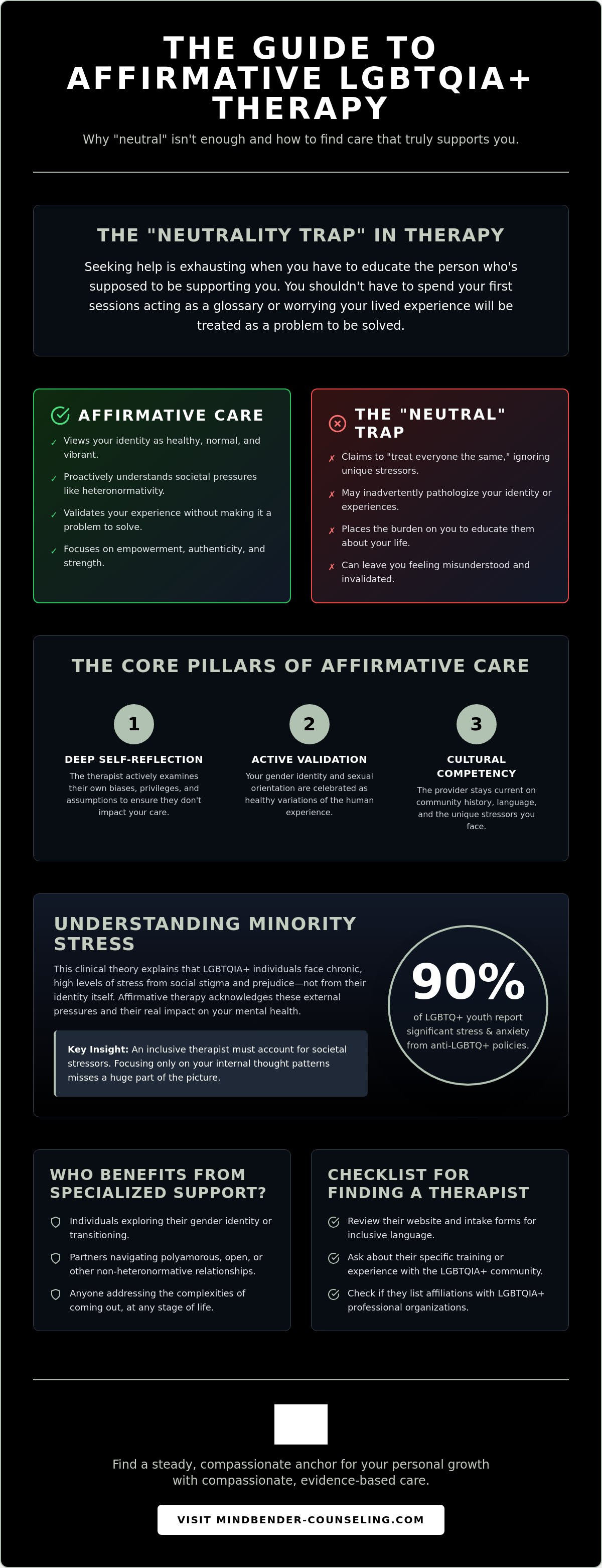
A "neutral" therapist isn't enough when your identity is the very thing the world asks you to defend every day. You shouldn't have to spend your first three sessions acting as a glossary for your provider or worrying that your lived experience will be treated as a clinical problem to solve. It's exhausting to seek help only to find yourself educating the person who's supposed to be supporting you.
We understand that finding safe, affirmative lgbtqia+ therapy is about more than just a rainbow sticker on a window. It's about finding a professional who understands how minority stress and shifting legislation in Arizona and Texas impact your daily well-being. This guide clarifies what true inclusive care looks like and how to find a therapist who honors your identity without reservation. We'll explore practical ways to navigate non-traditional relationship structures and connect with providers who view your identity as a source of strength. By the end, you'll have a clear path to finding a steady, compassionate anchor for your personal growth.
Key Takeaways
- Learn why true lgbtqia+ therapy requires a proactive, affirmative stance rather than a merely "neutral" approach to your identity.
- Understand how Minority Stress Theory explains the link between external societal pressures and your internal well-being.
- Identify the clinical red flags of the "neutrality trap" to ensure your provider validates your experience without making it a problem to solve.
- Discover practical steps for vetting therapists in Arizona and Texas, from analyzing intake forms to checking for specific cultural competencies.
- Explore how evidence-based care can help you build a solid internal foundation while navigating non-traditional relationship structures and life transitions.
What is LGBTQIA+ Affirmative Therapy?
Affirmative therapy is far more than a welcoming smile or a rainbow sticker on an office door. It is a proactive, clinical stance that views LGBTQIA+ identities as healthy, normal, and vibrant. Unlike "neutral" therapy, which often operates under the assumption that a therapist should ignore a client's identity to remain objective, affirmative care recognizes that your identity is a fundamental part of how you move through the world. Neutrality can often become a trap. When a provider claims to "treat everyone the same," they may inadvertently overlook the specific societal pressures you face, which can lead to a feeling of being misunderstood or even pathologized.
In the context of lgbtqia+ therapy, the provider assumes the responsibility of understanding heteronormativity and its impact on your mental health. They don't expect you to be the educator. Instead, they recognize that while you may be seeking support for anxiety, depression, or relationship shifts, your identity is not the root cause of these struggles. To understand the clinical roots of this approach, one might ask: What is gay affirmative psychotherapy? Historically, this framework was developed to move away from outdated models that viewed queer lives through the lens of a "problem" to be fixed, shifting the focus toward empowerment and authenticity.
The Core Pillars of Affirmative Care
A truly inclusive therapist works from a foundation of specialized competencies. This isn't just about personal belief; it's about clinical rigor. The American Counseling Association (ACA) outlines specific ethical standards that guide this work, ensuring that your care is rooted in proven methods. These pillars include:
- Deep Self-reflection: The therapist actively examines their own biases, privileges, and assumptions to ensure they don't enter the therapeutic space.
- Active Validation: Your gender identity and sexual orientation are celebrated as healthy variations of the human experience.
- Cultural Competency: The provider maintains an up-to-date understanding of community history, language, and the unique stressors that impact LGBTQIA+ individuals in places like Arizona and Texas.
Who Can Benefit from Specialized Support?
While anyone can seek lgbtqia+ therapy, certain life experiences often call for this specialized clinical lens. Having a provider who already understands the nuances of your life allows you to dive deeper into healing without the friction of constant explanation. This support is particularly vital for:
- Individuals exploring the spectrum of gender identity or those in the process of a social or medical transition.
- Couples and partners moving through polyamorous, open, or other non-heteronormative relationship structures.
- Those addressing the complexities of coming out, whether they are a teenager or an adult in a later stage of life.
The Clinical Importance of Inclusive Mental Health Support
Effective mental health care requires a deep understanding of the environment where you live and breathe. Minority Stress Theory explains that LGBTQIA+ individuals face chronic, high levels of stress not because of their identity, but because of the social stigma and prejudice they encounter. This isn't just a concept; it has a measurable impact on long-term mental health. When you seek individual counseling for anxiety, a provider must account for these external societal stressors. If they only focus on your internal thought patterns, they miss a significant part of the picture. Inclusive lgbtqia+ therapy bridges this gap by acknowledging how systemic pressure affects your nervous system.
Intersectionality plays a vital role in this process. Your experience is shaped by the overlap of your sexual orientation, gender identity, race, class, and ability. A person of color in the queer community may face layers of discrimination that a white peer does not. Inclusive care honors these complexities, leading to significantly better therapeutic outcomes. When you feel seen in the fullness of your identity, you can build a more secure internal foundation. At Mindbender Counseling, we believe that understanding these overlaps is essential for creating a truly supportive path toward well-being.
Navigating Minority Stress in Arizona and Texas
Living in the Southwest brings unique challenges. Recent data from June 2026 shows that 90% of LGBTQ+ youth report that anti-LGBTQ+ policies cause them significant stress and anxiety. While Arizona saw several restrictive bills vetoed in 2026, the ongoing legislative climate in both Arizona and Texas creates a sense of persistent vigilance. Minority stress is the cumulative physiological wear and tear on the body caused by chronic exposure to prejudice and social exclusion. In regions where local community support may be fragmented, finding a therapist who understands these regional nuances is a vital step toward resilience.
Evidence-Based Methods in Affirmative Therapy
We use proven clinical tools adapted specifically for the queer experience. For instance, therapy behavioral therapy helps you distinguish between internal struggles and the valid reactions you have to a challenging environment. Other effective methods include:
- Dialectical Behavior Therapy (DBT): This approach provides practical tools for emotional regulation when navigating high-stress social or political environments.
- Trauma-Informed Care: This is essential for those who have experienced familial or religious rejection, helping to process past pain without being defined by it.
- Affirmative Cognitive Strategies: These methods help you deconstruct internalized phobias and build a more compassionate self-narrative.
Using these evidence-based techniques ensures that your lgbtqia+ therapy isn't just supportive, but also deeply effective in fostering lasting change.
Affirmative vs. Traditional Therapy: Spotting the Difference
Many therapists claim to be inclusive because they maintain a "neutral" stance, but in the context of lgbtqia+ therapy, neutrality is often a barrier to progress. This "Neutrality Trap" occurs when a provider says, "I treat everyone the same." While this sounds fair, it actually ignores the specific cultural nuances and systemic pressures of your life. By ignoring these differences, a therapist may miss the way societal stigma shapes your anxiety or relationship dynamics. True affirmative care doesn't just ignore your identity; it actively incorporates it into the healing process as a source of resilience.
The difference is often visible before you even sit on the couch. Traditional therapy might use outdated intake forms that only offer binary gender options or assume a heteronormative relationship structure. In contrast, an affirmative provider uses gender-neutral language and inclusive terminology. They don't assume your pronouns or the gender of your partner. This shift from "tolerating" your presence to "celebrating" your identity creates the safety needed for deep, transformative work. It moves the focus from your identity being a potential problem to your identity being a foundational part of your strength.
Red Flags to Watch For
Identifying red flags early can save you from a frustrating or even harmful experience. In states like Arizona and Texas, where legislative changes can be frequent, a therapist who is "neutral" about your rights is a significant concern. Be cautious of providers who suggest your identity is a "phase" or a symptom of past trauma. This is a form of pathologizing that has no place in modern clinical practice. Other warning signs include a therapist who seems unfamiliar with basic terminology like non-binary, asexual, or polyamory. If you find yourself spending half the session explaining your basic existence, the therapeutic relationship is out of balance.
Green Flags of a Truly Inclusive Therapist
A truly inclusive therapist creates an environment of calm assurance through specific, intentional actions. These green flags signal that the provider is prepared to be a steady, informed guide for your journey. Look for these indicators during your search for lgbtqia+ therapy:
- Proactive Language: The therapist shares their own pronouns and invites you to share yours without pressure.
- Inclusive Paperwork: Intake forms include diverse options for gender identity and relationship status beyond "married" or "single."
- Specialized Knowledge: The provider has specific training or credentials in queer-affirming care and understands the impact of minority stress.
- Visual Cues: Their digital portal or office space includes inclusive signage that makes it clear you are in a safe, validating environment.
How to Evaluate an Inclusive Therapist in Arizona & Texas
Finding the right provider for lgbtqia+ therapy often begins with specialized directories, but the most critical step is the individual consultation. While a directory can filter for broad categories, it can't capture the specific clinical energy or "vibe" of a therapist. You deserve a provider who is licensed in your state, either Arizona or Texas, and who has invested time in specific queer-affirming certifications. These might include training from the World Professional Association for Transgender Health (WPATH) or specialized courses in sexual orientation and gender diversity. Licensing ensures they meet professional standards, while their specific certifications show a genuine commitment to your community.
During your first interaction, look for "cultural humility" rather than just "competence." A therapist with cultural humility doesn't claim to be an expert on every queer experience. Instead, they demonstrate an openness to learning about your unique life and acknowledge their own limitations. They act as a partner in your growth, not a detached authority figure. This approach builds the immediate trust necessary for a safe therapeutic environment and ensures you aren't the one doing the heavy lifting of education.
Questions to Ask During a Consultation
Prepare a list of vetting questions for your first phone call or video meeting. This is your time to interview them and ensure they can provide the steady support you need. Consider asking these direct questions:
- "What is your experience working with [my specific identity]?" A vague answer might indicate they are "friendly" but lack deep clinical experience with your specific needs.
- "How do you incorporate intersectionality into your practice?" This helps you see if they understand how race, class, and identity overlap, as we discussed in earlier sections.
- "What does affirmative care mean to you clinically?" Listen for a response that goes beyond "I'm nice to everyone" and mentions proactive validation and an understanding of minority stress.
Evaluating Local Resources
Regional context matters deeply in the Southwest. When seeking professional counseling, you need a provider who understands the specific political and social climate of Arizona or Texas. A therapist involved in local advocacy or connected to community centers often has a better grasp of the stressors you face daily. If you live in a rural area, verify if they offer secure telehealth options. This ensures you can access high-quality lgbtqia+ therapy even if there isn't a specialized provider in your immediate town.
If you're ready to start this journey with a team that values your lived experience, we invite you to explore our approach at Mindbender Counseling, where we provide compassionate, evidence-based care tailored to your unique needs.
Mindbender Counseling: Compassionate, Evidence-Based Care
Mindbender Counseling provides a sanctuary where your identity is celebrated, not just tolerated. Our practice is built on a foundation of Evidence-Based Therapy that integrates affirmative principles into every session. We recognize that the search for lgbtqia+ therapy in Arizona and Texas can feel daunting, especially given the current social climate. Our clinicians are specifically trained to provide a supportive methodology that prioritizes your safety and internal progress. By combining professional expertise with deep compassion, we act as a facilitator for your unique journey toward balance and well-being.
Starting your healing process should be a low-friction experience. We've designed our intake process to be straightforward and welcoming, allowing you to schedule a therapeutic appointment without the anxiety of being misunderstood. Whether you are seeking support for identity-related stressors or general life transitions, our team offers a steady, unwavering anchor. We believe that professional mental health care is most effective when it honors the full spectrum of your lived experience.
Individual and Couples Support
Our Individual Counseling Services focus on your specific needs, whether you are navigating a transition, exploring your identity, or healing from past rejection. We move at a pace that allows you to process information without feeling rushed, mirroring the patient nature of the therapeutic process. For those in partnerships, our Couples Counseling respects all relationship structures and dynamics. We understand the nuances of polyamorous and non-heteronormative bonds, providing practical tools to help you and your partners build a solid internal foundation. Our goal is to foster emotional resilience and long-term stability for every individual and relationship we serve.
Taking the First Step Toward Healing
Choosing to prioritize your mental wellness is an act of strength. In a world that often feels chaotic, your therapy sessions should be a place of tranquility and order. We view wellness holistically, recognizing that external factors like professional life also play a role in your overall health. For instance, we offer specialized resources for counseling for work stress Arizona to help you manage the unique pressures of the modern workplace while staying rooted in your authentic self.
When you're ready to move forward, our team is here to support you. We invite you to view our provider bios and discover a therapist who resonates with your needs and values. Investing in specialized lgbtqia+ therapy is an investment in your future self. Take that first step today and begin building the resilient, authentic life you deserve.
Building a Foundation for Your Authentic Future
You deserve a therapeutic space where your identity is honored as a source of strength rather than a problem to solve. We've explored how true affirmative care moves beyond simple neutrality to actively validate your lived experience and support your unique journey. Finding the right lgbtqia+ therapy in Arizona and Texas involves seeking a provider who combines cultural humility with deep clinical expertise. By prioritizing a trauma-informed and intersectional approach, you can build a resilient internal foundation while navigating the specific challenges of our region.
Our team provides evidence-based affirmative care designed to foster stability and personal evolution. We're licensed in Arizona and Texas, offering a steady, compassionate anchor for your growth. If you're ready to begin this journey in a safe and supportive environment, we invite you to Schedule a Consultation for Inclusive LGBTQIA+ Therapy today. You don't have to navigate these complexities alone. There is a clear path forward toward balance and well-being, and we're honored to walk it with you.
Frequently Asked Questions
What is the difference between LGBTQ+ friendly and LGBTQ+ affirmative therapy?
LGBTQ+ friendly therapy typically implies that a provider is welcoming and does not have a prejudice against the community. Affirmative therapy goes a step further by using a proactive clinical framework that validates your identity as healthy and normal. Affirmative therapists possess specific training to understand the impact of minority stress and heteronormativity, ensuring they don't inadvertently pathologize your lived experience during your sessions.
Can I seek therapy if I am still questioning my gender identity or sexual orientation?
You can absolutely seek support while you are in the process of questioning or exploring your identity. A compassionate therapist provides a safe, non-judgmental space for you to examine your feelings at your own pace without pressure to reach a specific label. This exploration is a vital part of personal growth, and a skilled guide can help you find clarity and comfort in your authentic self.
How do I know if my therapist in Arizona or Texas is actually queer-affirming?
You can identify an affirming therapist by looking for specific clinical training from organizations like the American Counseling Association or WPATH. Check if their intake forms include diverse gender and relationship options and if they proactively share their own pronouns. It's also helpful to ask during a consultation how they stay informed about local legislative changes in Arizona or Texas that may impact your well-being.
Is my identity always the focus of LGBTQIA+ therapy sessions?
Your identity is not always the primary focus of lgbtqia+ therapy. While your identity informs your worldview, you may seek support for unrelated issues like grief, career transitions, or general anxiety. An affirmative therapist understands that your identity is a foundational part of who you are but recognizes it is not a "problem" to be solved or the cause of every struggle you face.
Does Mindbender Counseling offer couples therapy for same-sex or non-binary partners?
Mindbender Counseling provides specialized couples therapy that honors and respects all relationship structures, including same-sex and non-binary partnerships. We offer a secure environment to address communication, intimacy, and shared goals while recognizing the unique dynamics of queer relationships. Our evidence-based approach ensures that every partner feels seen and supported as you work together toward a more stable and fulfilling connection.
How can therapy help with minority stress and discrimination?
Therapy helps you manage minority stress by providing practical tools for emotional regulation and building internal resilience. By working with an affirmative provider, you can process the physiological impact of discrimination and deconstruct internalized stigmas. This support acts as a steady anchor, helping you maintain a sense of calm and self-worth even when navigating challenging social or political environments in the Southwest.
What should I do if I feel my current therapist is not being inclusive?
If you feel your current provider lacks cultural humility or inclusivity, you have the right to transition to a different therapist. Trust is the most essential element of the therapeutic process, and you shouldn't have to "educate" your provider on basic identity concepts. Seeking a specialist in lgbtqia+ therapy can ensure that your sessions remain a place of safety where you feel fully understood and validated.
Are telehealth therapy sessions as effective for LGBTQIA+ clients?
Telehealth sessions are a highly effective way to access specialized care, particularly for those living in rural parts of Arizona and Texas. Research indicates that the therapeutic alliance is just as strong in virtual settings as it is in person. This format allows you to connect with highly trained affirmative providers from the comfort and privacy of your own home, reducing barriers to receiving high-quality support.


