

You've likely spent more time staring at the bumper of a truck on I-35 than you'd care to admit, wondering if a fifty-minute session is worth a two-hour round trip. By the time you finally reach the office, the stress of the commute has often clouded the mental space you intended to clear. You aren't alone in feeling that the logistics of seeking help shouldn't become a barrier to the healing process itself. Many Austin professionals find themselves torn between the modern convenience of their home office and the grounded, physical presence of a traditional therapy room. When comparing online therapy to face-to-face counseling in Austin, the decision often feels like a difficult trade-off between your busy schedule and your need for genuine connection.
We believe your mental health journey requires a foundation of both trust and accessibility. This guide explores the scientific outcomes and practical realities of both formats to help you find the best fit. You'll gain a clear understanding of how 2026 Texas telehealth regulations impact your care and which format yields the best results for your unique situation. Whether you seek the stability of an in-person sanctuary or the flexibility of a digital session, this overview provides the clarity needed to move forward with confidence and a sense of balance.
Key Takeaways
- Understand how clinical research validates the efficacy of both digital and in-person sessions for fostering lasting emotional resilience.
- Assess the practical impact of Austin’s geography and traffic on your therapeutic consistency to ensure your care remains a source of relief.
- Gain access to a structured framework for comparing online therapy to face-to-face counseling in Austin to find the format that aligns with your lifestyle.
- Learn when the grounded presence of an office setting is essential for navigating high-intensity trauma or complex emotional situations.
- Discover how evidence-based techniques provide a sturdy foundation for your personal evolution in both virtual and physical environments.
The Landscape of Counseling in Austin: Why Format Matters
Austin's mental health environment has shifted significantly over the last few years. In 2026, the city's tech-forward identity and sprawling geography mean that seeking professional support no longer implies a single destination. Instead, it represents a choice between two distinct but equally valid environments. When you are comparing online therapy to face-to-face counseling in Austin, you are essentially deciding which setting will best support your commitment to change. This choice matters because consistency is the primary predictor of success. If the format you choose creates friction, whether through traffic or technical glitches, your progress may stall. Consistency is key.
For those new to digital formats, a broad overview of online counseling highlights how these methods have transitioned from experimental tools to foundational elements of modern healthcare. Austin's professional culture, characterized by high-intensity roles in tech and creative industries, often favors the efficiency of digital-first care. However, the traditional office remains a cornerstone for many seeking a tangible boundary between their daily lives and their healing work.
Defining Face-to-Face Counseling
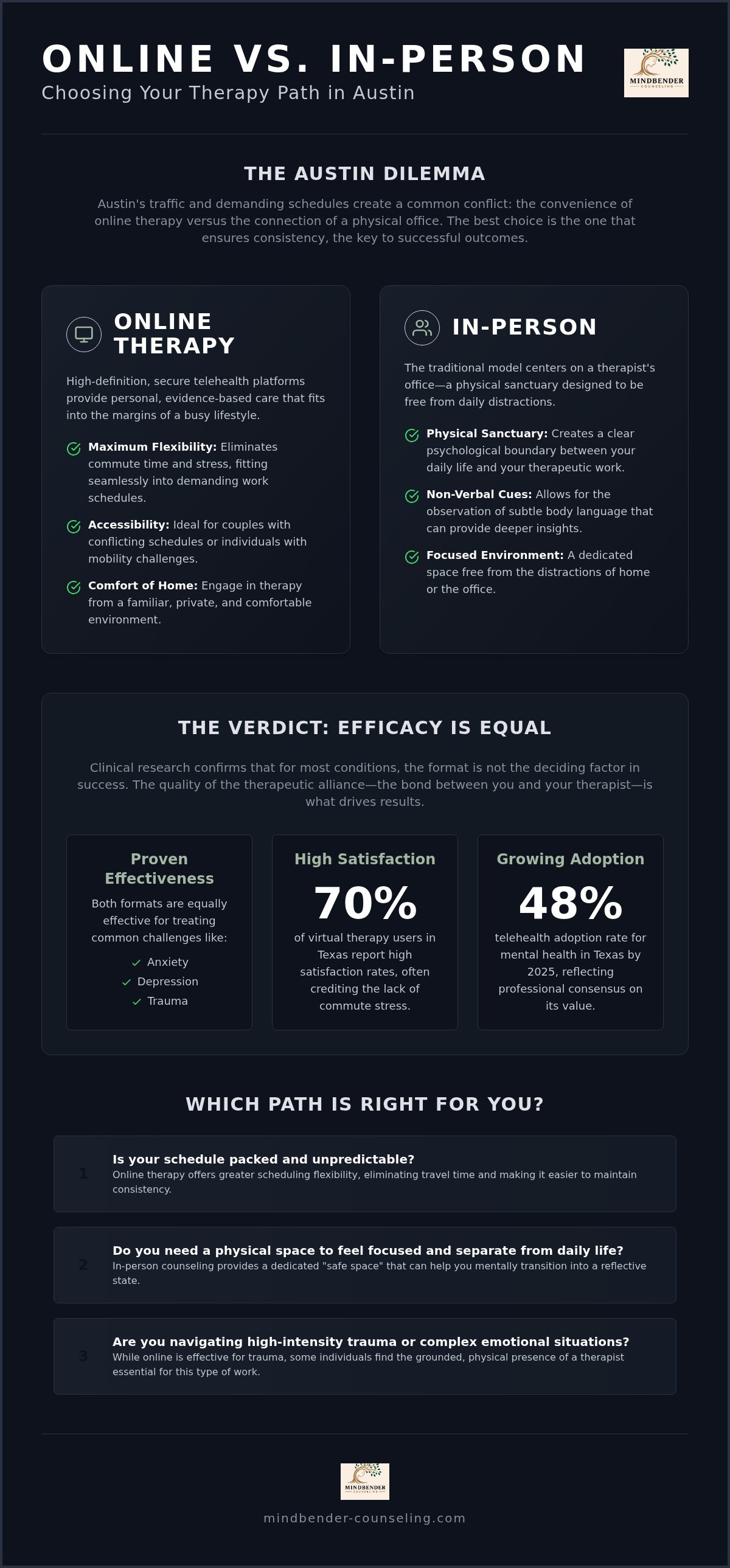
The traditional model of in-person Individual Counseling Services centers on the physical sanctuary of the therapist's office. Therapists intentionally design this environment to be a "safe space," free from the distractions of your home or workplace. Physical presence allows for the subtle observation of non-verbal communication, such as a shift in posture or a fleeting expression, which can provide deep insights during a session. For some, the act of physically leaving their daily environment helps them transition into a reflective state of mind, creating a clear psychological boundary for personal growth.
The Reality of Online Therapy in 2026
By 2026, telehealth has matured into a sophisticated, high-definition experience that feels remarkably personal. It is a misconception that digital sessions lack depth or "human connection." Modern platforms allow for seamless, evidence-based interventions that fit into the margins of a busy Austin lifestyle. This evolution is particularly evident when looking at how does online couples counseling work today. For partners with conflicting schedules or childcare needs, the ability to join a session from separate locations or the comfort of their living room has made relationship support more accessible than ever. When comparing online therapy to face-to-face counseling in Austin, remember that both paths utilize evidence-based techniques to build a solid foundation for your growth. The best format is the one that allows you to show up fully, week after week.
Evidence-Based Outcomes: Comparing Efficacy and Results
When you are comparing online therapy to face-to-face counseling in Austin, the most common concern is whether digital care is "second best." Clinical data suggests that for most individuals, the medium is not the deciding factor in success. Multiple meta-analyses have confirmed that virtual sessions are equally effective at treating anxiety, depression, and trauma. In Austin, where high-performance culture often meets high-stress environments, the focus remains on the quality of the evidence-based intervention rather than the physical room. By 2025, the adoption rate of telehealth for mental health in Texas reached 48%, reflecting a broad professional consensus on its efficacy.
The Science of the Therapeutic Bond
The "therapeutic alliance" is the collaborative partnership between a clinician and a client, grounded in shared clinical goals and a resilient emotional bond that facilitates lasting psychological change. Many people worry that a screen might act as a barrier to this connection. However, therapists use specific, research-backed techniques to build trust and rapport virtually, focusing on active listening and intentional engagement. In fact, approximately 70% of virtual therapy users in Texas report high satisfaction rates. These individuals often cite the ability to connect deeply with their therapist without the lingering stress of a heavy commute. This sense of calm before a session often leads to more productive work.
Individual vs. Couples Outcomes
Research indicates that individual counseling for anxiety often yields exceptional results in a virtual setting. Clients report feeling safer in their own homes, which allows them to lower their defenses and open up more quickly. For couples, the choice is more nuanced. While online sessions offer the benefit of "neutral territory," some partners find that sitting in a shared physical space with a therapist helps them stay more grounded during difficult conversations.
Retention rates offer another compelling data point for those making this choice. Online users often remain in therapy longer because the logistical friction of attending sessions is significantly reduced. When your schedule becomes demanding, it's easier to log on for a session than to navigate I-35. If you're ready to find a format that supports your long-term progress, you can connect with a compassionate guide to begin your journey toward a more balanced life.
The Austin Factor: Logistics, Lifestyle, and Commutes
Austin is a city defined by its vibrant energy, but it's also defined by its congestion. When comparing online therapy to face-to-face counseling in Austin, the geographical reality of where you live and work becomes a primary clinical consideration. If you live in Round Rock but work Downtown, or reside in South Lamar while your therapist is in the Arboretum, a single session can easily consume three hours of your day. This isn't just a matter of convenience; it's about protecting the emotional energy you need for your actual therapeutic work. Choosing a format that reduces logistical friction ensures that your mental health remains a priority rather than another item on a stressful to-do list.
The Traffic Tax on Mental Health
A 45-minute crawl on I-35 or Mopac can effectively undo the sense of peace you worked hard to achieve during a session. Instead of reflecting on your progress or practicing a new mindfulness technique, you're white-knuckling the steering wheel or searching for elusive parking near Lady Bird Lake. Digital care allows you to transition from a demanding workday to a healing space in seconds. This flexibility is vital for Austin's tech and creative professionals who often balance non-traditional hours with high-stakes projects.
- Scheduling Flexibility: Online sessions allow you to fit Individual Counseling Services into a lunch break or a narrow window between school runs.
- Preserving the "Afterglow": Instead of immediately facing traffic, you can spend ten minutes in your own garden to process the session's insights.
- Consistent Attendance: When Austin's weather or road closures make travel impossible, the digital bridge ensures you don't miss a vital appointment.
Privacy and Comfort in the Austin Home
For many, the traditional waiting room in an urban clinic can trigger a sense of "waiting room anxiety." You might worry about running into a colleague or simply feel exposed in a public space while you are processing private emotions. Comparing online therapy to face-to-face counseling in Austin reveals that digital care offers an unparalleled level of social privacy. You have the power to create a therapeutic "bubble" in your own living space, surrounded by familiar objects that provide a sense of safety and grounding.
This environmental comfort often allows for deeper vulnerability. When you're in a space you control, your nervous system can settle more quickly, allowing you to focus on the work of personal evolution. Whether you are navigating the complexities of a professional career or seeking to restore balance in your personal life, the ability to remain in a familiar environment can lower your defenses and accelerate your progress. By removing the stress of the commute, you can dedicate your full attention to the evidence-based strategies that lead to lasting resilience.
Choosing Your Path: A Practical Decision Framework
Selecting the right format is a personal process that requires looking at both your clinical needs and your daily reality. While research confirms that both methods are effective, your individual circumstances will dictate which path feels most supportive. When comparing online therapy to face-to-face counseling in Austin, consider your current emotional state. If you are navigating a severe mental health crisis or high-intensity trauma, the grounded, physical presence of a therapist in a dedicated office setting provides an extra layer of containment and safety. Conversely, if you are managing generalized anxiety or a demanding professional schedule, the digital format removes the logistical friction and allows you to begin your session from a place of relative calm.
You don't always have to pick just one. Many Austin residents now utilize a "hybrid" model, where they might start with in-person sessions to build a strong initial rapport and then transition to online care for long-term maintenance. This flexibility ensures that your progress isn't derailed by a busy work week or a sudden change in your commute. The goal is to find the path of least resistance to your own well-being.
Format Selection for Individual Counseling
The ideal candidate for online individual therapy is someone who possesses a private, reliable space at home and values the ability to integrate personal growth into their existing daily routine without the friction of travel. Your personality plays a significant role in this choice. Some individuals find they are more expressive and vulnerable through a screen, while others crave the sensory experience of a shared physical room. Evaluate your home environment for privacy and technical reliability; if you have a quiet space and a stable connection, digital care offers a streamlined path to resilience.
Special Considerations for Couples
For partners, the decision involves assessing the current "temperature" of the relationship. High-conflict couples often benefit from a shared physical space where a therapist can more easily manage intense non-verbal cues and de-escalate tension in real-time. However, for partners who travel frequently or work in different parts of the city, online sessions ensure that relationship work remains consistent. This flexibility helps partners build a solid internal foundation regardless of where they are physically located. If you're ready to explore which format fits your lifestyle, schedule an initial session with Mindbender Counseling today to begin your personalized journey toward growth.
Personalized Growth with Mindbender Counseling
We understand that the decision between digital and in-office care isn't always a permanent choice. At Mindbender Counseling, we bridge the gap by offering a fluid approach that adapts to your evolving needs. Whether you are comparing online therapy to face-to-face counseling in Austin to find an initial starting point or looking to transition between formats as your schedule changes, we provide a consistent, supportive presence. Our goal is to ensure that the quality of your care remains exceptional, regardless of whether you are sitting on our couch or your own. We prioritize your progress over the logistics of the medium.
Evidence-Based Care Tailored to You
Our practice is rooted in Evidence-Based Therapy, which means every session is structured around research-backed techniques that facilitate real movement. We don't believe in a one-size-fits-all approach. Instead, we offer personalized interventions for Individual Counseling Services and specialized Couples Counseling. By focusing on proven methods, we help you build a sturdy internal foundation that supports long-term emotional resilience. You'll find that our clinicians maintain a tone of quiet confidence and professional compassion, creating a safe environment where you can explore your challenges without judgment. We focus on the possibility of positive change while staying rooted in reliable, clinical methods.
Starting Your Journey in Austin
Finding a therapist who understands the unique professional and social landscape of Central Texas is the first step toward lasting change. We've designed our intake process to be low-friction and accessible, mirroring the methodical and reassuring rhythm of the therapeutic process itself. During your first personalized consultation, we'll discuss your specific goals and help you determine which format-online, in-person, or a hybrid of both-best aligns with your Austin lifestyle and mental health needs. This organized approach creates a sense of order and security from the very first interaction.
You deserve a partner in growth who values your time as much as your progress. By removing the barriers to entry, we make it possible for you to prioritize your well-being without sacrificing your professional or personal commitments. Take the first step toward restoring balance and stability in your life today. Schedule your individual or couples session with Mindbender Counseling today to begin your journey with a guide who truly sees you.
Embrace Your Journey Toward Balance and Growth
Finding the right support is a deeply personal decision that balances your clinical needs with the realities of your Austin lifestyle. We've explored how both digital and in-person formats utilize Evidence-Based Therapy to foster resilience, ensuring that your progress remains the priority regardless of the setting. The most effective path is the one that allows you to remain consistent and fully present in your own healing. Consistency is the anchor of long-term change.
When comparing online therapy to face-to-face counseling in Austin, remember that your choice can be as dynamic as your life. You deserve a therapeutic partnership that offers both professional expertise and compassionate, individualized care. Our team provides the structured guidance necessary to help you navigate relational or personal challenges with confidence. We focus on building a solid internal foundation that lasts long after your sessions end.
We invite you to begin your path to healing with Mindbender Counseling today. You don't have to navigate these complexities alone; a more stable and fulfilling future is well within your reach.
Frequently Asked Questions
Is online therapy as effective as in-person for anxiety and depression?
Online therapy is scientifically proven to be just as effective as in-person care for common conditions like anxiety and depression. Clinical studies highlight that the evidence-based methods used by Mindbender Counseling yield similar results regardless of the medium. For many Austin residents, the reduced stress of avoiding traffic actually improves their ability to focus during sessions. This increased comfort often leads to better long-term outcomes and a more resilient mindset.
Does insurance in Texas cover online counseling the same as face-to-face?
Yes, current Texas regulations generally require insurance providers to cover telehealth services at the same rate as traditional in-office visits. This payment parity ensures that your choice of format is based on your clinical needs rather than your budget. We recommend verifying your specific plan details before your first session to confirm your coverage levels. This transparency helps you build a stable foundation for your mental health journey without unexpected financial friction.
What if I don’t have a private place at home for online therapy?
If your home environment doesn't offer the necessary privacy, you have several practical alternatives to consider. Some Austin professionals find a quiet, parked car or a private office space works well for their digital sessions. However, if finding a secure "bubble" remains a challenge, choosing face-to-face counseling might be the most effective way to ensure you feel safe and heard. Your comfort is essential for meaningful therapeutic work and personalized growth.
Can we switch between online and in-person sessions at Mindbender Counseling?
We fully support a hybrid approach that allows you to move between online and in-person sessions as your lifestyle demands. This flexibility is a core part of how we serve the Austin community, ensuring that your care remains consistent even during busy work weeks. Many clients find that starting in person to build rapport and then transitioning to digital care provides the perfect balance of connection and modern convenience.
Is couples counseling more difficult to do over a video call?
Couples counseling is not inherently more difficult via video, though it does change the session's dynamic. Many partners appreciate the "neutral ground" that a digital platform provides, which can lower defensiveness during difficult conversations. While physical presence helps a therapist read subtle non-verbal cues, our evidence-based methods are specifically designed to bridge the screen. This format often makes it easier for busy couples to attend their appointments together consistently.
What technical equipment do I need for a successful online session?
You only need a few basic tools to ensure a successful digital experience. A stable internet connection, a device with a working camera and microphone, and a private space are the primary requirements. When comparing online therapy to face-to-face counseling in Austin, the technical setup is often simpler than navigating a commute. We utilize secure, HIPAA-compliant platforms to protect your privacy, allowing you to focus entirely on your personal evolution and resilience.
How do I know if my therapist in Austin is actually licensed for online care?
You can verify a therapist's credentials through the Texas Behavioral Health Executive Council (BHEC) online portal. Texas law requires any therapist providing telehealth to residents within the state to hold a valid Texas license. At Mindbender Counseling, all our clinicians are fully licensed and trained in both traditional and digital care. Checking these public records provides you with a sense of security and trust before you begin your first session.
What are the specific privacy risks associated with teletherapy?
The primary privacy risks involve data security and potential interruptions in your physical environment. We mitigate these risks by using encrypted, HIPAA-compliant software designed specifically for healthcare. You can further protect your session by using a private Wi-Fi network rather than public hotspots. Taking these small steps ensures that your therapeutic sanctuary remains confidential, allowing you to engage deeply with the evidence-based strategies that lead to lasting psychological stability.


