

Building healthier self-esteem isn’t necessarily about silencing every critical thought. It can mean learning to understand and respond to those thoughts differently. Persistent self-doubt can affect everyday choices, relationships, and how you see your strengths. Counseling to improve self-esteem in Dallas may offer a personalized space to explore those patterns and identify practical goals, though progress looks different for everyone.
You may be wondering what happens in counseling, how you’ll know whether it’s helping, or how to tell if a counselor feels like the right fit. Those are reasonable questions. A supportive process should make room for your priorities and give you opportunities to discuss what feels useful, without promising a particular outcome.
This article explains what self-esteem counseling can involve, what to ask when assessing a counselor’s approach and fit, and how to check local availability. Mindbender Counseling offers individual counseling with evidence-based approaches tailored to individual needs and lists Texas among its service regions. Confirm directly whether it can serve clients in Dallas as you consider a low-pressure next step.
Key Takeaways
- Notice where self-judgment shows up in daily life, such as in relationships, decisions, or your response to setbacks.
- In individual counseling, discussing recurring beliefs may help you recognize patterns and clarify goals that matter to you.
- When comparing counselors, ask about credentials, relevant experience, approach, availability, and how you’ll communicate.
- Before reaching out about counseling to improve self-esteem in Dallas, prepare a few questions and confirm local availability and practical details.
- Mindbender Counseling offers individual counseling with evidence-based, personalized interventions. Ask whether its services are available to clients in Dallas.
What counseling to improve self-esteem in Dallas can help you explore
Self-doubt can influence how you relate to others, make everyday decisions, and respond when something doesn’t go as planned. You might hold back from sharing an opinion, question a choice you’ve already made, or treat one mistake as proof that you’ll fail again. These experiences can be difficult, but they don’t automatically mean you need counseling or have a mental health diagnosis.
Self-esteem counseling explores beliefs about your personal worth and how those beliefs affect everyday life. It can help you consider where self-judgments come from and whether they still reflect what you value or experience now. For a broad overview of the concept, see What is self-esteem?
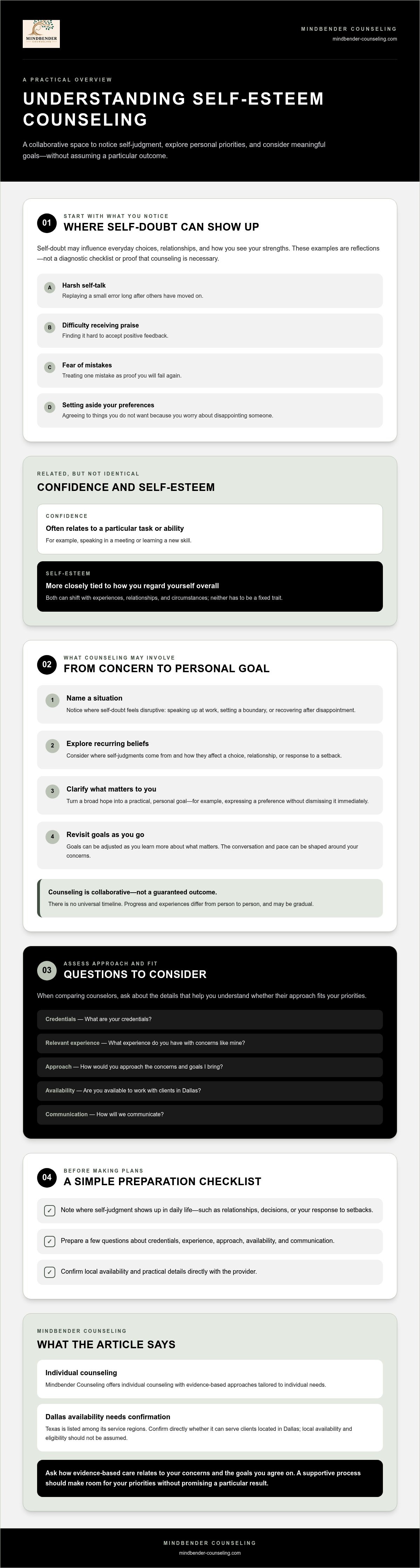
Self-esteem and confidence are connected, but they aren’t identical. Confidence often relates to a particular task or ability, such as speaking in a meeting or learning a new skill. Self-esteem is more closely tied to how you regard yourself overall. Neither has to be a fixed trait: how you feel about yourself can shift with experiences, relationships, and circumstances.
How low self-esteem may show up in everyday life
Some people notice harsh self-talk, such as replaying a small error long after others have moved on. Others may find it hard to accept positive feedback, fear making mistakes, or agree to things they don’t want because they worry about disappointing someone. These are examples to reflect on, not a diagnostic checklist or proof that counseling is necessary. People’s experiences differ, and self-doubt may have more than one contributing factor.
What counseling can and cannot promise
Counseling can provide a collaborative setting to talk about what concerns you, notice recurring self-judgments, and identify goals that feel meaningful in daily life. You might explore how a belief affects a choice or relationship, then consider what you’d like to approach differently. The process should make room for your perspective. You don’t need to arrive with a perfect explanation of what’s wrong.
There’s no guaranteed outcome or universal timeline. The pace and experience vary from person to person, and progress may be gradual. If you’re considering counseling to improve self-esteem in Dallas, ask a prospective counselor how they would approach your concerns and discuss goals with you. They can also clarify whether their services fit what you’re looking for. Check directly whether they can serve clients located in Dallas, since local availability and eligibility shouldn’t be assumed.
How individual counseling can support healthier self-esteem
Individual counseling can offer a private, collaborative place to examine the self-judgments that keep returning. You might talk about what happens after a mistake, why praise feels difficult to accept, or how doubt shapes a decision. Discussing these moments with a counselor may help you notice patterns and decide what you’d like to change. The conversation and pace can be shaped around your concerns rather than a fixed sequence of sessions.
For a related example of individualized support, read about individual counseling for anxiety. Counseling to improve self-esteem in Dallas can likewise start with your specific experiences and priorities. Confirm whether a provider can serve clients in Dallas before making plans.
Turning personal concerns into counseling goals
Before a conversation with a counselor, consider where self-doubt feels most disruptive. Is it making it harder to speak up at work, set a boundary, or recover after a disappointment? Naming a situation can help turn a broad hope, such as “I want to feel more confident,” into a practical, personal goal, such as expressing a preference without dismissing it immediately.
Goals don’t need to be perfect or permanent. As you learn more about what matters to you, you and your counselor can revisit them and adjust the focus. A university overview of how counseling can support healthier self-esteem offers additional context on the potential role of counseling.
Understanding evidence-based, personalized care
Mindbender Counseling describes its individual counseling as evidence-based and tailored to individual needs. Ask how evidence-based care relates to your concerns and the goals you agree on. This can help you understand how the counselor’s approach connects to what you want to explore, rather than assume a particular method or result. For broader context, see this guide to evidence-based therapy approaches.
If you’re considering support, you can learn more about Mindbender Counseling and ask whether individual counseling is available to clients in Dallas. Confirm the counselor’s eligibility to serve you and discuss whether their approach feels suited to your needs. Seeking information is a useful first step, not a commitment to a particular outcome.
How to choose a self-esteem counselor serving Dallas
Choosing a counselor involves more than finding someone who mentions self-esteem. Compare practical qualifications and experience, then consider whether you feel comfortable asking questions and explaining what you hope to work on. The right fit is personal, and you can discuss your concerns before deciding whether to proceed.
Use this comparison guide when speaking with prospective counselors:
| What to compare | Questions to ask |
|---|---|
| Credentials | What is your current professional credential, and where can I verify it? |
| Relevant experience | Do you work with concerns related to self-esteem, self-doubt, or personal growth? |
| Approach | How would you connect your approach to my concerns, and how would we set and review goals? |
| Availability and logistics | Can you serve clients located in Dallas? What session formats, scheduling, fees, and insurance arrangements are available? |
| Communication fit | How can I raise concerns if I’m unsure about the pace or approach? |
For Texas credentials, consult the Texas Behavioral Health Executive Council’s official license lookup to check current status and any publicly listed disciplinary history. Ask the counselor directly whether they’re eligible to serve clients located in Texas. Don’t assume that a practice listing Texas as a service region accepts Dallas clients or offers a particular session format.
Questions to ask before choosing a Dallas counselor
Keep the conversation focused on what matters to you. Ask how the counselor works with self-esteem concerns, how you’ll define useful goals, and how you can revisit them over time. Also confirm Dallas eligibility, session format, availability, fees, and insurance details directly. For counseling to improve self-esteem in Dallas, clear answers can help you compare options without expecting a guaranteed outcome.
Signs the counseling relationship may feel supportive
A potentially good fit may feel like a space where you’re heard, treated with respect, and able to ask questions without embarrassment. Notice how the counselor responds if you bring up uncertainty about comfort, pace, or approach. They should explain whether their services fit your needs and discuss options without pressuring you to continue.
Mindbender Counseling offers individual counseling with evidence-based, personalized interventions. Confirm directly whether it can serve clients in Dallas and whether the counselor is eligible to provide services there. You can contact Mindbender Counseling about individual counseling to ask about fit and logistics.
What to expect when starting self-esteem counseling
Taking a first step can feel easier when you know what you want to ask, even if you’re still unsure what you need. You don’t have to describe everything perfectly or prepare a complete personal history before reaching out. A few notes can help you begin a conversation and decide whether counseling feels like a useful option.
Preparing for an initial inquiry or appointment
Try this simple sequence to prepare:
- Clarify your concerns. Note a situation, thought, or relationship where self-esteem feels relevant, such as hesitating to share an opinion or struggling to accept a compliment.
- List your questions. You might ask about privacy, the counselor’s approach, how goals are discussed, and what happens if you feel unsure or uncomfortable.
- Confirm the logistics. Ask whether the practice can serve clients located in Dallas, and verify session format, availability, fees, insurance details, and intake steps directly.
- Discuss what you hope to work toward. A starting goal can be simple, such as responding to self-criticism with more balance or feeling more able to express a preference.
The first conversation may include questions about what brings you to counseling and what support you’re seeking, but practices differ. Confirm the actual intake process with the provider rather than assuming what an initial contact or appointment will involve. It’s okay to say, “I’m not sure where to start, but I’d like to talk about self-doubt.”
If you’re considering counseling to improve self-esteem in Dallas, ask Mindbender Counseling directly whether it can serve clients located in Dallas. Mindbender lists Texas as a service region, but Dallas availability, session formats, and intake details should be confirmed. Ask Mindbender about Dallas availability and find out what information you’ll need before deciding whether to proceed.
Discussing progress without expecting a quick fix
Progress doesn’t have to mean never doubting yourself. You and your counselor can check in about whether the goals you set still feel relevant and what changes, if any, feel meaningful to you. Perhaps you notice that self-critical thoughts affect a decision less, or that you can talk about a concern more openly. These are personal observations, not required milestones.
If something doesn’t feel useful, you can raise that and ask whether the focus or approach might need adjustment. The pace and experience vary, and counseling can’t guarantee a particular outcome or timeline. Open conversations about what’s helping you can keep the work connected to your priorities.
Explore personalized counseling options with Mindbender
Mindbender Counseling offers individual and couples counseling using evidence-based approaches and interventions tailored to individual needs. If you’re considering individual counseling to explore self-esteem goals, ask whether your concerns are a fit for the available support. This isn’t a dedicated self-esteem program, and counseling can’t guarantee a particular outcome. A conversation can help you understand whether the service and approach match what you’re looking for.
Mindbender lists Arizona and Texas among its service regions, but confirm directly whether it currently serves people located in Dallas. Ask about the counselor’s credentials and eligibility to provide services there, as well as available session formats. Checking these details before making plans helps you make an informed choice without assuming that a general service region confirms availability in your location.
What to confirm with Mindbender before moving forward
When you reach out, share that you’re exploring counseling to improve self-esteem in Dallas and ask a few practical questions. Confirm whether the practice can currently serve someone located in Dallas, Texas, and ask about the counselor’s credentials and eligibility to provide services there. You can also ask about available session formats and scheduling, along with any other details you need to decide whether to proceed.
Then describe, in your own words, what you’d like help exploring. It could be recurring self-criticism, difficulty trusting your decisions, or another concern. Ask whether individual counseling seems appropriate for your goals and how you and the counselor might discuss those goals together. You don’t need to have your concerns neatly organized before starting that conversation.
Take a considered first step toward support
Asking questions doesn’t obligate you to begin counseling. It gives you a chance to understand the service, clarify what remains uncertain, and consider whether the interaction feels respectful and useful. You can take time to weigh the answers and decide what feels right for you. If a detail isn’t clear, it’s reasonable to ask for clarification before making a decision.
If you’d like to explore the possibility, contact Mindbender Counseling to ask about individual counseling, Dallas availability, and whether its services may fit your goals. A first inquiry can simply be a way to gather information and consider your next step at your own pace.
Take a thoughtful next step toward support
Self-esteem counseling can give you space to explore how self-judgment affects your life, clarify goals that feel meaningful, and consider what kind of support fits you. You don’t need to have everything figured out before asking questions. Progress is personal, and counseling can’t promise a particular outcome.
If you’re considering counseling to improve self-esteem in Dallas, Mindbender Counseling offers individual counseling and describes its interventions as evidence-based and personalized. Before moving forward, confirm whether the practice can serve clients located in Dallas, verify clinician eligibility, and ask about session formats and other practical details. Those answers can help you decide whether the service feels like a good match.
Contact Mindbender Counseling to ask about individual counseling and Dallas availability. Reaching out is an opportunity to learn more. You can take your time, ask what you need, and choose a next step that feels right for you.
Frequently Asked Questions
Is counseling effective for improving self-esteem?
Counseling may help you explore self-critical beliefs and work toward goals that matter to you, but experiences and outcomes vary. Ask a prospective counselor about their relevant experience and how their approach relates to your concerns. You can also ask how you’d set goals and review whether the work feels useful together. Their answers can help you decide whether to proceed without expecting a guaranteed result.
How do I find a self-esteem counselor in Dallas?
Look for a counselor with credentials and service eligibility appropriate to your location, then ask about experience with self-esteem concerns, approach, availability, and practical arrangements. Confirm directly that they can serve clients located in Dallas. Mindbender Counseling lists Arizona and Texas among its service regions, but Dallas-specific availability and clinician eligibility should be verified before you consider it a local option. Notice whether communication feels respectful and collaborative.
What happens in counseling for low self-esteem?
Counseling may begin with a conversation about what’s troubling you, when self-doubt tends to arise, and what you hope might change. You and the counselor can discuss goals and how you’ll check whether the work feels useful. The exact process depends on the person and provider. Before scheduling, ask the practice about its intake steps rather than assuming every counselor follows the same format.
Can counseling help with negative self-talk?
A counselor may help you examine how negative self-talk affects your feelings, decisions, or relationships, then clarify what you’d like to work on. Ask how they approach recurring self-criticism and how you’d develop goals together. The specific approach depends on your concerns and the counselor’s methods. Counseling can’t guarantee difficult thoughts will disappear, and people’s experiences and progress differ.
How long does counseling take to improve self-esteem?
There’s no single timeline for counseling or self-esteem goals. The pace may depend on your priorities, circumstances, preferences, and the counselor’s approach. Instead of relying on a promised number of sessions, ask how goals are set and reviewed and how to discuss whether the work feels helpful. A counselor should be willing to talk about expectations without guaranteeing a specific result or schedule.
Does Mindbender Counseling offer self-esteem counseling in Dallas?
Mindbender Counseling offers individual counseling and describes its interventions as evidence-based and personalized. Confirm directly whether the practice currently serves Dallas clients, whether its clinicians are eligible to provide services there, and which session formats are available. Explain your self-esteem goals and ask whether individual counseling may fit your concerns before making plans.
What should I ask a counselor before starting?
Ask whether the counselor works with concerns like yours, how they develop and revisit goals, and what their approach generally involves. Confirm their credentials and eligibility to serve someone located in Dallas, as well as appointment availability, session format, fees, and insurance details. You can also ask how to raise concerns if the fit doesn’t feel right. Clear answers help you make a considered choice without committing prematurely.


