

The closest counselor isn’t always the right fit. Searching for individual counselors near me can bring up a long list, but it may not be clear who works with concerns like yours, what their approach involves, or whether their location and session format will work for you.
Look beyond distance when comparing options. Consider the counselor’s experience with your concerns, their approach, and whether you feel comfortable talking with them. You can also ask practical questions about location, format, and next steps before deciding.
This guide offers a framework for comparing nearby counselors and checking whether their approach aligns with your goals. It also explains what to confirm when considering Mindbender Counseling, which provides personalized individual counseling using evidence-based approaches. If you’re in Arizona or Texas, confirm that the practice serves your specific location and needs.
Key Takeaways
- Start by identifying what you want support with, then compare counselors against your goals and circumstances.
- When reviewing individual counselors near me, weigh relevant experience, approach, communication style, credentials, and practical arrangements together.
- Consider whether a solo counselor or a larger practice better matches your priorities, while keeping the therapeutic relationship central to your decision.
- Ask about service area, session format, credentials, and approach. You don’t need to share more personal information than you’re ready to.
- Explore whether Mindbender Counseling’s personalized, evidence-based individual counseling aligns with your needs, and confirm that the practice serves your location.
Looking for Individual Counselors Near Me? Start With What You Need
Searching for support can raise practical questions: what kind of counselor should you look for, how can you tell whether an approach feels right, and what does “near me” mean for your schedule? You don’t have to answer everything at once. Start by clarifying what you hope to work on, then use that goal to compare options.
Individual counseling is one-to-one support where you and a counselor work together on concerns and goals that matter in your life. Sessions may focus on stress, emotional challenges, relationship patterns, or personal growth. The work is shaped around your circumstances rather than a one-size-fits-all plan. To become familiar with some of the terms you might encounter, read this overview of different types of psychotherapy.
When might individual counseling be worth exploring?
You might consider counseling when a challenge keeps returning, affects your day-to-day life, or feels difficult to work through on your own. You may also want support as you build confidence, adjust to change, or explore a pattern in your relationships. You don’t need a diagnosis, and you don’t have to wait until you’re in crisis to reach out.
Put your hopes into everyday language. You might want to feel less overwhelmed at work, communicate more clearly with someone close to you, or make decisions with greater confidence. You don’t need a polished explanation before contacting a counselor. “I’d like help managing stress” is enough to start a conversation.
What does “near me” mean for counseling in Arizona or Texas?
A nearby option depends on where you’re physically located and which session formats are available to you. A practice may serve some parts of a state but not others. Don’t assume a listing means in-person or online sessions are available where you are. Confirm the details directly before making plans.
If you’re considering a counselor who practices in Arizona or Texas, ask whether they serve your specific location and are authorized to provide counseling where you’ll be during sessions. This matters if you’re considering remote sessions or may attend from another state. Mindbender Counseling provides personalized individual counseling using evidence-based approaches. Confirm whether its service area and formats fit your circumstances.
As you search for individual counselors near me, keep the first step manageable: write down one concern or goal, then use it to guide your questions. You’re looking for a workable starting point, not a perfect answer before you’ve had a conversation.
How to Compare Individual Counselors: Approach, Fit, and Credentials
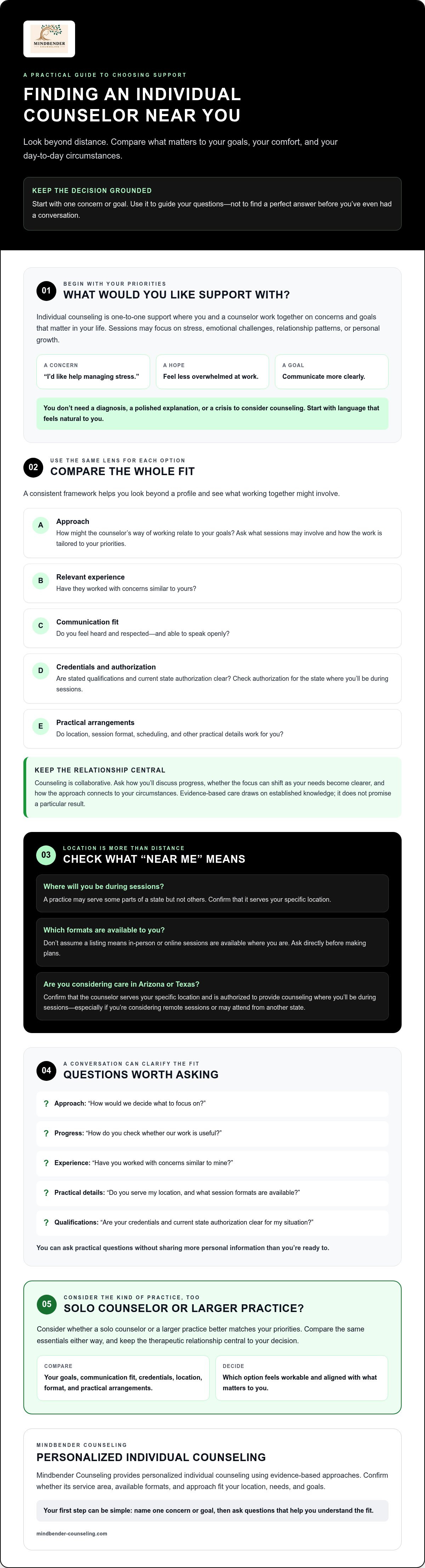
A consistent comparison framework helps you look beyond a profile and consider what working together might involve. As you review individual counselors near me, use the same criteria for each option to identify what fits your goals and what you still need to ask.
| What to compare | Questions to consider |
|---|---|
| Approach | How might the counselor’s way of working relate to your goals? |
| Relevant experience | Have they worked with concerns similar to yours? |
| Communication fit | Do you feel heard, respected, and able to speak openly? |
| Credentials | Are their stated qualifications and current state authorization clear? |
| Logistics | Do location, session format, scheduling, and practical arrangements work for you? |
Approach matters, but so does the relationship. The American Psychological Association describes how psychotherapy works as a collaborative process. Ask how a counselor adapts sessions to your concerns, how you’ll discuss progress, and whether the focus can change as your needs become clearer. Evidence-based care draws on established knowledge, but it doesn’t promise a particular result. Ask how the approach relates to your goals and circumstances.
What should you ask about a counselor’s approach?
Ask the counselor to explain what sessions might involve and how they tailor their work to your priorities. For example: “How would we decide what to focus on?” or “How do you check whether our work is useful?” Cognitive behavioral therapy is one approach you could ask about, but don’t assume a particular counselor offers it. Look for an answer you understand and feel comfortable discussing.
How can you check qualifications and local authorization?
Review the counselor’s stated credentials, then verify relevant licensing information through the appropriate official state board. In Arizona, check current requirements with the state board responsible for behavioral health professionals. In Texas, consult the relevant state licensing board. Confirm authorization for the state where you’ll be during sessions. If you’re unsure which credential or board applies, ask the counselor.
Credentials help confirm professional qualifications; personal fit helps you decide whether you feel comfortable doing the work together. Both deserve attention. To learn about the practice’s approach, explore Mindbender Counseling’s individual counseling and ask whether it aligns with your needs and location.
Individual Counselor or Larger Practice: Which Option Fits Your Priorities?
Practice size can shape how you find and communicate with a counselor, but it doesn’t determine what the therapeutic relationship will be like. A smaller practice may offer a direct point of contact; a larger practice may have more than one provider to ask about. These are possibilities to check, not guarantees. Your goals, comfort, and access to care matter more than the label.
Consider the counseling relationship separately from the practice’s administrative processes. The counselor’s listening style, communication, and approach to personalizing sessions shape your work together. The practice’s processes may affect how you ask questions, coordinate scheduling, or explore other provider options. Neither structure automatically leads to a better outcome.
When might a smaller or individual practice feel like a better fit?
If you value a consistent relationship or prefer to communicate directly with the person providing your sessions, ask how the practice handles those preferences. Find out who would work with you, whether you can expect continuity, and how sessions are tailored to your goals. A smaller setting doesn’t automatically mean more personal attention, so focus on whether the answers are clear and respectful.
When might a larger practice better match your needs?
A larger practice may have multiple providers, but don’t assume you’ll have a choice or that you can transfer between counselors. Ask how provider matching works, who handles scheduling questions, and what options exist if your needs change. Confirm that any provider you might see serves your location and is authorized to counsel clients where you’ll be during sessions.
As you compare individual counselors near me, consider asking each practice:
- Continuity: Who will provide my sessions, and what happens if that person is unavailable?
- Choice: Can I learn about the counselor’s experience and approach before deciding?
- Communication: Who should I contact with questions about sessions or practical arrangements?
- Access: Does the practice serve my location, and which session formats are currently available to me?
These questions help you understand how a practice operates without confusing administrative convenience with personal fit. A larger practice may suit someone who values provider options, while a smaller one may appeal to someone who prefers a direct point of contact. Either way, notice whether you feel heard and whether the arrangement fits your priorities. Choose based on the actual counselor, communication, and access available to you, not practice size alone.
Questions to Ask Before Choosing a Local Individual Counselor
An initial inquiry can be brief. Start with practical questions and share only what feels comfortable, such as a general goal rather than your full personal history. Use this checklist to compare responses and decide whether you’d like to learn more.
What can you ask in an initial conversation?
Choose the questions that matter most to you. You don’t have to cover everything at once, and it’s okay to ask for clarification if an answer is unclear.
- Service area: Do you work with people located where I’ll be during sessions?
- Goals and experience: Do you work with concerns like the one I’ve briefly described?
- Approach: How do you tailor counseling to a person’s goals, and how do you discuss progress?
- Credentials: What credentials do you hold, and where can I verify your current state authorization?
- First session: What does an initial session generally involve, and what information should I expect to discuss?
- Format and arrangements: What session formats are available for my location? How do scheduling, fees, and insurance questions work?
These questions help you understand the process without requiring you to disclose more than you wish. You can pause, ask another question, or take time to decide whether to proceed. If anxiety is one of your concerns, you may also want to read about individual counseling for anxiety.
How can you assess comfort and practical fit?
Notice how the counselor or practice responds. Do they listen to your priorities, explain things clearly, and treat your questions with respect? You don’t need to feel certain after one conversation, but you should have room to ask questions and make an informed choice.
Before scheduling, confirm what affects access: whether your location is served, which session format is available, how scheduling is handled, and what fees or insurance arrangements apply. Ask directly rather than relying on assumptions from a search listing. For more context before reaching out, explore this guide to understanding private therapy.
If you’re considering Mindbender Counseling, you can ask about personalized individual counseling and confirm whether the practice serves your location and needs.
Explore Personalized Individual Counseling With Mindbender Counseling
Once you’ve considered your goals, preferred approach, and practical needs, use those priorities to explore specific options. Mindbender Counseling provides personalized, one-to-one individual counseling using evidence-based approaches. Sessions focus on personal mental health goals and are tailored to individual needs. If you’re comparing individual counselors near me, consider whether that focus matches what you’re looking for, then confirm the details that matter to you.
What can you expect from a personalized counseling approach?
Personalized counseling starts with what you want support with. Ask how your goals shape the work, how the counselor’s evidence-based approach relates to your concerns, and how you can revisit your priorities over time. These questions help you understand the process without assuming a particular method or outcome.
Evidence-based care is one factor to consider, alongside relevant experience, communication style, credentials, and comfort. It doesn’t guarantee a specific result or timeline. A useful conversation makes space for questions about what an approach means in practice and whether it feels relevant to your circumstances. For broader background, read this guide to therapy and behavioral therapy guidance.
What is a low-pressure next step?
Start with a short inquiry rather than sharing your full story. Mention your general goal and ask whether the practice may be a fit. Before deciding whether to schedule, confirm whether your specific location is served, which session formats are available to you, and the counselor’s credentials and current availability. Ask about practical arrangements directly so you can make an informed choice.
Mindbender Counseling serves clients in Arizona and Texas, but that doesn’t necessarily mean every location in either state is covered. Confirm service-area eligibility and authorization for the state where you’ll be during sessions. Then ask any remaining questions about format and availability.
If personalized individual counseling sounds aligned with your goals, explore individual counseling and ask whether Mindbender Counseling may be a fit for your location and needs.
Take Your Next Step Toward the Right Support
Choosing a counselor is about more than finding someone nearby. Start with what you hope to work on, then compare each counselor’s approach, relevant experience, communication style, credentials, and practical arrangements. A good fit should make sense for your goals and feel comfortable enough to explore further.
As you consider individual counselors near me, ask whether your location is served, which session formats are available, and how to verify the counselor’s credentials and state authorization. These details help you make an informed choice without rushing.
Mindbender Counseling describes its individual counseling as personalized to each client’s goals and grounded in evidence-based approaches. If that focus sounds relevant, confirm that the practice serves your location and ask questions about fit and availability. Explore personalized individual counseling as a possible next step.
You don’t need every answer before reaching out. A thoughtful question or simple inquiry can help you begin at a pace that feels right.
Frequently Asked Questions
How do I find an individual counselor near me?
Start by identifying what you’d like help with, then compare counselors’ relevant experience, approach, communication style, credentials, and practical arrangements. Search results can help you build a list, but confirm directly whether each counselor serves your specific location and offers a session format that works for you. In Arizona or Texas, don’t assume a practice serves every part of either state. Ask about local availability before scheduling.
How do I know if an individual counselor is a good fit?
A good fit combines relevant professional experience with a sense that you can communicate openly and feel respected. Ask how the counselor’s approach may connect to your goals, how sessions are tailored, and how you can discuss progress or adjust the focus. Notice whether explanations are clear and your questions receive thoughtful answers. You can take time to consider whether to continue.
What should I ask an individual counselor before starting?
Ask whether the counselor works with concerns like yours, how they tailor sessions, and what an initial session generally involves. Confirm their credentials and how to check state authorization. Also ask whether your location is served, which session formats are available, and how scheduling, fees, and insurance questions are handled. You can share a brief description of your goals without giving your full personal history. Pause or ask for clarification whenever you need to.
Can I see a counselor in Arizona or Texas if I live elsewhere?
Possibly, but don’t assume a counselor can work with you just because they serve clients in Arizona or Texas. Requirements and authorization can depend on where you’re physically located during a session, and the practice must confirm whether it can serve your state. Ask directly about your location, the counselor’s authorization there, session format, and current availability. Mindbender Counseling serves clients in Arizona and Texas, but confirm specific service areas.
What is the difference between an individual counselor and a larger therapy practice?
The main difference is how the practice is organized, not whether counseling will be effective. A smaller practice may offer direct communication with the person providing sessions, while a larger practice may have multiple providers. Verify how each practice works. Ask who would work with you, how continuity is handled, and whom to contact with practical questions. Compare the actual counselor, your comfort, location, and access rather than assuming practice size guarantees a better outcome.
Do I need a diagnosis to talk with an individual counselor?
No, you don’t need a diagnosis to consider individual counseling. People may seek support for recurring stress, emotional challenges, relationship patterns, life changes, or personal growth. You can begin with a simple goal, such as wanting to feel less overwhelmed or communicate more clearly. A counselor can discuss whether their approach fits your concerns and explain what working together might involve. You can ask questions before deciding whether to proceed.


