

What if the goal of managing your life isn't to eliminate the pressure, but to change how your mind and body respond to it? You've likely spent months feeling physically exhausted, watching your sleep patterns crumble and your patience with loved ones wear thin. It's easy to feel like a failure when you can't simply "tough it out" alone, but seeking therapy for stress management isn't a sign of weakness. It's a strategic step toward building a psychological foundation that prevents daily pressure from becoming a long-term pathology.
Discover how evidence-based therapy transforms chronic tension into lasting emotional resilience through personalized clinical strategies. We'll provide a clear framework for understanding your current stress levels and help you identify which therapeutic path, such as CBT or DBT, aligns with your unique personality. You'll find a steady path toward a calmer, more controlled daily life where you're no longer just surviving the day, but finally moving forward with quiet confidence and restored balance.
Key Takeaways
- Understand why your stress response is a survival tool that's become misaligned with modern life and learn how to recalibrate it for better health.
- Explore how specialized tools like CBT and DBT provide a structured foundation for therapy for stress management, turning reactive habits into intentional resilience.
- Identify the specific signs of functional impairment that signal when it's time to move from self-management to professional clinical support.
- Discover the science of co-regulation and how stabilizing your own nervous system can heal strained relationships and improve communication with your partner.
- Learn how a personalized, evidence-based approach helps you transition from simply surviving to truly thriving in your professional and personal life.
Navigating the Landscape of Modern Stress in 2026
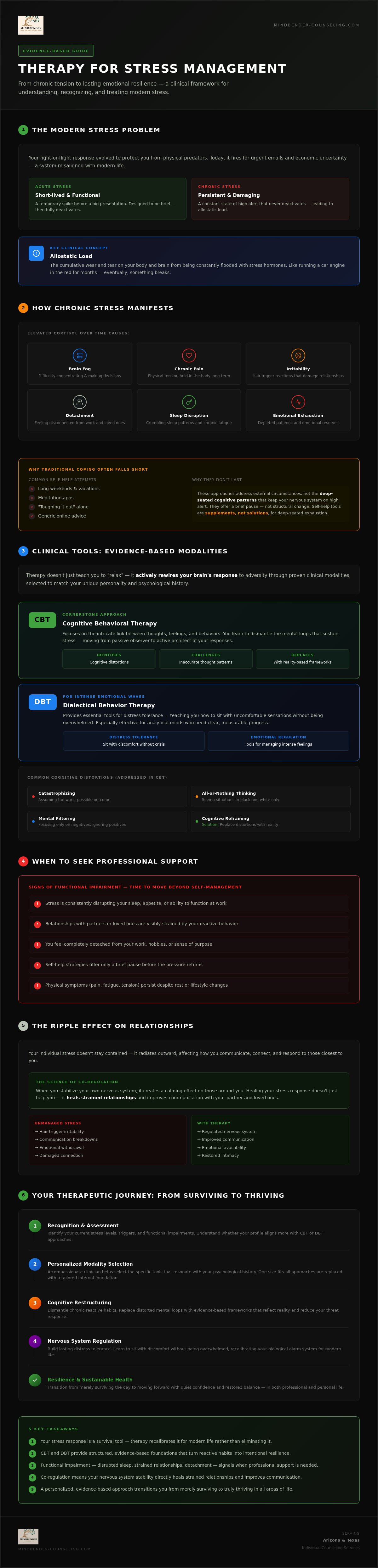
Stress isn't your enemy; it's an ancient survival system designed for a world that no longer exists. Thousands of years ago, your "fight or flight" response saved you from physical predators. Today, that same biological alarm sounds off because of an urgent email or a sudden shift in the economy. This is why therapy for stress management is a vital tool for anyone feeling overwhelmed by the demands of the current year. Your body is simply trying to protect you, but in a world that never sleeps, those protections have become maladaptive.
It's helpful to distinguish between acute and chronic stress. Acute stress is the temporary spike you feel before a big presentation or a difficult conversation. It's meant to be short-lived. Chronic stress, however, is a persistent state of high alert that never truly deactivates. In 2026, we face a unique combination of digital fatigue, a professional "always-on" culture, and rapid economic shifts that keep our systems in a state of perpetual readiness. When this pressure remains unresolved, you experience what clinicians call "allostatic load." This is the literal wear and tear on your body and brain from being constantly flooded with stress hormones. It's like running a car engine in the red for months on end; eventually, something breaks.
The Physical and Psychological Architecture of Stress
When your nervous system perceives a threat, it releases cortisol to prepare you for action. While helpful in short bursts, elevated levels over time lead to persistent brain fog, chronic physical pain, and a hair-trigger irritability that can damage your relationships. You might find yourself snapping at partners or feeling completely detached from your work. Emotional resilience is the ability to adapt to adversity without long-term dysfunction.
Why Traditional Coping Mechanisms Often Fail
You might try to solve systemic internal stress with external fixes like a long weekend or a new meditation app. While these offer a brief pause, they rarely address the deep-seated cognitive patterns that keep your system on high alert. Self-help tools are often supplements, not solutions, for deep-seated exhaustion. Professional Individual Counseling Services provide the sturdy anchor you need for real, lasting change. By seeking therapy for stress management, you move away from temporary distractions and toward a structured environment where you can dismantle the habits of chronic tension and replace them with sustainable health.
Evidence-Based Modalities: Clinical Tools for Lasting Relief
Stress management often feels like a series of temporary band-aids. However, clinical interventions offer a way to restructure your internal world so that pressure no longer feels like a constant threat. By engaging in therapy for stress management, you aren't just learning to "relax"; you're actively rewiring your brain's response to adversity. This process relies on proven modalities that provide a structured, logical path toward emotional stability.
Cognitive Behavioral Therapy (CBT) is a cornerstone of this approach. It focuses on the intricate link between your thoughts, feelings, and behaviors. Instead of remaining a passive observer of your stress, you learn to dismantle the mental loops that sustain it. For those who struggle with intense emotional waves, Dialectical Behavior Therapy (DBT) offers essential tools for distress tolerance. It teaches you how to sit with uncomfortable sensations without being overwhelmed by them. These evidence-based strategies are particularly effective for analytical minds because they offer clear, measurable progress rather than vague suggestions.
Personalization is the key to success in this journey. One-size-fits-all advice often fails because it ignores your unique psychological history and personality. A compassionate guide helps you select the specific tools that resonate with your life. This individualized focus ensures that you aren't just following a program, but building a tailored internal foundation for long-term health.
Cognitive Reframing: Changing Your Internal Narrative
Your internal narrative often acts as a megaphone for stress. Through a process called cognitive reframing, you identify "cognitive distortions"—mental filters like catastrophizing or "all-or-nothing" thinking—that amplify your daily pressures. A therapist helps you challenge these inaccurate thoughts and replace them with frameworks that reflect reality. This work is deeply integrated with Individual Counseling for Anxiety, as stress and anxiety frequently stem from the same distorted cognitive roots. By changing the narrative, you change the emotional outcome.
Behavioral Activation and Mindfulness-Based Strategies
While reframing handles the thoughts, behavioral activation addresses the actions. This technique involves using small, intentional steps to shift your emotional state, proving that you don't have to wait until you "feel better" to start acting with purpose. Clinical mindfulness further supports this by creating a "buffer" between a stressor and your reaction. Unlike general meditation, clinical mindfulness focuses on:
- Objective awareness of physical triggers
- Non-judgmental observation of emotional spikes
- Intentional pausing before responding to pressure
Recognizing the Threshold: When Stress Management Becomes Therapy
Many people hesitate to seek help because they believe their stress isn't "severe" enough. They compare their struggles to others and decide they should be able to handle it alone. However, waiting for a complete crisis often makes the recovery process longer and more difficult. Choosing therapy for stress management isn't about admitting defeat; it's about recognizing when the weight you're carrying has exceeded your current capacity to process it.
Clinical support becomes necessary when stress transitions from a feeling to a functional impairment. If your stress levels are consistently interfering with your ability to perform at work, maintain your physical health, or get restorative sleep, you've reached a critical threshold. It's no longer just a "busy season" when your body and mind signal that they can no longer compensate for the pressure. When you can't "turn off" the mental noise at the end of the day, you're experiencing a systemic overload that requires professional attention.
Consider the metrics of duration and intensity. A few stressful days are a normal part of life. If you've felt overwhelmed for most days over the last month, you're likely dealing with a chronic pattern. High intensity, where you feel a sense of dread or physical panic, is another clear indicator. Engaging in therapy early acts as a preventative measure. It allows you to address burnout before it results in a full emotional or physical collapse, helping you maintain your professional and personal stability.
Signs You Need Professional Support
While everyone experiences pressure differently, certain symptoms suggest that your nervous system is stuck in a state of high alert. These include:
- Persistent insomnia or waking up feeling unrefreshed despite a full night's sleep.
- Social withdrawal or a growing sense of disconnection from friends and family.
- "Unexplained" physical ailments like tension headaches, digestive issues, or chronic muscle pain.
- A noticeable drop in productivity or an inability to focus on complex tasks.
Therapy is not a sign of weakness, but a strategic investment in your highest-functioning self. To understand how these clinical interventions build long-term emotional strength, you can explore Understanding Therapy and Behavioral Therapy.
The Benefits of Individual Counseling for Adults
One-on-one sessions offer a confidential environment that is especially valuable for high-stakes professionals who feel they must always project strength. Within this space, your therapist acts as a professional facilitator in your personal evolution. They help you navigate complex transitions with clarity and objective support. The long-term ROI of Individual Counseling Services is significant. You'll find yourself making better decisions under pressure and enjoying improved physical health as your nervous system returns to a state of balance. This work provides a sturdy anchor, ensuring that you can face the demands of 2026 with a sense of calm assurance and renewed purpose.
The Ripple Effect: How Individual Stress Impacts Your Relationship
Stress doesn't stay confined to the office or your own mind. It often travels home with you, manifesting as a sharp tone during dinner or a silent withdrawal after a long day. When you're constantly in a state of high alert, your capacity for patience and empathy naturally diminishes. This shift can leave your partner feeling confused, neglected, or defensive. Seeking therapy for stress management is often the most effective way to address these symptoms before they erode the foundation of your partnership.
A critical concept in clinical work is "co-regulation." This describes how partners naturally influence each other's nervous systems. If one person is perpetually stressed, their physiological state can inadvertently trigger a stress response in the other. This creates a feedback loop where both people feel increasingly unstable. For busy professionals in Arizona and Texas, online couples counseling has become a vital resource for addressing these dynamics in real-time, allowing partners to synchronize their recovery from the comfort of home.
Breaking the Cycle of Shared Stress
Living in a high-pressure environment often leads to "stress contagion," where tension spreads through a household like a virus. Without a structured way to communicate, this shared stress quickly turns into conflict. Therapy helps you build a "team vs. the stressor" mentality. Instead of viewing your partner's irritability as a personal attack, you learn to see it as a symptom of an external pressure. To break the cycle, consider these communication strategies:
- Name the stressor explicitly rather than directing frustration at your partner.
- Schedule specific "de-stressing windows" where work talk is prohibited.
- Practice active listening that prioritizes validation over immediate problem-solving.
Relational Resilience in a High-Pressure World
Maintaining emotional intimacy during periods of intense external pressure requires more than just good intentions. It demands specific, evidence-based tools that protect your connection when life feels chaotic. By strengthening your bond under fire, you ensure that your relationship remains a sanctuary rather than another source of demand. You can explore counseling for work stress in Arizona to see how clinical support for your professional life directly benefits your home environment.
When individual coping strategies aren't enough to stop the ripple effect, professional intervention provides a clear path forward. If you're ready to restore balance to your partnership, consider starting Couples Counseling with a compassionate expert who understands the unique pressures of 2026.
Cultivating Resilience: Your Therapeutic Journey in Arizona and Texas
Starting therapy for stress management shouldn't feel like another heavy item on your already crowded schedule. We view the first therapeutic appointment as a low-friction, high-value exploratory step designed to help you regain your footing. At Mindbender Counseling, we bridge the gap between clinical expertise and deep compassion. Our evidence-based approach provides the structure you need to see real, measurable changes in your daily life. We serve professionals across Arizona and Texas through modern platforms that prioritize your privacy and convenience, ensuring that your path to wellness fits seamlessly into your routine. Our commitment is to provide steady, unwavering support as you move from a state of constant survival to one of intentional thriving.
What to Expect in Your First Individual Session
The intake process is often a source of anxiety, but it's actually a collaborative effort focused on alignment rather than judgment. During this initial meeting, we work together to map out the specific pressures you're facing and the outcomes you hope to achieve. We set clear goals and establish how we'll track your progress, which is essential for analytical minds that value tangible results. In this space, the therapist acts as a professional facilitator for your own journey, offering objective insights while you remain the architect of your own growth. This structured beginning ensures that every subsequent session is purposeful and tailored to your unique psychological architecture.
Taking the First Step Toward Balance
Navigating the logistics of scheduling shouldn't be a barrier to your health. Whether you're looking for support in the heart of Phoenix or within the busy hubs of Texas, we've refined our process to be as straightforward as possible. You don't need to wait for a crisis to justify seeking help; addressing burnout early is a strategic move that protects your future. We offer a clear, reassuring path forward that honors your professional commitments and personal boundaries. By choosing to invest in Individual Counseling Services now, you're building the resilience needed to handle whatever challenges 2026 may bring. Begin your path to resilience with Mindbender Counseling and take the first step toward a calmer, more controlled life.
Reclaiming Your Sense of Control and Balance
The weight of chronic stress doesn't have to be a permanent fixture in your life. By understanding the biological roots of your tension and applying evidence-based strategies, you can transform physical exhaustion into sustainable emotional resilience. We've explored how identifying the threshold for professional support protects not only your individual well-being but also the health of your most important relationships. Choosing therapy for stress management is a proactive step toward building a solid internal foundation that can withstand the unique pressures of 2026.
Mindbender Counseling provides compassionate care from licensed Arizona and Texas professionals who specialize in interventions tailored specifically to your life. We focus on long-term emotional growth and stability, acting as a steady anchor during times of transition. You don't have to carry the burden of "handling it all" alone. Schedule your personalized stress management consultation today and begin the journey toward a calmer, more intentional future. You deserve a life defined by balance and quiet confidence.
Frequently Asked Questions
Is therapy for stress management actually effective?
Choosing therapy for stress management is highly effective when you use evidence-based modalities like CBT or DBT. These clinical tools allow you to recalibrate your nervous system's response to pressure rather than just managing surface-level symptoms. By addressing the cognitive patterns that amplify your tension, you build a sturdy foundation for long-term resilience. This structured approach helps you transition from a state of constant survival to one of intentional, balanced thriving.
How many therapy sessions will I need to feel less stressed?
The duration of your treatment varies based on your individual needs and the complexity of your current stressors. Some clients notice a significant shift in their perspective after eight to twelve sessions of focused, evidence-based work. Others choose to engage in ongoing support to maintain emotional stability through major professional transitions. Your therapist will work with you during the intake process to set clear goals and establish a steady, reassuring timeline.
What is the difference between a life coach and a therapist for stress?
A therapist is a licensed mental health professional trained to treat clinical conditions and address deep-seated psychological patterns. While life coaches generally focus on future goals and motivation, therapy for stress management provides a higher level of clinical oversight. This ensures that you are addressing the biological and emotional roots of your exhaustion. Licensed therapists use proven interventions to heal the nervous system and manage functional impairments that coaches aren't equipped to handle.
Can I use my insurance for stress management therapy in Arizona or Texas?
Coverage typically depends on your specific insurance provider and the details of your individual plan. Many plans in Arizona and Texas do cover mental health services when a clinical need is established for your well-being. It's best to contact your insurance carrier directly to verify your out-of-network benefits or co-payment requirements. Our team can provide the necessary documentation to help you navigate this process and maximize the value of your personal health investment.
Will my employer find out if I am seeking counseling for work stress?
No, your privacy is protected by strict confidentiality laws, including HIPAA regulations that safeguard your medical information. Your employer has no legal right to access your private health records or your therapy history. Seeking Individual Counseling Services is a private decision, and your sessions remain a confidential space for personal growth. This security allows high-stakes professionals to explore their challenges without fear of professional repercussions or judgment from their workplace leadership.
What happens if I don’t feel a "click" with my first therapist?
Finding the right therapeutic fit is essential for successful outcomes, and it's perfectly normal to explore different options. If you don't feel a sense of calm assurance or trust with your first provider, we encourage you to share that feedback. A professional therapist understands that personal alignment is a key component of the healing process. We prioritize matching you with a compassionate guide who resonates with your personality and your specific goals for growth.
How do I know if I need individual therapy or couples counseling for my stress?
If your stress primarily stems from internal patterns or personal work pressure, individual sessions are often the best starting point. However, if your tension has created a persistent cycle of irritability or withdrawal within your partnership, Couples Counseling may be more effective. Many clients find that stabilizing their own nervous system first provides the clarity needed to decide if relational work is the next logical step in their journey toward balance.
Is telehealth as effective as in-person therapy for managing stress?
Yes, research consistently shows that telehealth is just as effective as in-person sessions for most mental health concerns. Modern, professional platforms allow for a deep level of connection and clinical engagement from the comfort of your own home. For busy professionals in Arizona and Texas, virtual sessions reduce the logistical stress of travel. This convenience makes it much easier to maintain the consistency required for long-term emotional progress and restored stability.


