

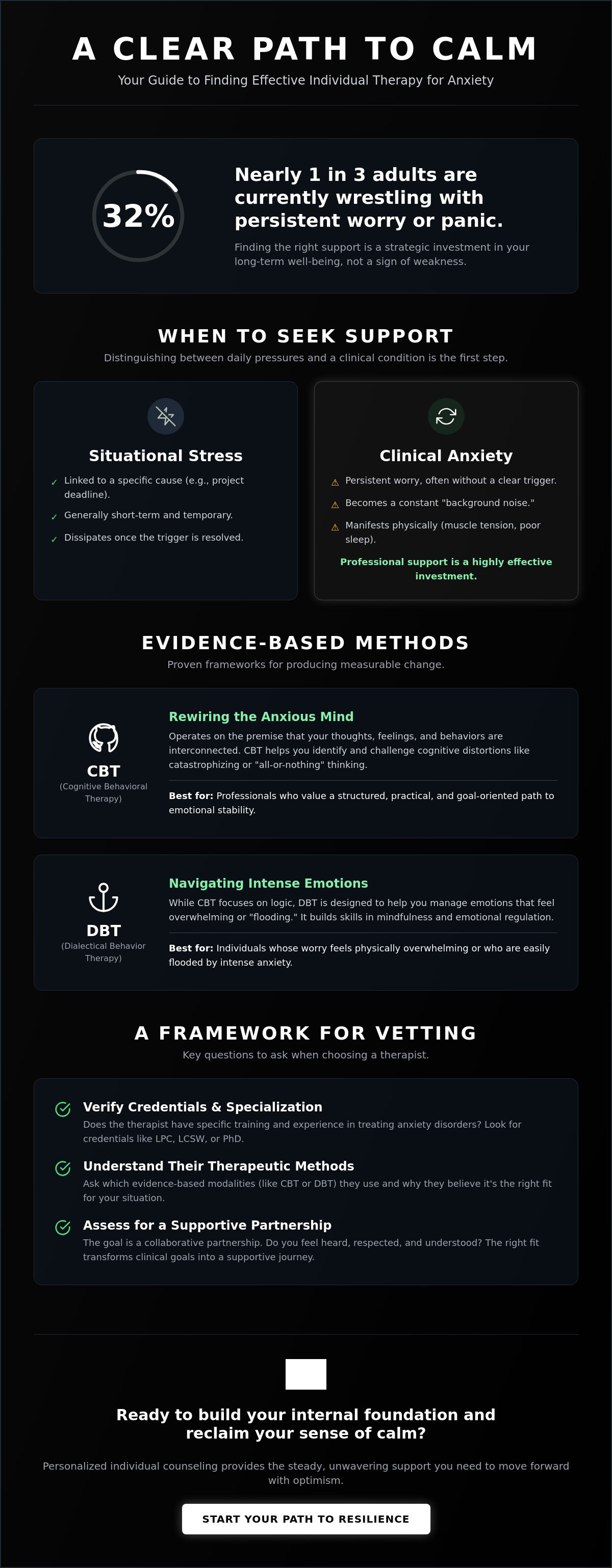
Nearly 32% of adults are currently wrestling with the weight of persistent worry or panic, yet the search for individual therapy for anxiety often feels like an added source of stress. It’s understandable to feel paralyzed by a sea of options or to worry that a clinical approach won't actually address your specific situation. You might find yourself confused by technical acronyms like CBT or DBT, wondering if any provider truly understands the unique pace of life in Arizona or Texas. We believe that finding support should be a source of relief, not a secondary burden.
You deserve a clear, reliable path toward reclaiming your emotional balance and building a steady internal foundation. This guide will teach you exactly how to evaluate evidence-based anxiety specialists and vet potential therapists with confidence. We’ll break down the practical benefits of different therapeutic methods and provide a framework for finding a local specialist who truly recognizes your experience. By the end of this article, you’ll have the tools to choose a partner in your growth who offers the steady, unwavering support you need to move forward with optimism.
Key Takeaways
- Learn to identify the subtle differences between situational stress and clinical anxiety to determine when professional support is the most effective investment for your well-being.
- Understand the core benefits of evidence-based methods like CBT and DBT so you can confidently select individual therapy for anxiety that produces measurable change.
- Gain a clear framework for vetting therapists in Arizona and Texas, including how to verify specific credentials and assess specialization in anxiety disorders.
- Discover why local expertise is vital for navigating the unique professional and social pressures found in rapidly growing hubs like Austin and Phoenix.
- See how a personalized approach to individual counseling transforms clinical goals into a supportive partnership for reclaiming your sense of calm.
Recognizing When Individual Counseling for Anxiety is the Right Investment
Distinguishing between daily stress and an anxiety disorder is a vital first step in your journey toward balance. While stress usually dissipates once a project ends or a conflict resolves, clinical anxiety persists. It often becomes a background noise that never quite stops. Approximately 21.3% of adults in the U.S. experience a diagnosable anxiety disorder each year. For many professionals in high-growth hubs like Phoenix or Austin, this often manifests as high-functioning anxiety. You might be meeting every deadline and maintaining a perfect social facade, yet internally, you feel a constant sense of dread or a racing mind that refuses to rest. Choosing individual therapy for anxiety isn't an admission of failure; it's a strategic investment in your long-term resilience.
The Tipping Point: From Coping to Seeking Support
Anxiety often moves from a mental hurdle to a physical reality. You might notice persistent tension in your shoulders or a sleep pattern that leaves you drained before the workday even begins. In competitive markets across Arizona and Texas, just pushing through can eventually lead to burnout or uncharacteristic mistakes in the workplace. When your online searches for how to stop worrying shift toward looking for a specific provider, you've reached a state of transactional readiness. You're no longer just looking for information. You're looking for a solution that works. This transition marks the moment where self-help reaches its limit and professional expertise becomes necessary.
Individual vs. Group Therapy for Anxiety
While various forms of psychotherapy offer support, individual sessions provide a level of personalized attention that group settings cannot match. In a one-on-one environment, the focus remains entirely on your unique triggers and history. This dedicated clinical space allows you to dismantle complex emotional patterns without the distraction of others' experiences. Individual therapy for anxiety often provides a faster return on your time because the therapist can tailor evidence-based tools specifically to your lifestyle and goals. It creates a safe harbor where you can be entirely honest, accelerating the healing process through focused, individualized care.
Self-help books and wellness apps have their place, as do holistic resources; for instance, many individuals discover Mental Compass to explore how natural mushroom and flower essence tinctures can support their emotional well-being. However, these tools lack the interactive feedback of a trained specialist. Professional intervention acts as a catalyst. It helps you navigate the mental health professional shortage often found in the Phoenix metro area by ensuring the time you spend in care is highly effective. Taking this proactive step is a sign of strength. It sets the foundation for a more stable, fulfilling future where you're in control of your emotions rather than being driven by them.
Evaluating Evidence-Based Modalities: CBT, DBT, and Beyond
Selecting the right methodology is just as vital as choosing the right therapist. Evidence-based therapy refers to clinical approaches that have been rigorously tested and scientifically proven to produce results. These aren't just theories; they're structured frameworks designed to provide an effective treatment for anxiety. By grounding your care in these proven methods, you ensure that your time in session translates into tangible, long-term progress in your daily life.
Cognitive Behavioral Therapy (CBT): Rewiring the Anxious Mind
CBT is often considered the gold standard for managing worry. It operates on a simple but powerful premise: your thoughts, feelings, and behaviors are all interconnected. When you engage in individual therapy for anxiety using CBT, you're essentially training your brain to recognize cognitive distortions. These are the mental traps, like catastrophizing or "all-or-nothing" thinking, that fuel a panic response. By identifying these patterns, you can challenge their accuracy and replace them with more balanced perspectives. Because CBT is practical and often involves task-oriented exercises, it's particularly effective for busy professionals who value a structured, goal-oriented path toward emotional stability.
Dialectical Behavior Therapy (DBT) and Mindfulness
While CBT focuses on the logic of your thoughts, DBT is designed to help you navigate intense emotions. It's an excellent choice if you feel easily "flooded" by anxiety or if your worry feels physically overwhelming. A core component of DBT is mindfulness, which creates a vital buffer between a trigger and your reaction. You learn to observe your anxious thoughts without judgment, allowing them to pass rather than letting them dictate your actions. This approach builds distress tolerance, giving you the immediate tools needed to remain calm during high-pressure situations at work or home. It's about finding a middle ground where you can acknowledge your feelings while maintaining control over your choices.
We believe that your care should be as unique as your experience. While we rely on these proven methods, we prioritize personalized therapeutic interventions that adapt to your specific needs. We don't use a one-size-fits-all manual. Instead, we blend the logical strategies of CBT with the regulating skills of DBT to help you build a solid internal foundation. If you're ready to see how a tailored approach can make a difference, we invite you to learn more about our Evidence-Based Therapy options. By integrating these modalities into individual therapy for anxiety, we help you move beyond just coping and toward a state of genuine, lasting resilience.
How to Vet an Individual Therapist: A Buying Guide Checklist
Selecting a provider for individual therapy for anxiety is a decision that deserves a structured approach. You aren't just looking for a listener; you're looking for a clinical partner who can provide a high return on your emotional investment. To find the right match in the Arizona or Texas landscape, follow this focused vetting process.
- Verify state-specific credentials. Ensure your therapist is licensed by the appropriate state board. In Arizona, practitioners are licensed through the Arizona Board of Behavioral Health Examiners, which is implementing a new e-licensing system on June 22, 2026. In Texas, look for Licensed Professional Counselors (LPC) who have completed their required 3,000 hours of supervised experience.
- Assess their specialization. Ask what percentage of their caseload is dedicated specifically to anxiety. You want a specialist, not a generalist who treats everything from career coaching to grief.
- Inquire about progress measurement. A quality therapist doesn't just "talk." They use objective tools to track your symptom reduction over time. Ask how they’ll know when you’re ready to graduate from care.
- Review modern logistics. Both Arizona and Texas have telehealth parity laws, meaning many insurance plans cover virtual sessions at the same rate as in-office visits. However, many top-tier specialists use private pay structures to ensure they can offer more personalized, high-touch care.
- Conduct a "vibe check." During your first meeting, notice if you feel a sense of calm assurance. You should feel seen and understood without feeling judged.
Decoding Clinical Credentials and Specializations
Understanding the alphabet soup of clinical initials helps you make an informed choice. While many therapists are capable, specialized individual counseling for adults requires specific postgraduate training in anxiety-specific modalities. A specialist understands the neurological roots of your panic and provides targeted tools rather than broad advice. For a deeper dive into what to look for during your search, you can review our individual therapy sessions checklist. This resource helps you move from being an overwhelmed seeker to an empowered advocate for your own health.
The Importance of the Therapeutic Alliance
Decades of research confirm that the relationship between you and your therapist is the single best predictor of success. This "therapeutic alliance" is the foundation upon which all deep work is built. It’s vital to find a personality that aligns with your learning style. At Mindbender, we prioritize being compassionate guides rather than cold clinical observers. We believe that individual therapy for anxiety works best when you feel supported by a sturdy anchor. When you trust your guide, you're more likely to engage with the evidence-based tools that lead to lasting restoration of balance.
Navigating the Local Therapy Landscape in Arizona and Texas
Living in high-growth metropolitan hubs like Phoenix or Austin brings a specific set of modern pressures. The rapid expansion of these areas often leads to increased professional competition, rising costs of living, and a frantic pace of life that can exacerbate underlying worry. When seeking individual therapy for anxiety, choosing a provider who understands these regional nuances is essential. A local specialist recognizes the unique lifestyle stressors you face, from the tech-sector demands in Austin to the professional "mental health professional shortage" often felt in the Phoenix metro area. This shared context helps your therapist build a more accurate picture of your daily reality.
Telehealth vs. In-Person Counseling in the Southwest
Telehealth has become a durable standard in 2026, offering a practical solution for busy professionals who can't afford to lose hours to traffic. In Texas, Senate Bill 670 ensures that most commercial insurance plans reimburse for telehealth at the same rate as in-office visits. Arizona maintains similar parity laws, making virtual care a highly accessible option. However, it's vital to ensure your provider holds a valid license in your specific state. For instance, Texas requires 3,000 hours of supervised experience for an LPC, while Arizona's Board of Behavioral Health Examiners is moving to a new e-licensing platform on June 22, 2026. Mindbender Counseling serves both states through structured, state-compliant programs that prioritize clinical excellence regardless of the setting.
Private Pay and Confidentiality
Many individuals are now opting for private pay structures to gain more control over their care. When you choose private therapy, your records remain strictly between you and your provider. This avoids the requirement of submitting a formal diagnosis to an insurance company, which can be a significant advantage for professionals in sensitive industries. Private pay also allows for a more personalized approach, as the therapist isn't restricted by the session limits or "medical necessity" definitions often imposed by large insurance corporations. It's an investment in a higher standard of individualized attention and long-term emotional stability.
The regulatory environments in both Arizona and Texas are designed to ensure you receive high-quality care from vetted experts. By working with a local practice that specializes in individual therapy for anxiety, you're choosing a partner who is rooted in your community's standards and values. If you're ready to find a supportive guide who understands your local environment, we invite you to explore our Individual Counseling Services. Investing in specialized care today provides the sturdy anchor you need to thrive in the fast-paced Southwest landscape.
Starting Your Path to Resilience with Mindbender Counseling
At Mindbender Counseling, we recognize that the decision to seek help is a profound act of self-advocacy. Our approach combines professional expertise with a deeply compassionate perspective, ensuring you never feel like just another case file. We specialize in individual counseling for anxiety that is meticulously tailored to your unique history and future goals. By grounding our work in proven, reliable methods, we provide the steady, unwavering support you need to restore your internal balance. We act as a professional facilitator for your growth, offering a sturdy anchor while you navigate the path toward emotional stability.
What to Expect in Your First Mindbender Session
Your first session is designed to be a source of clarity rather than stress. During the initial intake, we’ll work together to identify your specific triggers and set meaningful, achievable milestones. This structured process allows us to use research-backed counseling to build a solid foundation for your progress. We invite you to begin this journey at your own pace. Scheduling your first therapeutic appointment is a straightforward, low-friction process intended to respect your time and energy. It’s a gentle invitation to step into a space of safety and reliability where your personal evolution is the primary focus.
Your Future Beyond Anxiety
Progress in individual therapy for anxiety isn't about the total absence of worry. It's about transforming anxiety from a controlling force into a manageable signal that no longer dictates your choices. As you gain mastery over your internal environment, you'll learn how to integrate self-care and resilience into your daily life. This ongoing wellness strategy ensures that the gains you make in our sessions remain durable over the long term. You'll begin to visualize a life defined by quiet confidence and optimism rather than the paralysis of overthinking.
You have the capacity for significant change. Taking that first step toward professional support is often the hardest part of the process, but it's also the most rewarding. We remain committed to fostering your personal healing and helping you build a life that feels balanced and secure. Whether you are in the heart of Phoenix or the hills of Austin, our team is ready to provide the individualized attention you deserve. Your journey toward reclaiming emotional balance starts with a single, courageous choice to prioritize your well-being.
Reclaiming Your Sense of Balance and Stability
Choosing to prioritize your mental wellness is a significant step toward a more grounded and fulfilling life. We have explored the essential criteria for selecting a provider, from verifying state-specific credentials in Arizona and Texas to understanding how evidence-based therapy techniques like CBT and DBT provide a roadmap for change. Finding the right individual therapy for anxiety is about more than just finding a listener. It is about securing a clinical partner who uses proven methods to help you thrive amidst the unique pressures of the modern Southwest landscape.
Our licensed specialists are here to offer a personalized, compassionate care model that respects your individual journey and focuses on measurable progress. You deserve a space where you feel seen, understood, and equipped with the tools necessary to maintain a steady internal foundation. If you are ready to move from a state of constant worry toward one of quiet confidence, we are here to guide you. Schedule your initial therapeutic appointment with Mindbender Counseling today. You possess the strength to reclaim your emotional balance, and we would be honored to support you in that pursuit.
Frequently Asked Questions
How do I find a good individual therapist for anxiety near me?
Finding a qualified provider begins with searching specialized clinical directories and state licensing boards in Arizona or Texas. Focus your search on practitioners who identify as anxiety specialists rather than generalists. It is helpful to review their professional biographies to see if they utilize proven methods like CBT or DBT. A local specialist will understand the specific community pressures you face and can offer a more personalized experience.
What is the difference between a therapist and a counselor for anxiety?
In the clinical field, these terms are often used interchangeably to describe licensed professionals who provide mental health support. Whether someone is a Licensed Professional Counselor (LPC) or a Licensed Clinical Social Worker (LCSW), their specific training in anxiety disorders is what matters most. You should prioritize a provider’s experience and their commitment to evidence-based methods over their specific job title to ensure you receive high-quality care.
How many sessions of individual counseling will I need for anxiety?
The duration of care depends on your specific goals and the intensity of your symptoms. Many people engaging in individual therapy for anxiety notice significant improvements within 12 to 20 sessions when using structured, evidence-based protocols. Your therapist will work with you to establish clear milestones and track your progress regularly. This ensures that your time in session is purposeful and leads to a sustainable restoration of your emotional balance.
Can individual therapy for anxiety be done effectively via telehealth?
Research confirms that virtual sessions are just as effective as in-person visits for managing worry and panic. Telehealth offers a practical solution for busy professionals in high-growth areas like Austin or Phoenix who need to save time on commuting. Modern platforms provide a secure and confidential environment for individual therapy for anxiety. This flexibility allows you to receive consistent support from the comfort of your own home or office.
What should I ask during a consultation with an anxiety specialist?
Inquire about their specific experience treating your type of anxiety and which evidence-based modalities they prefer. You might ask how they track progress and what a typical session looks like in their practice. It is also useful to ask if they provide task-oriented exercises between sessions to help you build your internal foundation. These questions help you determine if their professional style aligns with your personal learning and growth needs.
Is CBT or DBT better for treating generalized anxiety?
CBT is widely considered the gold standard for addressing the repetitive thought patterns and cognitive distortions found in generalized anxiety. However, DBT is exceptionally effective if you feel overwhelmed by intense emotions and need to build distress tolerance. Many compassionate guides use a personalized approach that blends elements of both. The best choice depends on whether you need more help with logical restructuring or emotional regulation to find your balance.
What happens if I don’t click with my therapist after the first session?
It is perfectly acceptable and even encouraged to seek a different provider if you don't feel a sense of trust. The relationship between you and your therapist is a top predictor of clinical success. You should feel seen and supported by a guide who acts as a sturdy anchor for your journey. If the connection isn't there, finding a better match is a proactive step toward your long-term well-being.
How much does private individual counseling typically cost in Arizona or Texas?
Rates for professional support vary based on the therapist’s experience level and their specific location within Arizona or Texas. Major metropolitan areas often have different cost structures than smaller communities. Many high-quality practices utilize private pay models to ensure the highest level of confidentiality and individualized attention. This approach allows your therapist to focus entirely on your progress without the limitations or session caps often imposed by insurance corporations.


