

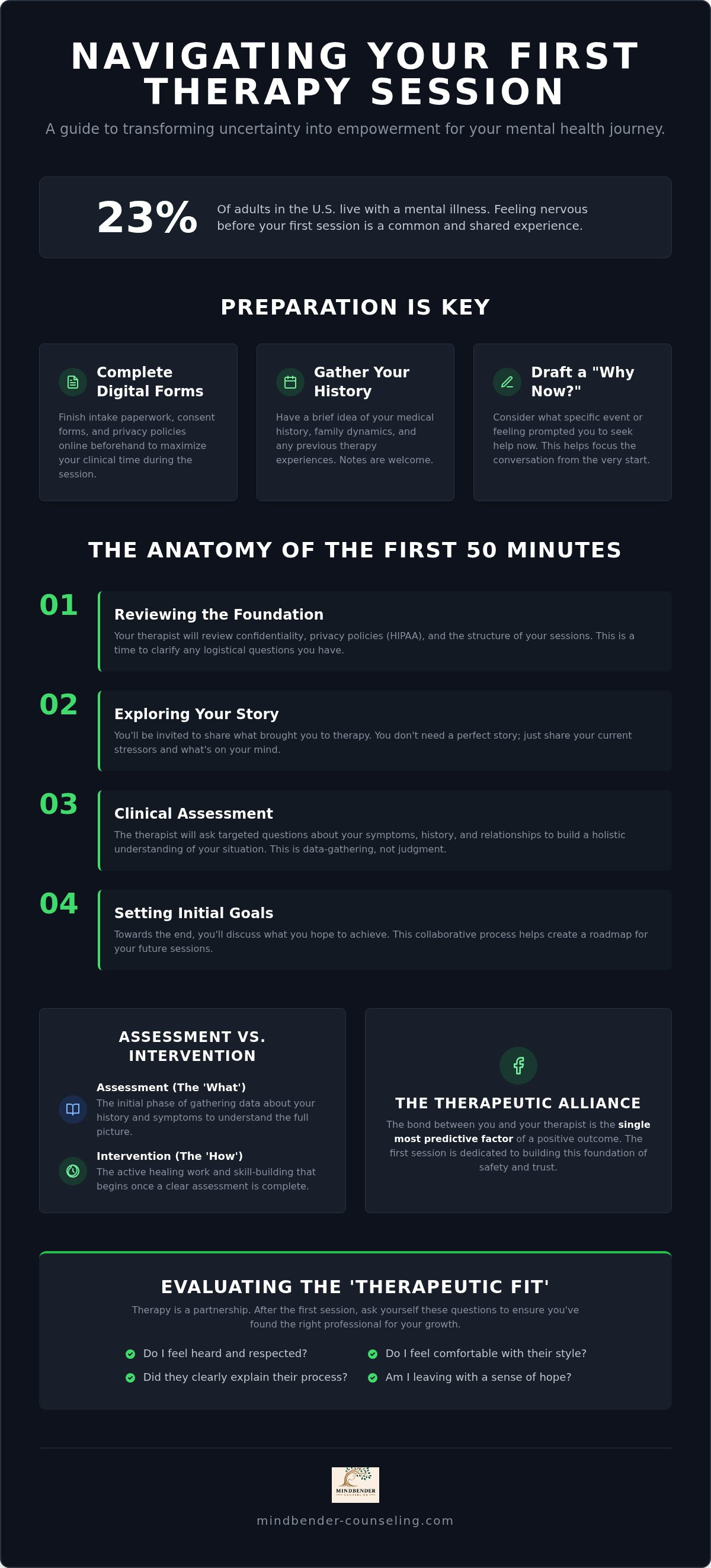
What if the most intimidating part of starting therapy isn't the vulnerability itself, but the nagging fear that you'll somehow do it wrong? It's a common concern, especially when you consider that over 23 percent of adults in the U.S. were living with a mental illness in 2026, many of whom faced those same first-day jitters. You might feel a heavy sense of anxiety about being judged by a stranger or find yourself overwhelmed by the logistics of insurance and intake paperwork. Learning what to expect in your first individual therapy session can transform that uncertainty into a sense of calm empowerment, allowing you to focus on your healing rather than your nerves.
This guide will demystify those first 50 minutes, providing you with a clear roadmap for the intake process and practical tips to prepare for a successful start to your mental health journey. We will walk through the typical flow of evidence-based therapy sessions, address the administrative details that often cause stress, and help you learn how to evaluate your therapist to ensure they are the right partner for your growth. By the end of this article, you'll feel equipped to step into your session with confidence, ready to build a solid foundation for your future well-being.
Key Takeaways
- Understand that the intake session is a clinical assessment designed to build a stable foundation for your future growth.
- Learn how to prepare for your appointment in Arizona or Texas by gathering your medical history and completing digital forms in advance.
- Gain a clear, step-by-step understanding of what to expect in your first individual therapy session, from reviewing confidentiality to exploring your current stressors.
- Discover how to evaluate your counselor's "therapeutic fit" and identify the professional boundaries that signal a healthy, supportive partnership.
- Explore how personalized, evidence-based therapy transitions from discussing your past to building practical skills for a more balanced life.
Understanding the Purpose of an Individual Intake Session
Starting therapy is a significant step toward internal stability. Think of the intake session as the architectural phase of your mental health journey. It isn't a typical conversation; it's a structured time where your therapist gathers the building blocks of your history to create a sturdy foundation for the work ahead. Many people feel a heavy sense of urgency to solve a specific problem during this first hour, but it's helpful to remember that this session is dedicated to assessment rather than immediate fixing. A doctor wouldn't prescribe medication without a diagnosis, and a therapist shouldn't offer interventions without understanding your unique baseline.
It's completely natural to feel a wave of anxiety before meeting a new behavioral health consultant. You're preparing to share your inner world with a stranger, which requires immense courage. You don't need to have a perfect, linear story ready to tell. Your current reality might feel messy or fragmented, and that's exactly what your therapist is trained to help you organize. When you consider what to expect in your first individual therapy session, remember that you aren't being interviewed for a job. You're being heard, perhaps for the first time in a professional, clinical setting.
The Goal: Building the Therapeutic Alliance
Research consistently shows that the bond between a client and their therapist is the single most predictive factor of a positive outcome. This bond is known as the therapeutic alliance. During these first 50 minutes, the therapist works to establish a no-judgment zone where you can feel safe exploring difficult emotions. To understand the broader context of what psychotherapy is, it helps to view the intake as the first structural layer of this alliance. The therapist uses this time to understand your personal history and current challenges, ensuring that every future session is tailored to your specific needs.
Assessment vs. Intervention: What’s the Difference?
Assessment is the data-gathering phase of your treatment plan. Your counselor will ask about your symptoms, your family dynamics, and your previous experiences with therapy. This information allows them to build a personalized program that respects your individual journey. Interventions, or the actual work of healing, generally begin once this foundation is laid. For example, individual counseling specifically targets your anxiety or stress by first identifying your unique triggers during the intake. Once the assessment is complete, you can move forward with the confidence that your treatment is rooted in evidence and personalized care.
Preparing for Your Appointment in Arizona or Texas
Preparation acts as a bridge between your initial decision to seek help and your first actual conversation. Knowing what to expect in your first individual therapy session starts with handling the logistical details before you even arrive or log on. Completing your digital intake forms in advance is the most effective way to protect your clinical time. When these documents are finished beforehand, your therapist can review your history rather than spending the first twenty minutes watching you sign papers. This proactive approach helps establish the therapeutic alliance and relationship from the very first moment, allowing you to move straight into the heart of your concerns.
In Arizona and Texas, specific regulations influence your intake process. Arizona law includes telehealth parity, which generally requires private insurance plans to cover virtual visits just as they would in-person sessions. If you are in Texas, your therapist must obtain your specific informed consent before beginning any telehealth work. Beyond legalities, take a moment to draft a "Why Now?" statement. This is a simple, two-sentence explanation of the specific event or feeling that prompted you to reach out this week. This clarity helps your therapist focus their questions and respects the investment you are making in your mental health.
The Paperwork: What to Expect
You will likely encounter several standard documents, including a Consent for Treatment, HIPAA Privacy disclosures, and a Social Media policy. The most comprehensive form is the Biopsychosocial Assessment. This clinical questionnaire covers your medical history, family dynamics, and previous therapy experiences to help the counselor understand your internal foundation. As you fill these out, try to write a single sentence defining your primary goal for the next three months. This keeps your progress measurable and grounded in reality. Taking these small steps ensures you're ready for individual counseling services that prioritize your unique needs.
Setting the Physical and Mental Space
If you are using telehealth, choose a private, secure connection where you won't be interrupted. Treat the space with the same respect as a physical office by bringing a notebook, a water bottle, and an open mind. To manage pre-session jitters, try a brief grounding exercise five minutes before your start time. Notice five things you can see and four things you can touch. This simple shift in focus calms your nervous system and prepares you to engage fully in the therapeutic process. Each small preparation reinforces your commitment to your own personal evolution.
The Anatomy of the First 50 Minutes: A Step-by-Step Breakdown
Understanding the chronological flow of your first meeting can significantly lower your defenses. While every therapist has a unique style, most sessions follow a methodical structure designed to move you from initial orientation to a concrete plan of action. The first ten minutes usually involve a brief review of administrative details and an essential discussion on the legal limits of confidentiality. This ensures that you understand the boundaries of this safe space before you begin to share. Knowing what to expect in your first therapy session allows you to settle into the chair with a sense of order and predictability.
Once the boundaries are set, the session transitions into a "deep dive" where you'll explore your current symptoms and the primary stressors impacting your daily life. Your therapist will guide you through questions about your upbringing, family dynamics, and past experiences to understand the context of your current reality. This isn't about dwelling on the past for the sake of it; it's about identifying patterns that might be influencing your present well-being. By the final ten minutes, you'll work together to discuss initial impressions and determine the next steps for your journey. This structured wrap-up helps you transition from the vulnerability of the session back into your daily life with a sense of closure.
Opening the Conversation
Almost every intake begins with a gentle invitation: "What brings you in today?" If you find yourself in an "I don't know where to start" moment, don't worry. This is a common reaction to the weight of the experience. Therapists are skilled facilitators who can help you untangle your thoughts through targeted, supportive questions. They'll also take this time to clearly explain that while your sessions are private, they have a professional obligation to break confidentiality if there is a risk of harm to yourself or others. This transparency is a vital part of what to expect in your first individual therapy session, as it builds the trust necessary for true progress.
Goal Setting and Treatment Planning
The final phase of the intake is where your personal pains are translated into measurable clinical goals. This collaborative process is a hallmark of therapy behavioral therapy, where you and your counselor establish a clear roadmap for your evolution. You'll discuss how often you should meet; whether weekly sessions are needed for immediate stability or bi-weekly meetings are more appropriate for your current pace. This organized approach ensures that you leave the room not just with a sense of relief, but with a tangible path forward toward the restoration of balance.
Navigating the 'Therapeutic Fit': Evaluating Your Counselor
While we have discussed the logistical structure of the hour, it's equally vital to consider the person sitting across from you. Part of what to expect in your first individual therapy session is the realization that you're also interviewing the therapist. You're looking for a partner in your personal evolution, which requires a specific blend of professional expertise and human connection. This evaluation isn't about judging the therapist's character, but rather determining if their style aligns with your specific needs and internal foundation.
Pay close attention to how you feel during the conversation. "Green flags" often include feeling truly heard, experiencing professional warmth, and receiving clear, direct communication about your treatment path. Conversely, be mindful of red flags such as feeling dismissed, noticing a lack of professional boundaries, or encountering a therapist who seems overly rigid in their approach. Trusting your gut is a key part of the process, but remember the "Three-Session Rule." The first meeting is often high-stress for the client; it usually takes about three sessions to accurately differentiate between the natural discomfort of the therapeutic process and a genuine mismatch with the person.
Questions to Ask Your Therapist
Empower yourself by treating the intake as a collaborative inquiry. You have every right to ask specific questions to ensure the counselor possesses the right experience for your journey. Consider asking the following during your first 50 minutes:
- What is your specific experience with treating issues like anxiety or trauma?
- How do you integrate evidence-based therapy into your daily practice?
- What does a typical "working" session look like after the intake is complete?
Trusting Your Intuition
It's important to differentiate between "discomfort with the process" and "discomfort with the person." Growth is often uncomfortable, but you should always feel safe and respected. If you find that the connection isn't forming after a few meetings, it's perfectly acceptable to say, "I don't think we're a good match." A professional therapist will respect this and may even help you find a better fit. Seeking out specialized private therapy can often provide a more tailored, individualized experience where your unique goals remain the central focus. When the fit is right, therapy becomes a catalyst for profound movement rather than just another obligation. Ready to find your match? Schedule your individual therapy session today and begin building your foundation for change.
The Mindbender Approach: Moving from Intake to Healing
Once the initial 50 minutes conclude, the focus shifts from gathering information to implementing change. At Mindbender Counseling, the data collected during your intake isn't just stored in a file; it's used to construct a personalized program that respects your history while prioritizing your future. It's common to experience what some call an "emotional hangover" in the 24 hours following your appointment. You've just shared deep parts of yourself with a new person, and feeling a bit drained or vulnerable is a natural part of the process. Give yourself permission to rest and process the experience as you transition from the assessment phase into active healing.
The movement from "talking about the past" to "building skills for the future" happens methodically. While the intake explores your background, subsequent sessions focus on the practical application of evidence-based strategies. This shift ensures that your time is spent not just reflecting on challenges, but actively developing the resilience needed to overcome them. Understanding what to expect in your first individual therapy session helps you recognize that the intake is merely the gateway to a more dynamic, skill-building phase of your journey.
Evidence-Based Progression
Mindbender Counseling prioritizes research-backed methods because they offer a reliable path toward lasting results. Your treatment plan is a living document; it evolves as you meet your initial goals and discover new areas for growth. This might include integrating wellness therapy into your professional and personal life to manage work-related stress or improve your overall life balance. By rooting our approach in proven clinical methodologies, we provide you with a steady anchor during times of internal movement.
Your Next Steps Toward Growth
Patience is a vital component of the therapeutic process. Change rarely happens overnight, but every session builds upon the last to create a stronger internal foundation. To maintain your momentum, we encourage you to use our secure client portal to manage your appointments and track your progress. Booking your follow-up session immediately after your intake ensures that your healing remains a consistent priority. What to expect in your first individual therapy session is ultimately the start of a collaborative partnership dedicated to your well-being. Ready to begin? Schedule your first individual therapy session with Mindbender Counseling today.
Your Foundation for Lasting Change
Stepping into your first session is an act of profound courage and the start of a meaningful architectural phase for your mental health. By understanding what to expect in your first individual therapy session, you have already begun to lower the barriers of anxiety that often prevent people from seeking help. You now know that this initial meeting is a collaborative assessment; it's a time to establish a strong therapeutic alliance and set the stage for evidence-based interventions tailored specifically to your life.
At Mindbender Counseling, our compassionate, licensed professionals in Arizona and Texas utilize research-backed techniques to ensure your journey is rooted in proven methods. We focus on creating personalized treatment plans that move you steadily from the vulnerability of the intake toward the strength of skill-building. You don't have to navigate this transition alone. Take the first step toward personal healing; book your individual therapy session today. Your path toward internal balance and personal evolution is ready to begin, and we are here to guide you every step of the way.
Frequently Asked Questions
How long does the first individual therapy session usually last?
A standard intake session typically lasts between 50 and 60 minutes. Knowing this timeframe is a key part of what to expect in your first individual therapy session, as it helps you pace your thoughts without feeling rushed. Your therapist will manage the clock so you can focus entirely on your responses and building an initial connection with your counselor.
Do I have to talk about my childhood in the first session?
You aren't required to dive into your childhood during the first meeting if you don't feel ready. While your upbringing provides valuable context for your internal foundation, the intake focuses primarily on what brought you in today. You have full control over the pace at which you share sensitive personal history and can wait until you feel more secure.
What if I start crying and can't stop during the intake?
It is perfectly acceptable and quite common to cry during your first session. Therapists provide a stable, non-judgmental environment where your emotions are treated with respect and care. There's no need to apologize for your feelings; expressing them is often the first step toward the restoration of balance and the beginning of your healing journey.
Is everything I say in my first session confidential?
Most of what you share is legally protected by HIPAA and professional ethics; however, there are specific legal exceptions. Therapists are mandated reporters, meaning they must break confidentiality if there's a risk of harm to yourself, someone else, or a child. Your counselor will review these specific legal boundaries with you at the very start of the hour.
How much does the first therapy session cost in Arizona or Texas?
Therapy costs in Arizona and Texas vary based on the provider's experience and whether you are using insurance. Because every plan and practice has different structures, it's best to verify coverage with your insurance company or ask the office directly before your visit. This ensures you have clear financial expectations and reduces stress before you begin your work.
What if I realize halfway through that I don't like the therapist?
If you realize the fit isn't right halfway through, you are always free to express that or choose not to return. Understanding what to expect in your first individual therapy session includes knowing that you have the right to evaluate the therapist's style. It often takes a few meetings to decide if a personality mismatch is a true barrier to your progress.
Can I bring a friend or partner to my individual therapy intake?
Individual counseling is designed to be a private, one-on-one space for your personal growth and evolution. While you generally attend these sessions alone, some therapists may allow a support person for the first few minutes of an intake if it helps reduce your initial anxiety. It's always best to ask your provider about their specific policy before you arrive.
Should I take notes during my first therapy session?
Taking notes is a helpful way to remember insights or questions that arise during the conversation. Many people find that jotting down a few key points helps them process the "emotional hangover" that can sometimes follow a deep discussion. Feel free to bring a notebook to help you stay grounded and organized throughout the therapeutic process.


