

What if the most productive hour of your week isn't about finding the perfect words, but about building the right map? Many people enter a session feeling a heavy, nameless weight, only to worry that setting goals in therapy feels like an impossible task. It's natural to feel uncertain when you can't quite pin down what "better" actually looks like, or to fear that your time isn't leading to real change. You're not alone in wanting your mental health journey to have a clear sense of direction and purpose.
We'll show you how to transform those vague feelings of discontent into a structured foundation for personal growth. This guide explores how to collaborate with your therapist to define meaningful objectives that lead to lasting emotional resilience. You'll learn how to identify concrete therapeutic milestones and gain the tools necessary to track your progress with confidence; ensuring every session moves you toward the life you want to lead. By shifting from aimless talk to intentional action, you can turn your sessions into a powerful catalyst for the evolution you deserve.
Key Takeaways
- Learn why setting goals in therapy is the essential first step to moving from vague discomfort toward a structured path of emotional resilience.
- Discover how to apply the SMART framework to your mental health journey, turning abstract desires into measurable milestones you can actually track.
- Understand the distinct differences between individual progress and relationship growth to ensure your therapeutic objectives align with your current situation.
- Master the "discovery phase" of your first session by learning how to communicate your most urgent needs and long-term aspirations with clarity.
- Explore how evidence-based interventions provide a steady foundation for your personal evolution and the restoration of internal balance.
Why Setting Goals in Therapy is the Foundation of Change
Setting goals in therapy is more than just a clinical requirement; it's a collaborative partnership between you and your provider to define what healing actually looks like in your daily life. When you enter a session, you might bring a heavy sense of burden, but without a target, that burden can feel immovable. By identifying desired outcomes together, you create a shared language for your progress. Your therapist acts as a wise guide and facilitator during this process, ensuring that your objectives are rooted in your values rather than external judgments or expectations.
Much of this process draws from established Goal setting theory, which suggests that having clear, challenging targets significantly improves persistence and the likelihood of success. In a mental health context, this translates to a vital shift from "subjective unhappiness" to "objective milestones." Instead of just feeling "bad," you begin to see specific areas where your internal foundation needs reinforcement. This clarity provides a sense of agency. It reminds you that while you can't always control your circumstances, you can influence your response to them with steady, intentional movement.
From Vague Feelings to Concrete Objectives
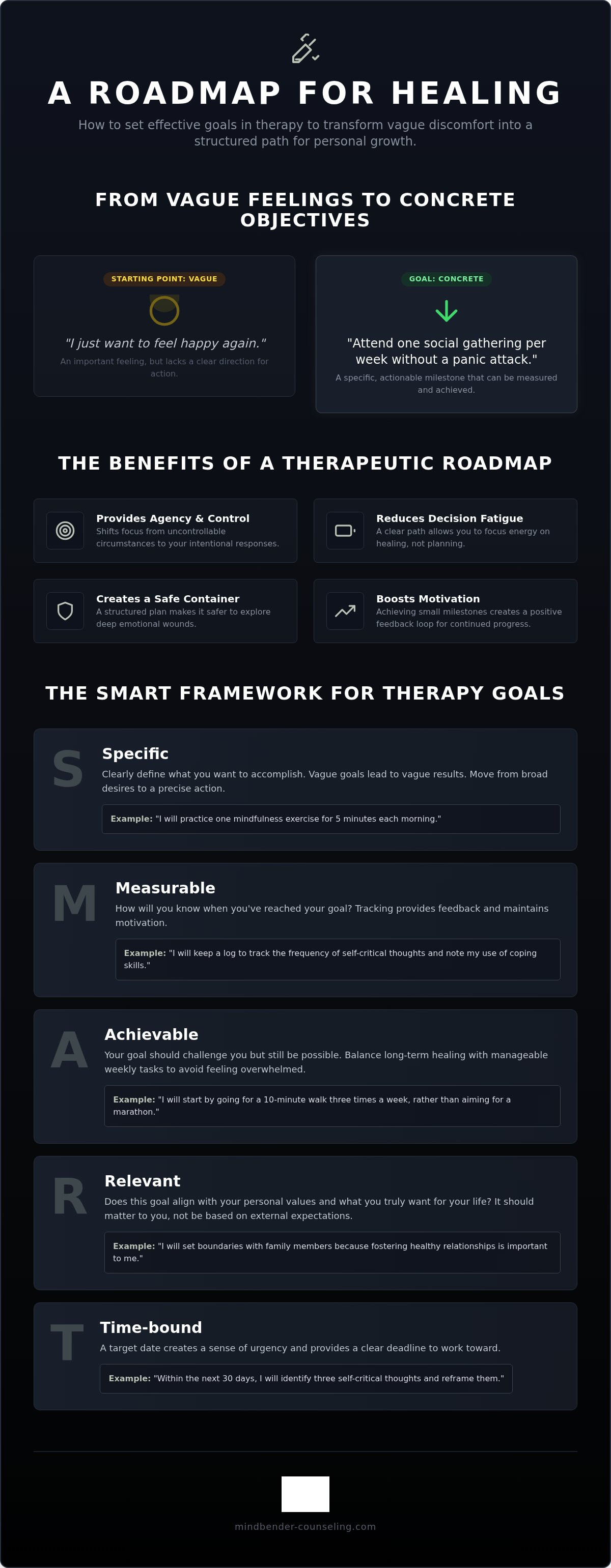
Many people start their journey by saying, "I just want to feel like myself again" or "I want to be happy." These are valid starting points, but they don't provide a map. Healing begins when we look beneath the surface of general discontent to find specific behaviors or thought patterns. For instance, "being happy" might actually mean "having the energy to attend social gatherings without a panic attack" or "going a full day without self-critical thoughts." Naming these challenges is the first step toward dismantling them. It turns an overwhelming fog into a series of visible hurdles that you can clear one by one.
The Psychological Benefits of a Therapeutic Roadmap
A clear roadmap does more than just track time; it protects your mental energy. When you're struggling, making even small decisions can feel exhausting. Having a pre-defined path for your sessions reduces this "decision fatigue," allowing you to focus your limited resources on the deep work of healing. Setting goals in therapy also leverages your brain's natural reward systems to keep you engaged in the process.
Every time you reach a small therapeutic milestone, your brain releases dopamine, which boosts your motivation to keep going. This creates a positive feedback loop that counters the stagnation often felt during seasons of depression or anxiety. This structure also acts as a "safe container." When you know there's a plan in place, it becomes easier to explore deep emotional wounds because you aren't just wandering aimlessly through your pain; you're moving toward a specific destination of stability and balance.
The Framework of Effective Therapy Goals: Using SMART Criteria
Effective change requires more than just good intentions; it requires a structure that can hold the weight of your lived experiences. The SMART framework provides this essential foundation. While these criteria were originally developed for organizational success, applying them to your mental health journey ensures that setting goals in therapy leads to tangible results rather than just temporary relief. As detailed in the University of Minnesota's Guide to Goal Setting, this collaborative approach ensures that both you and your therapist are working toward the same milestones with clarity and purpose.
While setting goals in therapy provides a clear direction, these objectives must remain flexible. Life is unpredictable; your emotional capacity may shift from week to week. A professional guide will help you balance ambitious long-term healing with manageable weekly tasks, ensuring you feel challenged but never overwhelmed. This steady, methodical approach builds the quiet confidence needed to navigate complex emotional terrain without losing your way.
Breaking Down SMART Goals in a Clinical Context
Specific: Move away from broad desires like "improving my mood." Instead, define a clear action, such as "attending one social event without a panic attack." This level of detail makes the path forward visible and less intimidating. Measurable: Measurement in a clinical setting often involves tracking the frequency of symptoms or the use of specific coping skills. You might keep a simple log of how to practice self-care through daily movement or evening reflection. Achievable: A goal should stretch you without breaking you. It must respect your current energy levels and the external stressors you face in your daily life. Relevant and Time-bound: Ensure your goals align with your core values and have a realistic timeframe for review, allowing you to celebrate progress or adjust your strategy as needed.
Short-Term Wins vs. Long-Term Evolution
Stabilization goals are vital for those in immediate crisis or high-stress situations. These short-term wins focus on safety, grounding, and immediate symptom management. Once you have established a solid internal foundation, you can begin developing growth goals. These focus on deeper personality shifts and long-term relationship development. Modern therapy behavioral therapy uses these distinct layers to build resilience by stacking small, consistent successes on top of each other. This tiered approach creates a "safe container" for your evolution, allowing you to explore deep emotional wounds while maintaining a sense of order.
If you are ready to transform vague feelings into a clear roadmap for change, the team at Mindbender Counseling is here to support you with personalized, evidence-based care. We treat every individual with fresh attention, acting as a steady anchor throughout your journey toward well-being.
Tailoring Goals to Your Needs: Individual vs. Couples Counseling
The process of setting goals in therapy shifts significantly depending on whether you are seeking support as an individual or as part of a couple. In individual sessions, the lens is focused inward on your personal history, internal regulation, and the construction of a solid internal foundation. Conversely, couples therapy treats the relationship itself as the "third entity" in the room. This distinction is crucial because it changes how we measure success. While an individual might strive for internal peace, a couple might strive for relational safety; both are valid, yet they require different roadmaps.
Recent research on therapeutic goals suggests that many people find the most value in exploring complex emotions and building a robust support system. This highlights that goals aren't just about fixing problems, but about expanding your capacity for connection and self-understanding. A common concern in couples work is the fear that one partner's needs will overshadow the other's. A compassionate therapist acts as a steady facilitator to ensure that both voices are heard, creating a balanced space where the relationship can evolve without either individual feeling lost in the process.
Common Objectives in Individual Therapy
The core of individual work often involves developing emotional regulation and specific private therapy skills that allow you to navigate life's stressors with greater ease. You might focus on processing past trauma to ensure it no longer dictates your present choices, or you might work on improving your internal self-talk to build lasting self-esteem. These goals are deeply personal. They are designed to help you reclaim your sense of self and build the resilience needed to face external challenges with quiet confidence and clarity.
Aligning Visions in Couples Counseling
In a relational context, the focus shifts from "fixing the partner" to "improving the interaction." Couples often set goals centered on communication, rebuilding trust, and deepening intimacy. It's also important to recognize how external factors, such as the need for counseling for work stress Arizona professionals often require, can bleed into a couple’s home life. By addressing these overlaps, partners can learn to support one another through professional pressures, ensuring that work stress doesn't become a barrier to relational health. Setting goals in therapy as a couple allows you to co-create a shared vision for your future, moving from conflict toward a state of restorative balance.
Collaborating with Your Therapist: How to Define Your Path
Your first session serves as a discovery phase, a dedicated space where you and your therapist align your visions for the future. This isn't a one-sided interview; it's a collaborative dialogue designed to ensure your time and resources are used effectively. The process of setting goals in therapy depends on your willingness to be honest about what feels most urgent right now versus what you believe is most important for your long-term health. While you bring the lived experience and the raw data of your emotions, your therapist brings the clinical expertise to help organize those feelings into a coherent strategy for change.
A therapist acts as a steady translator. You might enter the room feeling a tangled web of anxiety or grief, and through conversation, your therapist helps you distill those feelings into clinical objectives. This partnership is built on the therapeutic alliance, a bond of trust and mutual respect that serves as the engine for all progress. When you feel seen and heard, the goals you set become more than just items on a checklist; they become shared commitments to your well-being. If you're ready to start this collaborative journey, you can reach out to Mindbender Counseling today to begin defining your unique path toward growth.
Overcoming the Fear of "Doing it Wrong"
It's common to feel a sense of pressure when trying to articulate what you want from treatment. You might worry that your goals aren't "serious" enough or that you don't have the right words to describe your pain. In a safe therapeutic space, there are no bad goals. Whether you want to stop a specific habit or simply want to feel less "stuck," every starting point is valid. Your therapist's role is to gently challenge unrealistic expectations and help you find a pace that feels sustainable. If your priorities change mid-treatment, that isn't a failure; it's a sign that you're gaining deeper insight into your own needs. We encourage you to speak up when a goal no longer resonates, as this flexibility is essential for authentic progress.
Adjusting Goals as You Evolve
Growth is rarely a straight line, and as you evolve, your roadmap should too. Often, "graduating" from a goal like symptom management reveals a deeper, more significant objective, such as exploring your personal history or improving your relationship with yourself. You'll know it's time to pivot when a once-difficult task starts to feel like second nature. These transitions are moments for celebration. Taking the time to acknowledge how far you've come, no matter how small the milestone may seem, reinforces your internal foundation and builds the momentum needed for the next phase of your journey. By staying curious and open to adjustment, you ensure that therapy remains a dynamic catalyst for your ongoing personal evolution.
Finding Your Direction with Mindbender Counseling in Arizona and Texas
At Mindbender Counseling, we understand that the transition from a state of vague discontent to one of structured resilience requires more than just conversation. It requires a dedicated partner who respects your unique history while providing a clear path forward. Our practice is deeply committed to providing evidence-based individual and couples therapy for residents across Arizona and Texas. Whether you are navigating the professional pressures of Phoenix or seeking relational stability in the major hubs of Texas, we offer a steady, compassionate environment where your personal evolution is the priority. We believe that setting goals in therapy is the essential bridge between where you are today and the balanced life you deserve.
Our intake and goal-setting process is designed to be methodical and reassuring. We recognize that many individuals feel a sense of hesitation when beginning this journey, often fearing that their emotions are too complex to organize. We treat every person with fresh attention, acting as a wise guide to help you distill those complexities into actionable steps. By focusing on personalized interventions, we ensure that your therapeutic roadmap is built on a solid internal foundation, allowing you to move at a pace that feels both safe and productive.
Our Evidence-Based Approach to Goal Alignment
We combine deep clinical expertise with the invaluable data of your unique life experience. This synergy ensures that the objectives we set together are not just theoretical, but deeply practical for your daily life. Our therapists utilize proven methodologies to ensure that every hour you spend in session is effective and purposeful. We strive to create a calm, assured atmosphere that lowers your defenses and builds immediate trust. This organized approach reduces the friction often associated with seeking professional services, allowing you to focus entirely on the construction of your own well-being. We don't just look for temporary relief; we work toward the restoration of balance and long-term psychological growth.
Taking the First Step Toward Your Personalized Plan
Prioritizing your mental wellness is a vital act of self-care, especially for busy professionals in Phoenix and throughout Texas. We've made the process of starting your journey as simple and low-friction as possible. You can easily schedule a therapeutic appointment to begin the collaborative process of setting goals in therapy with one of our experienced providers. Whether you are seeking individual counseling services to process personal challenges or couples counseling to improve relational health, we are here to provide unwavering support. Remember, you don't have to have all the answers to start the journey. You only need the willingness to take the first step toward a more resilient and intentional version of yourself.
Your Journey Toward Intentional Growth Starts Here
Transitioning from a state of general unhappiness to a life of purposeful movement requires a structured approach. By applying the SMART framework and fostering a strong therapeutic alliance, you can transform abstract feelings into measurable milestones. Whether you are seeking to repair a relationship or strengthen your own internal foundation, the process of setting goals in therapy provides the clarity needed to navigate life's complexities with grace. These objectives aren't just clinical benchmarks; they're the building blocks of your long-term emotional resilience.
Mindbender Counseling is here to serve as your wise guide throughout this evolution. We provide evidence-based therapy techniques and compassionate individual and couples support tailored specifically for professionals in Arizona and Texas. You don't have to carry the weight of uncertainty alone. Begin your journey toward clarity; schedule a consultation with Mindbender Counseling today.
You deserve a life defined by balance and steady progress. Take that first step toward your personal evolution with confidence, knowing that lasting change is always within your reach when you have the right map.
Frequently Asked Questions
What are some examples of good goals for therapy?
Effective therapy goals are specific and behavioral, such as "practicing one grounding technique during a stressful work meeting" or "initiating one honest conversation about boundaries per week." These concrete actions provide a clear target and help you move away from vague distress toward measurable change. By focusing on what you can do differently, you build a sense of agency and confidence in your own healing process.
How many goals should I have when I start counseling?
Most people find the most success by focusing on one to three primary objectives at a time. Setting goals in therapy is about quality rather than quantity; attempting to overhaul every aspect of your life at once can lead to fatigue and reduced motivation. Starting with a few meaningful targets allows you to dedicate the necessary energy to each, ensuring that your progress is both deep and sustainable.
Can my therapy goals change over time?
Yes, your therapeutic objectives should evolve as you gain new insights and internal strength. It's natural for a goal that felt urgent in your first session to be replaced by a deeper, more significant one as you progress through your journey. This flexibility is a sign of growth, showing that you're becoming more attuned to your own needs and ready for the next phase of your personal evolution.
What if I don’t know what my goals are yet?
It's perfectly normal to start your journey without a clear plan or the "right" words to describe your pain. Your therapist acts as a wise guide during the discovery phase, helping you translate vague feelings of discontent into a structured roadmap for your well-being. You can begin simply by describing how you feel today; the specific objectives will emerge naturally as you explore your experiences together.
How do therapists help you set goals if you are overwhelmed?
Therapists use evidence-based techniques to help you categorize your concerns into immediate needs and long-term growth. When you feel overwhelmed, they help you prioritize stabilization and safety, breaking down large burdens into smaller, manageable pieces. This methodical approach creates a safe container, allowing you to find your footing before moving into deeper emotional work or personality shifts.
Is it okay to have small goals, like just getting through the day?
Small goals are often the most vital ones during seasons of high stress, crisis, or intense transition. Focusing on "getting through the day" or "completing one basic self-care task" builds the essential internal foundation needed for more complex growth later on. These "stabilization goals" are a valid and respected part of the therapeutic process, providing the quiet confidence needed to eventually tackle larger challenges.
How do we set goals in couples counseling if we want different things?
In a relational context, the therapist helps you shift the focus from individual demands to the health of the relationship itself. You'll work on shared interaction goals, such as "improving communication during conflict" or "rebuilding a sense of safety," which benefit both partners. This collaborative process ensures that the relationship evolves in a way that respects both individuals without one person's needs overshadowing the other's.
How do I know if I am actually making progress toward my goals?
You'll know you're making progress when you notice a decrease in the frequency of distressing symptoms or an increase in your ability to use new coping skills in real-world situations. Setting goals in therapy allows you to look back at previous months and see how your reactions to old triggers have shifted. These objective milestones provide a sense of hope and prove that your commitment to the process is leading to lasting change.


