

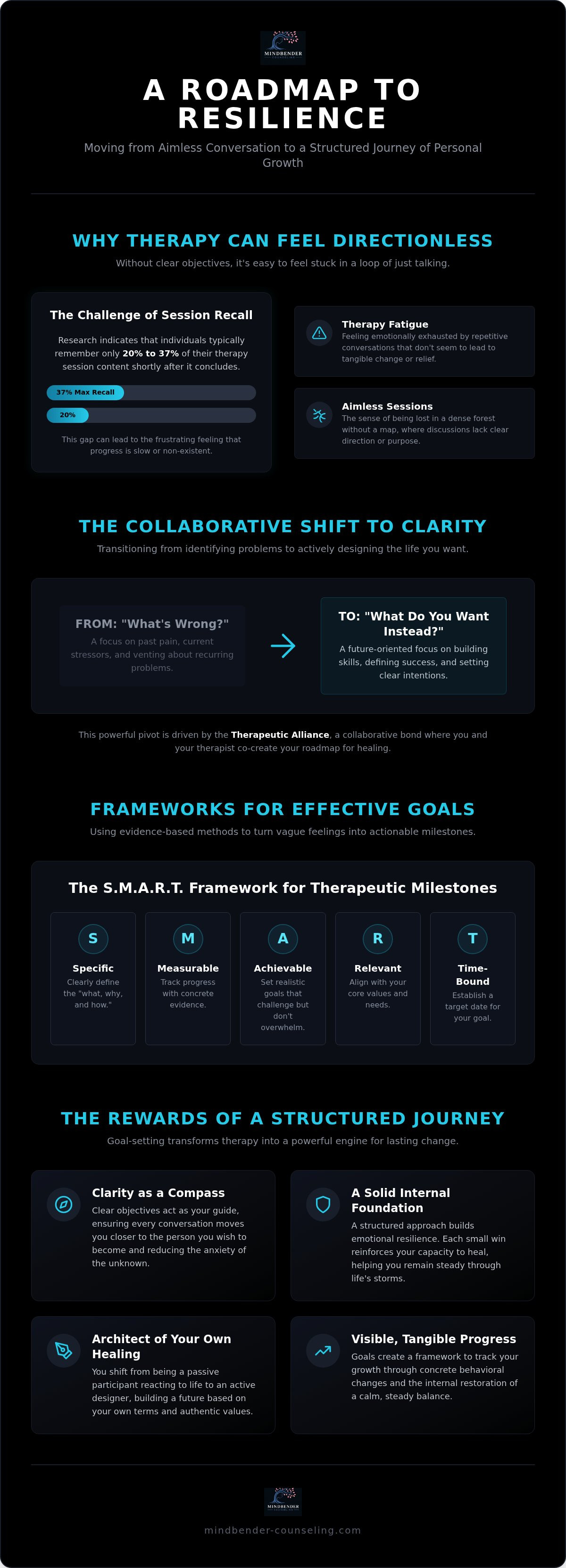
Research indicates that many individuals remember only 20 to 37% of their therapy session content shortly after it concludes. This gap often leads to the frustrating feeling that you're just talking without ever reaching a clear destination. You might feel a lingering sense of unease or worry that your progress is moving too slowly to make a tangible difference in your life. We understand how vital it is to feel that your time and emotional energy are producing real results. Setting goals in individual therapy transforms these vague feelings into a structured, evidence-based roadmap for your personal growth and emotional resilience.
You deserve to feel like the primary architect of your own healing journey. In this guide, we'll show you how to move from uncertainty to a place of clear agency. You'll discover how to vocalize your deepest emotional needs and turn them into manageable therapeutic milestones. We'll explore practical frameworks for success and provide concrete examples of what healthy progress looks like. By the end, you'll have the tools to build a solid internal foundation and experience the steady, restorative balance you've been seeking.
Key Takeaways
- Understand why defining clear objectives acts as a compass for your emotional journey, helping you avoid the feeling of being stuck or exhausted by aimless sessions.
- Explore the collaborative process of setting goals in individual therapy to transition from merely identifying problems to actively building the life you want.
- Learn to use the SMART framework and values-based planning to create therapeutic milestones that resonate with your authentic self.
- Gain the ability to track your progress through both concrete behavioral changes and the internal restoration of a calm, steady balance.
- Discover how evidence-based techniques provide a sturdy anchor for your growth, turning overwhelming stress into a solid internal foundation.
The Essential Role of Goal Setting in Individual Therapy
Imagine walking into a dense forest without a map. You might enjoy the scenery for a while, but eventually, the lack of direction feels heavy and disorienting. In the therapeutic space, setting goals in individual therapy acts as your compass. It ensures that every conversation moves you closer to the person you wish to become. Without this direction, sessions can easily slip into therapy fatigue. This is a common state where you feel like you're stuck in a loop of repetitive stories without experiencing tangible change or relief.
Your connection with your therapist is the engine that drives this process. This collaborative bond, often called the therapeutic alliance, allows you to apply principles of Goal-Setting Theory to your emotional life. This psychological framework suggests that specific, clear objectives lead to higher motivation and greater satisfaction. While short-term relief might help you manage a difficult week, long-term transformation requires a deeper commitment to these structured milestones. We aren't just looking for a temporary patch; we're looking for a new way of being.
Moving Beyond 'Just Talking'
It's natural to want to vent about a stressful day or a frustrating interaction. However, intentional therapy moves beyond casual venting into structured, purposeful dialogue. When you have clear objectives, your sessions become a workshop for change rather than just a place to unload your burdens. These goals provide a vital safety net. When you're processing painful memories or difficult emotions, knowing exactly what you're working toward keeps you from feeling overwhelmed. You stop being a passive participant in your life. Instead, you start becoming its active architect, designing a future built on your own terms.
Why Structure Enhances Emotional Resilience
Clarity is a powerful antidote to anxiety. Much of our distress comes from the unknown variables in the healing process. When we break down your journey into small, incremental milestones, the path forward feels manageable and safe. Each small win reinforces your belief in your own capacity to heal. This structured approach helps you build a solid internal foundation. Instead of reacting to every emotional storm with panic, you develop the resilience to remain steady. You stay anchored by the progress you've documented and the new skills you've mastered along the way.
How You and Your Therapist Collaborate on Your Roadmap
The first session of therapy is often filled with a mix of relief and nerves. Most people arrive ready to discuss "what's wrong" in their lives. While identifying pain is a necessary starting point, setting goals in individual therapy requires a vital pivot toward "what do you want instead?" This shift moves the focus from the heavy weight of the past to the bright possibility of the future. Your therapist acts as a compassionate guide during this transition. They don't function as a judge or a boss directing your life. Instead, they are a professional partner helping you build a shared language to describe exactly what success and progress look like for you.
The Initial Assessment: A Safe Space for Discovery
During the first one to three sessions, you can expect a deep dive into your personal history and current challenges. This initial phase is about more than just gathering data; it's a space for discovery. Your therapist uses evidence-based therapy to spot behavioral patterns or emotional triggers you might miss. This helps distinguish the "presenting problem," such as a conflict at work, from the underlying emotional need, like a lack of healthy boundaries. To truly understand what psychotherapy is, one must view it as a dynamic process of self-revelation. Collaborative assessment is a dedicated partnership between therapist and client aimed at illuminating the hidden architecture of the self to foster lasting change.
Vocalizing the Unspoken: When You Don't Know Your Goals
It's perfectly normal to feel numb or confused when you first start. You might know you're unhappy but struggle to name a specific objective. In these moments, we use techniques like "The Miracle Question." Imagine you wake up tomorrow and your current burden has vanished. What does your day look like? How do you feel? This exercise bypasses the analytical mind and taps into your core values. These values serve as your North Star, ensuring your therapeutic roadmap aligns with who you truly want to be. If you feel ready to explore these deeper needs, our individual counseling services provide the structured support necessary to find your way back to yourself.
Proven Frameworks for Effective Therapeutic Objectives
Once you and your therapist have identified your core needs, the next step involves translating those needs into a concrete plan. Establishing a structure doesn't mean your journey becomes rigid or clinical. Instead, it provides the "sturdy anchor" mentioned earlier, ensuring your effort leads to measurable change. When setting goals in individual therapy, we often look to established psychological models to bridge the gap between where you are and where you want to be. These frameworks help turn overwhelming emotions into actionable steps that respect your unique pace of healing.
Adapting SMART Goals for Emotional Growth
You may have encountered SMART goals in a professional setting, but they are equally powerful when adapted for mental health. To make a feeling measurable, we often use a simple 1 to 10 scale. For example, if you struggle with social anxiety, a goal might be to move from an 8 to a 4 in specific situations. We prioritize achievable steps to prevent the cycle of shame that often accompanies setting unrealistic expectations. Whether you are seeking support in Arizona or Texas, ensuring your goals are relevant to your current life stage is vital. A goal that felt right two years ago might not serve the person you are becoming today. By setting time-bound review periods, we ensure your roadmap stays as dynamic as you are.
The Power of Values-Aligned Objectives
There is a significant difference between meeting social expectations and honoring your internal values. Many people experience chronic stress because their daily actions are out of alignment with their deepest beliefs. We focus on values-based goals to resolve this friction. Consider the difference between "being less afraid" and "living with courage." The first is an attempt to delete a feeling, while the second is a commitment to an internal value. Living with courage allows you to take action even when fear is present, which builds a much deeper sense of stability than symptom management alone.
We also distinguish between outcome goals and process goals. An outcome goal might be "I want to sleep better," while a process goal is "I will practice ten minutes of mindfulness before bed." Process goals are entirely within your control, which fosters a sense of agency. If you worry about "failing" at therapy, remember that every outcome is simply data for our next session. We utilize the Goal-Based Outcomes (GBO) framework to keep our focus on what matters most to you. This evidence-based approach ensures that even when progress feels slow, we are always moving toward your North Star.
Tracking Progress and Navigating Goal Shifts
Measuring growth in therapy is a deeply personal endeavor. It involves more than just checking off a list of accomplishments; it's about noticing how your internal world interacts differently with your external reality. Setting goals in individual therapy provides the framework for these observations. We look for objective markers that signal your progress, such as:
- Improved sleep quality and more consistent energy levels.
- Setting and maintaining healthy boundaries in personal relationships.
- A reduction in the frequency or intensity of physical anxiety symptoms.
Subjective markers are equally vital. You might notice a growing sense of calm assurance or a feeling of increased stability when faced with old triggers. These internal shifts are the quiet evidence of your hard work. We use structured check-in sessions to review your therapeutic roadmap together. This ensures that the work remains relevant to your current needs. If you're ready to see how this structured approach can work for you, you can schedule a check-in session with one of our licensed professionals today.
Recognizing Subtle Signs of Success
Progress often appears in the small, quiet moments of daily life. You might realize you didn't ruminate as long after a mistake, or perhaps you felt a flash of self-compassion where there used to be only criticism. These are the building blocks of a solid internal foundation. It's important to stay patient because emotional growth is rarely a straight line. A period of regression is often just a prelude to a new and significant breakthrough. By acknowledging these subtle shifts, you reinforce your sense of agency and keep the momentum of your healing journey alive.
When and How to Pivot Your Therapy Plan
As you grow, your goals will naturally evolve. Sometimes, a goal you set in your first month might feel irrelevant six months later. This isn't a failure or a sign that you were wrong about your needs. Instead, it's evidence of your deepening self-awareness. You might realize that what you thought was a career problem is actually a deeper issue with self-worth. When this happens, simply bring it up with your therapist. A compassionate guide will welcome this pivot as a sign of progress. We can then adjust the plan to maintain order and predictability while focusing on your newest insights. This flexibility ensures that therapy always serves your current self, not a past version of you.
Personalized Goal Setting at Mindbender Counseling
At Mindbender Counseling, we believe that the process of setting goals in individual therapy should be as unique as the person sitting in front of us. Our practice serves residents across Arizona and Texas with a philosophy rooted in fresh attention and expert care. We don't believe in one-size-fits-all checklists or rigid, clinical scripts. Instead, we act as your compassionate guide, bridging the gap between clinical excellence and warm, supportive partnership. This balance creates a safe environment where you can explore your deepest needs without fear of judgment, allowing you to build a sturdy anchor for your future well-being.
Evidence-Based Approaches for Real-World Results
We utilize proven methodologies like Cognitive Behavioral Therapy (CBT) and Dialectical Behavior Therapy (DBT) to ensure your objectives are grounded in research. For the busy professionals and families we serve in Arizona and Texas, these personalized interventions are essential for managing the pressures of a high-stress world. We focus on the restoration of balance, helping you move from a state of overwhelming stress to a place of quiet confidence. By grounding your goals in evidence-based therapy, we provide the reliable structure you need to build a life that feels authentic and stable. Every session is an opportunity to reinforce your new foundation with practical tools you can use immediately.
Taking the First Step Toward Your New Foundation
Starting your journey shouldn't feel like another burden on your already crowded to-do list. We've designed a low-friction path to help you begin your work with us. During your first goal-setting conversation, we'll listen more than we talk, seeking to understand the specific nuances of your experience and the outcomes you desire. We'll work together to identify the milestones that will lead to your long-term transformation, ensuring you feel seen and heard from the very first moment. This initial session is about creating a sense of order and predictability for your future. You aren't just another case number; you're an individual with the capacity for profound growth and resilience. Begin your journey toward a more balanced life with Mindbender Counseling today.
Your Journey Toward a Solid Internal Foundation
Your journey toward well-being doesn't have to feel like a series of aimless conversations. By setting goals in individual therapy, you transform vague feelings of unease into a structured roadmap for lasting change. You've discovered how collaboration with a compassionate guide helps identify underlying needs and how evidence-based frameworks provide a sturdy anchor for your progress. These milestones aren't just clinical benchmarks; they are the building blocks of a solid internal foundation that allows you to face life's storms with steady confidence.
Whether you're navigating high-stress transitions in Arizona or seeking deeper stability in Texas, expert care is within reach. Our team combines clinical excellence with the warm, personalized support you deserve to foster true emotional growth. You have the agency to reclaim your story and move toward a future of balance and clarity. Schedule your personalized consultation with a Mindbender therapist today and take the first step toward the life you want to build. You don't have to walk this path alone; we're here to support your movement toward a more resilient and meaningful life.
Frequently Asked Questions
What if I don't know what my goals are before my first therapy session?
It is perfectly normal to arrive without a defined list of objectives. Your therapist is trained to help you sift through your feelings of unease to find the core needs beneath them. During the first few sessions, we focus on discovery rather than pressure. We'll work together to identify what matters most to you, ensuring that the process of setting goals in individual therapy feels like a supportive partnership rather than a chore.
Can my therapy goals change over time as we talk more?
Yes, your goals can and should evolve as your self-awareness deepens. As you gain new insights, you might realize that your initial objectives were actually symptoms of a different underlying issue. Shifting your focus isn't a sign of failure; it's evidence of progress and growth. We regularly review your roadmap to ensure it still aligns with your values and current life circumstances, keeping your treatment relevant and effective.
How many goals should I realistically set in individual counseling?
Focus on setting one to three primary goals to avoid feeling overwhelmed. While you may have many areas you'd like to improve, narrowing your focus allows for deeper work and more sustainable progress. We often break these larger objectives down into smaller, manageable milestones. This approach helps you maintain a sense of order and ensures you don't exhaust your emotional energy by trying to change everything at once.
How do I know if I am actually reaching my therapy goals?
You will know you are making progress when you notice consistent changes in your daily reactions and internal state. This might look like sleeping better, setting firmer boundaries, or experiencing a sense of calm assurance during stressful moments. We use objective tools and regular check-ins to track these shifts. Seeing these tangible results reinforces your agency and provides the evidence you need to feel confident in your healing journey.
Is it normal to feel like I'm failing at my therapy goals?
Feeling like you are failing is a common part of the therapeutic process, but it's rarely an accurate reflection of your progress. Growth is non-linear and often involves periods of discomfort or perceived regression before a breakthrough occurs. We treat these moments as valuable data rather than defeats. Your therapist provides a safe space to explore these feelings with self-compassion, helping you stay anchored even when the path feels difficult.
How does a therapist help me stay accountable to my objectives?
A therapist provides accountability by maintaining a consistent structure and gently highlighting patterns in your behavior. We serve as a sturdy anchor, reminding you of your intentions when you feel distracted or discouraged. Through regular reviews of your progress, we help you stay focused on your values-based objectives. This professional guidance ensures that setting goals in individual therapy leads to real-world results rather than just temporary relief.
What is the difference between a goal and a 'presenting problem'?
A presenting problem is the immediate distress that brought you to therapy, while a goal is the specific outcome you want to achieve. For example, chronic work stress is a presenting problem, but developing healthy communication skills is a goal. Identifying this difference allows us to move beyond symptom management. We focus on building a solid internal foundation that addresses the root cause of your distress rather than just the surface-level issues.
How long does it typically take to achieve a major therapeutic goal?
The timeline for achieving major goals varies significantly based on the complexity of the issue and your unique circumstances. Some people experience meaningful shifts in a few months, while deeper patterns may take a year or more of consistent work. We focus on steady, incremental progress rather than rushing toward a finish line. Your therapist will help you set realistic expectations, ensuring you feel supported throughout every phase of your personal evolution.


