

What if the difference between feeling "heard" and actually healing lies in the structure of the conversation? Many people find themselves stuck in a loop of negative thoughts, wondering why venting to a supportive friend doesn't provide the lasting relief they need. It's natural to feel a sense of hesitation or even anxiety about the vulnerability required in a one-on-one setting, especially when life feels increasingly overwhelming. You're seeking more than a temporary outlet; you're looking for a way to break free from old patterns and regain your internal balance.
I understand that starting this journey requires courage and a clear sense of direction. This guide explores how a structured individual therapy program uses evidence-based methods to foster lasting emotional resilience and mental well-being. You'll discover how research-backed techniques provide a reliable roadmap for emotional healing, moving beyond simple talk to offer practical tools for managing modern stress. We'll look at the specific ways personalized care helps you build a solid internal foundation, ensuring that every step you take is rooted in proven, professional methodology.
Key Takeaways
- Understand how a structured individual therapy program provides a goal-oriented framework that transforms simple conversation into meaningful, long-term change.
- Learn why evidence-based modalities like Cognitive Behavioral Therapy are considered the gold standard for reframing negative thought patterns and building resilience.
- Discover the unique advantages of one-on-one sessions, where 100% focused attention allows for a deeper level of personal exploration and healing.
- Identify the specific stages of a professional therapeutic journey, including the initial history assessment and the collaborative setting of your mental health goals.
- See how localized expertise in Arizona and Texas ensures your care is tailored to the specific professional and personal stressors of your region.
Defining the Individual Therapy Program: More Than Just a Conversation
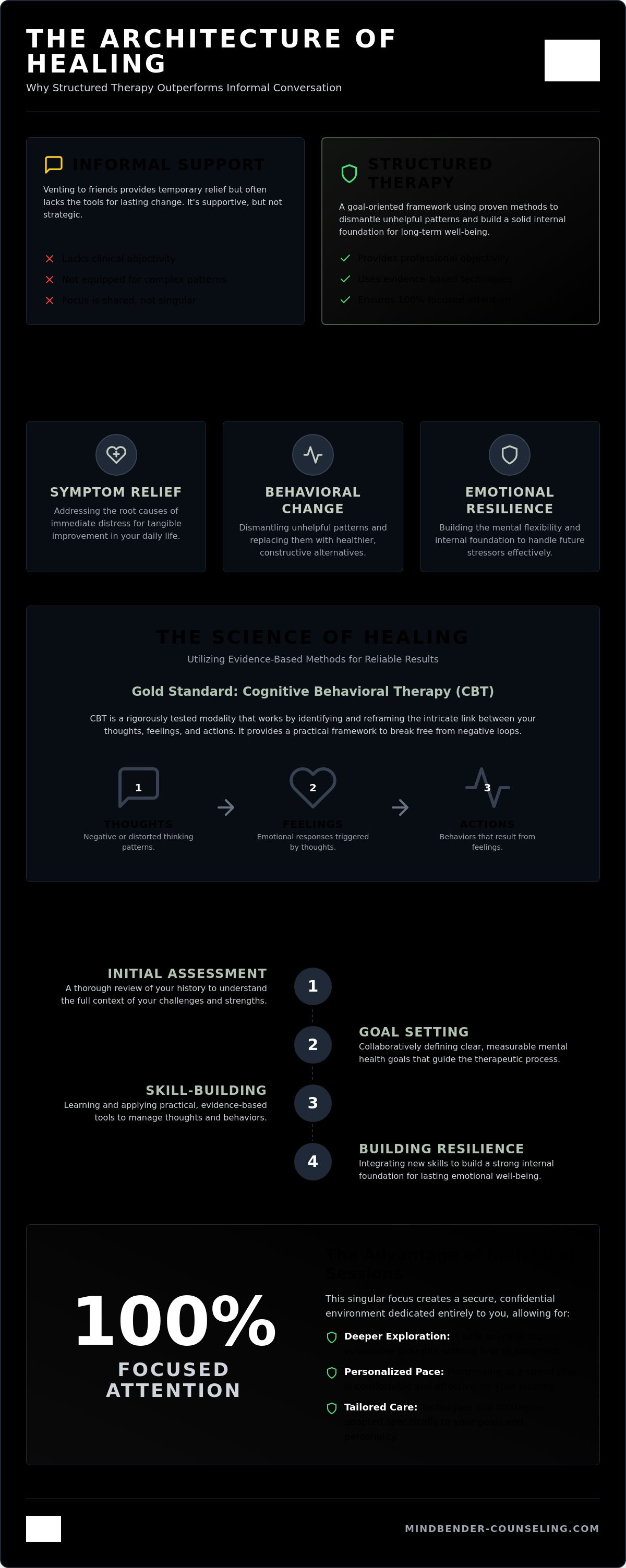
An individual therapy program is far more than a simple venting session; it's a structured, goal-oriented psychological framework designed to facilitate measurable change. While many people use the term "talk therapy" as a catch-all, professional interventions involve specific clinical techniques that guide you through a deliberate process of self-discovery and skill-building. Unlike a casual conversation, this program is a collaborative partnership. You and your therapist work together to dismantle unhelpful patterns and replace them with healthier alternatives that serve your long-term well-being.
At its core, a programmatic approach means your sessions aren't random. They're part of a cohesive strategy tailored to your unique history and aspirations. This structure provides a sense of order and predictability, which is often exactly what's missing when you feel overwhelmed by stress or negative thought patterns. By moving beyond surface-level symptoms, you can begin to understand the underlying drivers of your behavior, creating a solid internal foundation for the future.
The Core Objectives of Personal Counseling
The primary aim of a professional program is to provide long-term stability rather than just temporary relief. We focus on three main pillars: symptom relief, behavioral change, and emotional resilience. By addressing the root causes of distress, such as deep-seated beliefs or past experiences, you can achieve a level of healing that surface-level advice cannot reach. Many individuals now view therapy for personal growth as a proactive wellness tool. It's an investment in your future self, helping you develop the mental flexibility needed to handle the specific stressors of professional and family life in Arizona and Texas.
Why Structured Programs Outperform Informal Support
Friends and family are essential for support, but they often lack the clinical objectivity required to help you navigate complex psychological patterns. A professional individual therapy program provides a neutral perspective, allowing a therapist to see blind spots that loved ones might miss. This relationship is built on professional boundaries and absolute confidentiality, creating a secure environment where you can express your most vulnerable thoughts without fear of judgment. Specialized training allows a therapist to recognize the subtle nuances of your internal dialogue, facilitating progress that informal support systems simply aren't equipped to handle. This dedicated space ensures that the focus remains entirely on your progress, restoration, and balance.
The Science of Healing: Core Evidence-Based Modalities
In the field of mental health, the term "evidence-based" represents a commitment to methods that have been rigorously tested and proven effective through scientific research. Choosing an individual therapy program that prioritizes these modalities ensures that your time and energy are invested in strategies that actually work. This isn't about guesswork; it's about applying a Structured Program of care that has helped countless others achieve emotional stability and internal progress. By rooting your healing in science, you gain the confidence that your journey is guided by reliable, professional standards.
Modern therapy utilizes several core modalities to address different aspects of the human experience. While some focus on immediate symptom relief, others dive into the underlying patterns that have shaped your life. A truly effective program doesn't just offer a one size fits all solution. Instead, it draws from a diverse toolkit of research-backed interventions to create a path that resonates with your specific challenges and goals. This methodical approach helps lower your defenses, creating an atmosphere of safety where real change can take root.
Cognitive and Behavioral Approaches
Cognitive Behavioral Therapy (CBT) is perhaps the most well-known evidence-based tool. It functions by identifying the intricate link between your thoughts, your feelings, and your subsequent actions. When you're stuck in a loop of negative thinking, CBT provides a framework to reframe those thoughts, which naturally shifts your emotional state and behavior. The "behavioral" side is just as vital; it involves taking active, manageable steps to change habits that no longer serve you. By focusing on these practical applications, you can build understanding therapy and behavioral therapy as a foundation for long-term resilience and daily stability.
Specialized Interventions for Complex Needs
While CBT focuses on the present, psychodynamic approaches help you understand how your relational history influences your current interactions. This depth of exploration allows you to address the root of recurring conflicts rather than just the symptoms. For those who struggle with intense emotional swings or high stress, Dialectical Behavior Therapy (DBT) offers essential skills for regulation and mindfulness. These tools are especially effective when seeking individual counseling for anxiety, as they provide immediate relief while you work on deeper healing. Every person's path is unique, and a compassionate therapist will help you determine which of these specialized interventions best fits your life. If you're ready to see how these methods can work for you, exploring Evidence-Based Therapy is a powerful first step toward restoration.
Individual Therapy vs. Group Sessions: Choosing Your Path
Choosing the right format for your mental health journey is a significant decision that shapes your path toward healing. While group settings offer a sense of shared community, an individual therapy program provides a unique level of focused attention that's impossible to replicate in a crowd. This one-on-one dynamic ensures that every minute of your session is dedicated entirely to your specific needs, history, and goals. To understand the foundations of what psychotherapy is, one must look at the depth of the therapist-client alliance. This partnership allows for a surgical focus on your internal world, moving at a pace that respects your personal comfort and readiness.
The primary advantage of solo work is the ability to dive deep into personal narratives without the distraction of other participants' needs. In this space, the therapist acts as a professional facilitator for your own journey, offering steady and unwavering support. You aren't just one of many; you're the sole focus, which allows for a more methodical and reassuring rhythm of progress. This individualized attention is a sturdy anchor, helping you restore balance at a speed that feels safe and sustainable for you. For those who find that their individual work involves navigating specific lifestyle transitions, such as maintaining sobriety, Courtney Recovered offers specialized coaching and resources to complement your therapeutic progress.
When One-on-One Care is Essential
For many, the vulnerability required to heal is best nurtured in a private environment. This is especially true if you're dealing with intense social anxiety, deep-seated trauma, or high-stakes professional stressors that require absolute discretion. A private therapy setting removes the pressure of social performance, allowing you to build a foundation of trust with your therapist. You don't have to wait for your turn to speak or worry about how your story affects others; the space is yours alone. This format also offers greater flexibility in scheduling and session frequency, making it an ideal choice for busy professionals in Arizona and Texas who need a program that fits their demanding lifestyles.
A Framework for Decision Making
Deciding between these two paths often comes down to your current emotional needs and the complexity of the issues you wish to address. Consider these factors as you evaluate your next steps:
- Privacy Requirements: Do you feel safe sharing your story in front of peers, or do you need the total confidentiality of a solo session?
- Issue Complexity: Are you looking for general support, or do you need to unravel complex psychological patterns that require a therapist's undivided expertise?
- Intensity of Work: do you want to move through your roadmap at your own speed, or are you looking for the shared rhythm of a group?
While groups provide community support, an individual therapy program acts as a catalyst for deep, personal movement. It allows you to address the root of your distress with a level of precision that ensures long-term restoration and balance. By choosing a path that prioritizes your unique voice, you set the stage for a more profound and lasting transformation.
Navigating the Journey: What a Structured Program Looks Like
A well-designed individual therapy program moves with a deliberate rhythm, ensuring you never feel lost in the process. It is helpful to view this journey as a series of progressive stages, each building upon the last to create a solid internal foundation. This methodical approach transforms abstract goals into concrete actions, providing a sense of order that helps reduce the friction often associated with seeking help. By following a clear path, you can move from a state of feeling stuck to one of empowered movement and restoration.
- Step 1: The Initial Assessment. This involves mapping your history, identifying current challenges, and understanding the unique context of your life.
- Step 2: Goal Setting. You and your therapist define what success looks like for your mental health, creating a target for your collaborative work.
- Step 3: Skill Acquisition. Here, you learn the specific tools of your chosen modality, such as reframing thoughts or practicing mindfulness.
- Step 4: Implementation. You begin applying these therapeutic insights to real-world Arizona and Texas stressors, from professional pressures to family dynamics.
- Step 5: Review and Graduation. As you reach your milestones, you transition to independent maintenance, equipped with a lifetime of resilience tools.
The Assessment and Treatment Plan
Your experience with personal counseling services begins with a deep dive into your unique story. This initial phase is essential for ensuring that the care you receive is perfectly aligned with your needs. A treatment plan is a roadmap for clinical progress. These plans are living documents, meaning they are regularly adjusted as you grow and your needs evolve. This flexibility ensures that your therapy remains relevant and effective throughout your entire journey.
Measuring Progress and Milestones
Therapy is most effective when progress is visible and tracked. Your therapist will help you monitor improvements in your mood, daily behavior, and the quality of your relationships. This objective tracking provides a sense of accomplishment and helps you see how far you've come. Out-of-session practice, often referred to as homework, plays a vital role in accelerating your growth. It allows you to test new skills in your everyday environment, reinforcing the work done during your sessions. It is reassuring to remember that therapy has a beginning, a middle, and an intended healthy conclusion. If you are ready to start your own roadmap, consider reaching out for Individual Counseling Services today.
Beginning Your Progress: Individual Therapy in Arizona and Texas
Living and working in Arizona or Texas presents a unique set of challenges that can often lead to a sense of internal imbalance. Whether you are navigating the high-pressure corporate environments of Phoenix and Scottsdale or managing the complexities of family life in the rapidly growing hubs of Dallas and Houston, the weight of modern stress is significant. In Texas, where the state ranks 45th in the nation for access to mental health care, finding a reliable individual therapy program is not just a luxury; it is a vital step toward long-term stability. We believe that residents of the Southwest deserve a supportive partner who understands these local pressures and provides a clear, research-backed path toward restoration.
For new parents navigating these transitions, incorporating holistic bonding activities can be a powerful complement to structured therapy; for instance, you can learn more about Mother And More to see how baby massage and yoga support parental well-being and infant development.
Mindbender Counseling offers a bridge to the care you need, focusing on personalized interventions that respect your time and your story. Our approach is designed to lower your defenses and build immediate trust, ensuring that you feel seen and heard from the very first session. By choosing a program rooted in evidence-based methods, you ensure that your journey toward emotional resilience is built on a sturdy, professional foundation. We are here to act as a catalyst for your movement, providing the steady guidance required to navigate life's most complex psychological patterns.
Finding the Right Fit for Your Lifestyle
The success of any therapeutic journey depends heavily on the "fit" between you and your therapist. This alliance is the cornerstone of progress, providing the safety needed for deep exploration and behavioral change. We recognize that professionals in our region face specific demands, which is why counseling for work stress in Arizona and Texas is integrated seamlessly into our broader individual programs. This flexibility allows you to prioritize your mental well-being without sacrificing your professional commitments. Our wise and compassionate guides treat every individual with fresh attention, ensuring your care is as unique as your fingerprints.
Your First Step Toward Resilience
Taking the first step toward personal healing is an act of proactive strength, not a sign of crisis. It is an investment in your future self and a commitment to the restoration of your internal balance. We have created a low-friction path to help you begin this process with ease and confidence. You don't have to wait for a breaking point to seek the stability you deserve. Our methodical, reassuring rhythm of care is ready to support you as you build a more resilient life. Schedule your initial individual therapy session with Mindbender Counseling today.
Your Path to Lasting Emotional Resilience
Healing is a methodical process that requires the right tools and a supportive, expert environment. A structured individual therapy program provides the clinical framework necessary to move beyond surface-level relief toward deep, permanent growth. By utilizing evidence-based techniques like CBT, DBT, and psychodynamic therapy, you can reframe negative thought patterns and build a solid internal foundation for the future. Our compassionate, professional therapists are licensed in both Arizona and Texas, offering local expertise that respects your specific lifestyle and professional challenges.
You don't have to navigate modern stress alone. With personalized treatment plans focused on your long-term resilience, you can restore balance and rediscover your strength. Whether you're seeking relief from anxiety or a proactive way to thrive, we are here to facilitate your journey with fresh attention and care. It's time to invest in your own well-being and move toward the life you envision.
Begin your personalized individual therapy program at Mindbender Counseling
Your journey toward a more balanced, resilient life is a powerful choice, and we're honored to guide you every step of the way.
Frequently Asked Questions
How long does a typical individual therapy program last?
The duration of an individual therapy program depends on your specific goals and the complexity of the challenges you are facing. Many research-backed interventions, such as Cognitive Behavioral Therapy, are designed for 12 to 20 weekly sessions to address specific symptoms. However, some individuals choose to continue their work for several months or longer to foster deeper personal growth and ensure long-term resilience.
Is an individual therapy program covered by insurance in Arizona and Texas?
Most private insurance plans in Arizona and Texas provide coverage for mental health services, though specific benefits vary by provider. In Arizona, telehealth parity laws require insurance companies to cover virtual sessions at the same rate as in-person visits. It's always best to verify your specific coverage details with your insurance carrier or your therapist's office before beginning your program to understand your benefits.
What is the difference between an individual therapy program and general counseling?
An individual therapy program is distinct from general counseling because it follows a structured, goal-oriented roadmap rooted in proven clinical methods. While general counseling might offer broad emotional support, a programmatic approach uses specific evidence-based tools to address the root causes of distress. This structure ensures that every session contributes to a clear path of internal progress and measurable healing.
How do I know if I need an individual therapy program or couples counseling?
You should choose the format that addresses the primary source of your current distress. If your challenges are rooted in personal thought patterns, past trauma, or individual stress, an individual program is likely the best fit for your needs. If the conflict is primarily between you and a partner, couples counseling focuses on the relationship dynamic itself. Many people find that individual work strengthens their ability to participate effectively in relational sessions later.
What should I expect during my first therapeutic assessment?
Your first assessment is a collaborative session focused on mapping your history and identifying your current needs. Your therapist will ask about your background, the challenges you're facing, and what you hope to achieve through professional support. This initial conversation isn't a test; it's a safe, non-judgmental space to begin building a treatment plan that serves as your roadmap for the journey ahead.
Can I participate in an individual therapy program via telehealth?
Yes, you can participate in an individual therapy program via telehealth as long as your therapist is licensed in your state. Both Arizona and Texas have established regulations that support virtual care, making it an accessible option for busy professionals and families. Telehealth provides the same level of professional support and evidence-based intervention as in-person sessions while offering greater flexibility for your daily schedule.
How is progress measured in an evidence-based therapy program?
Progress is measured through a combination of objective milestones and your own subjective sense of well-being. Your therapist will track changes in your mood, behavioral patterns, and the quality of your relationships over time to ensure the interventions are working. Using these metrics ensures that the program remains effective and allows for adjustments to your treatment plan as you grow and evolve toward your goals.
What if I don’t feel a connection with my therapist after the first few sessions?
Finding the right therapist-client fit is essential for a successful outcome, and it's perfectly acceptable to seek a different provider if you don't feel a connection. A professional therapist understands that the therapeutic alliance is the foundation of healing and will support your decision to find a better match. Your comfort and safety are the top priorities, and finding a guide you trust is vital for your restoration and balance.


