

Imagine sitting in your car outside the clinic or staring at your laptop screen, wondering how you're supposed to condense years of complex life experiences into a single hour. The weight of that first appointment can feel heavy, especially when you're unsure where to even begin. Learning how to prepare for your first therapy session isn't about having every answer ready. Instead, it's about creating the internal space to be honest with yourself while managing the practical steps that often feel overwhelming.
It's natural to feel a mix of hope and anxiety. You might worry about being judged or feel frustrated by the maze of intake paperwork and insurance questions. We understand that this is a significant step toward personal growth. This guide will help you navigate those logistical and emotional hurdles so you can walk into your first meeting with a sense of calm and clarity.
We'll walk through the essential tasks, from organizing your thoughts to understanding the difference between an initial intake and a regular session. You'll also learn how to evaluate if a therapist is the right fit for your unique needs. By the end, you'll have a clear roadmap to start your journey with confidence, whether you're seeking individual support or specialized couples counseling in Arizona or Texas.
Key Takeaways
- Understand that your initial intake is a collaborative foundation building phase designed to gather history rather than a high pressure deep dive into your past.
- Learn how to identify specific areas of your life that feel heavy or unbalanced to help your therapist create a personalized roadmap for your growth.
- Discover the practical steps of how to prepare for your first therapy session, including navigating licensing requirements and scheduling nuances in Arizona and Texas.
- Prepare for the emotional vulnerability hangover by recognizing that feeling tired or sensitive after your first meeting is a natural sign of the healing process.
Demystifying the First Session: What Is an Intake Appointment?
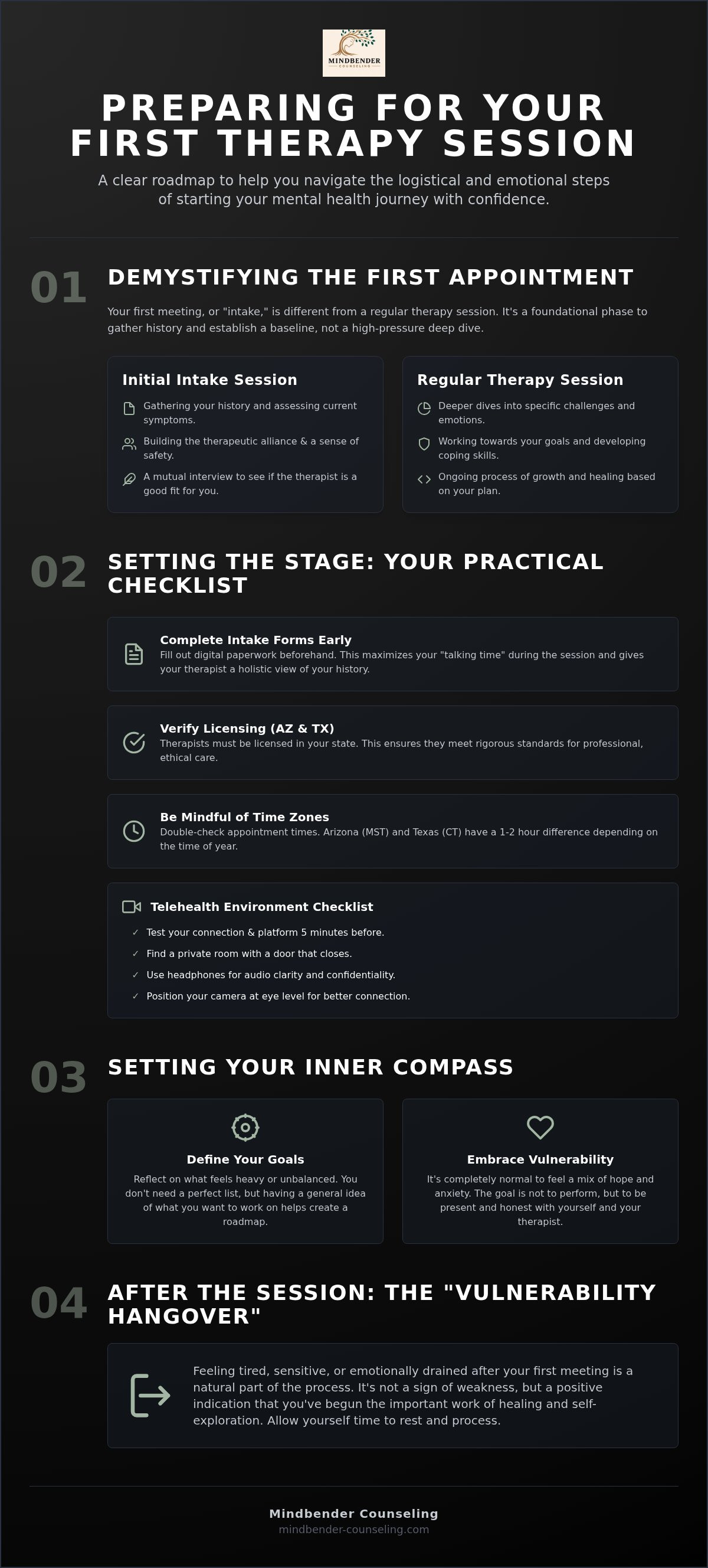
The threshold of your first appointment often brings a mix of curiosity and apprehension. Demystifying the First Session starts with understanding that this initial meeting, known as an intake, is distinct from the ongoing therapeutic work that follows. It isn't a deep dive into your most painful memories on day one. Instead, it's a comprehensive "get to know you" phase where you and your therapist begin to sketch the landscape of your life. During this time, your therapist focuses on gathering your history, assessing current symptoms, and establishing a clear baseline for where you are today. This structure ensures that your care is grounded in your actual needs rather than assumptions.
Think of this as a collaborative discovery process. While the clinical goal is to gather data, the human goal is to begin building the therapeutic alliance. Research consistently shows that the quality of the bond between you and your provider is the primary predictor of successful outcomes. The intake serves as the essential foundation for your personalized, evidence-based treatment plan. Understanding this structure helps when considering how to prepare for your first therapy session because it shifts the focus from "performing" to simply being present and honest about your current state.
The Purpose of Professional Intake Forms
You'll likely receive a packet of digital forms before your appointment. While they may seem like a hurdle, these documents are vital tools for your progress. They ask about family history and medical backgrounds to give your therapist a holistic view of your health and any biological factors that might influence your well-being. Your privacy is paramount; strict HIPAA regulations ensure your story remains confidential and protected. Completing these forms early is a practical way to maximize your "talking time" during the actual hour, allowing you to focus on your immediate needs rather than administrative details.
Understanding the Therapist-Client Fit
It's helpful to view the first session as a mutual interview. You aren't just a patient being evaluated; you're also evaluating whether the therapist’s style resonates with your personality. Pay attention to how you feel in the room or on the screen. Do you feel heard? Is their communication style supportive? Signs of a good fit include feeling a sense of safety and a belief that the therapist understands your goals. If you experience a "not quite right" feeling, it's okay to handle it professionally by discussing your concerns or seeking a different match. Finding the right guide is a key part of how to prepare for your first therapy session and ensures your long-term stability.
The Logistics of Getting Started in Arizona and Texas
Starting therapy across state lines involves specific legal guardrails that protect you as a client. In both Arizona and Texas, therapists must hold state-specific licenses to provide care. This ensures that your provider meets the rigorous standards set by local boards and understands the specific regulations of your region. When you're researching individual counseling, verifying these credentials provides peace of mind that you're working with a qualified professional dedicated to your long-term stability.
Scheduling requires a bit of extra attention if you're working remotely between these two states. Arizona remains on Mountain Standard Time year-round, while Texas operates on Central Time. This one or two-hour difference can lead to minor confusion if it isn't clarified during your initial outreach. Double-check your calendar invites to ensure your appointment fits perfectly into your day. Understanding these small details is a key part of how to prepare for your first therapy session, as it removes unnecessary stress before the meeting even begins.
To ensure your telehealth experience is as effective as an in-office visit, use this checklist for your environment:
- Test your internet connection and video platform five minutes before the start time.
- Find a room with a door that closes and, if possible, locks to ensure total privacy.
- Use headphones to enhance audio clarity and prevent others from hearing your therapist.
- Position your camera at eye level to foster a natural sense of connection and eye contact.
Telehealth vs. In-Office: Choosing Your Environment
The vast landscapes of Texas and Arizona make virtual sessions an excellent choice for busy professionals who can't spend hours in traffic. However, the transition from a high-pressure meeting to a therapeutic space can be jarring. What to Expect in Your First Therapy Session involves a shift in mindset that is easier when you have a dedicated "therapy nook." Taking five minutes to breathe and put away work devices helps signal to your brain that it's time for self-reflection rather than productivity.
Insurance and Payment Preparation
Financial clarity reduces session-end friction and allows you to stay focused on your personal growth. Verify your benefits early so you understand the difference between your co-pay and your deductible. Most practices now utilize secure portals to keep payment information on file. This organized approach creates a sense of predictability and security, helping you feel more comfortable as you begin your journey with evidence-based therapy tailored to your life.
Setting Your Compass: How to Define Your Therapeutic Goals
Defining what you hope to achieve acts as a vital internal anchor. Before your appointment, try to identify one to three specific areas of your life that currently feel heavy or unbalanced. This might be a recurring conflict in your marriage, a persistent sense of professional burnout, or a general feeling of being "stuck." Thinking about how to prepare for your first therapy session involves looking past the immediate crisis to see the person you wish to become. This proactive step helps you move from a state of overwhelm to one of focused intention.
It's helpful to distinguish between "symptom relief" and "growth." Symptom relief focuses on feeling better in the short term, such as quieting a racing mind or improving your sleep patterns. Growth focuses on doing better in the long term, such as changing the way you respond to criticism or setting healthier boundaries with family. A structured evidence-based therapy approach turns these desires into a functional roadmap. This clarity is a cornerstone of how to prepare for your first therapy session because it gives you a sense of agency from the start. Don't worry if your thoughts feel disorganized; your therapist is a professional facilitator trained to help you untangle these threads.
Questions to Ask Your Potential Therapist
You are hiring a partner for your personal evolution, so it's appropriate to ask questions that ensure a solid foundation of trust. Clear communication about expectations helps reduce the friction often associated with starting professional services. Consider these points during your initial conversation:
- What is your specific experience with private therapy for the concerns I've mentioned?
- How do you typically measure progress or success in our sessions together?
- Which evidence-based methods do you find most effective for individual counseling?
The "Therapy Inspo" Folder
Sometimes, words fail us when we try to summarize a lifetime of feelings in fifty minutes. Creating a "Therapy Inspo" folder on your phone can be a creative way to bridge that gap. You might collect articles, quotes, or even memes that resonate with your current internal state. Bringing these external prompts into the room can help break the ice and provide a concrete starting point for deeper conversation. Your "why", the core reason you decided to seek support, serves as a grounding tool during sessions that feel particularly difficult. It reminds you that the temporary discomfort of vulnerability is a necessary part of building a more stable and fulfilling life.
Emotional Preparation: Navigating the Vulnerability of Opening Up
Stepping into a therapeutic space for the first time is a courageous act that often brings a flutter of "first-session jitters." These feelings aren't a sign of weakness; instead, they indicate that you're embarking on work that truly matters to your well-being. Knowing how to prepare for your first therapy session involves accepting that you don't need to be a "perfect" client. There's no script to follow, and you're in complete control of the pace of your disclosure. You decide what to share and when you feel safe enough to share it, allowing the relationship with your therapist to develop naturally over time.
You might notice a specific type of fatigue after your appointment ends, often referred to as a "vulnerability hangover." Opening up to a new person requires significant emotional energy. Feeling tired, sensitive, or even a bit raw afterward is a normal part of the healing process. Adopting a no-judgment policy for your own performance during the hour helps lower your defenses and builds immediate trust with yourself. Remember that your therapist is there to be a supportive partner, not a critic evaluating your story.
Managing Pre-Session Anxiety
It's helpful to have a few grounding tools ready if you feel your nervous system accelerating before you log on or walk in. Try the "5-5-5" rule: breathe in for five seconds, hold for five, and exhale for five. This simple rhythmic pattern signals to your brain that you're safe. Set a realistic expectation for this initial meeting; you don't have to "fix" everything today. Focusing on the goal of simply showing up is a vital component of how to prepare for your first therapy session and ensures you don't feel overwhelmed by the road ahead.
The Post-Session Buffer: Creating a Transition Space
One of the most overlooked aspects of therapy is the period immediately following the session. Avoid scheduling high-stress meetings or demanding errands right after your appointment. Instead, try to create a fifteen-minute transition space. A quiet walk or a few minutes of reflection in your car can help you process the conversation before you return to your daily responsibilities. You might also find it useful to jot down any "after-thoughts" or questions that arise during this time. These notes serve as a sturdy anchor for your next meeting, helping you maintain the momentum of your progress. If you feel ready to begin this process with a compassionate guide, you can schedule an initial session to start your journey toward balance.
Starting Your Journey with Mindbender Counseling
Transitioning from the conceptual stage of knowing how to prepare for your first therapy session to actually sitting in the room is a powerful shift. At Mindbender Counseling, we honor that transition by providing a space that is both professionally authoritative and deeply compassionate. Our commitment to evidence-based care means your journey isn't left to chance. Instead, we use proven methodologies to help you build a solid internal foundation; this ensures that every session contributes to your long-term stability and growth. We believe that therapy should be a sturdy anchor, providing you with the tools to navigate life’s complexities with renewed strength.
For professionals in Phoenix or across the diverse landscape of Texas, finding time for self-care can feel like an additional burden in an already crowded schedule. We've designed our wellness therapy to integrate seamlessly into a high-functioning life. You don't have to choose between your career ambitions and your mental health. Our sessions follow a methodical, steady rhythm that mirrors the patient nature of the therapeutic process itself. This predictable structure helps reduce the friction often associated with seeking professional services, allowing you to focus entirely on your personal evolution without feeling rushed or overwhelmed.
What Makes Mindbender Different?
We view ourselves as your wise and compassionate guide throughout this process. While we possess deep experience in evidence-based techniques, we treat every individual with fresh attention and care. Our practice offers specialized support through both individual and couples counseling, ensuring that your unique relationship dynamics and personal goals receive the attention they deserve. We don't simply offer a listening ear; we provide a structured methodology designed to foster movement and restore balance in your life. This balance of professional authority and empathetic partnership creates an atmosphere of safety where you can explore your challenges and build lasting resilience.
How to Book Your First Appointment
Starting this process is a simple, low-friction path designed to respect your time and energy. You can reach out directly via our website to share a bit about your current needs and goals. Once you send that first message, our team will guide you through the initial steps, including the digital intake process we discussed in earlier sections. It's natural to feel a lingering sense of hesitation, but remember that by learning how to prepare for your first therapy session, you've already completed the most difficult step. You've chosen to prioritize your well-being, and we're here to provide the steady, unwavering support you need to move forward with confidence.
Your Path to Lasting Balance Starts Here
Taking the initiative to prioritize your mental health is a profound act of self-care. By understanding the structure of an intake appointment and setting clear, actionable goals, you've already laid the groundwork for a successful therapeutic journey. Reflecting on how to prepare for your first therapy session allows you to move past the initial anxiety and focus on the possibility of positive change. Your growth is a methodical process; it requires both a sturdy anchor and a compassionate guide to navigate the complexities of personal evolution.
Mindbender Counseling provides the professional expertise and empathetic partnership you need to build a solid internal foundation. With licensed support in Arizona and Texas, we offer evidence-based therapy approaches designed for your unique life circumstances. Whether you're seeking individual or couples counseling, our team is committed to providing compassionate professional care that respects your pace and your story.
Ready to take the first step? Schedule your initial consultation with Mindbender Counseling today. You've already done the hardest part by starting this process; we're here to walk the rest of the way with you.
Frequently Asked Questions
How long does the first therapy session usually last?
A first session typically lasts between 45 and 60 minutes. This duration provides enough time to discuss your history and current needs without feeling rushed. At Mindbender Counseling, we ensure this hour is structured to gather essential information while allowing you to feel heard. This timeframe is standard across our Arizona and Texas practices, helping you plan your day with predictability and a sense of calm assurance.
Do I need to bring anything with me to my first appointment?
You should have your identification and insurance information ready if you are using benefits for your care. Many people find it helpful to bring a small notebook to jot down thoughts or a list of specific goals they have identified. When considering how to prepare for your first therapy session, having these practical items on hand reduces administrative friction and allows you to focus entirely on the conversation.
What if I don’t know what to talk about when the session starts?
Your therapist will act as a compassionate guide and lead the conversation through a structured intake process. You don't need to have a polished speech or a perfect summary of your life prepared. We are trained to ask the right questions to help you untangle your thoughts. This collaborative approach ensures that even if you feel disorganized, we can still build a solid foundation for your evidence-based treatment plan together.
Can I bring my partner to my first individual counseling session?
Individual counseling services are designed for one-on-one personal growth and focused attention on your unique internal experiences. While your partner's support is valuable, these sessions are a private space for your own evolution. If you feel that your relationship needs specific attention, we offer specialized couples counseling in Arizona and Texas to address those dynamics directly with both partners present in a supportive environment.
Is everything I say in therapy truly confidential?
Yes, your privacy is protected by strict legal standards and professional ethics. There are very specific legal exceptions to this rule, such as when there is an immediate risk of harm to yourself or someone else. Outside of these rare safety requirements, your story remains secure within our clinical practice. This confidentiality is a sturdy anchor that allows you to explore your thoughts and feelings with total honesty and security.
How many sessions will it take before I start feeling better?
The timeline for progress is highly individualized and depends on your specific goals and history. Some clients notice a sense of relief after just a few sessions; however, deeper growth and stability often take more time to cultivate. We use evidence-based therapy to monitor your progress regularly. This structured approach ensures that your treatment remains effective and aligned with the restoration of balance and health in your life.
What happens if I cry or get very emotional during the intake?
Expressing deep emotion is a natural and welcome part of the therapeutic process. Your therapist provides a safe, non-judgmental environment where you can feel whatever arises without any sense of shame. We are deeply experienced in supporting individuals through intense feelings and will help you ground yourself before the session ends. Your vulnerability is an important sign that you are ready to engage in meaningful and lasting personal work.
How do I know if my therapist is actually "good" for me?
A good fit is characterized by feeling heard, respected, and safe during your meetings. You should feel that your therapist understands your concerns and has a clear, methodical plan to help you reach your goals. Part of how to prepare for your first therapy session is giving yourself permission to evaluate the relationship. If the connection doesn't feel right after a few sessions, it's okay to discuss this openly and professionally.


