

What if the most intimidating part of your healing journey isn't the work itself, but the simple act of picking up the phone? For many, the hurdle of scheduling a therapeutic appointment feels mountain-high, often blocked by fears of being judged or confusion over insurance details. You're likely feeling a mix of hope and hesitation, wondering if you'll find a therapist who truly understands your story. With over one in five U.S. adults seeking mental health support in 2026, you're certainly not alone in this transition. Seeking help is a profound act of strength, not a sign of failure.
This guide will show you exactly how to move from hesitation to your first session with clarity and ease. You'll learn how to navigate insurance questions, choose between individual or couples counseling, and prepare for that first conversation so you feel ready. We'll break down the logistics of the booking process to ensure you find a professional fit that supports your long-term growth and restoration of balance. By the end of this article, you'll have a clear, low-friction path to starting your journey toward well-being.
Key Takeaways
- Distinguish between consultation calls and intake sessions to enter your first meeting with clarity and confidence.
- Follow a structured path to booking your therapeutic appointment while navigating state-specific requirements in Arizona and Texas.
- Evaluate whether individual counseling services or couples counseling best aligns with your current goals for emotional resilience.
- Understand the value of professional credentials and how telehealth options provide flexible access to care regardless of your location.
- Learn how evidence-based therapy creates a reliable framework for your personal evolution and long-term well-being.
Understanding the Purpose of a Therapeutic Appointment
A therapeutic appointment represents a sanctuary in a busy world. It is a boundary you set for yourself, ensuring that your mental health receives the same focused attention as any other vital aspect of your life. While it might feel like just another entry on your calendar, this hour is where the architecture of your emotional resilience begins. By Understanding Psychotherapy as a collaborative process, you can view this first meeting as the cornerstone of a stronger internal foundation. It is a space where you don't have to perform or minimize your feelings; instead, you are invited to be fully seen.
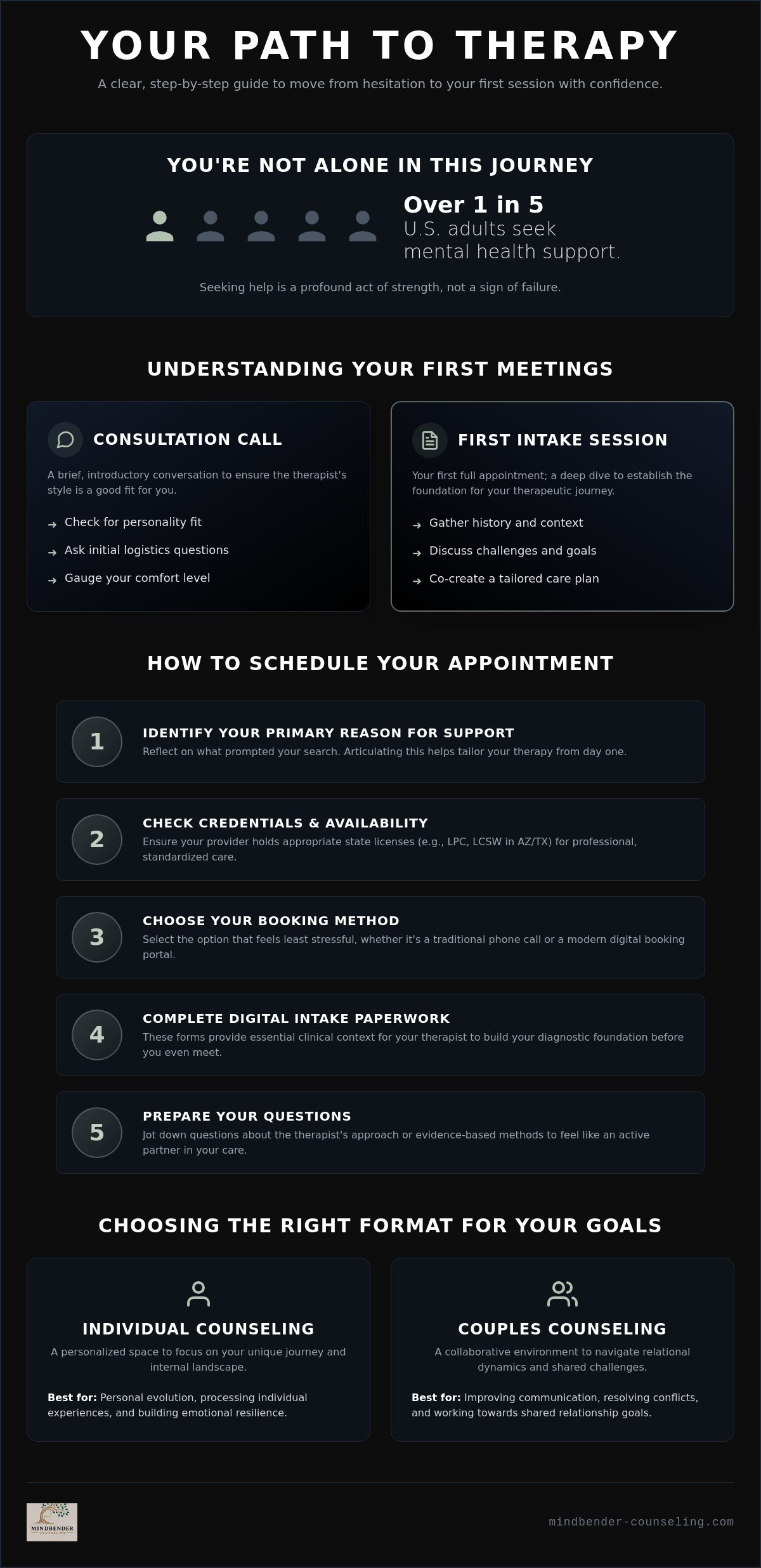
It's helpful to distinguish between a brief consultation call and the actual start of care. A consultation is often a short conversation to see if the therapist's style resonates with you. In contrast, your first full therapeutic appointment is a deep dive. This session moves beyond "checking the fit" to actively gathering the history and context needed to support your growth. You'll discuss your past experiences, current challenges, and the specific outcomes you hope to achieve. This history-taking isn't about dwelling on the past, but about identifying the patterns that will inform your future progress.
The Role of the Intake Session
From the first minute you arrive, the intake session is designed to establish a safe, non-judgmental environment. Your therapist isn't there to critique your choices, but to understand the experiences that have shaped your current reality. By collecting essential background information, your provider can tailor a care plan that addresses your unique strengths and vulnerabilities. This ensures that your time in therapy is efficient and focused on results. The intake session serves as the diagnostic foundation for evidence-based therapy, and for those who require integrated medical and psychiatric support, HealthWorksPros offers a comprehensive suite of services to complement your mental health journey.
Why This First Step Matters
Many people spend months or even years in a cycle of procrastination, waiting for the "perfect" time to seek support. Breaking this cycle is a transformative act. When you move from "thinking about help" to "actively healing," you experience an immediate shift in your internal narrative. There's a profound sense of psychological relief that comes with having a scheduled path forward. It replaces the heavy weight of uncertainty with a structured plan for personal evolution. You aren't just booking a session; you're reclaiming your agency and building a stable platform for your future well-being.
How to Schedule Your First Therapeutic Appointment: A Step-by-Step Guide
Moving from the intention to seek help to the actual act of booking requires both courage and a clear map. While the internal work of therapy is deep, the logistics of starting don't have to be overwhelming. Learning how to start therapy begins with a few intentional steps designed to protect your time and emotional energy. By following a structured process, you can replace the friction of uncertainty with the confidence of a well-prepared plan.
- Step 1: Identify your primary reason for support. Take a moment to reflect on what prompted your search today. Whether it's a specific life transition or a general feeling of being stuck, being able to articulate this helps your therapist tailor their approach from day one.
- Step 2: Check availability and local credentials. If you live in Arizona or Texas, ensure your provider holds the appropriate state-specific licenses, such as being a Licensed Professional Counselor (LPC) or a Licensed Clinical Social Worker (LCSW). This verification ensures you're receiving care that meets rigorous professional standards.
- Step 3: Choose your booking method. Most modern practices offer a choice between a traditional intake call or a digital booking portal. Pick the method that feels the least stressful for you.
- Step 4: Complete your digital intake paperwork. These forms are more than just administrative tasks; they provide the clinical context your therapist needs to build your diagnostic foundation.
- Step 5: Prepare your questions. Write down a few things you'd like to know about their experience with evidence-based therapy. This helps you feel like an active partner in your care.
As you prepare for your first therapeutic appointment, remember that this process is about finding a supportive match for your unique needs. If you're looking for a compassionate guide to help you through this transition, you may want to explore our individual counseling services to see how we can support your personal evolution.
Using the Client Portal Effectively
What Information to Have Ready
Having your details organized before you start can significantly lower your anxiety. You'll need your basic contact information and emergency contact details for safety protocols. It's also helpful to have your insurance card ready if you plan to use benefits, or a clear understanding of your preferred payment method. Briefly summarizing your current symptoms or challenges in a few sentences will also make the intake process much smoother and more productive.
Choosing the Right Format: Individual vs. Couples Counseling
Choosing the right format for your care is a decision that shapes your entire healing experience. While both paths lead toward greater stability, the focus of each is distinct. You might be wondering if you should work on your own emotional foundations or if the priority lies in the dynamic you share with a partner. A therapeutic appointment for an individual is a private exploration of your internal world, whereas a couples session treats the relationship itself as the client. Understanding the different types of therapy available helps you select the modality that best fits your current needs.
The intake process varies significantly between these two formats. In an individual session, the therapist focuses on your personal history, your specific symptoms, and your unique goals for growth. In a couples therapeutic appointment, the intake usually involves both partners together to observe the communication patterns and shared history. Some therapists may even schedule individual check-ins with each partner as part of the broader intake to ensure a comprehensive understanding of the relationship's ecosystem. This structural difference ensures that the treatment plan is optimized for the specific challenges you're facing. At times, individuals find that concurrent support—attending both personal and relational sessions—provides the most robust framework for long-term progress.
When to Book Individual Counseling
Individual support is most effective when you're navigating personal life transitions, persistent stress, or internal emotional struggles. It's a dedicated time to focus on your own emotional resilience and self-care habits. For those struggling with specific mental health challenges, pursuing individual counseling for anxiety provides a specialized, evidence-based path toward peace. This format allows you to build a sturdy anchor within yourself, developing coping mechanisms that serve you in every area of your life.
When Couples Counseling is the Priority
If your primary distress stems from communication breakdowns or recurring conflicts with a partner, couples counseling should be the priority. This format focuses on strengthening bonds and resolving relational friction through evidence-based techniques. Inviting a partner to the first session can feel delicate; it's often best to frame the invitation as a collaborative effort toward a healthier future rather than a critique of their behavior. When both parties are committed to the process, the therapy becomes a catalyst for profound relational movement and stability.
Navigating the Logistics of Care in Arizona and Texas
Accessing mental health support in the Southwest requires a clear understanding of local standards and regulations. Whether you're navigating the metro area of Phoenix or a rural community in Texas, the logistics of care are designed to protect your privacy and ensure quality. In both states, providers must hold valid licenses to serve residents. You'll likely encounter professionals with LPC (Licensed Professional Counselor) or LCSW (Licensed Clinical Social Worker) credentials. These titles indicate that the clinician has completed thousands of hours of supervised practice, ensuring that every therapeutic appointment is grounded in professional expertise and ethical safety.
State regulations also dictate how telehealth is delivered. In Arizona, strong parity laws ensure that private insurance covers virtual care at the same level as in-person visits. Texas requires providers to be licensed within the state to see Texas residents, maintaining a high bar for accountability. These regional nuances might seem like administrative hurdles, but they actually serve as a sturdy anchor for your care, guaranteeing that your therapist understands the specific legal and cultural landscape of your home state. This oversight is vital for maintaining the confidentiality and trust required for deep emotional work.
Telehealth vs. In-Office Appointments
Deciding where your sessions take place depends on your lifestyle and comfort. You may prefer the convenience of seeking professional counseling from your own living room, which can significantly reduce the friction of a busy schedule. This virtual option is a powerful tool for those in rural Texas or Arizona who might otherwise lack access to specialized care. If you choose telehealth, it's vital to secure a quiet, private space where you feel safe to speak freely. Meanwhile, in-person sessions remain a valuable option in cities like Phoenix, offering a dedicated physical space that is entirely separate from your daily stressors.
Inclusive Care for Local Communities
Cultural competence is not an optional extra; it's a requirement for effective healing. This is particularly important when LGBTQIA+ therapy in Arizona and Texas is sought. Providers who understand the specific community dynamics and local stressors of the Southwest can offer more nuanced support. When your therapist is familiar with the local environment, they can better validate your experiences and help you build resilience within your actual community context. This localized expertise ensures that you don't have to explain the "where" of your life, allowing you to focus entirely on the "why" and "how" of your growth.
If you're ready to find a provider who aligns with your values and location, you can book your therapeutic appointment through our secure portal to start your journey today.
Why Choose Mindbender Counseling for Your Therapeutic Journey
Choosing the right partner for your mental health journey is a decision that deserves careful consideration. At Mindbender Counseling, we recognize that you're looking for more than just a list of credentials; you're looking for a guide who pairs professional expertise with deep, genuine compassion. We focus on providing Evidence-Based Therapy that respects your unique history while looking forward toward your personal evolution. Your first therapeutic appointment is the beginning of a collaborative partnership where your goals are the primary focus.
We understand the specific pressures facing professionals in the Southwest today. High-demand careers often lead to a sense of burnout that can bleed into every area of your life. To address this, we provide specialized counseling for work stress in Arizona and Texas, helping you build the resilience needed to manage executive pressures without sacrificing your mental well-being. Our onboarding process is designed to be low-friction, ensuring that the path from your initial inquiry to your first session is clear and supportive.
Our Clinical Approach
We believe that healing should be grounded in what works. By utilizing research-backed methods, we ensure that your progress is measurable and your time is valued. We don't believe in a one-size-fits-all approach. Instead, we tailor every therapeutic appointment to address the specific nuances of your situation. Our evidence-based methods provide a clear, structured roadmap for achieving long-term emotional stability. This scientific foundation, combined with an individualized care plan, creates the stability you need to navigate life's complexities.
Ready to Begin?
The hardest part of the journey is often the very first step. We invite you to move beyond the hesitation and take that intentional action toward a healthier future. You can contact Mindbender Counseling today to schedule your initial consultation and begin the process of restoration. Our team is ready to act as a steady anchor as you explore new ways of being. You've already done the hard work of identifying the need for change. Remember, you don't have to navigate these challenges alone; we're here to walk alongside you every step of the way.
Embrace the Path to Personal Evolution
Taking the initiative to organize your mental health care is a profound investment in your future. You've learned how a therapeutic appointment serves as a dedicated space for growth; moving you from a state of hesitation to one of active healing. By understanding the distinction between individual and relational support, you can ensure that your care plan aligns with your most pressing needs. Whether you're navigating professional stress in Phoenix or seeking virtual support in rural Texas, the logistics of booking are designed to be a low-friction entry point into a more stable way of living.
Our team of Licensed Professional Counselors in Arizona and Texas is committed to providing evidence-based therapy techniques tailored to your story. We utilize a secure, HIPAA-compliant client portal to keep your communication private and your scheduling simple. When you're ready to build a sturdier internal foundation, we're here to provide the expert guidance you deserve. Schedule your therapeutic appointment with Mindbender Counseling today and begin the rewarding work of restoration. You've already shown the strength to start; let's walk the rest of the way together.
Frequently Asked Questions
How do I know if I actually need a therapeutic appointment?
You may benefit from professional support if you feel stuck, overwhelmed, or unable to navigate life's transitions alone. You don't need to be in a crisis to seek care. Early intervention often leads to faster emotional stabilization and prevents minor stressors from becoming deeply rooted patterns. If your usual coping mechanisms no longer feel sufficient, reaching out is a proactive step toward reclaiming your well-being.
What should I say during the first call to schedule an appointment?
You only need to share basic information, such as your contact details and a very brief summary of why you're seeking support. You might say, "I'd like to schedule a therapeutic appointment for individual counseling to help manage work-related stress." You aren't expected to share your whole life story during this initial administrative step; focus on your availability and insurance details instead.
Can I book a therapeutic appointment for someone else?
Generally, adults must book their own appointments to ensure they are personally committed to the therapeutic process. While you can offer encouragement or help a loved one research providers, the individual receiving care needs to complete the intake paperwork themselves. For minors, a legal guardian must handle the scheduling and provide the necessary consent to begin treatment.
What happens if I feel nervous or don’t know what to talk about?
It's completely normal to feel anxious before your first session. Your therapist is trained to lead the conversation and will ask gentle, guided questions to help you open up. You don't need to have a prepared script or a list of topics. The process is designed to move at your pace, allowing you to find your voice within a supportive and patient environment.
Is my therapeutic appointment confidential?
Yes, your privacy is protected by strict HIPAA regulations and professional ethical standards. Everything you discuss during a therapeutic appointment remains between you and your provider, with very specific legal exceptions regarding immediate safety or the protection of vulnerable populations. This confidentiality creates the secure environment necessary for honest personal evolution and the restoration of balance.
How long does a typical therapeutic appointment last?
Most standard sessions last approximately 45 to 55 minutes, which is often referred to as a "therapeutic hour." This duration provides enough time to explore deep topics while ensuring you have space to decompress before returning to your daily routine. Initial intake sessions may occasionally be scheduled for a longer duration to accommodate thorough history-taking and goal-setting.
Do you offer telehealth appointments for residents in Texas?
We offer virtual sessions for individuals located anywhere in Texas, provided the clinician holds a valid license within the state. Texas regulations require providers to be licensed in Texas to offer behavioral health services via synchronous platforms. This ensures you receive care that meets rigorous local professional standards while enjoying the convenience and privacy of your own home.
What is the cancellation policy for a therapeutic appointment?
Most professional practices require at least 24 to 48 hours' notice if you need to reschedule or cancel your session. This policy respects the therapist's time and allows other clients to access that dedicated hour. You should review the specific details in your digital intake paperwork to understand how your provider handles late-cancellation fees and rescheduling requests.


