

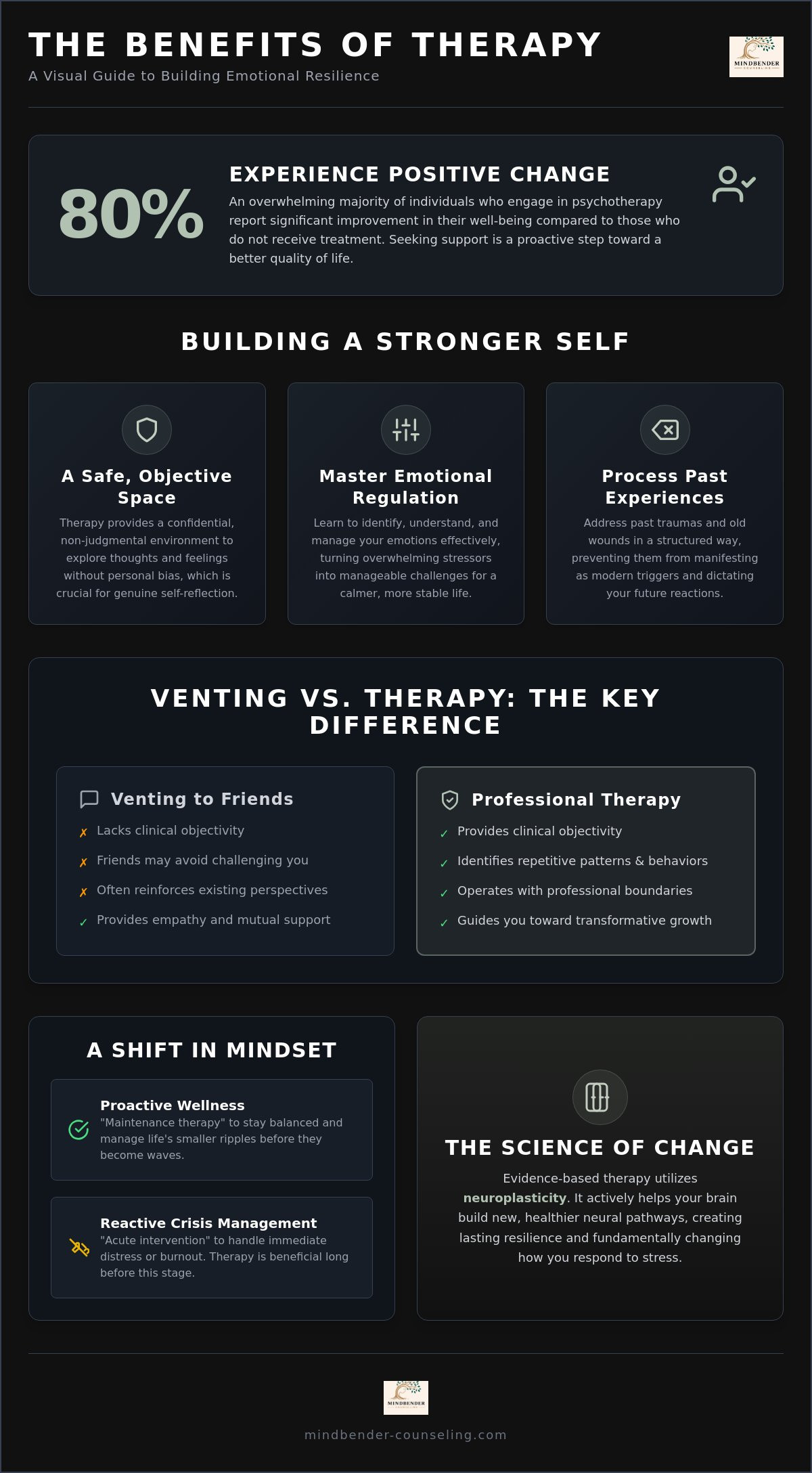
Did you know that roughly 80 percent of people who engage in psychotherapy find themselves in a better place than those who do not receive treatment? It's a powerful reminder that you don't have to carry the weight of modern stress or repetitive relationship patterns alone. If you've been feeling emotionally drained or find yourself struggling to process past experiences, you might be asking yourself: what are the benefits of therapy? Seeking support isn't a sign of weakness; it's a proactive step toward building a solid internal foundation and regaining a sense of control over your mental health.
We understand that the decision to start counseling is a significant one. That's why we've created this guide to show you how professional support builds lasting emotional resilience and provides evidence-based tools for a more balanced life. You'll discover how individual and couples counseling can transform your communication with partners and help you develop practical coping strategies. We'll walk through the tangible ways that dedicated, non-judgmental support fosters both emotional and relational growth, moving you from a place of survival to one of genuine stability and well-being.
Key Takeaways
- Learn how a collaborative, safe space with a licensed professional provides clinical objectivity; it's a vital tool for managing modern stress.
- Discover what are the benefits of therapy for your internal stability, from mastering emotional regulation to processing past experiences.
- See how evidence-based therapy utilizes neuroplasticity to help your brain build new, healthier patterns for long-term resilience.
- Explore the ways individual counseling services and couples counseling transform your relationships by fostering clearer communication.
- Get a practical, low-friction guide to starting your journey, including how to prepare for your first session with confidence.
Understanding the Core Benefits of Therapy in the Modern World
Many people view therapy as a last resort, but it's actually a structured, collaborative process led by a licensed professional. It's a specialized form of Psychotherapy designed to help you understand the complex mechanics of your internal world. When you ask what are the benefits of therapy, the answer starts with the unique environment it creates. This "safe space" isn't just a comfortable room. It's a clinical setting where confidentiality, lack of personal bias, and professional objectivity allow you to explore thoughts you might keep hidden elsewhere.
We're seeing a significant shift in how people approach their mental health. Instead of waiting for a total burnout, more people use individual counseling for adults as a preventative measure. It's about moving from reactive crisis management to proactive mental wellness. You don't wait for a physical illness to become life-threatening before seeing a doctor. Your mind deserves that same level of care and attention to ensure long term stability.
Breaking the 'Crisis-Only' Myth
Seeking support is an indicator of high emotional intelligence. It shows you're aware of your needs and willing to address them before they escalate. We often distinguish between maintenance therapy and acute intervention. While acute intervention handles immediate distress, maintenance therapy helps you stay balanced during life's smaller ripples. When considering what are the benefits of therapy, remember that you don't need to be in a state of emergency to deserve professional support. Therapy is a strategic investment in your future self.
The Difference Between Venting and Therapy
It's natural to lean on friends for mutual support, but venting over coffee is fundamentally different from a clinical intervention. Friends provide empathy, which is beautiful, but they often lack the clinical objectivity needed to challenge your perspective effectively. Professional counseling operates within strict boundaries that facilitate honest self-reflection. A therapist can identify repetitive patterns or subconscious behaviors that loved ones might miss or avoid mentioning to protect your feelings. This professional distance is exactly what allows for deep, transformative growth. You're not just being heard; you're being guided toward a clearer, more resilient version of yourself.
Strengthening the Self: Emotional Resilience and Mental Clarity
Building a life that feels stable starts from within. When you explore what are the benefits of therapy, you'll find that one of the most profound outcomes is the development of a sturdy internal foundation. This foundation isn't just about feeling better in the moment; it's about constructing a sense of self that remains steady even when external circumstances shift. Through professional guidance, you learn to regulate your emotions effectively, turning overwhelming daily stressors into manageable tasks. You begin to understand the nuances of your own temperament, which allows you to navigate the world with a sense of calm assurance. Understanding the broader benefits of therapy helps you see it as a long-term strategy for health rather than a quick fix.
Therapy also provides a safe container to process past traumas. Without this processing, old wounds often manifest as modern triggers, causing you to react to current situations with past pain. By addressing these experiences, you prevent them from dictating your future. This is a core component of individual counseling for anxiety, where we work to replace fear-based responses with grounded confidence. You'll learn to identify the physical signs of stress early, giving you the chance to intervene before your anxiety takes over.
Developing Lasting Resilience
Resilience is your psychological "bounce back" factor. It's the ability to navigate adversity and eventually find meaning within it. A key part of this journey involves learning how to practice self-care as a functional tool rather than just a luxury. As you strengthen these skills, you'll notice a shift from being reactive to being responsive. Instead of a knee-jerk reaction to a problem, you gain the space to choose a thoughtful, effective response. This shift is subtle but transformative, allowing you to maintain your peace in challenging environments.
Gaining Cognitive Clarity and Focus
Chronic stress often creates a persistent "brain fog" that makes even simple choices feel taxing. It's like trying to navigate through a thick haze where your priorities and goals are obscured. Therapy helps you untangle this mental clutter by providing objective feedback and structured reflection. This external perspective is essential for identifying and dismantling self-limiting beliefs that you may have carried for years. When you clear away these internal obstacles, your cognitive focus sharpens significantly. You'll find it easier to concentrate on the present moment without being pulled away by intrusive thoughts or worries. This newfound mental clarity leads to more confident decision-making in both your professional career and your personal life. If you're ready to build this kind of clarity, exploring professional individual counseling services can be your next step toward a more focused life.
The Relational Ripple Effect: How Therapy Transforms Connections
While the internal work of therapy builds a steady personal foundation, the most visible changes often occur in how you interact with the world around you. When people ask what are the benefits of therapy, they frequently focus on personal peace, but the relational ripple effect is equally transformative. As you heal individually, the quality of your external connections naturally improves. You stop reacting from a place of old wounds and start engaging from a place of present awareness. This shift reduces the frequency of projection, a common defense mechanism where we inadvertently take out our internal struggles on those we love most. By recognizing your own emotional state, you create a healthier environment for everyone in your life.
Establishing healthy boundaries is another core relational benefit. Many of us struggle to say no or to define our needs clearly, leading to resentment and burnout. Professional counseling helps you identify where you end and others begin. It teaches you that a boundary isn't a wall meant to keep people out; it's a gate that allows you to manage your energy and maintain your integrity. When you communicate these limits with calm assurance, your relationships become more honest and less draining. This clarity is one of the 12 Rewarding Benefits of Therapy that helps individuals foster mutual respect in their personal and professional lives.
Strengthening Relational Bonds
Couples counseling offers a unique, neutral ground for partners to navigate sensitive topics that might otherwise lead to circular arguments. In this structured environment, you learn the power of listening with empathy rather than defensiveness. Instead of preparing your rebuttal while your partner speaks, you learn to truly hear their perspective. This shift in communication is vital for effective conflict resolution. Investing in the health of your primary partnership has a high long term ROI, as stable, supportive relationships are one of the strongest predictors of overall life satisfaction and physical health.
Breaking Generational Patterns
One of the most profound answers to what are the benefits of therapy lies in its ability to stop the cycle of generational trauma. We often inherit emotional habits and reactive patterns from our families without even realizing it. Therapy provides the tools to examine these "inherited" behaviors and decide which ones serve you and which ones need to be left behind. By doing this work, you model healthy emotional behavior for your children and other family members, creating a legacy of wellness. Over time, this self-awareness also changes your "radar" for connections. You'll find yourself naturally gravitating toward healthier partners and friends who respect your growth and match your commitment to emotional stability.
The Science of Change: Why Evidence-Based Therapy Delivers Results
While the emotional relief of being heard is significant, the true power of professional support lies in its clinical foundation. Evidence-Based Therapy refers to methods that have undergone rigorous research to prove their efficacy. When you look at what are the benefits of therapy, you're actually looking at the results of decades of psychological studies. These methods aren't just suggestions; they're protocols designed to create lasting change. For instance, research indicates that approximately 75 to 80 percent of individuals who receive psychotherapy experience significant symptom reduction. This isn't a coincidence. It's the result of applying proven psychological principles to your unique life experience.
One of the most exciting aspects of modern counseling is the concept of neuroplasticity. Your brain isn't a static organ; it's constantly forming new pathways based on your thoughts and behaviors. Therapy helps you identify the loop of thoughts, feelings, and behaviors that might be keeping you stuck. Cognitive Behavioral Therapy (CBT) is a prime example of this, focusing on how shifting a single thought can change an entire emotional response. In fact, clinical data shows that CBT for Generalized Anxiety Disorder has a remission rate of 46 percent at long term follow up, proving that these tools provide more than just temporary relief. By tailoring these interventions to your unique neurobiology and history, we ensure the work is both relevant and effective.
The Neurological Impact of Counseling
When you verbalize complex emotions in a safe environment, you're doing more than just venting. You're actually reducing the activation of your amygdala, which is the brain's fear center. By engaging the prefrontal cortex through guided reflection, you regain control over your emotional state. Consistent therapy sessions lead to measurable changes in brain function by strengthening the connections between your emotional and rational centers. This process is often facilitated by corrective emotional experiences, where the supportive therapeutic relationship helps you rewrite old, painful narratives into stories of strength and agency.
Why 'Proven Methods' Matter
There's a vast difference between receiving anecdotal advice and engaging in research backed therapeutic protocols. Evidence-based practices ensure a higher level of safety and efficacy because they rely on what has been proven to work in clinical settings. The active ingredients of change often include self monitoring and active skill building. You aren't just talking about your problems; you're learning how to observe your own mind and apply new strategies in real time. If you're ready to experience the results of these clinical methods, you can begin your journey with our Evidence-Based Therapy services today.
Navigating Your Path: How to Begin Your Therapeutic Journey
Taking the first step toward professional support can feel like a significant transition. It's helpful to remember that the process is designed to be methodical and supportive, moving at a pace that respects your comfort level. Your journey typically begins with a bit of research to identify potential providers, followed by a brief initial contact to see if their approach aligns with your needs. To make this process feel more manageable, we recommend using this individual therapy sessions checklist to prepare your thoughts before your first meeting. This preparation helps you walk into the room with a sense of purpose and clarity.
One of the most critical factors in your success is therapeutic rapport. This is the professional bond and trust you share with your provider. Clinical research consistently shows that the quality of this relationship is a primary predictor of positive outcomes. When you're considering what are the benefits of therapy, remember that the clinical tools are most effective when they're delivered by someone you feel safe with. Whether you're seeking care in Arizona or Texas, the rise of secure telehealth options has made it easier than ever to find a specialist who feels like the right fit, regardless of your physical location.
Identifying Your Primary Goals
Before your first session, try to differentiate between your immediate needs. Are you looking for support with persistent anxiety, processing a specific trauma, or improving a relationship? We encourage you to write down two or three specific things you want to feel differently about in six months. For example, you might want to feel more responsive and less reactive during work meetings. These goals serve as a compass for your work, though they can and should evolve as you gain deeper self-awareness and peel back new layers of your experience.
Finding the Right Fit in Arizona or Texas
Working with local providers offers the advantage of a shared understanding of regional stressors, from the unique pace of life in Phoenix to the specific community dynamics in Dallas. You'll likely see various initials like LPC (Licensed Professional Counselor) or LCSW (Licensed Clinical Social Worker). While their training backgrounds differ slightly, both are master's level professionals equipped to provide high-quality mental health care. Choosing a provider who understands your local context adds an extra layer of relatability to your sessions. If you're ready to see the benefits for yourself, schedule a consultation with Mindbender Counseling today to begin building your foundation for growth.
Building Your Foundation for a Balanced Life
Choosing to prioritize your mental health is a profound act of self-respect. We've explored how therapy serves as more than just a reactive tool; it's a proactive framework for building emotional resilience and cognitive clarity. By understanding what are the benefits of therapy, you move from a state of survival to one of intentional thriving. You gain the skills to navigate complex relationships with healthy boundaries and leverage the science of neuroplasticity to create lasting, positive change in your brain's response to stress.
Our team of licensed providers in Arizona and Texas is here to support you through an evidence-based therapeutic approach. We provide compassionate, personalized care for individuals and couples who are ready to transform their daily experiences. You don't have to navigate these challenges alone. Take the first step today and Start Your Journey to Emotional Resilience with Mindbender Counseling. Your future self will thank you for the steady, unwavering support you choose to invest in today. You possess the capacity for change, and we're honored to facilitate your progress toward a more stable and fulfilling life.
Frequently Asked Questions
How long does it take to see the benefits of therapy?
Most individuals begin to notice meaningful shifts in their perspective and emotional regulation within eight to twelve weeks of consistent sessions. The exact timeline depends on your unique goals and the complexity of the experiences you're processing. While some find immediate relief after just a few meetings, deep-seated relational patterns often require a longer commitment to achieve lasting transformation.
Is therapy worth it if I don't have a diagnosed mental health condition?
Therapy is a valuable resource for anyone seeking personal growth, regardless of whether they have a clinical diagnosis. It's a proactive way to build a solid internal foundation and improve your overall quality of life. Many people use counseling to navigate career transitions, improve their communication skills, or simply gain a better understanding of their own emotional landscape before a crisis occurs.
Can therapy help with physical symptoms like chronic pain or fatigue?
Yes, professional counseling can significantly impact physical well-being by addressing the psychological roots of stress. When you learn to reduce amygdala activation and manage the body's fear response, you often see a decrease in tension-related symptoms like headaches or chronic fatigue. Understanding what are the benefits of therapy includes recognizing this vital connection between mental clarity and physical vitality; for those looking to address physical recovery with advanced technology, Optima Physical Therapy offers specialized concierge services to support your overall health goals.
To explore supplemental options for achieving a sense of relaxed clarity through professional medical evaluations, check out CMed for their accessible online services.
How do I know if I'm making progress in my therapy sessions?
Progress often manifests as a shift from being reactive to being responsive in difficult situations. You might notice that your "brain fog" is lifting or that you're using new coping strategies without having to think about them consciously. When you find yourself feeling more in control of your mental health and experiencing more stable moods, you're successfully gaining the benefits of therapy.
What happens if I don't feel a connection with my therapist?
It's perfectly acceptable to seek a different provider if you don't feel a sense of trust and safety. Therapeutic rapport is the single most important factor in your success, and a professional therapist will understand if the fit isn't right. Finding a counselor you genuinely connect with is a necessary step in building the foundation required for deep emotional work.
Is online therapy as effective as in-person counseling for gaining these benefits?
Clinical research confirms that secure telehealth is just as effective as in-person sessions for most mental health goals. Modern technology allows you to receive evidence-based care with the same level of confidentiality and professional objectivity found in a traditional office. This flexibility ensures that high-quality support remains accessible even for those with demanding schedules or limited local options.
How much does a typical therapy session cost in Arizona or Texas?
The cost of professional counseling depends on several factors, including the provider's licensure type and the specific services offered. Rates generally vary based on whether you're seeking individual sessions or couples counseling. Many people find that their insurance plans provide mental health parity, which can significantly reduce their out of pocket expenses through manageable copays.
Can I benefit from therapy if I've had a bad experience with a counselor in the past?
A past negative experience does not define your future potential for growth with a different provider. Every therapist has a unique style and approach, and finding the right match is a personal process. With the right therapeutic relationship and a focus on evidence-based methods, you can build a new, positive experience that fosters genuine healing and relational success.


