

What if the persistent hum of "high-functioning" anxiety isn't just a personality trait you're forced to manage, but a signal that your internal architecture needs a strategic upgrade? You might find yourself balancing professional ambition with a quiet sense of overwhelm, wondering why your usual logic can't solve the cyclical thoughts that hinder your decision-making. It's a common struggle for those who seem to have it all together on the outside. This is where individual counseling for adults transitions from a reactive crisis measure to a proactive, strategic investment in your long-term well-being.
We understand that you're looking for more than just a listening ear; you're seeking a concrete framework for emotional regulation and improved interpersonal boundaries. This guide will show you how evidence-based therapy provides the strategic tools needed to navigate modern stress and foster lasting emotional resilience. We will explore the methodology behind modern growth and how you can achieve a sense of internal stability and clarity that lasts far beyond the therapy room. By shifting your perspective, you can transform these challenges into a foundation for a more balanced and purposeful life.
Key Takeaways
- Modern individual counseling for adults is a collaborative partnership designed for personal evolution rather than just managing a crisis. Learn how this proactive approach creates a clear path toward your long-term goals.
- Gain insight into the mechanics of evidence-based therapy and how peer-reviewed research provides a reliable, predictable framework for your internal growth.
- Discover why professional neutrality and unconditional positive regard offer a level of clarity and safety that informal support from friends or family cannot replicate.
- Demystify the therapeutic journey by exploring the typical arc of a program, from your initial intake session to the successful completion of your personal milestones.
- Explore how specialized, personalized interventions in Arizona and Texas help high-functioning adults build lasting resilience and a solid internal foundation.
What is Individual Counseling for Adults in the Modern Era?
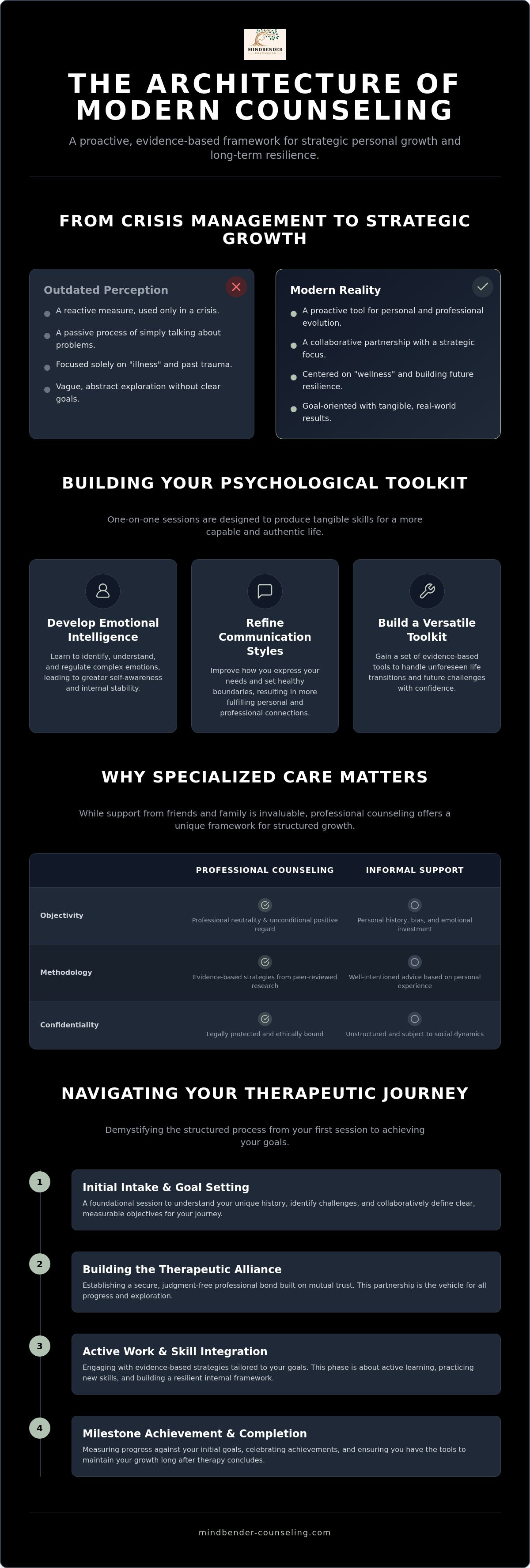
Individual counseling for adults has moved far beyond the outdated image of a silent professional taking notes while a patient reclines on a sofa. In the modern era, this process is a dynamic, collaborative, and evidence-based partnership focused on personal evolution. It's a dedicated space where your specific goals take center stage. Unlike the "blank slate" stereotypes of the past, today’s psychological therapy involves an active exchange. Your counselor acts as a strategic partner, helping you dismantle restrictive patterns to build a more resilient internal architecture. This specialized focus acknowledges that adults face unique developmental hurdles, such as career plateaus, the desire to leave a meaningful legacy, and the intricate demands of high-stakes personal relationships.
The primary vehicle for this change is the therapeutic alliance. This professional bond is built on mutual trust and shared objectives, creating a secure environment where you can explore difficult truths without judgment. This is active work. It isn't just about talking; it's about structured movement toward a version of yourself that feels more authentic and capable. For creative professionals, this journey often mirrors the empowerment provided by BEMYOWNBOSS ENT LLC, which helps artists expand their horizons. By focusing on your strengths and identifying areas for growth, individual counseling for adults provides a reliable foundation for navigating the complexities of modern life.
The Evolution of Adult Therapy
Adult therapy has undergone a significant transformation, shifting from the abstract explorations of traditional psychoanalysis toward active, goal-oriented behavioral methods. By 2026, the cultural conversation has shifted toward "wellness" rather than just "illness." Many people now view counseling as a proactive tool for maintaining mental health, similar to how one might hire a professional coach for physical fitness or career advancement. This shift is particularly evident in the high demand for individual counseling for anxiety. In our fast-paced environments, managing the constant influx of digital information and professional pressure requires specialized strategies to maintain focus and internal calm.
Core Objectives of One-on-One Sessions
The work done in these sessions aims to produce tangible, real-world results that improve your daily experience. While every individual’s journey is unique, several core objectives often guide the process:
- Developing Emotional Intelligence: You'll learn to identify and regulate complex emotions, leading to greater self-awareness and improved internal stability.
- Refining Communication Styles: Improving how you express your needs and set healthy boundaries often results in better professional outcomes and more fulfilling personal connections.
- Building a Psychological Toolkit: You don't just solve current problems; you gain a set of versatile, evidence-based tools to handle unforeseen life transitions with confidence.
The Mechanics of Evidence-Based Individual Therapy
When we discuss "evidence-based" care, we're referring to a standard of treatment that prioritizes peer-reviewed research and proven outcomes over anecdotal evidence. This approach ensures that the strategies used in your sessions have been rigorously tested and shown to be effective for specific challenges. For those seeking a deeper understanding of what individual counseling is, it's helpful to view it as a structured process where clinical expertise meets scientific validation. This provides a predictable framework for progress, allowing you to see exactly how each session contributes to your overall growth. Individual counseling for adults thrives on this foundation of reliability, giving you confidence that your time is being used effectively.
While the methods are rooted in science, their application remains deeply personal. Effective individual counseling for adults requires tailoring these proven protocols to your unique history and current circumstances. By integrating therapy behavioral therapy, your counselor helps you create measurable change in your daily habits and thought patterns. This isn't about vague conversations; it's about applying specific interventions that have helped thousands of others achieve internal stability. The goal is to move from abstract ideas to concrete actions that improve your quality of life.
Common Evidence-Based Modalities
- Cognitive Behavioral Therapy (CBT): This focuses on the powerful link between your thoughts, feelings, and actions. It helps you identify and restructure the cognitive distortions that fuel anxiety or self-doubt.
- Dialectical Behavior Therapy (DBT): DBT emphasizes the balance between accepting your current reality and the necessary work for change. It's particularly effective for emotional regulation and distress tolerance.
- Acceptance and Commitment Therapy (ACT): This modality encourages you to move toward your core values even when you experience discomfort, helping you build a life of meaning and purpose.
Why "Proven Methods" Matter for Adults
Most adults manage multiple responsibilities and have limited time to spare. Evidence-based care ensures that your sessions are efficient and targeted, focusing on the techniques most likely to produce results for your specific situation. This reduces the "trial and error" often found in less structured counseling approaches. It also provides a clear roadmap, giving you a sense of direction and a way to know when you've reached your initial goals. If you're ready to begin this structured journey, you can explore our approach to personalized care to see how these methods apply to your life. Having a defined path forward reduces the friction of the therapeutic process and keeps the focus on your evolution.
Professional Counseling vs. Informal Support: Why Specialized Care Matters
It’s natural to wonder if a deep conversation with a spouse or a trusted friend could offer the same relief as a formal session. While social support is a vital component of a healthy life, it serves a different purpose than professional intervention. Friends often provide advice based on their own life experiences or a desire to protect your feelings. In contrast, individual counseling for adults offers a unique environment defined by professional neutrality and "unconditional positive regard." This means your counselor accepts you as you are, without personal stakes in your decisions, allowing for a level of honesty that personal relationships often can’t sustain. Individual therapy provides a clinical perspective that identifies deep-seated patterns and blind spots that you and your loved ones might naturally miss.
Engaging in this work is a sophisticated way to invest in your own foundation. When you learn how to practice self-care at this foundational level, you’re doing more than just managing stress; you’re restructuring how you interact with the world. A trained professional uses clinical expertise to spot cyclical thought patterns and emotional triggers that informal support simply isn't equipped to handle. This specialized care ensures that you aren't just venting, but actively evolving.
The Limitation of Social Support
Personal relationships involve a natural "emotional debt." When you lean heavily on a friend, there's often an unspoken pressure to follow their advice or eventually return the favor. Therapeutic boundaries eliminate this dynamic. A counselor doesn't need you to please them or agree with their perspective. They are trained in specific interventions for complex trauma and stubborn habits, providing tools that go beyond well-meaning encouragement. This professional distance creates the safety needed to explore difficult topics without the fear of damaging a personal bond.
Therapy as a Strategic Partnership
Think of your therapist as a mental architect or a performance coach for your internal world. They provide an objective feedback loop that helps you refine your decision-making and emotional responses. This partnership is built on a bedrock of confidentiality and safety. Choosing private therapy ensures that your journey toward well-being remains your own, free from the judgment or influence of your social circle. This structure allows you to focus entirely on your progress, using the counselor’s expertise to build a more resilient and stable sense of self.
Navigating the Individual Therapy Program: What to Expect
Starting a therapeutic journey often feels like stepping into a new landscape without a map. Understanding the arc of a professional program helps lower these initial defenses. Choosing individual counseling for adults is a commitment to a structured process that moves from initial discovery to lasting autonomy. It's not a never-ending cycle of venting; it's a goal-oriented path with a clear beginning, middle, and end. To help you stay oriented, we recommend using an individual therapy sessions checklist to track your milestones and maintain focus on your desired outcomes.
Your first session is rarely about finding an instant "cure." Instead, it's a vital opportunity for history-taking and determining the clinical fit between you and your counselor. You'll discuss what brought you in and what you hope to achieve. This session sets the tone for the entire relationship. Consistency is the engine of change here. Regular sessions, typically once a week or every other week, are essential for neural plasticity. Your brain needs repetitive, focused work to forge new pathways and dismantle old habits. If you're ready to see how this structure fits your life, schedule an initial consultation with our team to begin your personalized program.
The Assessment and Goal-Setting Phase
The early stages of therapy focus on distinguishing the "presenting problem," such as a recent conflict at work, from the root cause, like a long-standing fear of failure. We work together to set SMART goals that are specific, measurable, and achievable. This phase also establishes the rules of engagement. You'll learn how sessions will be structured, how to handle difficult emotions that arise, and the professional boundaries that keep the space safe for your evolution. This clarity reduces the friction often associated with seeking professional help.
The Working Phase: Deepening the Work
Cultivating Resilience with Mindbender Counseling in Arizona and Texas
Mindbender Counseling serves as a specialized resource for those seeking individual counseling for adults in Arizona and Texas. We recognize that high-functioning professionals face a unique set of pressures that require more than just standard talk therapy. Our approach focuses on personalized, evidence-based interventions designed for deep, transformative work. We provide a compassionate and professional environment where you can dismantle the barriers to your growth. Think of our practice as a steady anchor; we help you stay grounded even when the complexities of modern life feel like a constant storm. By prioritizing your specific developmental needs, we ensure that every session contributes to a more stable and clear internal foundation.
Local Expertise for Arizona and Texas Professionals
Arizona and Texas professionals deal with specific cultural and workplace stressors that require a nuanced understanding. Whether it's the high-stakes corporate energy in the Texas markets or the rapid growth and logistical hurdles in the Phoenix metro area, these environments demand a high level of internal resilience. Mindbender Counseling understands these local nuances and how they impact your mental well-being. To accommodate your busy schedule, we offer both in-person sessions and secure telehealth options. This flexibility ensures that your journey toward well-being fits into your life rather than becoming another source of stress. Our commitment to inclusive, research-backed care means you receive support that is both culturally sensitive and scientifically sound.
Starting Your Journey Toward Balance
Transitioning into a more balanced life doesn't have to be a complicated process. We've simplified the path to starting individual counseling for adults so you can focus on the work that matters. Your journey begins with a straightforward process where we prioritize your comfort and clarity from the very first interaction. This is a supportive, non-judgmental partnership dedicated entirely to your evolution. You'll find that having a professional facilitator for your journey makes the path toward internal stability much clearer. We invite you to take that first step toward a more resilient version of yourself, knowing that you have a steady partner to guide you through the process of personal growth.
You don't have to navigate these challenges alone. By choosing a partner who understands the specific needs of high-achieving adults, you're giving yourself the best chance for lasting change. Our team is ready to help you build the internal architecture needed for a successful and peaceful life. Schedule your individual counseling session with Mindbender Counseling today.
Building Your Foundation for Lasting Change
Choosing to prioritize your mental well-being is a significant step toward a more stable and purposeful life. We've explored how individual counseling for adults serves as a strategic framework for personal evolution, moving beyond simple stress management to address the root causes of internal friction. By utilizing evidence-based therapy techniques, you gain a predictable roadmap that transforms abstract goals into measurable progress. This specialized care, tailored specifically for residents in Arizona and Texas, provides the objective feedback and professional neutrality needed to navigate modern complexities with confidence.
Our compassionate, wise-guide approach ensures you have a steady partner throughout every phase of your journey. You don't have to manage high-functioning anxiety or professional overwhelm in isolation. Instead, you can leverage proven methods to build a more resilient internal architecture. Begin your path to personal healing with Mindbender Counseling and discover the clarity that comes from dedicated, expert support. Your evolution is a process, and we're here to facilitate your movement toward a more balanced future.
Frequently Asked Questions
How long does individual counseling for adults typically last?
The duration of your therapeutic journey depends on your specific goals and the complexity of the challenges you're navigating. Many clients find that 12 to 20 weekly sessions provide enough time to develop a solid foundation of tools and achieve significant progress on their initial objectives. Others choose to continue for several months or even years as they transition into deeper personal evolution and long-term maintenance of their internal stability.
What is the difference between a counselor, a therapist, and a psychologist?
"Therapist" is a broad umbrella term that includes counselors, social workers, and psychologists. Professional counselors typically focus on practical strategies for managing life transitions and emotional health. Psychologists hold doctoral degrees and often specialize in psychological testing or research-based interventions for complex clinical conditions. Regardless of the specific title, the most important factor is finding a provider who uses evidence-based methods and makes you feel safe and understood.
Can individual therapy help if I don’t have a specific "mental illness" diagnosis?
You don't need a clinical diagnosis to benefit from professional support. Many high-functioning adults seek counseling to improve their emotional intelligence, refine their communication styles, or navigate the pressures of professional ambition. Individual counseling for adults is an investment in your personal architecture, helping you build resilience before a crisis occurs. It provides a proactive framework for self-discovery and clarity, allowing you to reach a higher level of internal peace.
Is individual counseling for adults covered by insurance in Arizona and Texas?
Coverage for mental health services depends on your specific insurance provider and plan benefits in Arizona or Texas. Most major insurance plans are required to provide some level of coverage for behavioral health under federal and state parity laws. It's essential to verify your copay, deductible, and whether a provider is in-network before your first session. This ensures you understand your out-of-pocket costs and can focus entirely on your therapeutic progress.
What should I do if I don’t feel a "click" with my therapist after the first session?
It's perfectly acceptable to seek a different provider if you don't feel an immediate sense of safety and trust. The therapeutic alliance is the primary driver of change; finding the right fit is a necessary part of the process. We encourage you to be honest with your counselor about your concerns. They can often adjust their approach or provide a referral to a colleague who may better suit your personality and needs.
How do I know if I need individual counseling or couples therapy?
Individual counseling for adults is the right choice if your primary goal is to address your own internal thought patterns, emotional regulation, or personal history. If the challenges you face are rooted in the dynamic between you and your partner, couples counseling may be more effective. Often, individuals find that doing their own internal work first provides a stronger foundation for the collaborative efforts required in relationship therapy.
What is the difference between talk therapy and behavioral therapy?
Talk therapy generally focuses on gaining insight into your past and understanding the "why" behind your current feelings. Behavioral therapy is more action-oriented, focusing on the "how" of changing specific habits and thought patterns. Modern evidence-based approaches often combine both, helping you understand your history while providing concrete tools to modify your behavior and achieve measurable results in your daily life.
Can individual counseling help with work-related burnout and career stress?
Professional counseling is highly effective for managing the "high-functioning" anxiety and chronic stress that often lead to professional burnout. Your counselor can help you identify the specific drivers of your stress, such as difficulty setting boundaries or an unsustainable need for perfection. By building a psychological toolkit for these challenges, you can restore your sense of balance and protect your long-term career satisfaction without sacrificing your personal peace.


