

What if the emotional weight you've been carrying isn't a permanent part of who you are, but simply a pattern waiting to be unlearned? It's natural to feel stuck in negative cycles or to worry that seeking help might feel cold and clinical. You may even fear being judged or misunderstood by someone who hasn't walked in your shoes. If you've found yourself asking what is individual psychotherapy and whether it can actually help you find relief, you're already taking a brave step toward a more balanced life.
We understand that the first step is often the hardest, which is why we've created this guide to demystify the process. You'll discover how individual psychotherapy provides a collaborative, evidence-based path to emotional resilience and personal growth. We'll explore the tangible benefits of personalized care and what you can expect from a professional therapeutic partnership. By the end of this article, you'll have the clarity and confidence needed to begin your own journey toward lasting healing and internal stability.
Key Takeaways
- Understand exactly what is individual psychotherapy by exploring how this collaborative, one-on-one process creates a confidential space for your personal healing.
- Learn how evidence-based frameworks help you identify and shift underlying patterns of thought and behavior to foster long-term emotional stability.
- Discover how to build a robust toolkit for managing modern stress, helping you prevent burnout and restore a sense of internal balance.
- Recognize that you don't need to be in a state of crisis to benefit from professional support; persistent feelings of being "stuck" are valid reasons to reach out.
- Explore how a compassionate, licensed therapist acts as a steady anchor and catalyst for your journey toward personal evolution and resilience.
Defining Individual Psychotherapy: More Than Just Talk
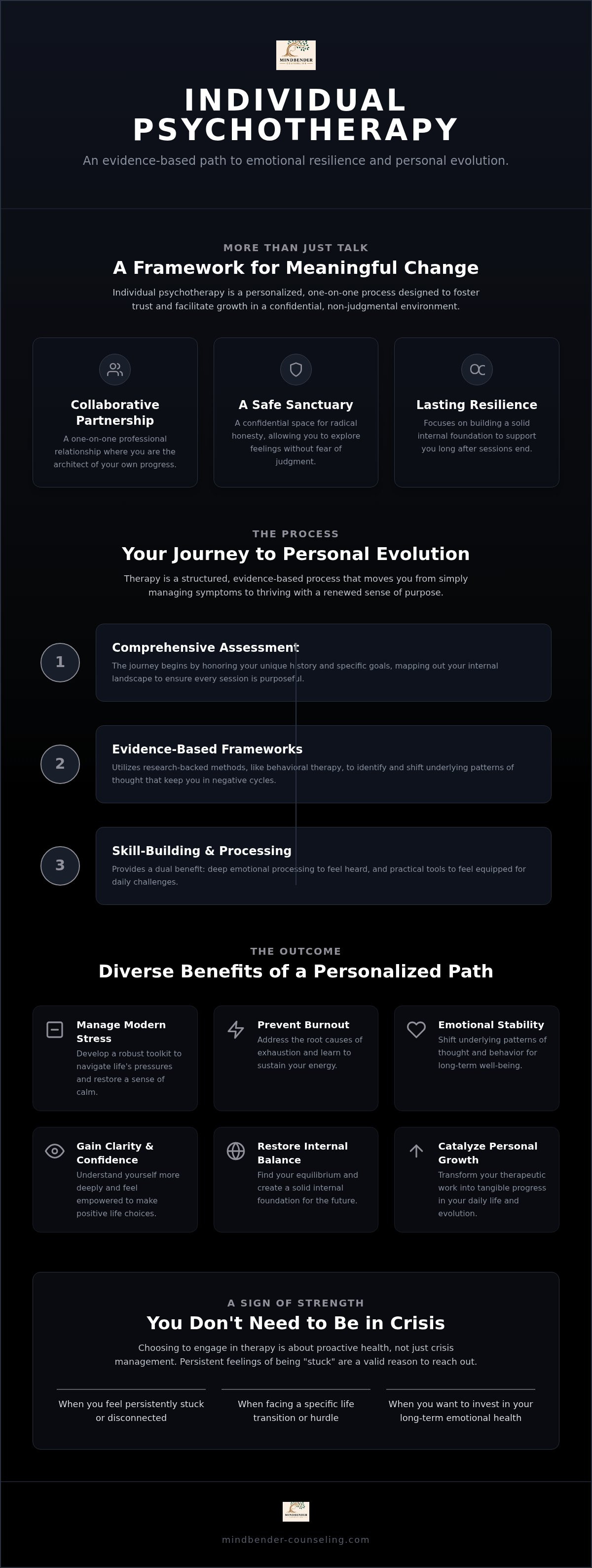
At its heart, individual psychotherapy is a personalized, one-on-one collaborative process between you and a trained professional. It's much more than just a conversation; it's a structured environment where you can explore your emotions, behaviors, and life challenges without the weight of outside judgment. Many people ask, "what is individual psychotherapy?" expecting a clinical or cold experience. In reality, it's a warm, professional relationship designed to foster trust and facilitate meaningful change. This partnership provides a sanctuary where your experiences are validated and your growth is prioritized.
Modern care doesn't just look backward at your past; it looks forward to your potential. It balances the need to address current symptoms with the desire to build lasting resilience. By identifying the root causes of distress, you can create a solid internal foundation that supports you long after your sessions have ended. This approach transforms the therapeutic room into a laboratory for personal evolution, where new ways of being are practiced and refined.
The Core Concept of a Therapeutic Partnership
Your therapist serves as both a sturdy anchor and a catalyst for movement. They provide the expert guidance needed to navigate complex feelings while ensuring you remain the architect of your own progress. This safe space allows for a level of radical honesty that's often impossible in daily life. Because the experience is entirely tailored to your history and goals, it moves at a pace that respects your personal needs. It's not a one-size-fits-all solution but a custom-built path for your future well-being. Within this psychotherapy framework, the focus is always on your individual journey toward clarity and balance.
Common Names for Individual Care
You might hear terms like "talk therapy," "counseling," or "psychotherapy" used interchangeably. While they share the same goal of helping you find stability, there are subtle nuances in their application. Personal counseling often addresses specific life transitions or situational stressors, while clinical psychotherapy may delve deeper into long-standing psychological patterns. Regardless of the label, the objective remains the restoration of your internal harmony through evidence-based methods.
A common misconception is that these services are only for those facing "severe" mental health crises. That's simply not true. You don't need to be in a state of emergency to seek a wiser perspective. Whether you're dealing with a specific hurdle or a persistent feeling of being disconnected, this path offers a way forward. It's about proactive health, not just crisis management. Choosing to engage in this process is a sign of strength and a commitment to your long-term emotional health.
How Individual Therapy Facilitates Personal Evolution
The journey toward healing doesn't begin with a generic checklist. It starts with a comprehensive assessment that honors your unique history and specific goals. When you explore what is individual psychotherapy, you find a process that is as much about discovery as it is about recovery. Your therapist acts as a supportive partner to help you map out your internal landscape. This initial phase ensures that every subsequent session is a purposeful step toward the life you want to lead. By understanding the nuances of your past, we can build a more stable and resilient future.
Individual therapy sessions are structured to provide a dual benefit. You receive the space needed for deep emotional processing, but you also gain practical skill-building tools. This balance ensures that you don't just leave a session feeling heard; you leave feeling equipped. Progress is measured through the lens of your daily functioning and personal evolution. It's a methodical transition from simply managing symptoms to thriving with a renewed sense of purpose.
The Power of Evidence-Based Frameworks
Innovation in mental health relies on methods that are rooted in science. We move beyond surface-level conversation by utilizing therapy behavioral therapy and other research-backed frameworks. These techniques are designed to identify underlying patterns of thought that keep you stuck in negative cycles. By applying proven, reliable methods, we help you create structural change in how you perceive and interact with the world. This evidence-based approach ensures that your hard work in therapy leads to tangible, long-term outcomes rather than temporary relief. If you're ready to start this process, our individual counseling services offer a clear path forward.
Setting and Achieving Therapeutic Milestones
Success in therapy is a collaborative definition. You and your therapist work together to decide what "success" looks like for you. This partnership follows a steady, reassuring rhythm that allows for deep work without feeling rushed. Initially, the focus often rests on acute symptom relief, helping you find immediate stability. As you gain strength, the work shifts toward building long-term resilience. You'll learn to recognize your own progress through specific milestones, such as a decrease in emotional triggers or an increased ability to set healthy boundaries. This methodical approach creates a sense of order and predictability, which helps to build the security necessary for deep personal change.
The Diverse Benefits of a Personalized Therapeutic Path
Beyond understanding the mechanics of the process, it's vital to recognize the life-altering outcomes that occur when you commit to this work. When people ask what is individual psychotherapy, they're often searching for tangible proof that things can actually get better. The benefits extend far beyond simple symptom management; they involve a fundamental shift in how you experience your internal world. By identifying emotional triggers and understanding the "why" behind your reactions, you gain a level of self-mastery that feels both empowering and grounding. This personalized path helps you cultivate a sense of quiet confidence, allowing you to face the future with optimism rather than dread.
You aren't just talking through your week; you're building a robust toolkit designed to prevent burnout before it starts. This internal work allows you to move through the world with a restored sense of balance. You'll find that the "clinical" fear disappears when you realize how practical these tools are for your everyday life. By focusing on your specific needs, we help you transition from feeling stuck in negative patterns to experiencing a renewed sense of agency.
Building Emotional Resilience for Modern Challenges
In the fast-paced environment of 2026, the pressures of digital connectivity, economic shifts, and social expectations can easily lead to burnout. Establishing a solid internal foundation is no longer a luxury; it's a necessity for maintaining your mental health. Individual therapy provides the specific tools needed to navigate these unique modern pressures. For many, this includes seeking individual counseling for anxiety to manage the persistent "noise" of contemporary life. Instead of just coping with stress, you learn to build resilience that acts as a buffer against life's inevitable ups and downs. This proactive approach ensures you're not just surviving your schedule but actually thriving within it.
Beyond the Individual: The Ripple Effect on Relationships
The healing that happens in one-on-one sessions rarely stays confined to the individual. As you develop better self-awareness and healthier communication habits, you'll likely notice a significant improvement in the quality of your relationships. Personal healing often leads to the restoration of relational bonds that may have been strained by past patterns of reactivity or silence. When you understand your own needs and boundaries, you're better equipped to express them clearly to others, which naturally reduces conflict and fosters intimacy.
This work creates a powerful intersection between individual growth and successful partnership. It's also why many find that these sessions perfectly complement other forms of support, such as couples counseling. By ensuring each person brings their best, most stable self to the table, the entire family system benefits. Healing yourself is often the first step toward healing the connections that matter most to you.
Recognizing When to Seek Professional Support
One of the most common myths about mental health is that you must reach a breaking point before you deserve support. In reality, you don't need to be in a crisis to benefit from the guidance of a wise professional. If you find yourself wondering what is individual psychotherapy, it's often most helpful to view it as a proactive tool for maintaining wellness, much like a regular exercise routine. Seeking help early allows you to address emotional fatigue before it begins to manifest as physical illness or chronic burnout. Choosing to engage in this process demonstrates a commitment to your long-term internal stability.
Persistent feelings of being stuck, overwhelmed, or disconnected from your daily life are valid reasons to reach out. These aren't signs of weakness; they're indicators that your current coping mechanisms may need an upgrade to match the complexity of your current life. By addressing these concerns now, you create a buffer against future stressors and build a more solid internal foundation. This organized approach to self-care reduces the friction of daily life and allows you to move forward with a renewed sense of agency.
Common Signs That It’s Time to Reach Out
Recognizing the need for support often starts with subtle shifts in your daily rhythm. These signs are gentle invitations to prioritize your well-being rather than evidence of failure. You might notice disruptions in your sleep patterns or energy levels that don't seem to have a physical cause. Increased irritability with loved ones or a loss of interest in hobbies that once brought you joy are also common indicators. Perhaps most telling are the "quiet" signs, such as persistent self-doubt or the heavy feeling that you're simply going through the motions of your life. Addressing these signals early prevents the accumulation of long-term distress and protects your overall health.
Overcoming the Stigma of Private Therapy
The internal objection of "I should be able to do this alone" is a significant barrier for many. This mindset often stems from an outdated stigma that views seeking help as a last resort. However, choosing private therapy is increasingly recognized as an act of profound strength. It shows that you value your personal evolution enough to use every expert resource available to you. As you learn more about what is individual psychotherapy, you'll find it's a professional partnership where the therapist acts as a catalyst for your movement. Seeking help doesn't mean you're broken; it means you're ready to thrive. If you're prepared to take this step, our individual counseling services offer a low-friction path to the support you deserve.
Beginning Your Healing Journey with Mindbender Counseling
Choosing to prioritize your mental health is a profound decision that requires both courage and a supportive environment. At Mindbender Counseling, we provide a professional and deeply compassionate approach tailored specifically to residents of Arizona and Texas. As you explore what is individual psychotherapy, you deserve a partner who respects the weight of your journey and offers more than just temporary relief. Our practice is rooted in evidence-based techniques that deliver meaningful, long-term outcomes. We believe that the path to personal evolution is built on a foundation of trust and expert guidance, ensuring you never have to navigate your challenges alone.
Our focus remains on creating a steady, unwavering support system for every individual we serve. We prioritize a methodical and reassuring rhythm to ensure you feel secure from your very first session. By creating a predictable and supportive environment, we help you lower your defenses and focus on the restoration of your internal balance. In understanding what is individual psychotherapy through our lens, you'll find a process that is both a sturdy anchor for your current life and a powerful catalyst for your future movement. This organized approach reduces the friction of seeking help and allows you to focus entirely on your growth.
What to Expect in Your Initial Consultation
Your first meeting with us is designed to be a low-friction entry into professional care. We view the initial consultation as a vital opportunity to build rapport and establish a foundation of quiet confidence. You won't find a cold or clinical atmosphere; instead, you'll experience a sense of calm assurance that helps you feel seen and understood. We use this time to understand your specific mental health goals and match our therapeutic interventions to your unique history. This personalized attention ensures that our work together is perfectly aligned with the life you're trying to build, moving at a pace that respects your individual needs.
Serving Our Local Communities in Arizona and Texas
We are proud to serve our local communities in Arizona and Texas with accessible, high-quality care. Our structured, research-backed counseling sessions are designed to fit into your life while providing the depth needed for real change. We believe that professional support should be a steady, unwavering presence in your journey toward well-being. Whether you're seeking to overcome specific emotional hurdles or simply want to build a more resilient foundation, our licensed experts provide the stability you need to move forward.
Taking the first step doesn't have to be overwhelming. We've simplified our intake process to ensure that your path toward healing remains clear and predictable. If you're ready to move beyond feeling stuck and begin your personal evolution, we invite you to reach out today. Schedule your session with our team and discover how our individual counseling services can help you restore the balance and strength you deserve.
Embracing Your Path to Lasting Resilience
Understanding what is individual psychotherapy reveals that it's far more than a clinical procedure; it's a personalized partnership designed for your specific evolution. We've explored how evidence-based frameworks move beyond surface-level conversation to build a sturdy internal foundation for your life. By recognizing the subtle signs of emotional fatigue early, you can transform your daily experience from simply going through the motions to living with quiet confidence and clarity.
Our licensed experts in Arizona and Texas serve as both a sturdy anchor and a catalyst for your movement toward better health. You don't have to navigate these patterns alone. We provide the professional guidance and compassionate care necessary to help you restore balance and find meaningful, long-term relief. Begin your journey toward personal healing with Mindbender Counseling today. Your future self will thank you for the strength you're showing right now.
Frequently Asked Questions
What is the difference between individual therapy and talking to a friend?
Therapy is a structured, professional relationship focused entirely on your personal growth, whereas a friendship is a reciprocal social bond. While friends offer support, a therapist provides objective, evidence-based interventions without the bias of personal history. This professional boundary allows you to explore difficult emotions with radical honesty. In the context of what is individual psychotherapy, this space ensures the focus remains on building your internal foundation rather than a mutual exchange of advice.
How long does individual psychotherapy usually last?
Session length and treatment duration vary based on your unique history and mental health goals. Most standard sessions last between 45 and 60 minutes. Some people find relief from acute symptoms in a few months, while others choose to continue for a year or more to build deep emotional resilience. We move at a pace that respects your progress, ensuring you feel secure as you transition from immediate symptom relief to achieving long-term stability.
Is individual therapy covered by insurance in Arizona or Texas?
Many insurance plans in Arizona and Texas provide coverage for mental health services, though specific benefits depend on your particular provider. Under current federal parity standards, insurers must generally treat mental health benefits similarly to medical and surgical care. We recommend checking your specific policy for copays or deductibles before your first visit. Our team helps you navigate this low-friction path to ensure you can access the professional care you deserve for lasting wellness.
What if I don't feel a connection with my therapist after the first session?
Finding the right fit is a vital part of the healing process, and it's perfectly okay to speak up if you don't feel a connection. The therapeutic alliance is a primary catalyst for movement, so we encourage you to share these feelings with your provider. If the rapport isn't there, we can help you find a different licensed expert who better matches your personality and mental health goals for a more effective journey toward personal healing.
Can individual therapy help with work-related stress and burnout?
Yes, individual therapy is highly effective for managing modern workplace pressures and preventing severe burnout. We help you identify the specific triggers that lead to emotional fatigue and develop a robust toolkit for setting healthy boundaries. By building a solid internal foundation, you'll learn to navigate high-stress environments without losing your sense of balance. This proactive approach protects your overall health and restores your quiet confidence in both professional and personal settings for the long term.
Is my information kept confidential during therapy sessions?
Your privacy is a cornerstone of the therapeutic relationship and is protected by strict legal and ethical standards. Licensed professionals follow HIPAA regulations to ensure that what you share remains within the safe space of the session. There are very specific legal exceptions, such as risks of immediate harm to yourself or others, which your therapist will explain clearly during your initial consultation. This commitment to security allows you to speak with radical honesty and build trust.
What is 'evidence-based' therapy and why does it matter?
Evidence-based therapy refers to clinical techniques that have been rigorously tested and proven effective through scientific research. This matters because it ensures you receive care grounded in reliable, proven methods rather than just opinion. When you ask what is individual psychotherapy, it's important to know that these frameworks provide a predictable path toward healing. This structured methodology delivers the meaningful, long-term outcomes you need to restore internal harmony and achieve your growth goals.
How often should I attend individual therapy sessions for the best results?
Most clients begin with weekly sessions to establish a steady, reassuring rhythm and build momentum toward their personal goals. Attending consistently allows you to process information without feeling rushed and helps your therapist act as a sturdy anchor during your transition. As you gain strength and achieve specific milestones, you might choose to move to bi-weekly or monthly sessions. This methodical approach ensures your progress remains sustainable as you build long-term emotional resilience.


